Belgrade’s standout exhibitions of the moment
Bojana JovanovićJanuary 27, 2026

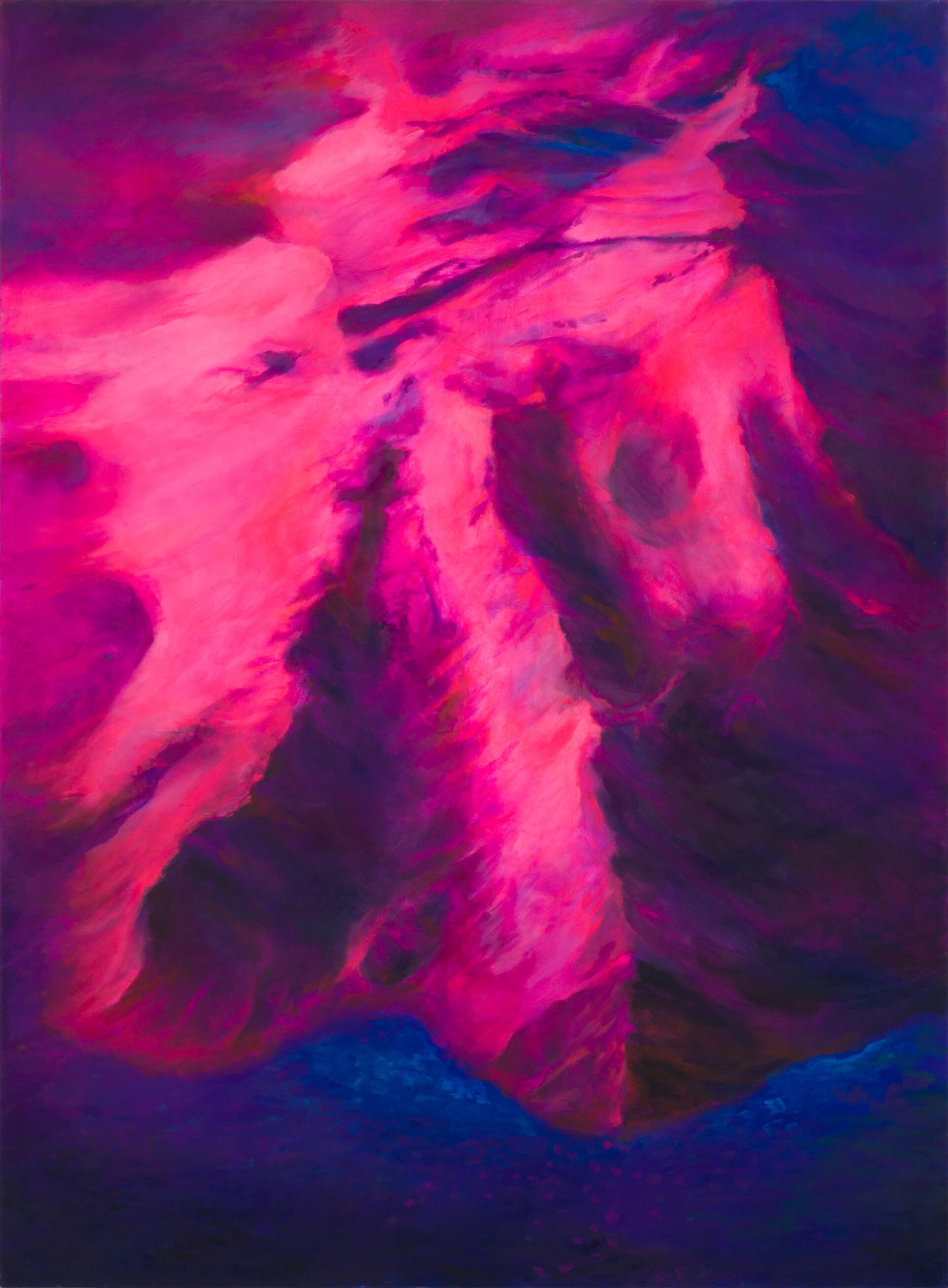
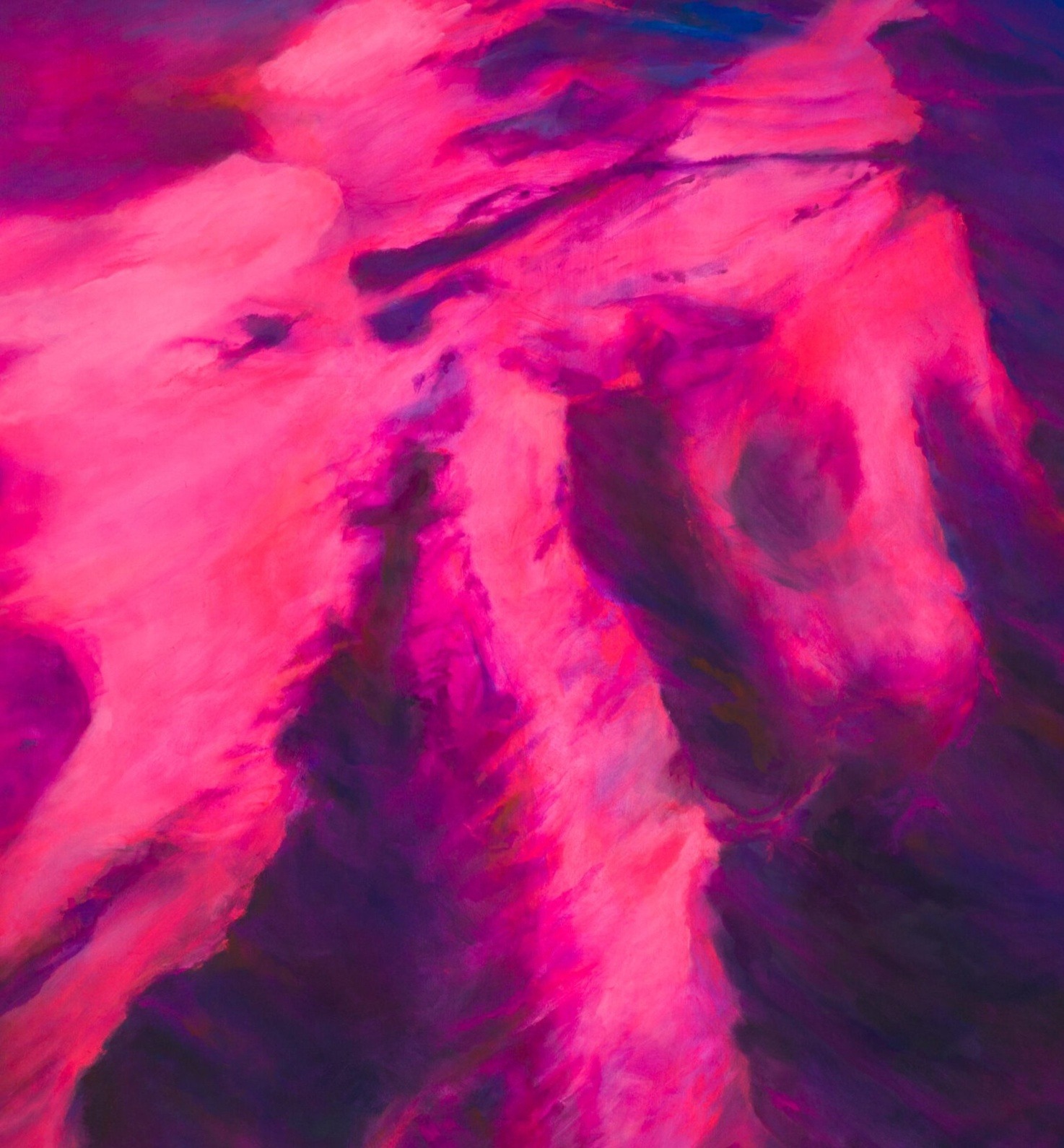
Belgrade is the city where I grew up, the city where I create, and the one I share an unbreakable bond with. Lately, the cultural and artistic scene has been facing serious challenges—from the lack of space and financial support to global shifts that inevitably affect us as well. Despite it all, this city has an incredible ability to generate new creative energy.
I want to highlight a few current exhibitions that, through different media and perspectives, showcase Belgrade’s art scene and its ability to stay relevant. These exhibitions bring the right mix of inspiration, innovation, and playfulness—perfect for anyone who wants to experience the city’s spirit through art, whether you’re here for just a few days or looking to add something new to your weekend.
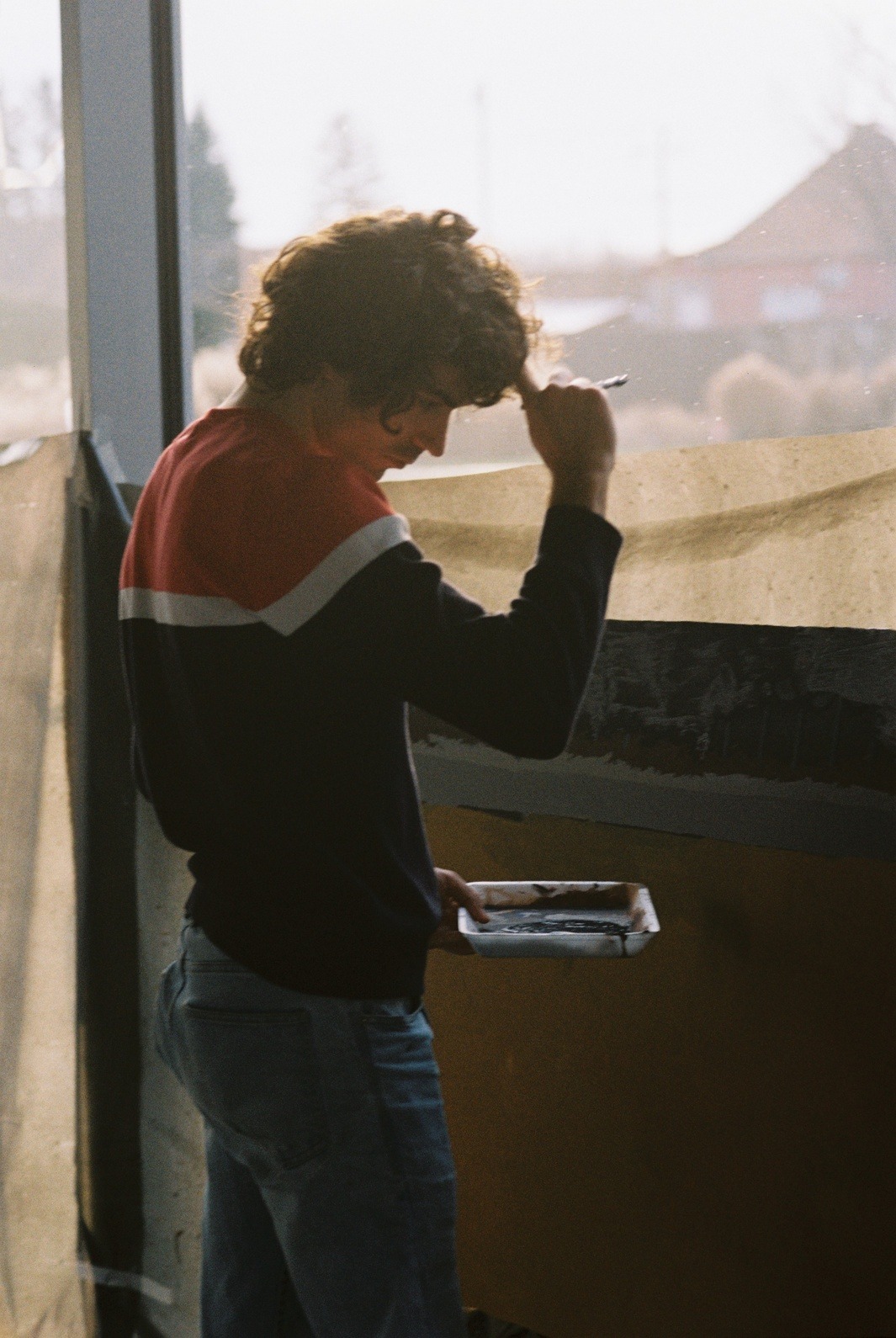
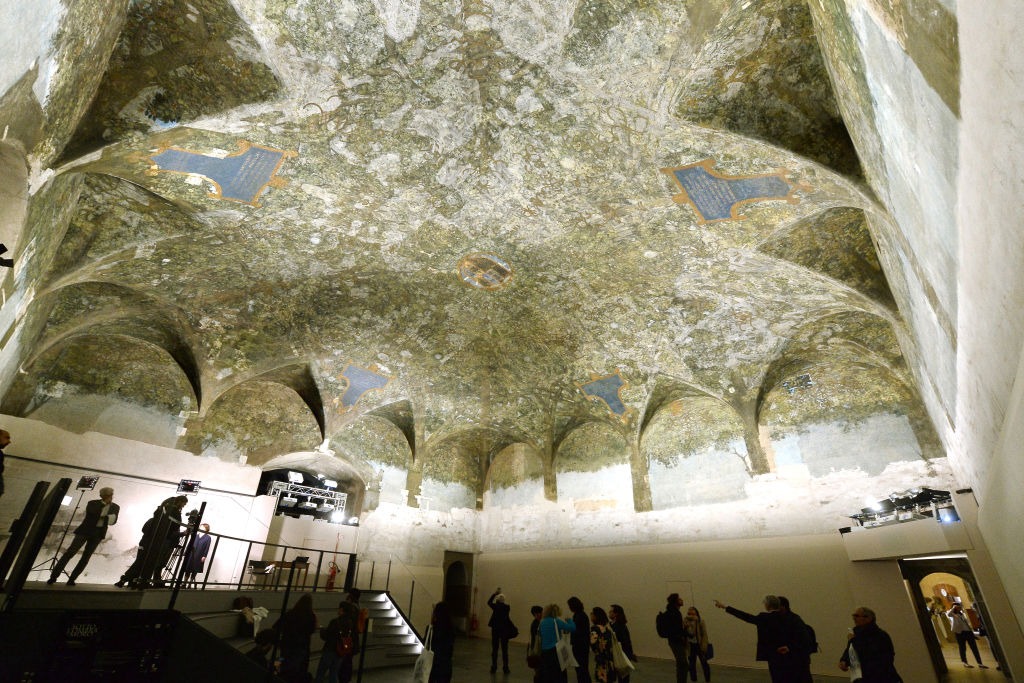
Three installations start from monuments that are currently in a state of dormancy. Each of them approaches memory through processes of accumulation and reduction: as something that over time gathers, discards, and reshapes itself. Nit explores how collective memory circulates and adapts within built environments.
Laura De Jager (1995) is an artist living and working between Tallinn, Estonia, and Brussels, Belgium. Her practice focuses on objects and places that are currently dormant. Through collecting and paraphrasing, she investigates ways in which stories can “fill” or reshape them. She works with physical materials as well as writing and curating. De Jager holds a master’s degree in fine arts (LUCA School of Arts / Estonian Academy of Arts) and a master’s degree in cultural studies (Catholic University of Leuven). Her works have been presented in solo and group exhibitions in Belgium, Estonia, Finland, and Germany. In 2024, she received the annual award from the Estonian Cultural Endowment. Alongside her artistic practice, she writes on contemporary art, teaches at the Estonian Academy of Arts, and leads tours at WIELS – the Centre for Contemporary Art in Brussels.
WHERE? Art space U10
WHEN? until February 7
U10
In the cycle Critics Have Chosen – a traditional exhibition that has been organized continuously since 1967 as a platform for contemporary visual art criticism at the Gallery of Fine Arts – art historian and 2020 Lazar Trifunović Award recipient Sofija Milenković curated an exhibition titled It’s Just the End of the World. The participating artists are Marija Avramović and Sam Twidale, Pavle Banović and Jelena Nikolić, Lidija Delić, Iva Kuzmanović, Tamara Spalajković, Jakub Daněk, and Daniel Rajmon.
The exhibition It’s Only the End of the World brings together artists connected by an interest in speculating on worlds that represent a discontinuity with the realm of our empirical experience and/or in exploring potential scenarios of the near or distant future. Developed within a methodological framework shaped by notions of science fiction, worldbuilding, and speculation, their works construct various alternative realities and worlds (of the future), most often envisioned as dystopias oriented toward some form of collapse or emerging as the result of its aftermath. Even when they take the form of a symbiotic utopia, their point of departure lies in some of the urgent issues of our present, such as the relationship between the human and the non-human, the dysfunctionality of dominant systems, and the omnipresence of technology. While drawing our attention to these problems and encouraging reflection on their causes and consequences and their systemic and structural interconnectedness, as well as their potential solutions, the works brought together in this exhibition also open up a space for reflecting on the ambivalent relationship we have toward them and the place they occupy in our everyday lives.
WHERE?Belgrade Cultural Center
WHEN? until March 8
Lidija Delić
The exhibition Closeness and Differences V is part of a long-term project conceived as a curatorial-artistic investigation aimed at exploring new ways to promote photography in Serbia. The project is based on a comparative analysis of photographic material from both contemporary art and historical heritage as a model for studying the characteristics of domestic photography, or the nature of the photographic medium as a whole.
The exhibition will feature photographs made from images captured during the 1930s in the Kingdom of Yugoslavia. The identity of the photographer and the circumstances in which the photographs were taken are currently unknown. Based on the dominant subjects, it can be assumed that the photographer’s interests stemmed from professional engagement related to railway transportation. Landscapes with railway tracks, railway station architecture, river ports, factory facilities, tunnels, bridges, viaducts, timber yards, shipyards, and city panoramas are frequent motifs in the photographs. The collection loses precise definition, taking on a hybrid form of a travelogue-like photo note in which professional duty and routine blend with photographic curiosity, providing us with compelling images of politicians, events, and scenes from the state at the time. Concept and curation by Ivan Petrović
WHERE? Belgrade Cultural Center
WHEN? until March 8
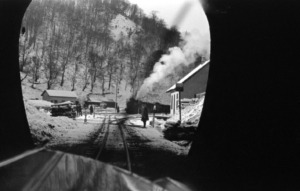
Bliskost i razlike V, Fotofraf nepoznat, c.1935. Kolekcija CEF
The obstacles are multiple and are multiplying daily, while the algorithms of social networks and artificial intelligence dictate the pace of most people’s activities. Public space has, without exaggeration, become like a computer game in which overcoming levels means sustaining life. Falling ceilings and parts of facades, detached parts of highways, holes in the asphalt, and congestion of the sewage network are just some of the consequences of the action of an extremely repressive social mechanism. In such a gamified reality, the frequent multiplication of obstacles makes the possibility of resistance or change impossible.
However, dashing over a physical or mental obstacle can signify revolt and a potential statement/expression of disobedience. Thus, this program unit was created with the idea of presenting a different and socially current, disobedient approach to passivated institutional exhibition practices. Since there is less and less meaning in the local and global context colored by the frequent growth of authoritative social practices, one gets the impression that art can only be coherent if it is in agreement with real circumstances.
Through multiple media, stylistically and aesthetically diverse programs (a selection of video, photographic, and in situ works by young artists; performance/happening; lecture/performance; concert), PREPREKE implies the activation of the gallery space with one-night events that will rotate every week. The focus will be on the creativity of younger artists, in order not to underline the mental landscapes of those who most actively participate in the implementation of social transformation prompted by student protests but also in all other forms of civil disobedience and expression of a critical attitude.
A selection of works by young artists: Isidora Branković, Angelina Pajković, Đorđe Tufegdžić, Danilo Bursać, Aleks Jovanović, and Danilo Bursać
WHERE? Belgrade Cultural Center
WHEN? until March 8
The series of works by Miodrag Samardžić titled Cepelini presents geometrized and simplified forms that reflect another period of growing up, when he spent long hours by the river, fascinated by the simplicity and minimalism of a ship’s hull. It also evokes the naive childhood fantasy that by joining two hulls, one could create a zeppelin that, besides being able to float, could also fly.
My engagement with sculpture is essentially a continuation of my childhood play and the creation of new toys that I was unable to make as a child. Now, as an adult and a father, I have the opportunity to continue my childhood game at a higher artistic and craft level. In this regard, I greatly enjoy it when viewers of my sculptures feel the need to touch, handle, pick up, or even play with them.
WHERE? Youth Center Gallery
WHEN? until January 30
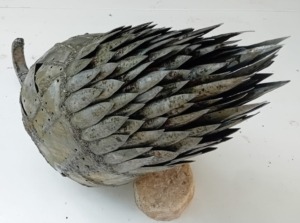
Miodrag Samardžić
Artists: Brankica Žilović, Lana Vasiljević, Tadija Janičić, Marina Marković, Ivana Bašić, Kiša Radić, Nina Ivanović, Gorana Bačevac & Marko Vučković
Srđan Šaper, founder of Galerija Novembar, emphasizes that the past year was pivotal for the gallery, which began with an exhibition dedicated to photographer Goranka Matić and continued with solo and group shows by domestic artists such as Jovan Matić, Ana Knežević, Marija Šević, and Selena Vicković, creating a space for dialogue and contemporary artistic reflection.
“In a year marked by social crisis in Serbia, the responsibility of art and cultural institutions is greater, to preserve a space for free thought and critical reflection. Galerija Novembar will always be such a place. With gratitude to the artists, collaborators, and audience, we enter 2026 with a bold and timely program, attuned to the challenges of our time,” Šaper said.
A particular success was the gallery’s participation in the international Art Athina fair, where it presented domestic artists in a European context. The group exhibition Highlights: Our Struggles, as curator Mia David notes, brings together young and established artists whose works, directly or symbolically, address contemporary challenges: from disappointment and ecological concerns to personal choices and the search for one’s place in society. The gallery is proud that its program over the year has aligned with the current circumstances.
WHERE? Galerija Novembar
WHEN? until February 1
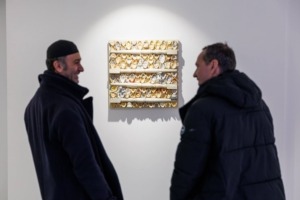
Galerija Novembar
No time like the present to talk about heritage as a tradable asset. “But contrary to the Eurocentric and modernist prejudice, I believe there are no inherent politics in the reanimation of heritage, just as democracy itself can lean toward radical inclusion as well as promote disastrous programs of militarist neoimperialism”. Sveta Mordovskaya and Tereza Glazova belong to a similar generation, separated by a slight—yet geopolitically significant—gap. Both live and work in Zurich, and their artistic practices are shaped by the post-Soviet condition as it circulates within the contemporary image economy. Throughout this economy, a ghostly identity is projected onto a fragmented territory named “Eastern Europe.” Our last names (mine included) place us there within a globalized cultural sphere. But does this identity ever truly belong to us, or is it something continually assigned, performed, and exchanged? Thinking about Eastern Europe is hard when you are, in fact, from Eastern Europe—a place that has never been east to the point from which you are standing. It often feels like defending a doctoral dissertation on who you are and failing, asking for a new deadline: there is simply too much history
to unpack in a classroom of people who don’t speak your language. Still, I will try, by examining one work per artist.
WHERE? Autokomanda Art Space
WHEN? until March 21
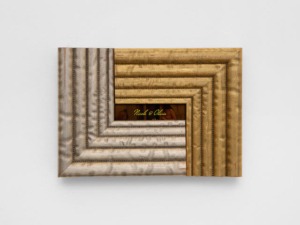
Autokomanda
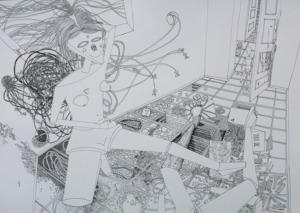
As part of the exhibition Memory of Miss Pogany, Dunja Ćorlomanović presents her artistic practice through a selection of drawings ranging from realistic depictions to abstract concepts, executed in rapidograph or fineliner on paper, created over the past two years. The scenes depicted are either documentary in nature (bars and rooms) or emotional (ropes of hair, hearts, wooden figures/dolls), often with a touch of absurdity. The formal conventions of Ćorlomanović’s drawings are reflected in meticulous attention to detail (seen in the repetitive, meditative repetition of movements and strokes), contour drawing with an emphasis on unbroken lines, inverse perspective (highlighting the internal meaning rather than external appearance), the balance of light and dark that organizes the composition and emphasizes relational dynamics, while the unreal proportions underscore the significance of the depicted subject. Exaggerated physical traits (enormous hair) and the distinctiveness of certain forms (wooden dolls instead of people) convey emotions and make the messages more legible. Compositions can be symmetrical or asymmetrical, but thanks to the balance of full and empty spaces, their arrangement is always harmonious.
In works that oscillate between intimacy and surrealism, two types of composition clearly emerge: 1) a scene viewed from a high vantage point with frequent use of inverse perspective (through the physical representation of the world, we infer its psychological significance for the artist), and 2) a “floating” scene set in an imaginary, empty space (through psychological representation, we decipher a real “event”). In both cases, the viewer feels somewhat like a voyeur, physically “outside” the image yet drawn deeply into the artist’s intimate thoughts and emotional states.
The drawings depict real and surreal spaces in which Ćorlomanović deconstructs relationships to reconstruct them intuitively, connecting elements in unexpected ways. She strips or restores dignity to the figures, reverses power and vulnerability, confronting ideas of humans as authentic, thinking beings on one hand and as easily influenced, mindless individuals on the other. The artist communicates through autobiographical terms, exploring different facets of interpersonal relationships, particularly in the context of anxiety or emotional paralysis. The concept of transfer is also evident, as the artist’s feelings and attitudes are revealed through the symbolism of depicted objects: puzzles, building blocks, and LEGO pieces as combinatorial games; chess and cards as games of thought; wooden dolls and marionettes representing people without character; butterflies symbolizing death and rebirth, metamorphosis, and female genitalia; the motif of toothed eggs signifying both the promise of new life and a deadly threat; hearts representing love; tongues symbolizing words, sensuality, and sexuality.
WHERE? Kolarac Endowment
WHEN? until February 7
Dunja Ćorlomanović
This exhibition, which will remain open for the next two years, marks the beginning of a new long-term cycle at the Museum, through which three major presentations will reaffirm the value of its collection, spanning artworks from 1900 to the present day. The first part of the cycle, Turning Points Toward Modernity: The Art of Society 1900–1945, offers a layered reading of the development of art in Serbia and Yugoslavia during the first half of the 20th century.
Through more than 400 works by 150 artists, the Museum presents its collection not as a linear sequence of styles, but as a heritage that continues to shape our understanding of both art and society. The exhibition guides visitors through chronological and thematic chapters: from the first modernist breakthroughs and avant-garde experiments, to the artistic practices of the 1930s that reflect social divisions and introspective questioning. The thematic framework explores the city and the bourgeois identity as chroniclers of modernization, the portrait as the “face of an era,” movement through form and body, and sculpture and relief as possibilities of spatial expression.
A special focus is placed on the Portrait of an Artist series, featuring key figures of pre-war modernism such as Petar Dobrović, Sava Šumanović, Milena Pavlović Barilli, and Nadežda Petrović. The curatorial team—Mišela Blanuša, Dr. Rajka Bošković, and Žaklina Ratković, presents the collection as a dialogue between art and society, reaffirming its significance and the Museum’s central role in preserving and interpreting cultural heritage.
WHERE? Museum of Contemporary Art, Belgrade
WHEN? until March 1, 2027
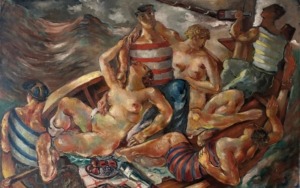
Photo: Muzej savremene umetnosti Beograd
The exhibition Lutalaštvo (Wandering) is part of a series of works by Mirjana Boba Stojadinović dedicated to travel, examining it through the lens of modes of transportation such as ships, trains, cars, buses, and airplanes, the history of travel, its psychological significance, and the artist’s personal experience of the travel process. The exhibition takes the form of an ambient installation that includes the artist’s photographs and sounds recorded during journeys, as well as texts written in 2020 that contain a subjective narrative of events or, more often, anti-events from travel. Transportation is a mechanism that has enabled nearly everything that defines contemporary civilization, from heavy industry to tourism, as well as migration, trade, and cultivation. However, it also enables a process of physical displacement and distancing from the familiar, that is, entering the unknown as a spiritual challenge through which the self is questioned. It is precisely this aspect of travel that the artist explores in the work Wandering, focusing on the subjectivity of the travel experience. An artistic work devoted to sojourning is not accidental in a time of a severe pandemic, not as an escapist response to the gravity of the situation, but as a refuge for the potential of humanity that we carry within us.
WHERE? Kolarac Art Gallery
WHEN? until January 30, 2026

Kolarac Art Gallery
As even the birds on the branches already know, I am always in favor of decentralization, and the more things happen outside Belgrade, the more willing I am to travel to cities in my own country that I have never visited before. What could be a better pre-holiday road trip idea than, for example, a quick getaway to Jagodina, where, alongside the beautiful nature you will encounter in the landscapes of Šumadija, excellent art awaits you as well.
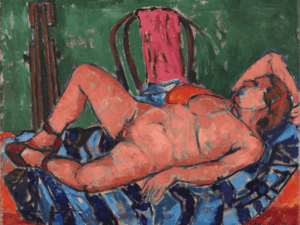
On December 16, the Museum of Naive and Marginal Art in Jagodina opened the exhibition “Lazar Vujaklija: Protest Toward the Self,” the first institutional, comprehensive overview of the work of an artist who inscribed Yugoslav and Serbian art of the second half of the 20th century with a line that both cuts and caresses. In the spirit of BOLD, this is not merely an exhibition, but a map of a thinking hand: how painting becomes a process, how line constructs space, how shadow transforms into meaning. Through 170 works, including painting, printmaking, drawing, tapestry, mural, poster, illustration, sculpture, and carpet design, the exhibition, curated by Dr. Rajka Bošković and Miroslav Karić, reveals Vujaklija’s “painterly alphabet” and his enduring curiosity toward material and form. Rather than following a chronological order, the curatorial concept organizes the oeuvre into six thematic sections: Duchampian Gesture, Appropriation, Anticipation, Ambivalence, Anachronicity, and the Democratization of Art, precise stations of a defiant poetics that refuses to fit into a single frame.
WHERE? Museum of Naive and Marginal Art in Jagodina
WHEN? until May 24, 2026
The exhibition “Lazar Vujaklija: Protest Toward the Self”, the first major retrospective return to an artist who was constantly moving forward, Museum of Naive and Marginal Art in Jagodina, Lazar Vujaklija