The forgotten childhood longing making a very adult comeback
Bojana JovanovićDecember 13, 2025


December 13, 2025
I am sitting on the roof of my family’s garage in Valjevo, maybe thirteen years old, looking up at a sky full of stars, imagining what I believed at the time were Oscar worthy scenarios of my future life, and I often end up crying because some Marko, Nikola or Jovan from eighth grade class two will never be able to meet the expectations of my complex plot. He will never love me, we will never run along the beach together while my bare feet kick sand onto my fluttering dress whose hem is salty from the ocean, he will never spin me in his arms while I laugh. In those moments of serious despair I would often play even sadder music to make the experience complete. I wanted that suffering, that yearning and those scenes that would forever be a fundamental part of the story of my movie character. It was something that would reveal why I am the way I am in this moment, why I am quiet, mysterious and withdrawn, all because I had been hurt and still longed for healing. Fifteen years after those almost theatrical elementary school projections, I know that my now very cynical brain is always ready to joke about who I used to be. Although the reality is that my story about running on a beach while someone spins me in their arms would now belong more to the genre of extreme sports documentaries, although even at thirteen I could have told you that since the signs were not exactly pointing to a future defined by fitness. Also, being mysterious and quiet for me is already in the realm of fiction. But what is very much our reality (at least for those of us whose screen time is about fifteen hours a day) is the need for yearning and for romanticizing suffering for someone or something. Maybe a lightbulb will turn on above your head when I say yearning because we are clearly once again in our collective yearning era.

Before Sunrise, Imdb
Yearning is a long, stretched line of emotion that connects desire and the absence of the thing we long for. It is a feeling that exists only in the crack between “it could happen” and “it never will.” Psychologically speaking, it is a mix of anticipation, idealization and the unrealized. It is the space where we imagine something that is mostly not real and often never will be, yet our brain grieves lost chances and invented scenarios as if they had just happened. Studies on anticipatory reward show that simply imagining love or closeness can trigger a stronger dopamine rush than actually spending time with that person. And that is why we are so devoted to yearning, because the idea itself often makes us feel better than reality. Old news, we all know that daydreaming is something we can surrender to so much that we lose our footing (it has happened to me). Longing, however, can also activate patterns similar to mild withdrawal: restlessness, intrusive thoughts, physical tension. And then there is the halo effect that can quietly move into our lives. The halo effect is a psychological pattern where one trait of a person influences our impression so strongly that we automatically assume other positive traits even though we have no evidence for them. Here is a vivid example that I am sure most people can relate to. That attractive guy walking his dog in front of the building who, for some reason, you meet more often than expected and who always holds the door even when you are still at the start of the stairs has the potential to be at the center of your halo effect. If someone is physically attractive to you or seems kind at first glance, you might unconsciously conclude that he is smart, reliable, emotionally mature, funny, even when you have never seen those traits in reality. The same works in reverse, but it is most often mentioned in the context of idealization.
When and why did we all collectively click the bring back yearning button? I am not sure whether the answer lies again in the now predictable and slightly boring folder called “hyper technological and too fast a time and the constant need for a slower life” or in something entirely different, but yearning is here to stay, at least until cuffing season passes, when we are all apparently ready for our hoe phase. Films and series are the ones celebrating the slow pace of emotions again, the tension in glances, all those subtle moments that never grow into something final or, if and when they do, it becomes the most fairy tale like story that even thirteen year old me would find too unrealistic to believe or a complete tragedy and disappointment. Returning to films like Before Sunrise, Little Women, Atonement or Pride and Prejudice is something I do almost every year, but I did not expect that this year the entire TikTok would be sitting at my nostalgic, yearning and tearful table. It turns out that us yearners, as the internet now calls us, are more numerous than I thought, and that some of my favorite films have now become a global emotional compass. The entire TikTok trend #boyswhoyearn further amplified this return. Men who stare thoughtfully out of windows, wear coats that sway in the wind and walk as if they are in the third installment of some indie novel. Oh, how I wanted that boy from eighth grade class two, whose name I do not even remember now, to be exactly that (back then I did not know the term performative male, but what harm would it have done to learn that lesson at such a young age? Probably plenty, but we will leave that in one of the many invented scenarios).
Related: 7 life lessons 2025 taught me

Pride and Prejudice, Imdb
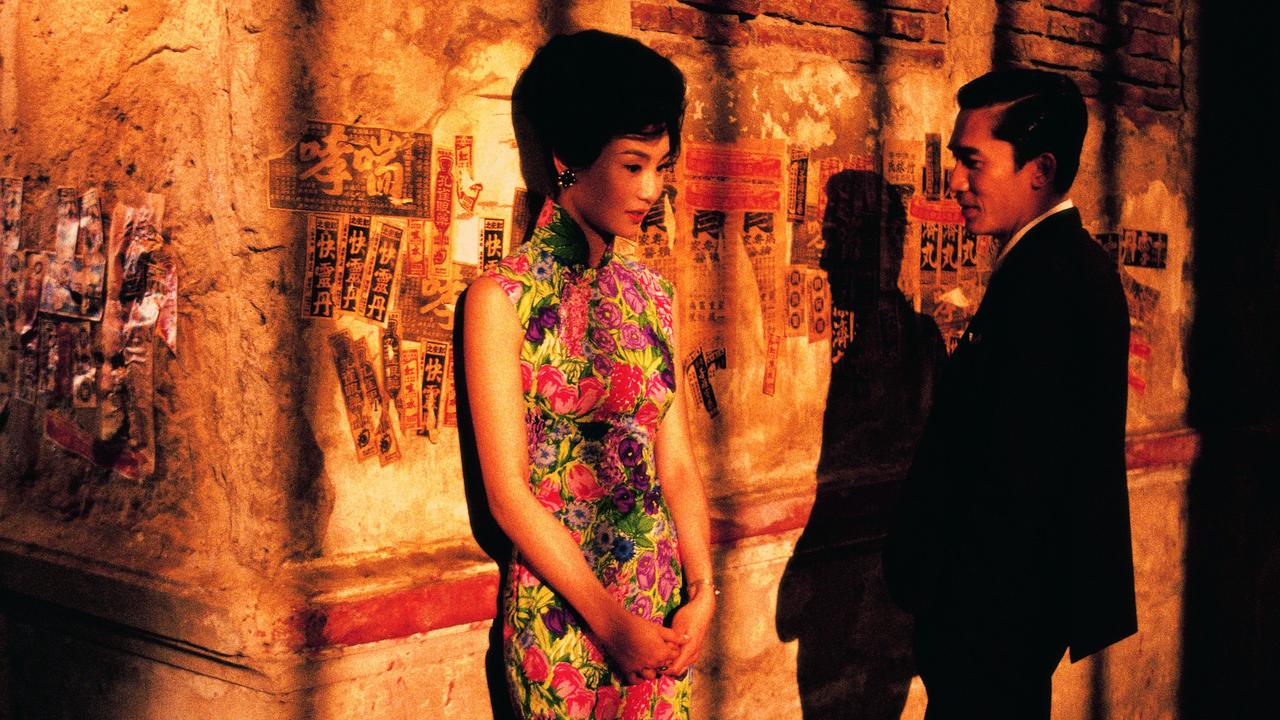
A point I feel is not highlighted enough is that maybe we do not even want to yearn for someone. Even though In the Mood for Love is a beautiful film, it is also one of the most emotionally draining films, and it is the main representative of the yearning phenomenon. It is exhausting, impractical and usually means the feelings are unreturned, the relationship is forbidden or complicated. What we really want is for someone to yearn for us. To be the object of someone else’s tension, quiet suffering, that look from across the room. We need to feel like the main character, not necessarily feel the pain of the main character.
It seems to me that the hints of an answer, if you are among those who at this point in my thoughts still hope for something resembling an answer to all the questions I have raised or you simply enjoy wandering through the wilderness with me, might be found in the fact that this year, for the first time, we stopped being afraid of “big emotions.” After several years of collective exhaustion, dullness and cynicism, people suddenly returned to emotions that are “too much,” that are messy, that require letting go of the brakes. Yearning is perfect for that because it is a safe form of intensity. It burns, but without the danger of actually burning you. It is drama without consequences. A film in which we are vulnerable but the audience applauds. As long as we do not go too far, which is more dangerous than we think. So caution is advised.
Povezano: Movies that make me love my single life
The second attempt at an answer is that I think we have once again learned to value beginnings rather than endings. Series are full of characters who linger on the edges of their emotions, not because they cannot move to the next step but because the beginning is emotionally more exciting than what comes after. And that edge is the most inspiring place to be. Do we not all love that initial euphoria when you still do not know where the story might go? That is where imagination kicks in, where intensity builds, where the heart beats under careful tension. And third, yearning frees us from responsibility in a way. If we are only longing, we do not have to act. We do not have to take risks. We do not have to reveal ourselves. We have an emotion that looks grand but does not require logistics. It is the ideal currency for a generation that loves big inner lives but not practical complications. My five minutes have finally come.