Athletes and designers who changed the rules of women’s sportswear
by Tina LončarFebruary 4, 2026

February 4, 2026
The excitement is at its peak. We are just two days away from the start of the Milano Cortina 2026 Winter Olympic Games, where over the course of 17 days athletes will compete in as many as 16 winter sports. AAs is often the case, some favorites will live up to expectations, while others will surprise us – and it is precisely this unpredictability that gives sporting competitions their magic.
But while everyone heads to the Olympic Games with the desire to make history by stepping onto the highest possible rung of the podium, we have taken a moment to recall the trophy-winning sportswomen who made history not only through their extraordinary achievements but also through their uniforms and costumes. At times, they were considered bold because of their stylistic choices, and their outfits were deemed controversial, yet their daring spirit always pushed boundaries and redefined the rules. On this journey along the roads of the past, we have not forgotten the women who designed and created these costumes, from devoted mothers with a vision to innovators and global design stars.
Povezano: Winter Olympic Games 2026: Everything you need to know
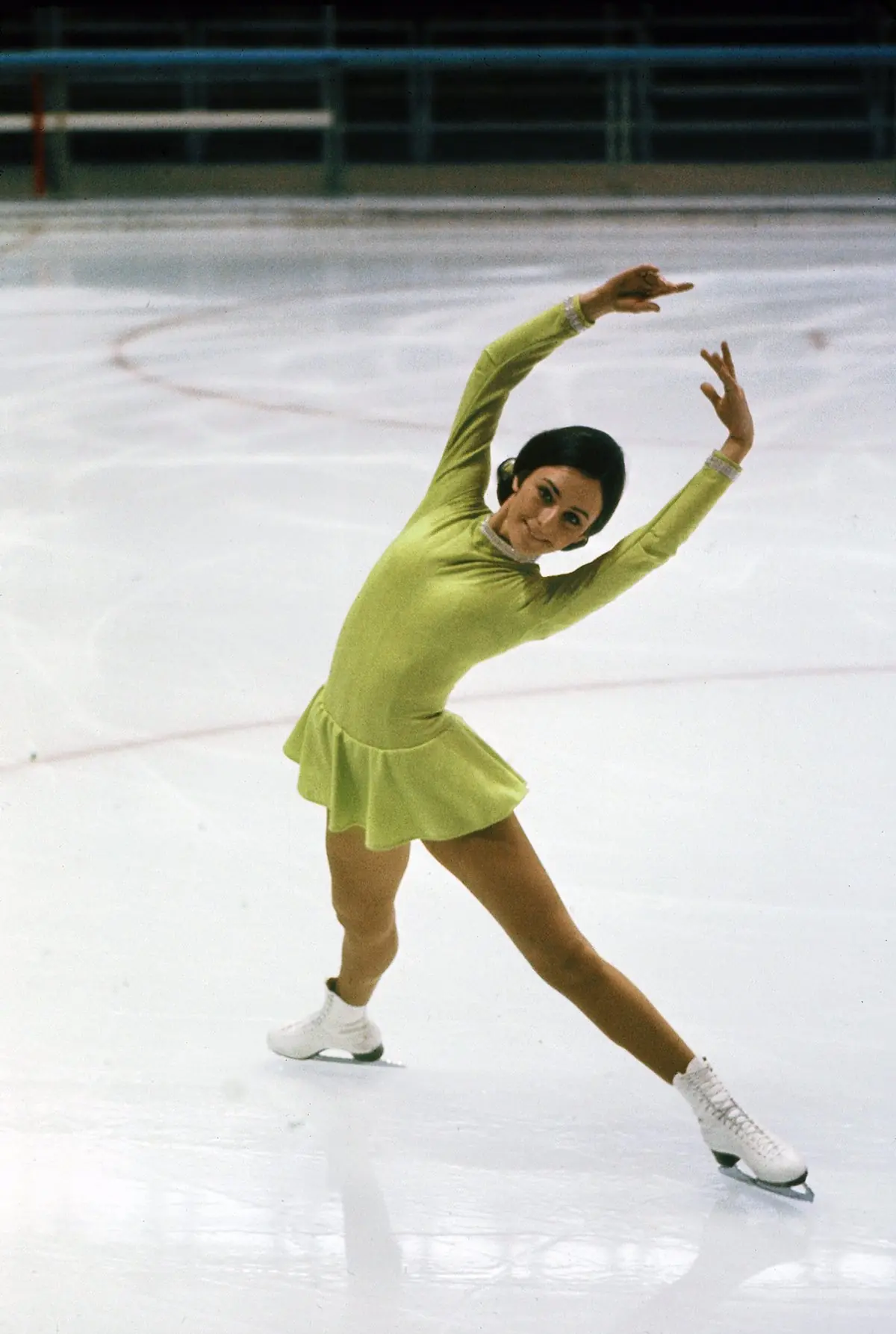
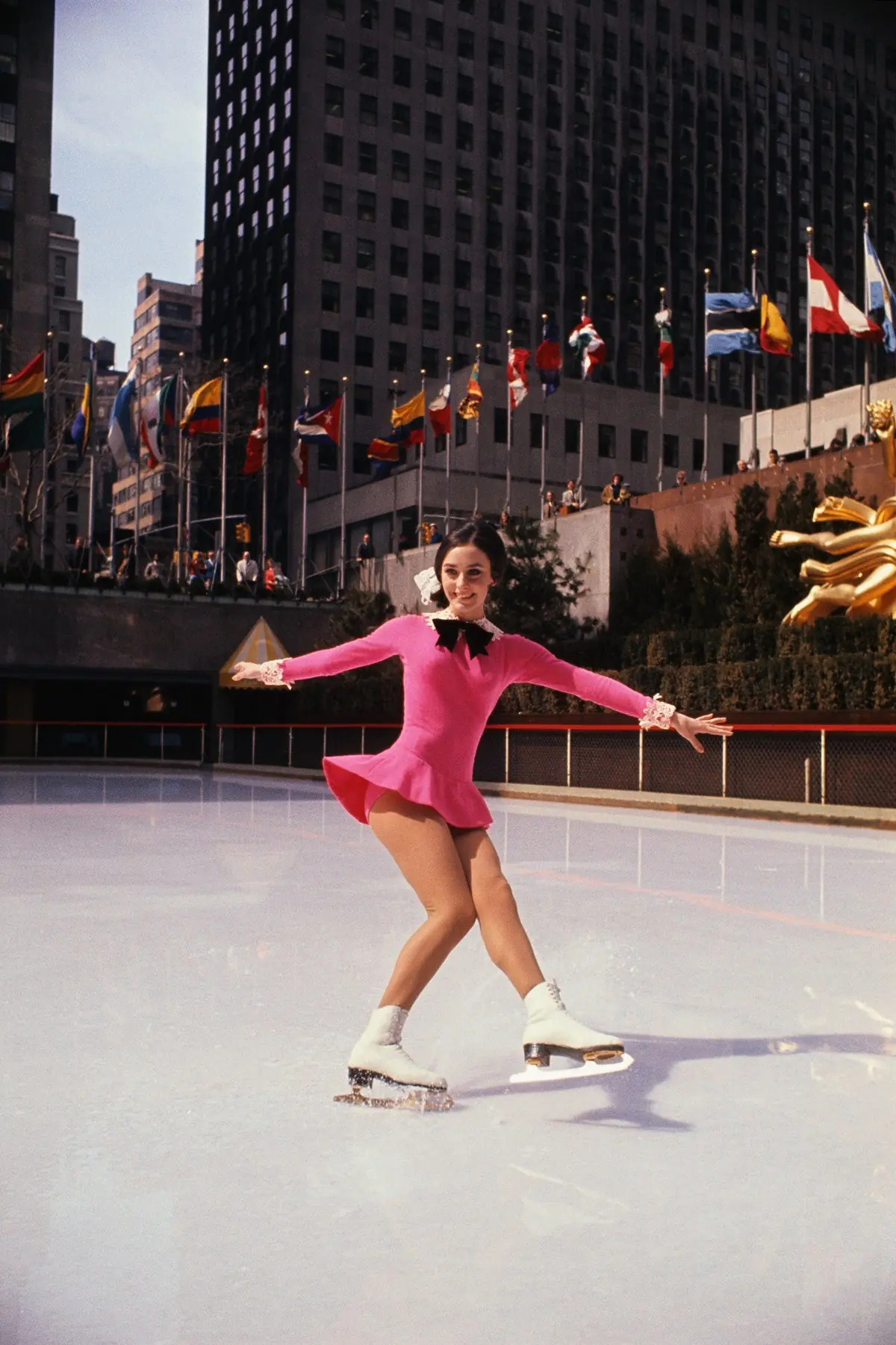
“Chiffon and lamé are very popular materials, and sequins and other decorative details are used in many imaginative ways,” wrote Howard Bassin in his book Winter Sports in 1968, describing the costumes in which figure skaters of the time performed their dazzling pirouettes. That same year, nineteen-year-old Peggy Fleming won the gold medal in the women’s singles event at the 1968 Winter Olympic Games in Grenoble, France. Although the young skater’s gold medal is remembered as the only victory of the American Olympic team at those Games, Peggy Fleming’s performance also went down in history because of her unique costume.
Namely, Doris Fleming, the talented skater’s mother, created an elegant mini dress in a chartreuse shade for the special occasion, in honor of the French region and its distinctive herbal liqueur produced by monks in the famous monastery in the Chartreuse mountains since 1737. In addition to the specific greenish hue, which Doris hoped would win over the French audience, the costume was simple and clean-lined, without ruffles, mesh fabrics, or excessive sequin shine. It featured the long sleeves typical of the time, while just a few crystals on the sleeves and collar added a discreet sparkle. There was nothing excessive about it. Many years later, Peggy jokingly recalled in an interview that most people probably did not even realize what her devoted mother had wanted to achieve with the color of the costume. But even if that detail, which Doris had realized so meticulously, went unnoticed, the entire story sounds incredible today. All of the American Olympic champion’s costumes were designed and made by her mother, and not in just any way. With her sensibility, she changed the rules and pushed boundaries by choosing simple elegance that directed attention to movement rather than the glitter of embellishments.
Although as late as 1964, at the Winter Olympic Games in Innsbruck, skiers were still racing down the snowy slopes of Patscherkofel in wool sweaters, technically more advanced ski suits had begun to develop more than a decade earlier. It all began in the mid-1930s, when German designer Maria Bogner created parkas for the German ski team, which at the time included her future husband Wilhelm Bogner. By the early 1950s, the Bogner brand had grown considerably, and their colorful parkas and durable gabardine ski pants in unconventional, bright shades were a huge success.
The real turning point came in 1951. A representative of the textile company Bianchini-Férier introduced the Bogner family to an innovative material called Helanca, a blend of wool and elastic, spirally wound nylon fibers that gave the fabric stretch. How to transform the material into a garment was a particular challenge, but Maria managed to find a solution, marking the beginning of more technically advanced ski suits. The waterproof pants were aerodynamic and followed the line of the body, and the Bogner brand exported them to the United States in 42 different colors. Skiing Magazine dubbed Bogner “the mother of modern ski clothing,” and the pants, which differed from anything else on the market at the time, were so popular that megastars such as Marilyn Monroe, Elizabeth Taylor, and Jackie Kennedy skied in them as well. Although it took several more years for Olympic athletes’ clothing to be fully modernized, Maria Bogner laid the foundation for today’s ski suits, firmly establishing the Bogner name in the ski fashion market.
Jackie Kennedy wearing Bogner pants in Gstaad, January 1966, Getty Images
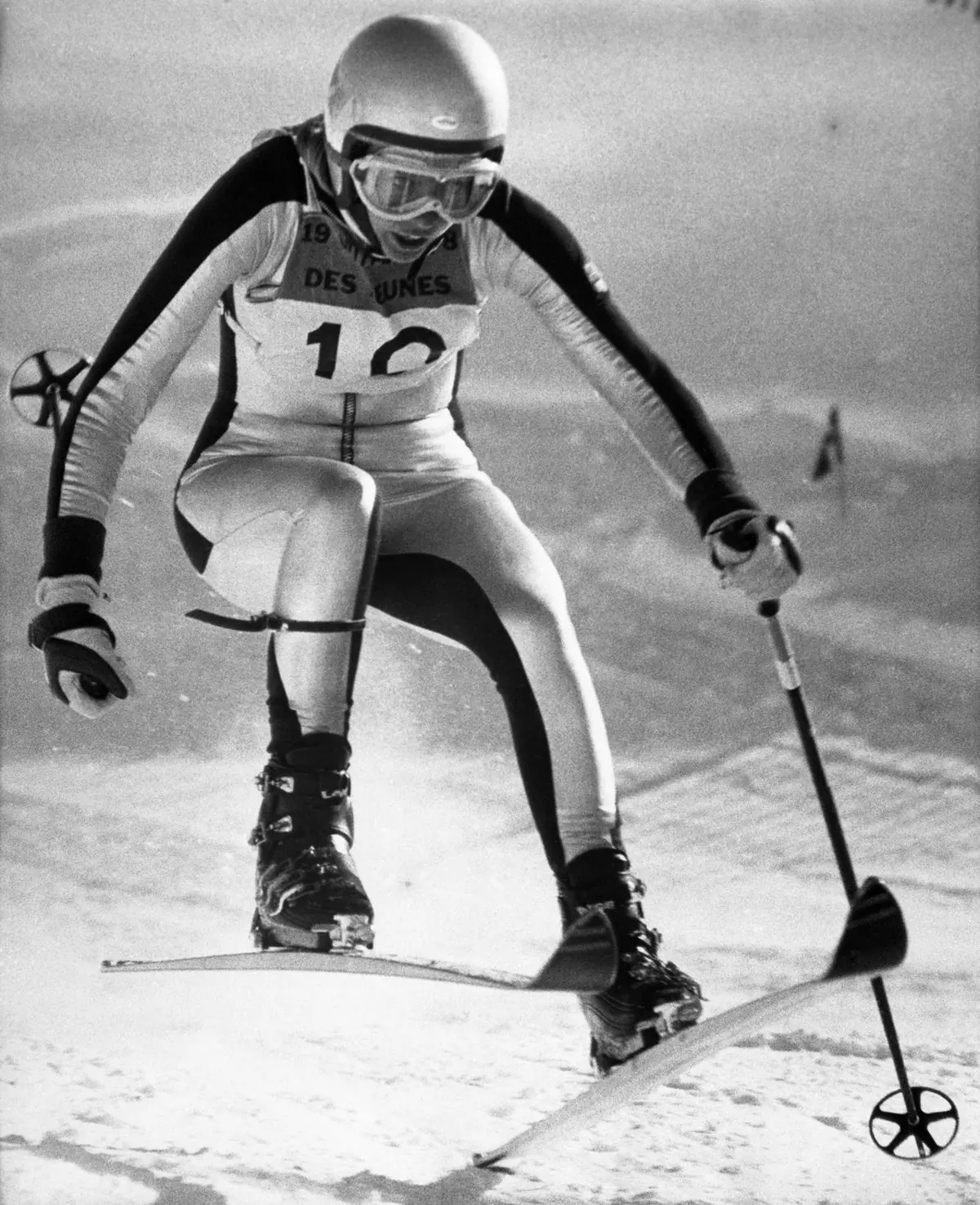
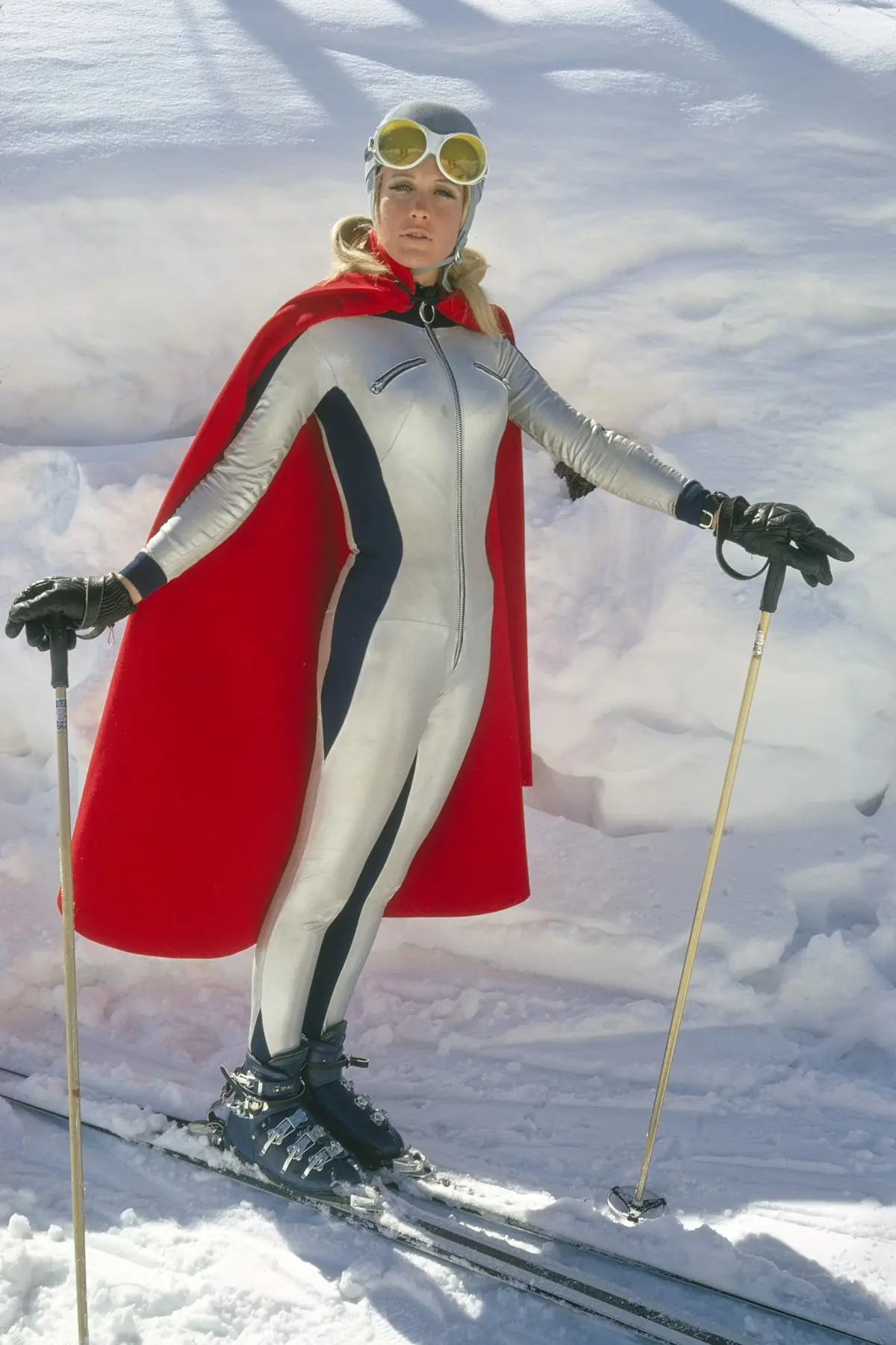
That ski slopes were ready for faster, more modern, and more aerodynamic suits became clear in 1968. American Olympian Suzanne Chaffee, also the captain of the US women’s ski team, was considered a favorite in the downhill event at the Winter Olympic Games in Grenoble. Although she did not manage to step onto the podium or win gold, finishing the race in 28th place before soon retiring from competitive skiing, Chaffee drew attention with her silver, form-fitting suit. Even though she did not live up to her status as a favorite at the Games, it was precisely her innovative outfit that “changed the rules of the game” that people talked about for days after the race. “I still got the most publicity after Peggy Fleming,” Chaffee told Sports Illustrated in 2001. “Fashion saved my butt!” After Grenoble, athletes began seeking new ways to harness ski suits to their advantage and gain a few milliseconds. And Chaffee? She stepped into the world of modeling.
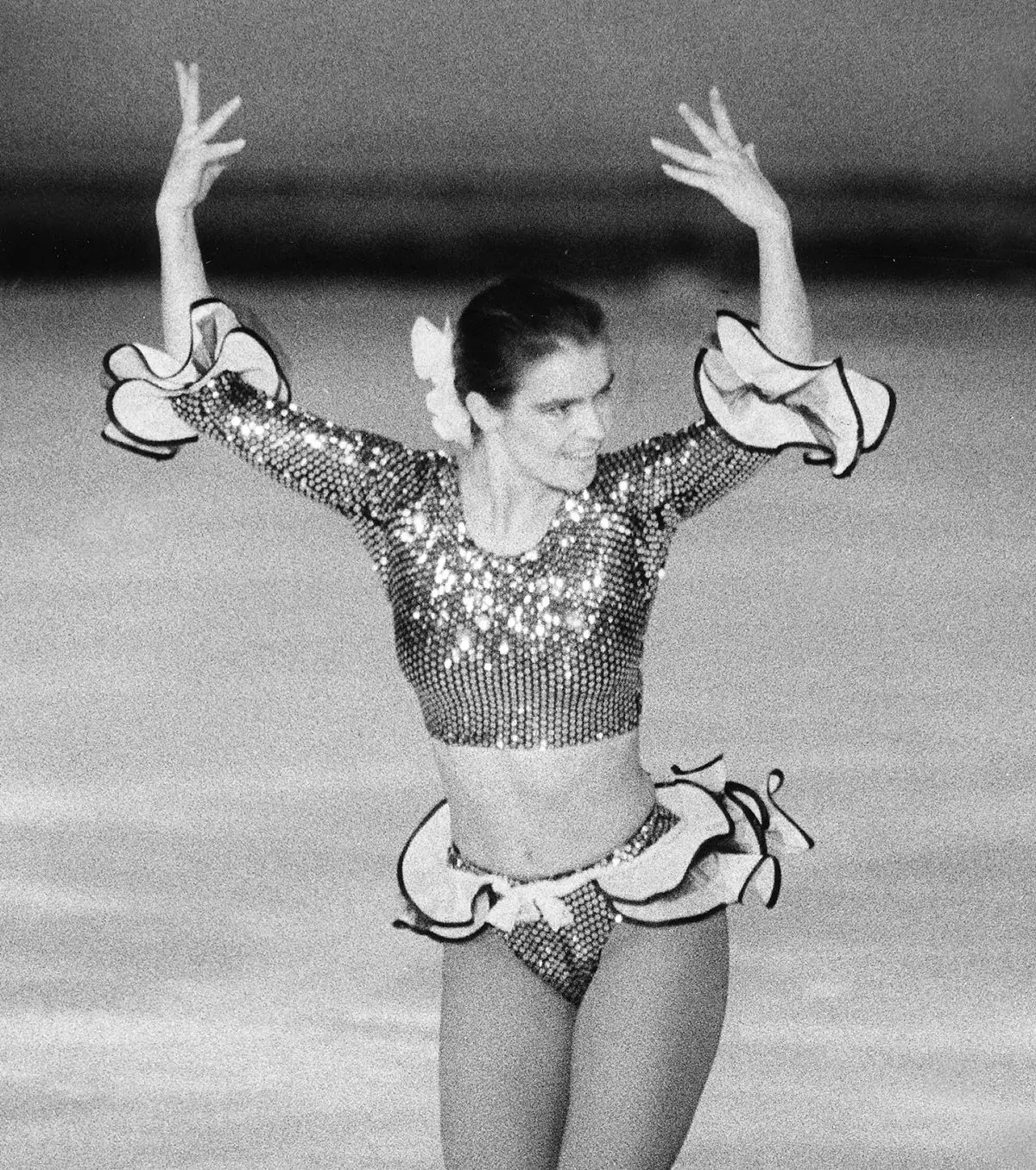
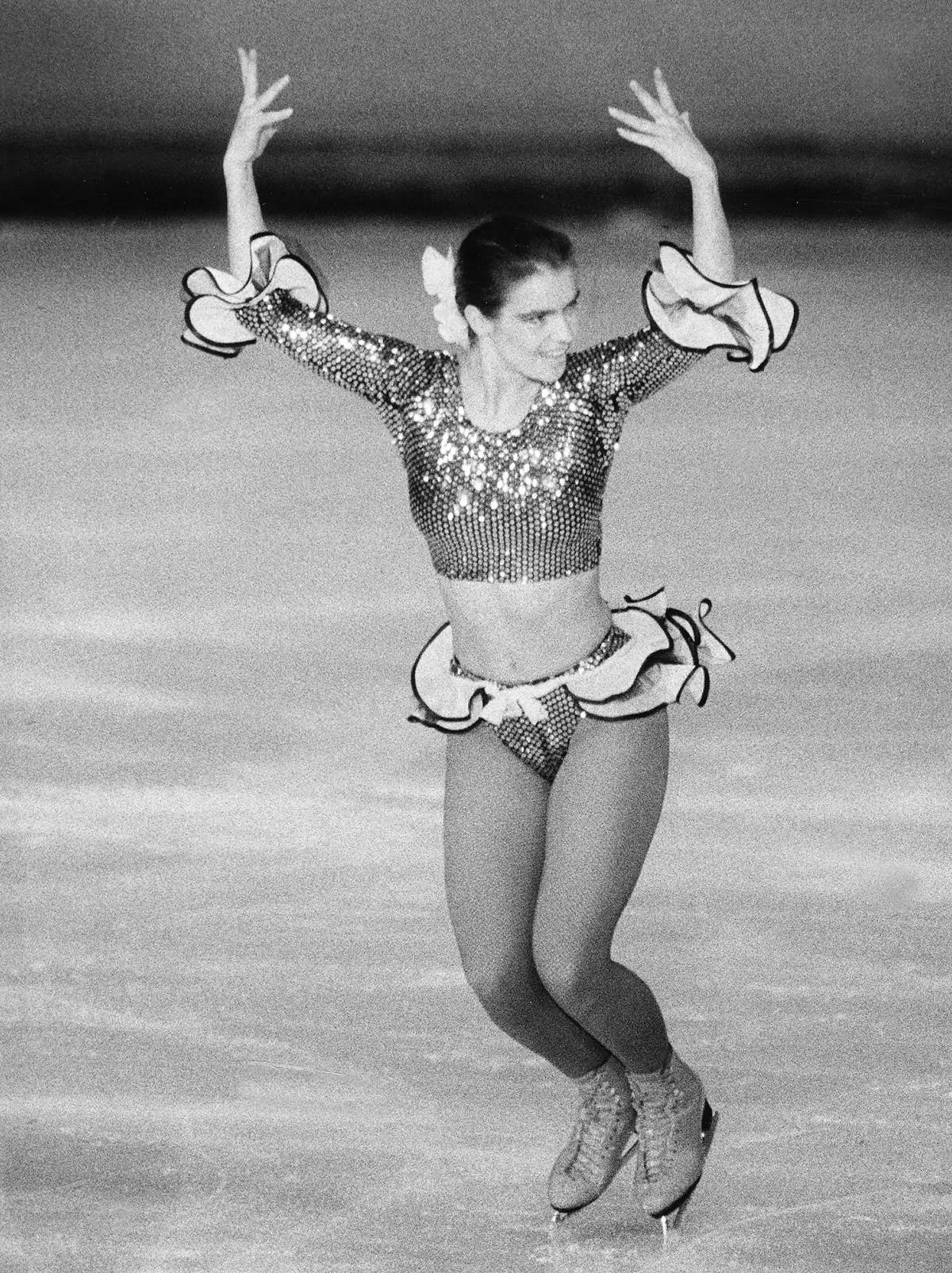
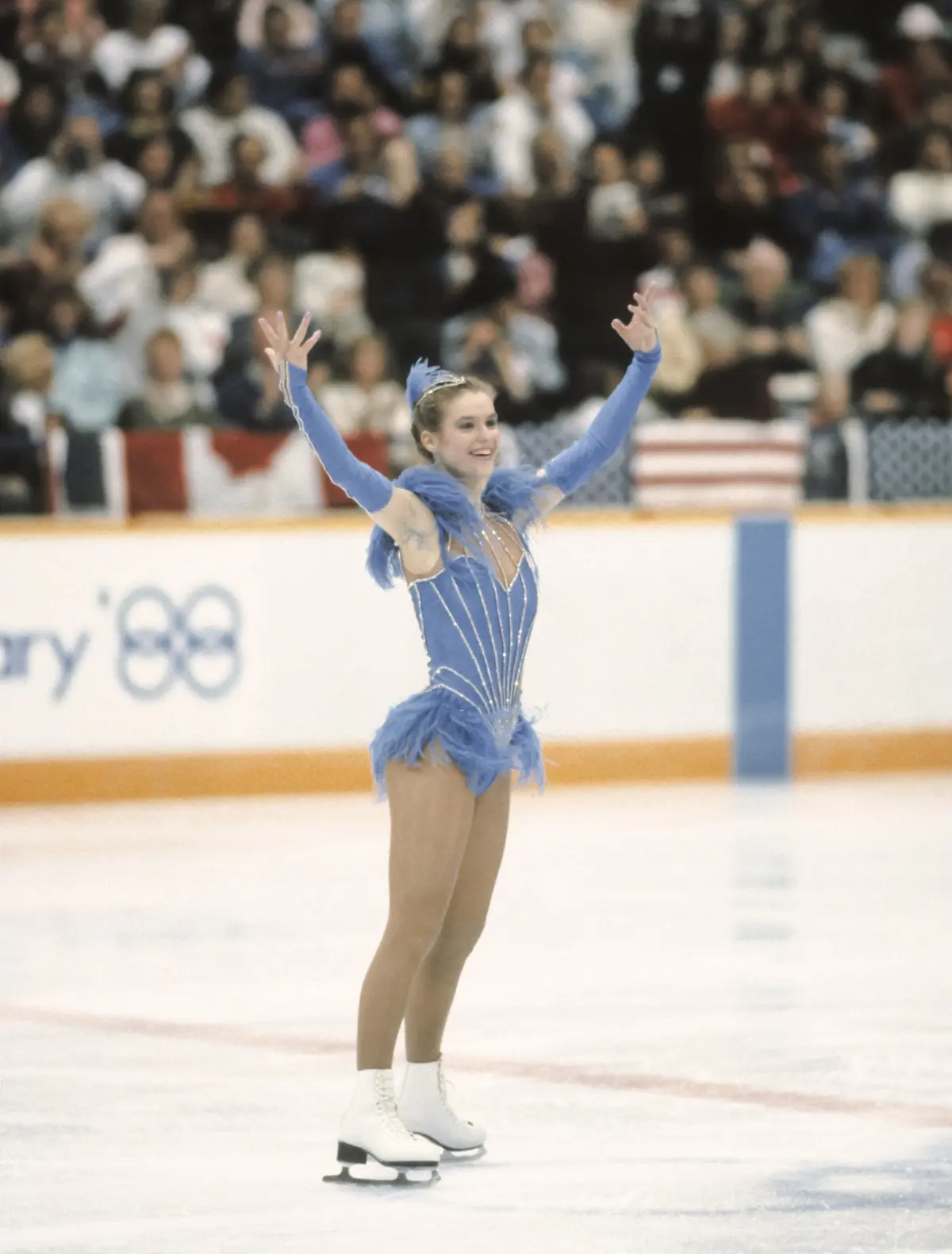
By the late 1980s, figure skating costumes were becoming ever shorter and more revealing. Sequins, feathers, chiffon, and beads were a completely common part of skating outfits, but at the 1988 Winter Olympic Games in Calgary, Canada, one costume proved particularly controversial. German skater Katarina Witt, who won her second Olympic gold in Calgary after Sarajevo 1984, caused a stir with her blue showgirl costume adorned with feathers. Her rivals allegedly complained that Witt, who dominated the ice in the 1980s, wore such seductive costumes that the judges could not focus on her performance, while public criticism at the time claimed that the disputed costume was “too theatrical and too hot for television.” The scandalous feathered bodysuit ultimately led to changes in dress regulations on the ice, which became known as the “Katarina rule.” The International Skating Union then introduced a rule requiring that skaters’ hips, abdomen, and buttocks be covered, while not banning feathers, crystals, and sequins, which became increasingly popular over the years. In 1994, skating in a program inspired by Robin Hood, Witt stated, “I wore a costume like Robin Hood’s, a male costume, because this time I did not want to be accused of seducing the judges.”
Before venturing onto the whimsical paths of fashion design, Vera Wang was involved in figure skating. From the age of eight, she was fully devoted to her skating career, but everything changed when she failed to qualify for the 1968 Winter Olympic Games in Grenoble. “I was devastated when I did not make the Olympic team,” Wang said, turning her focus to her fashion career. In 1971, she began her journey as an editor at American Vogue, where she remained for 17 years, then honed her craft at Ralph Lauren, and in 1990 opened a boutique featuring her own wedding dress designs.
Her passion for figure skating, however, never disappeared. For the 1994 Winter Olympic Games, she designed a shimmering long-sleeved costume for American skater Nancy Kerrigan. While Peggy Fleming won medals in costumes sewn by her mother, by the early 1990s this practice had almost entirely disappeared. With Nancy Kerrigan in Vera Wang and Surya Bonaly wearing a design by Christian Lacroix in 1992, it became increasingly popular for athletes to wear costumes by renowned fashion houses. Although Wang is best known for her fashion empire built on bridal creations beloved by celebrities, the famous designer has created countless costumes for figure skaters who followed Kerrigan. Michelle Kwan, Evan Lysacek, and Nathan Chen are just some of them, and in 2009 Wang was inducted into the US Figure Skating Hall of Fame for her contribution to the sport through the creation of unforgettable skating costumes.
Related: Uniforms of unity, momentum, and joy at the Winter Olympic Games in Sarajevo
Nancy Kerrigan at the 1994 Winter Olympic Games in Hamar, Norway, Getty Images
Although nearly thirty years have passed since the 1998 Winter Olympic Games in Nagano, Japan, Surya Bonaly will forever be remembered as the first Olympic skater to perform a backflip on one foot. But what sports circles and figure skating enthusiasts will also remember her for are her distinctive costumes that pushed the boundaries of athletic dress on the ice. The three-time world silver medalist and five-time European champion often stood out for unconventional stylistic choices, such as tight-fitting jumpsuits in bright colors while everyone else wore miniature dresses, or lavish outfits with colorful beads instead of the usual sequins and crystals. One of the few Black women in figure skating during the 1990s, Bonaly proudly emphasized her identity, striving to stand out even more through her skating costumes made by her mother, her hairstyle, and a skating style that blended with gymnastics. Before heading to the 1992 Winter Olympic Games in Albertville, Bonaly’s costumes were designed by Christian Lacroix, who gifted them to her for the occasion.
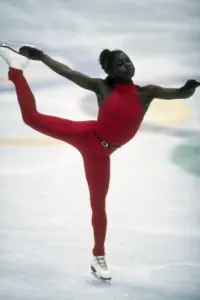
French skater Surya Bonaly during training at the Halle Olympique at the 1992 Winter Olympic Games in Albertville, France, Getty Images