What is hate watching and why do we enjoy watching content we hate?
Bojana JovanovićJanuary 13, 2026

January 13, 2026
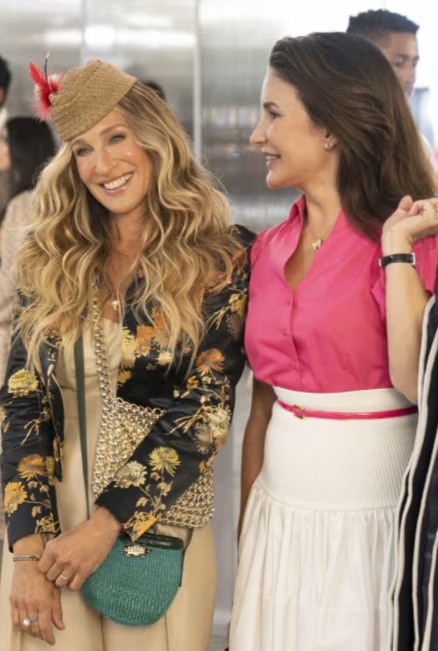
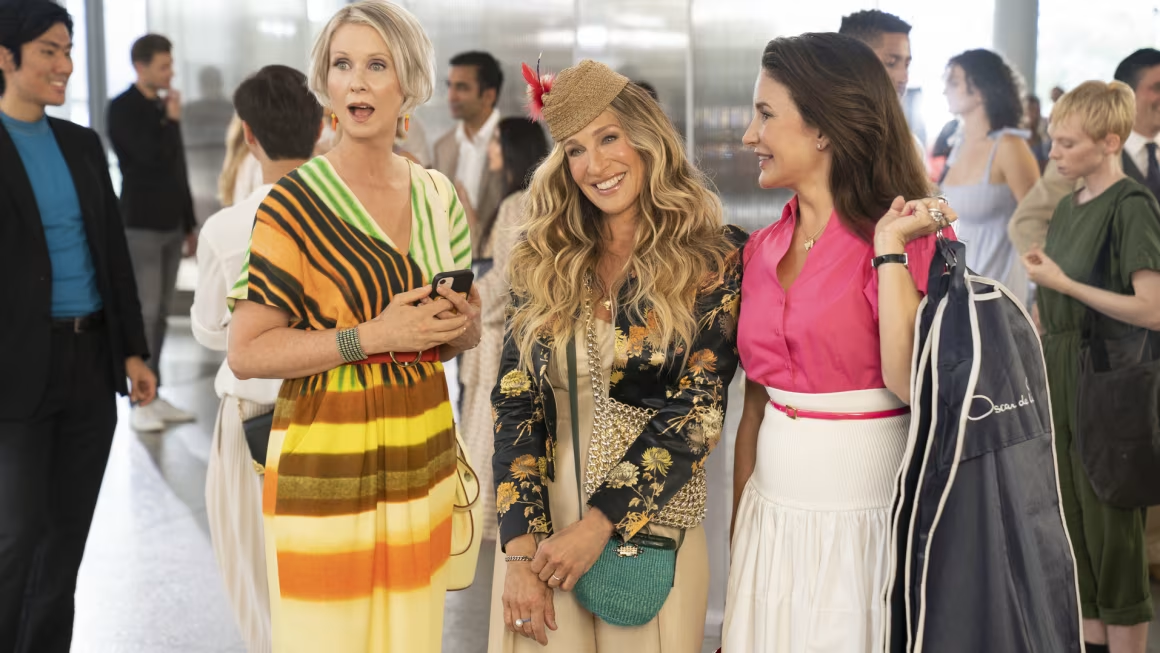
I will never forget the moment when, more than ten years after first watching Sex and the City in high school, I returned to rewatch it. I sat down with a friend, we ordered McDonald’s, and pressed play with excitement at the thought of revisiting something that had long seemed to us like the ideal of female friendship, approaches to romantic relationships, and humor. A few episodes in, I began cautiously glancing at the friend beside me, who was staring intently at the screen, hoping to catch at least a hint of the intense contempt I had started to feel toward almost all of the characters. Keep in mind that at that point we had not yet reached the episodes in which Steve appears, otherwise the disgust on our faces would have been unmistakable.
All the flaws I noticed in the development of the characters, in the handling of themes, in the worldview itself, and in the way sex is approached and, in this case, predominantly male female relationships, were not there when my teenage brain first encountered this series. After all of this, you might think that was the last time I ever watched SATC, that after just a few episodes I dramatically shut my laptop and accepted that my criteria for a good series had changed. However, you would be very far from the truth. SATC, alongside Gossip Girl, which can also be interpreted within this topic of hate watching, is one of the series I return to most often, and I certainly watch it in full at least once a year. This is probably the most classic example of the hate watching practice ever, but let’s see why I am one of those who enjoy it.
HBO
Hate watching is watching a series or a film solely to experience just how bad it is all the way to the end. It is not watched for the story, the characters, or the suspense, but for real time commentary, collective disbelief, and merciless dissection once the end credits roll. A true hatewatch has no redeeming qualities. Such works offend all the senses. They ruin your appetite. They make coffee taste worse. By their very existence, they make the world a slightly darker place. Viewers try to understand not only how something like this was made at all, but also how it is possible that an entire group of producers, editors, and executives nodded along and said: yes, this is it. This is great. They try to understand how people were paid for this, how the project passed through all the filters, and how not a single person, absolutely no one, even muttered under their breath that they were witnessing the creation of something worthy of a landfill.
Over the past few years, it has become quite clear that, despite the efforts of well meaning fans to extract at least a shred of meaning from rebooted franchises of their childhood, bad series and films are here to stay. Projects that sacrifice story, structure, and basic dramaturgy in favor of contemporary messages. Sequels that ignore what made the original so beloved in the first place. Franchises and authors who seem to have consciously set out to negate everything that came before them. Not only is this trend not slowing down, it seems to be accelerating.
Related: All A24 movies coming out in 2026
Related: 13 films that will shape the cinema landscape in 2026
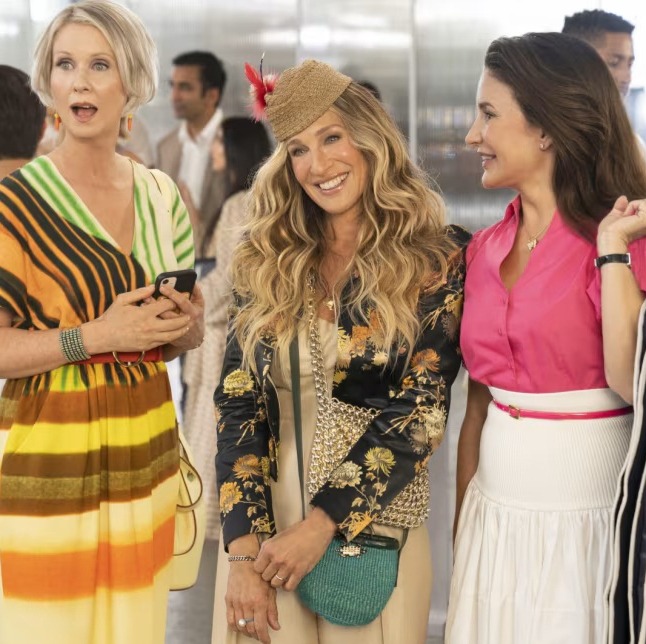
In that sense, and also as a perfect continuation of my views on the original, which is an absolute masterpiece compared to And Just Like That, the continuation of the iconic Sex and the City is a perfect example. A series that managed to alienate both longtime fans and potential new audiences, while behaving as if emotional confusion and poorly written dialogue are the same as bravery. There is also The Rings of Power, Amazon’s billionaire experiment that looks expensive but sounds hollow. Halo spent around ten million dollars per episode so that characters could endlessly talk about things no one actually cares about. She-Hulk, according to available data, cost up to 25 million per episode, and it remains a mystery where all that money went, unless someone truly packed their bags and fled to Panama to secure a fresh start. If I were in their place after a project like that, a change of identity and a life in the shadows might have been my only remaining option.

She-Hulk, imdb
Cinema has not been spared either. The Matrix Resurrections feels like a film that simultaneously wallows in self pity and apologizes for its own existence. Jurassic World Dominion is proof that dinosaurs are not the problem, bad screenplays are. Indiana Jones and the Dial of Destiny looks like it was made out of obligation, not necessity. Fantastic Beasts: The Secrets of Dumbledore feels like the third act of a story that never had a proper beginning. The list is long and it only grows from year to year.
Related: The must-see regional films of 2025, curated by Katarina Bogdanović Kukla

Indiana Jones and the Dial of Destiny, Imdb
Many people hate hate watching almost as much as they hate bad series and films themselves. They are even more annoyed by people who find pleasure in it. According to that logic, it would be enough to simply stop watching, to withhold clicks and minutes viewed, and bad content would disappear on its own and end up where it always belonged, in the historical trash bin. It sounds nice, but it does not quite align with the way contemporary studios function.
Because not all hate watch phenomena emerge from something that was once good and later went downhill. There are also projects that were bad from the very first frame, yet despite that became cult favorites. Riverdale was a logical mess wrapped in glossy packaging from the start. Twilight became a global phenomenon even though the dialogue sounded as if it had been written during breaks between two creative writing classes. The Kissing Booth was the epitome of cringe from the very beginning, but as we know, none of that stopped them from getting sequels, fandoms, memes, and serious media attention.

Prime Video
Let’s take And Just Like That… again. Even before the first episode aired, it was clear that this was not a short experiment, but a project designed to last. Multiple seasons were discussed in advance, and the renewal came despite negative reactions and a divided audience. Viewership remained a hazy category, but the sheer noise around the series was clearly more valuable than precise numbers. That is precisely the core of the problem. Actual viewership data today carries less weight than audiences assume. Series are renewed before anyone even knows how much they are truly watched. Studios play the long game, betting on visibility, on the possibility that something might “explode” in the next cycle. And when it turns out that people do not enjoy what they are watching, the reaction is rarely withdrawal. More often, it is stubborn doubling down.

HBO
Of all the titles I have mentioned here, only one was truly pulled. The Idol, a project by Euphoria creator Sam Levinson and The Weeknd, disappeared quickly and quietly. Thank the universe for sparing us that horror, although I cannot say that, stripped of all its bad elements, I did not secretly hope I would get material for even more hate watching. It vanished as an admission that neither scandal nor irony is enough to justify a complete lack of creativity. But precisely because it is an exception, it only further confirms the rule.

HBO
If anyone is still waiting for a reasonable voice from the top of the industry to say enough, that it is time for better stories and more meaningful characters, that person clearly has not been paying attention over the past few years. The same people who are disappointed today are the ones who approved these projects and pushed them through to the end, backed by enormous marketing budgets. That is why criticism of hate watching as an alleged act of sabotage against “good content” lacks any real foundation. We are still waiting for proof that ignoring bad series magically produces better ones.
For the same reason we watch good things. Because it is fun. It is fun to dissect a bad script, bad dialogue, and bad decisions. It is fun to watch Riverdale transition without blinking from a teenage drama into a crime musical with cults. It is fun to revisit Twilight and wonder how an entire generation took that love story seriously. Hate watching is not a noble discipline, but it is an effective one. Especially in a time when the industry persistently returns to the past. Reboots, remakes, sequels. Fans are not asking for much, just new stories that show at least minimal respect for what already existed. When that is missing, hate watching remains a way to extract at least some form of enjoyment from a bad product.
At the end of the day, hate watching is a tool. A way to turn something bad into something tolerable, or at least entertaining. We know those two are not causally linked. And as I, for the second time in six months, start SATC again and know deep down that once the credits of the final episode slowly come to an end I will very deliberately press play on And Just Like That, I also become aware that from the pile of lemons life has given me, I have to make lemonade the best way I know how. In this case, I will still add a few drops of gin to make the process easier.