A day in Shanghai with Wallace Chan, the artist redefining what jewellery can be
Tina KovačićekDecember 2, 2025

December 2, 2025
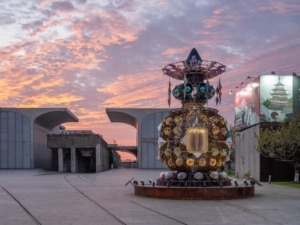
After visiting the Deji Art Museum in Nanjing, it became clear that the next stop on my first trip through China would be Shanghai, a modest little city of twenty four million people, only an hour away by train. At the time, Shanghai Art Week was in full swing, an annual art event that turns the city into one of the most important global destinations for contemporary art each November. The week includes major fairs, museum openings, gallery exhibitions, public installations and private previews that draw galleries, collectors, curators, artists and media from around the world. Nearly half of the international art world gathers in Shanghai during those days, eager to discover new and exciting artistic directions. At one of the city’s landmark institutions, the Long Museum, renowned artist Wallace Chan was presenting an advance preview of his two upcoming exhibitions Vessels of Other Worlds, which will open next year at the Venice Biennale and at the Long Museum.
Courtesy of Long Museum
Chan is an artist from Hong Kong whose practice spans jewelry, sculpture and carving. He devoted himself to gemstones at the age of sixteen, inspired by nature and Chinese symbolism, and today his works are part of the permanent collections of museums such as the Victoria and Albert and the British Museum in London, the Museum of Fine Arts in Boston and the Capital Museum of China. I learned the most fascinating details about his life from the video channels of the auction house Christie’s where he is a frequent guest. This special preview of Vessels of Other Worlds, to which Vogue Adria was also invited, offers a glimpse into Chan’s most ambitious project to date: a dual exhibition that will link Venice and Shanghai simultaneously in 2026 in honor of his seventieth birthday. Between the moment he turned sixteen and this milestone birthday which, after exploring the work of this intriguing Chinese artist, I feel as though I will be celebrating as well, an entire world has unfolded. Above all, he is self taught and started with nothing which is where my first question to Chan began. When I was sixteen, I needed a skill that would allow me to survive. My father gave me two options: to become an apprentice in a gemstone carving workshop or to work in an auto repair garage. My mother did not want me coming home each day covered in oil and dirt, so she chose carving. But the moment I touched my first piece of malachite, everything changed. The patterns, colors and hidden worlds within the stone completely captivated me, and I realized that even the smallest fragment can contain an entire universe. That was where my devotion to the art of materials began.
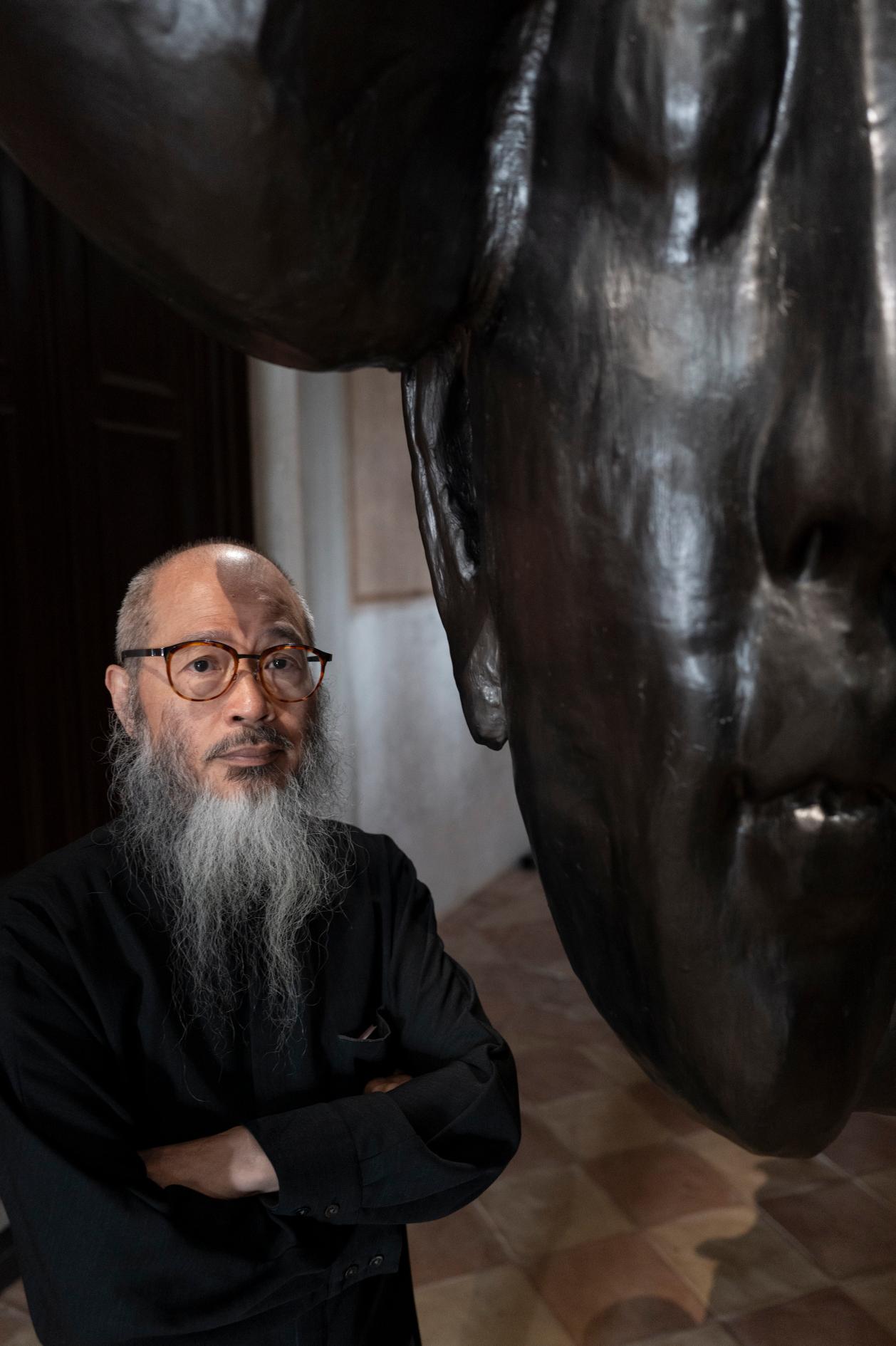
I reminded him of a line I remembered from one of the interviews I watched about this impressive man who radiated an incredible calm, the kind you notice in Buddhist monks: “Even if you have nothing, you can always create something.” He smiled. Everything comes from nothing. I come from poverty. I had no teachers, no resources, no support, only the desire to create. When you have nothing, you discover that imagination is the greatest wealth, time the most generous material and creativity your superpower. Even today, when I work with advanced materials like titanium or create monumental sculptures, I always begin in the same way: with an empty hand and an open mind. Creation does not depend on what you possess, but on how much of yourself you are willing to give. As long as I am alive, I will keep creating, even if all I have is light, silence and a single breath.
Courtesy of Long Museum
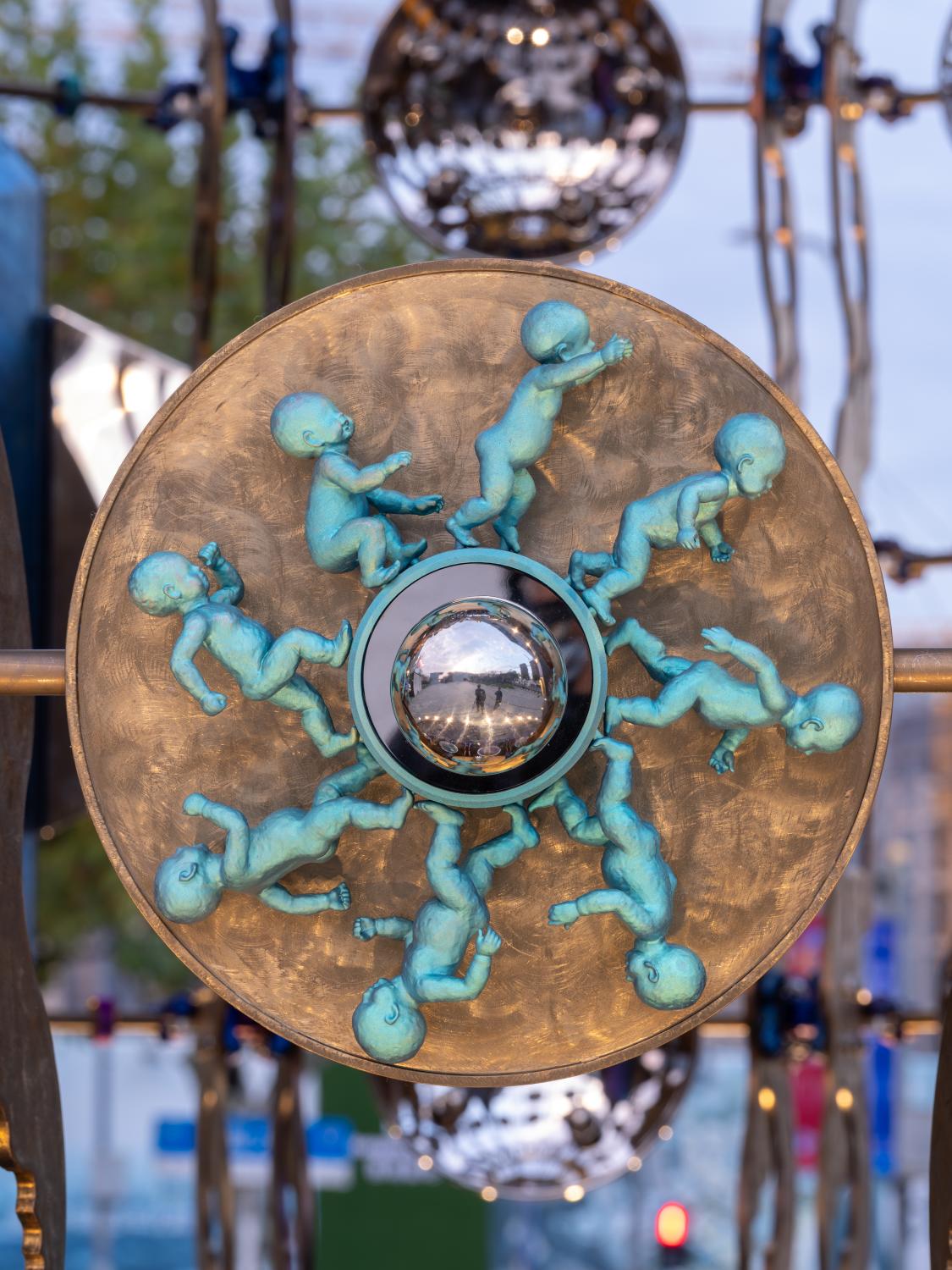
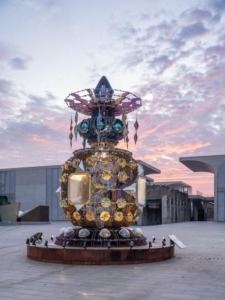
By then it was clear to me that with this artist, who became renowned for his meticulous gemstone work, I had touched on a spiritual layer that seemed to guide him more than anything else. It is interesting that he also spent some time as a monk in the early 2000s, when he gave up all material possessions. I asked him what that experience had taught him. I learned that my own material permanence is not as important as the embodiment of the soul in the physical. Even so, his passion for sculpture pushed him to create using accessible materials such as concrete, copper and stainless steel. After many years of research, he developed a method for shaping titanium, first for jewelry and more recently for monumental sculptures. It was at the Long Museum that we stood before Birth, a seven meter tall sculpture made of colored titanium and inspired by sacred oils used in blessing rituals. I asked him whether his approach to creating had changed now that he works on such large scale pieces. The scale has changed, but the essence has not. Whether something is three millimeters or seven meters, it must have a soul, it must breathe. What changes is the responsibility. A small work demands the precision of the hand. A monumental sculpture demands the precision of structure, engineering and foresight. When a work grows, the risks grow with it. Every joint, every connection, every calculation carries weight. Small works are intimate; you hold them close. Large works involve the body, space and the surrounding environment. Yet both begin in the same place: in a quiet question within me that waits to take shape.
It is fascinating that Chan studied the sculptures in European cemeteries extensively, describing them to me as ideal places for such observation. I discovered this at my grandfather’s funeral, when I was still a young student eager to learn about Western traditions. I became obsessed with the realization that emotions can be conveyed through material, the position of the body and gesture. Cemetery sculptures are not created for fashion but for memory, sorrow, love and a longing for eternity. They are sincere. Walking among them, I understood that sculpture is not only an object but a conversation between the living and the dead, between the present and the timeless.
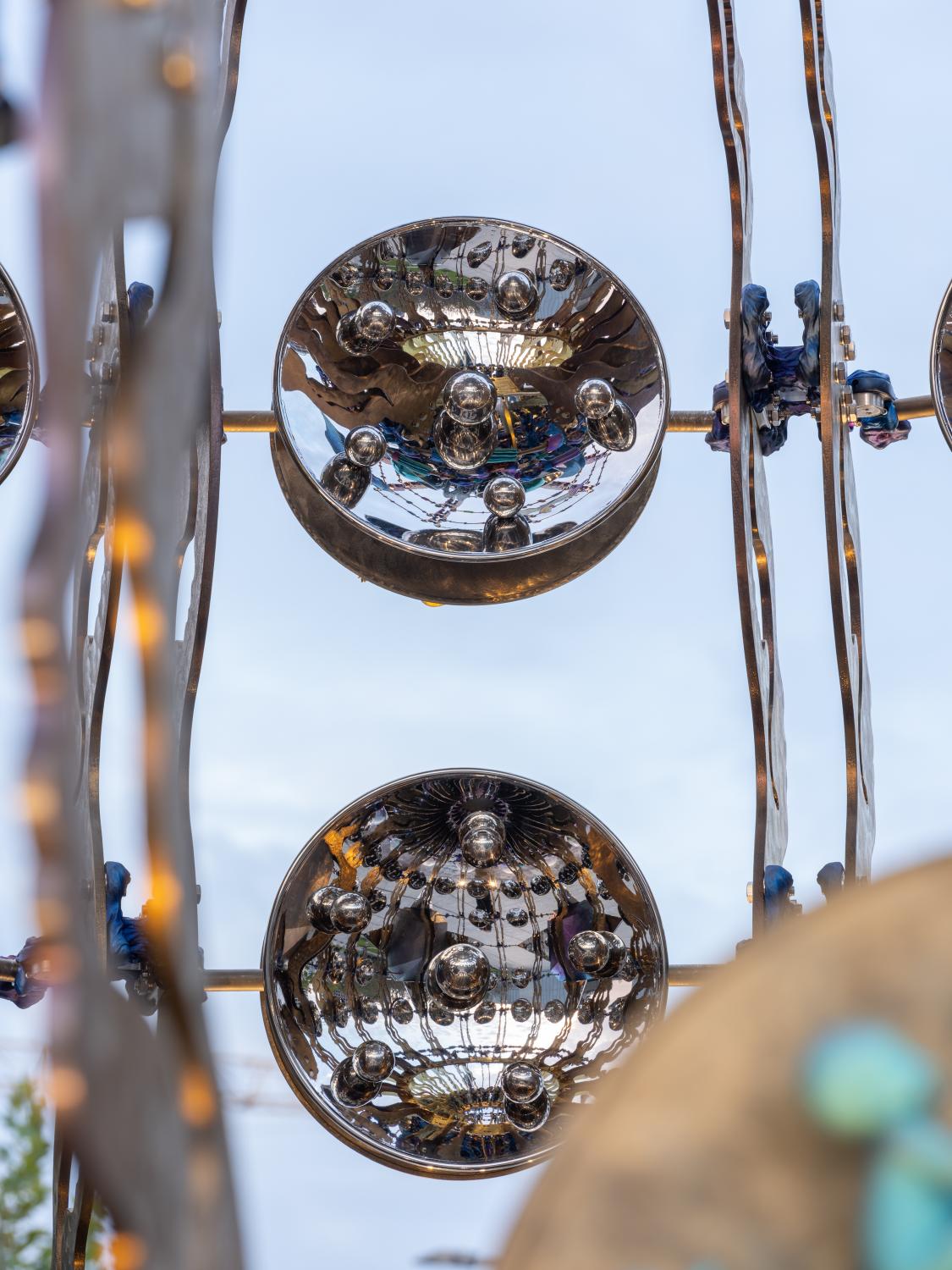
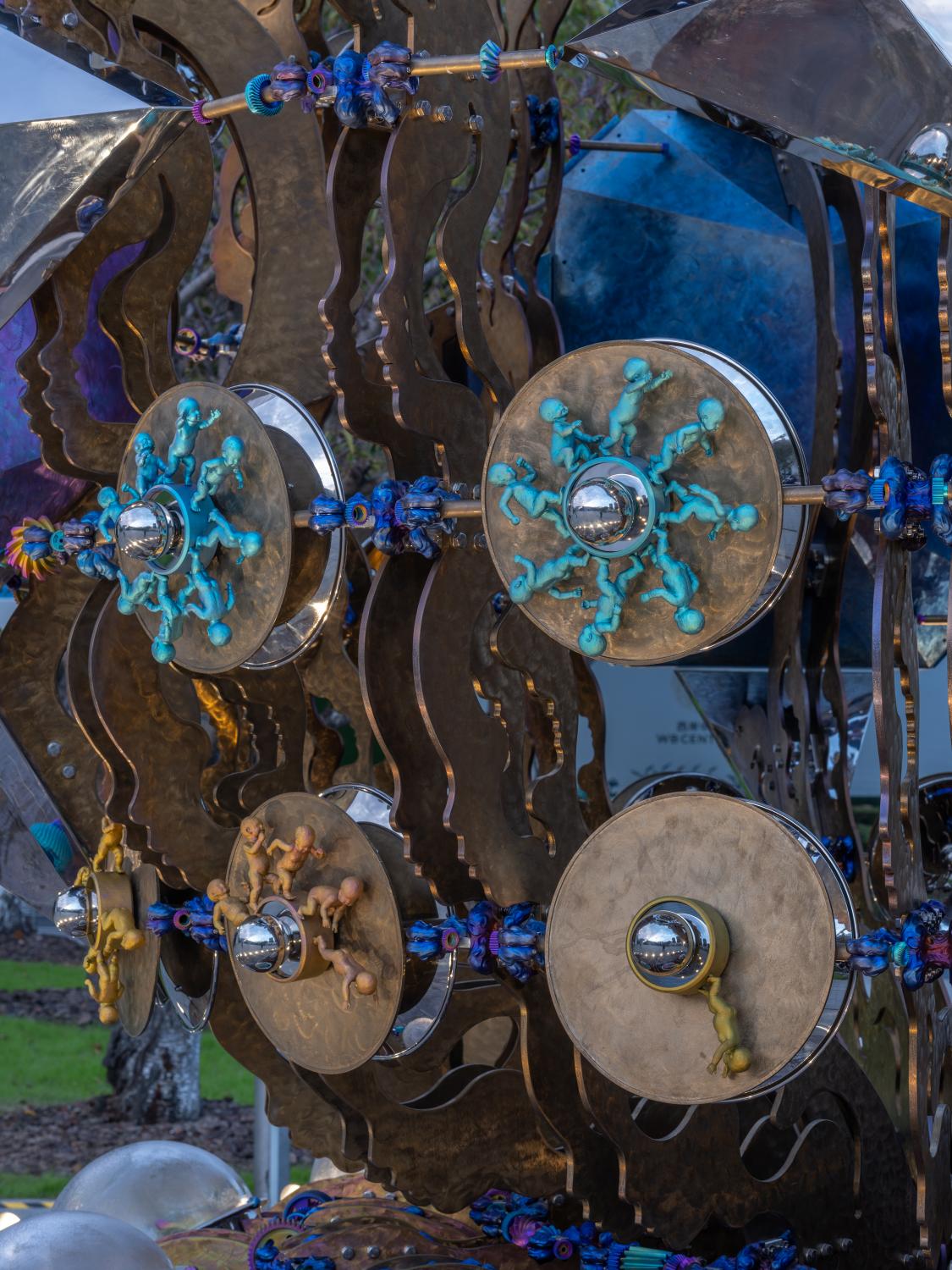
Titanium is his medium of expression, and his fascination with it runs deep. It is incredibly strong yet light. It resists time, corrosion and even fire. It behaves almost like a living material, biodegradable and full of color. I began using it for jewelry in the early 2000s and I believe that, like a person, it should grow. That is why I use it for increasingly large works. When I first touched titanium, I felt it was the material closest to both eternity and the future. Its nature is demanding; it requires new tools, new techniques and new ways of thinking. But perhaps that is exactly why it attracts me. Titanium allows me to create structures that seem impossible: thin yet strong, massive yet light. My pieces are made to outlive me so I must choose materials that can accomplish that. At that point our conversation drifted toward the idea of eternity. Many would like to live forever, and so would Chan, fully aware that we cannot. But my works are here for that, he added, emphasizing that he hopes to pass on the idea of self discovery to future generations. I hope they will be able to see my work as a reflection of themselves and that through it they will find their own insights for both work and life.
Courtesy of Long Museum
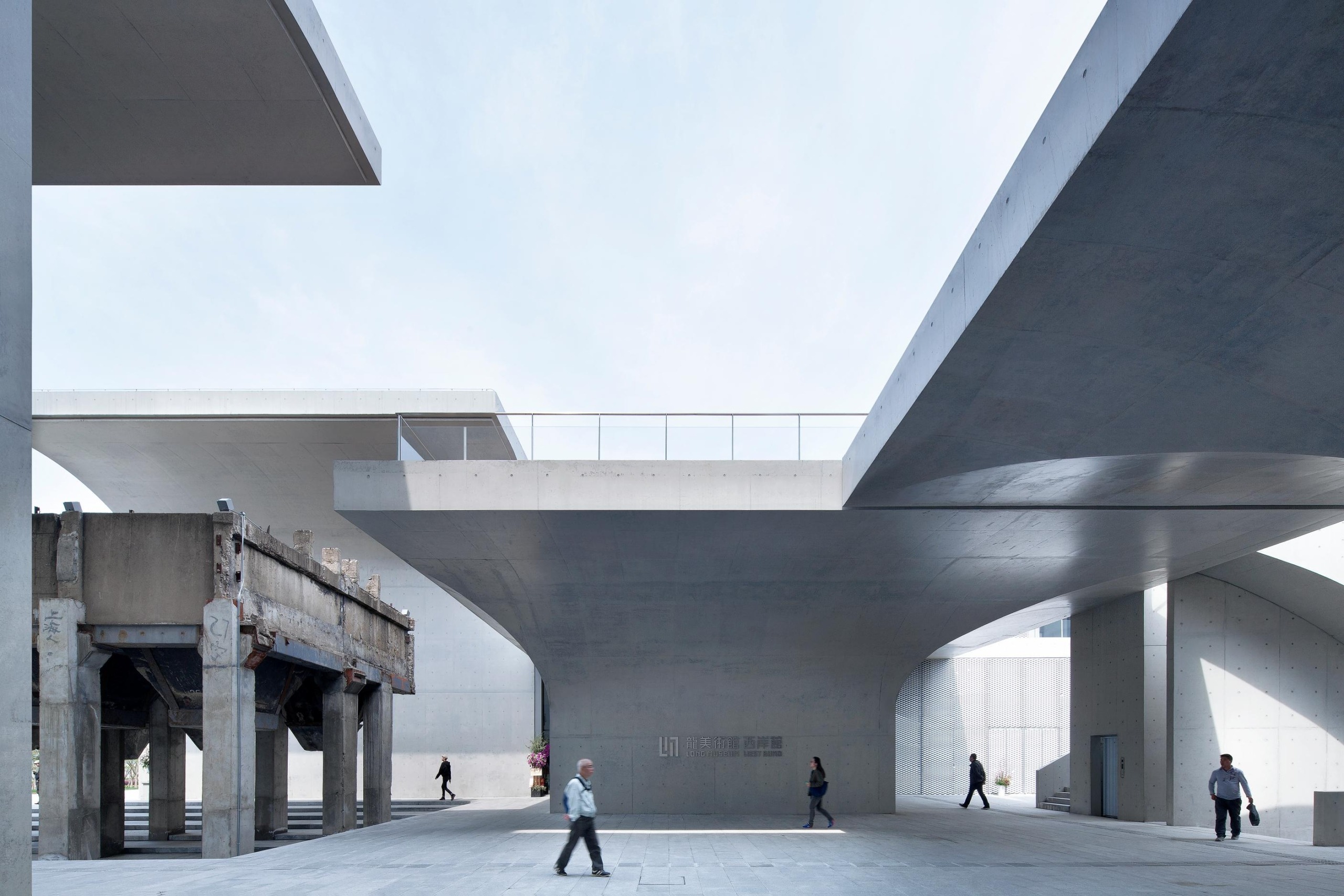
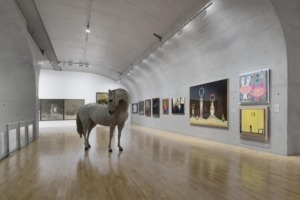
The time set aside for the interview was already running out, and Chan had to hurry to the official unveiling of Birth, the sculpture that we, along with other smaller works, will be able to see next year at Santa Maria della Pietà in Venice during the sixty first Biennale. I still had time to explore the exhibition 10——60, currently on view at the Long Museum, a private institution founded by the collector couple Liu Yiqian and Wang Wei, who are now among the most influential figures in the Chinese art world. As one of three Long Museum locations, this one is housed in a former coal unloading dock. When the architectural studio Atelier Deshaus designed the museum, they kept the original structures, the concrete coal hopper elements and the industrial character, transforming them into exhibition halls. Do I need to tell you how impressive it looks as a museum? Very. And their collection, which includes works by nearly five hundred artists born between the 1910s and the 1960s, with pieces created from the 1930s to today, is equally impressive as a whole.
Thinking about Chan and the impression he left on me, his final answer echoed in my mind when I asked where he finds the strength to keep creating and passing on knowledge. I prefer to see the world through the eyes of a child. Every time I go to sleep, I enter a kind of reincarnation, and in the morning I wake with a fresh sense of curiosity, observing the world in new ways. Regardless of Western or Chinese perspectives on philosophy, the spirit of a child is always present, and from it comes the desire to teach and to learn.