How a kitschy fashion piece became an essential holiday uniform
From ski slopes to iconic Christmas films, we tell the story of how a kitschy holiday garment became a phenomenon and found its place in designers’ collections
You have surely received a well meaning holiday gift from a relative at least once a cheerful sweater you would never wear in public, yet still put on at home because it is so comfortable. Christmas sweaters carry the rather fitting nickname ugly Christmas sweaters for a reason, as they are unapologetically festive and fairly unattractive. However, the fact that they are widely considered a poor fashion choice did not prevent them from becoming popular. On the contrary, it only fueled their fame, as many people today wear them supposedly ironically.
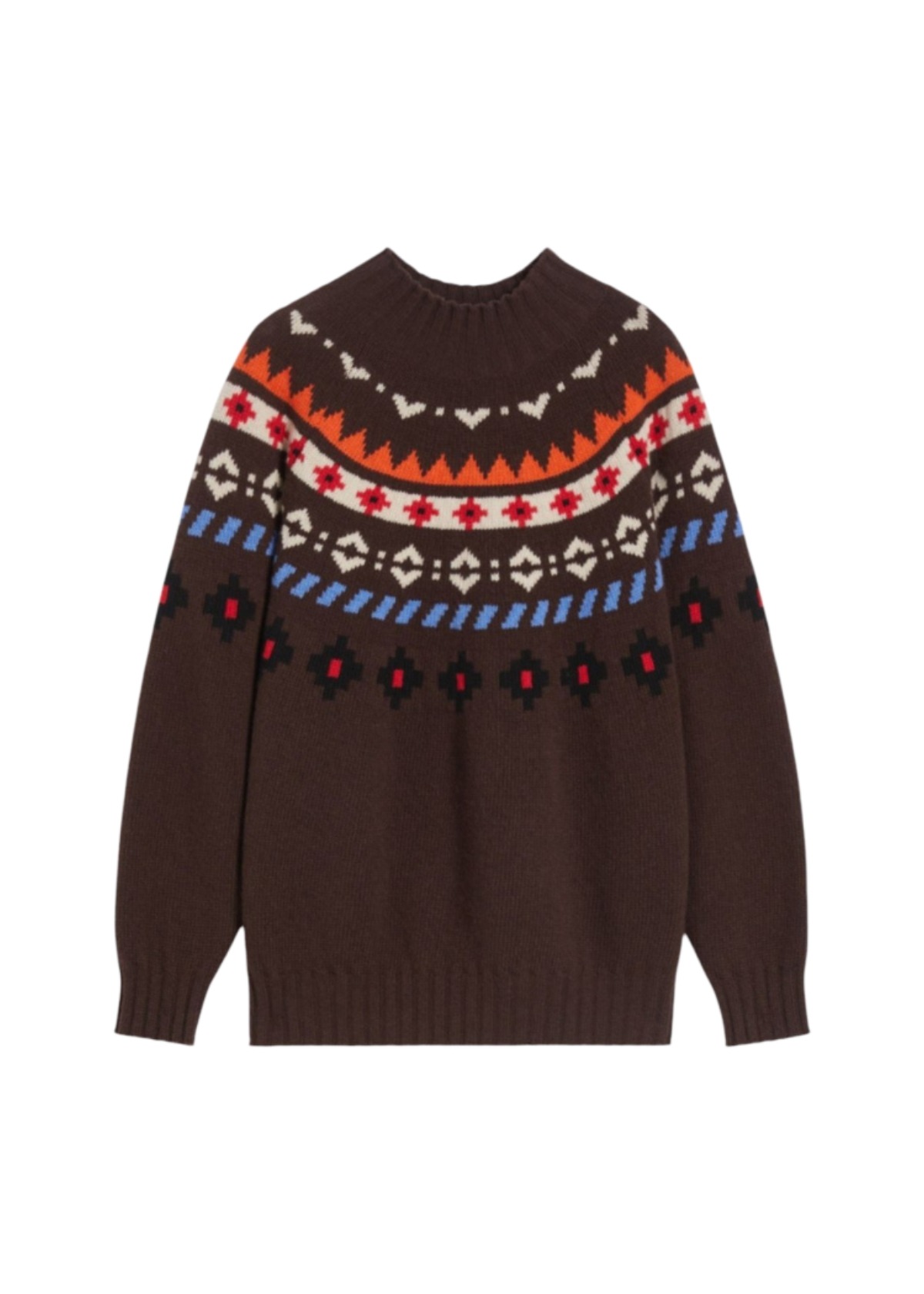
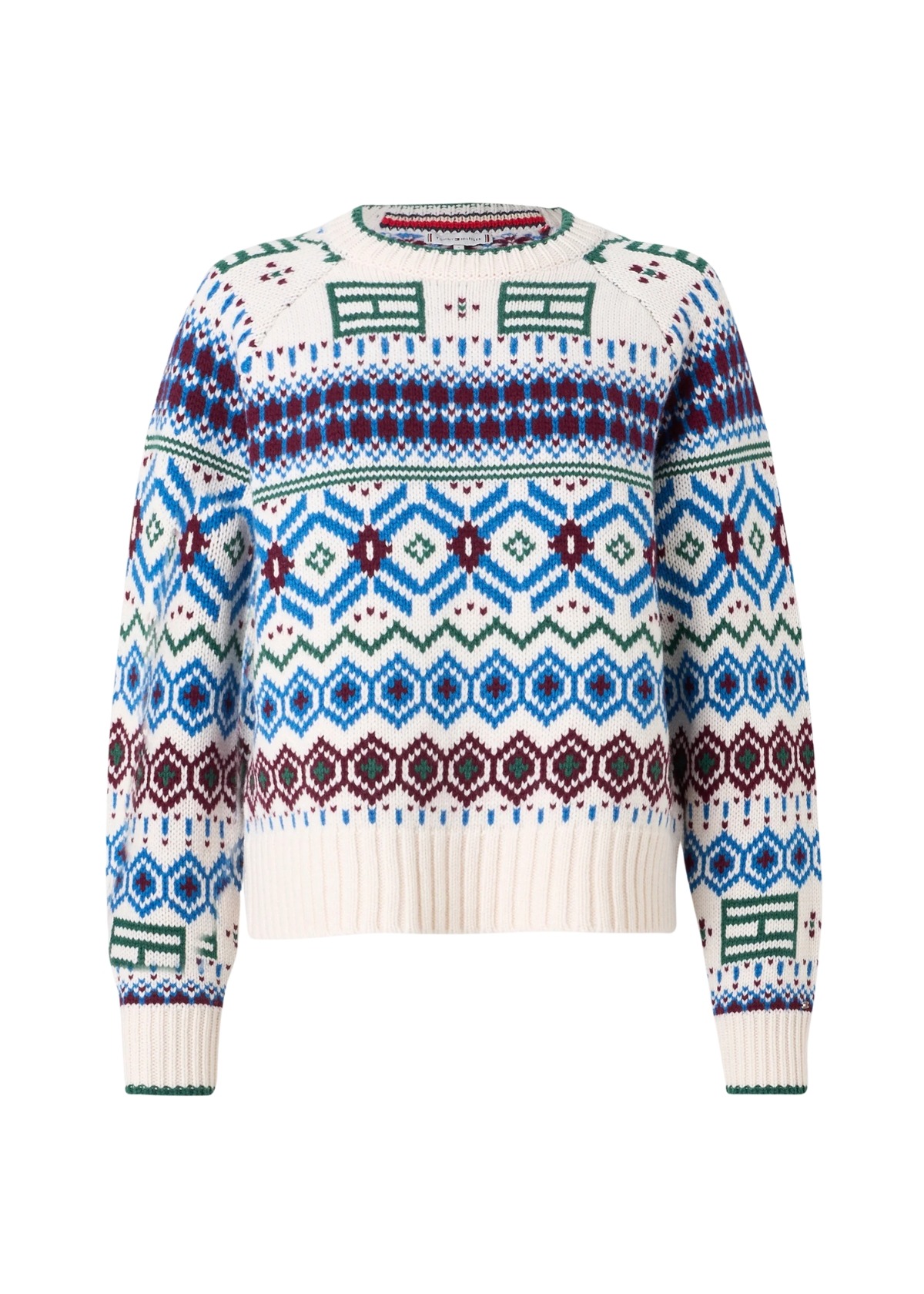
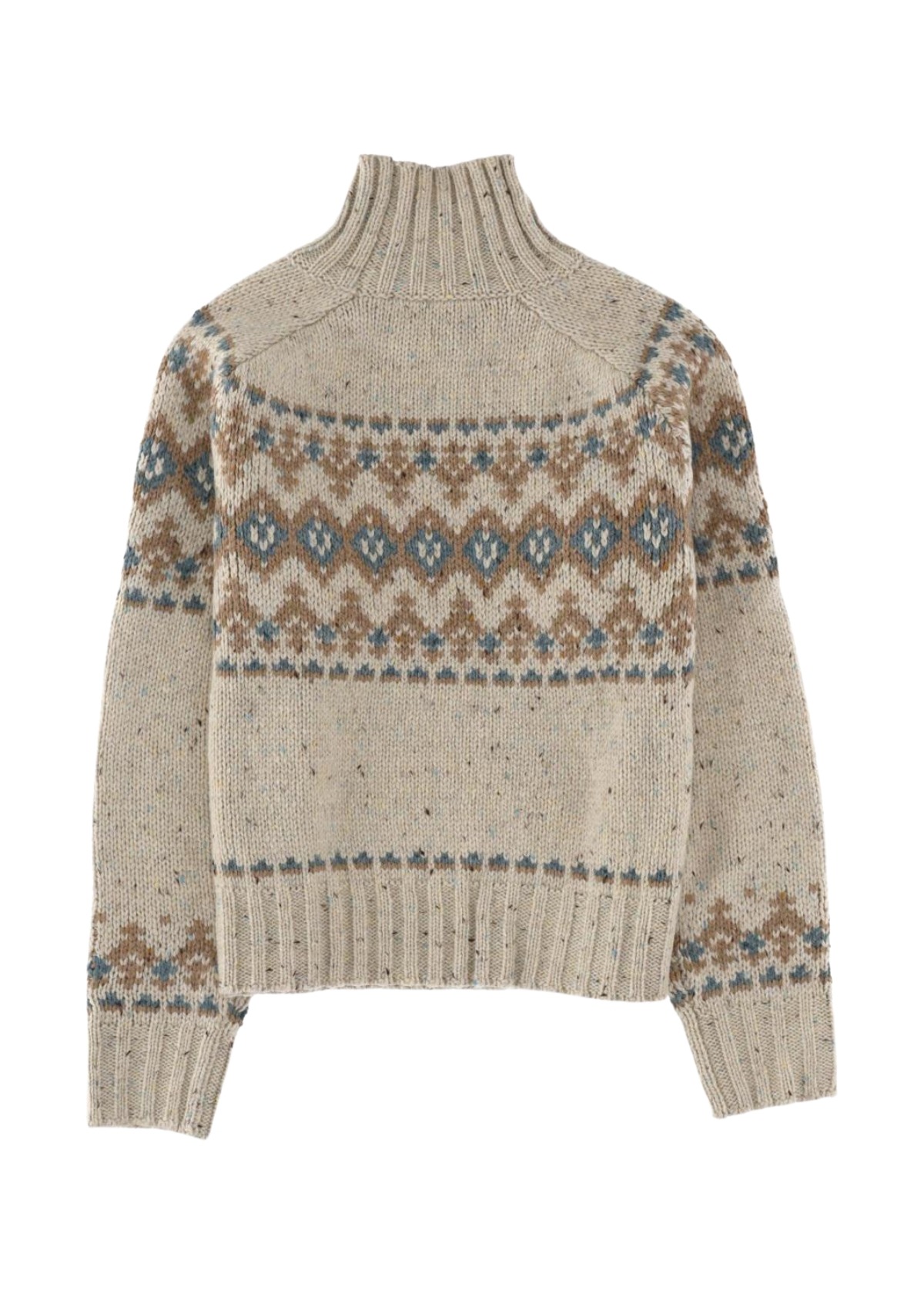
When talking about the history of ugly Christmas sweaters, we must start with knitting and wool, one of the oldest materials in the textile industry. Knitting was for a long time a pastime and hobby for many women, who made clothes, socks, hats, and gloves for their loved ones. When they decided to add a fun and recognizable touch to their knitwear by inventing patterns that would make their work stand out from the rest, they could hardly have imagined what kinds of sweaters would eventually emerge from those creations. Over time, these patterns evolved into more recognizable motifs, leading to the creation of sweaters such as the Scottish Fair Isle and Norwegian Mariusgenser styles. Precisely because of their multicolored designs and rich patterns, these sweaters can be considered the predecessors of modern Christmas sweaters.
The first ugly Christmas sweaters with embroidered holiday motifs such as snowflakes, pine trees, and reindeer appeared in the 1950s under the name Jingle Bell Sweaters and, believe it or not, were considered chic. After World War II, outdoor activities became extremely popular, as did skiing, thanks to which Norwegian sweaters became an essential part of the wardrobe and a kind of status symbol.
Another important factor that contributed to the success of ugly Christmas sweaters also occurred during those years: the commercialization of Christmas. Before the war, only the wealthiest families could afford holiday feasts and Christmas trees, luxuries that became widely accessible during the 1950s and 1960s and have remained part of tradition to this day. Obsession with Christmas and complete holiday euphoria began to develop rapidly, and kitschy sweaters, as a reflection of economic power and a symbol of the perfect family, a concept that was also gaining importance at the time, became a logical part of this trend.
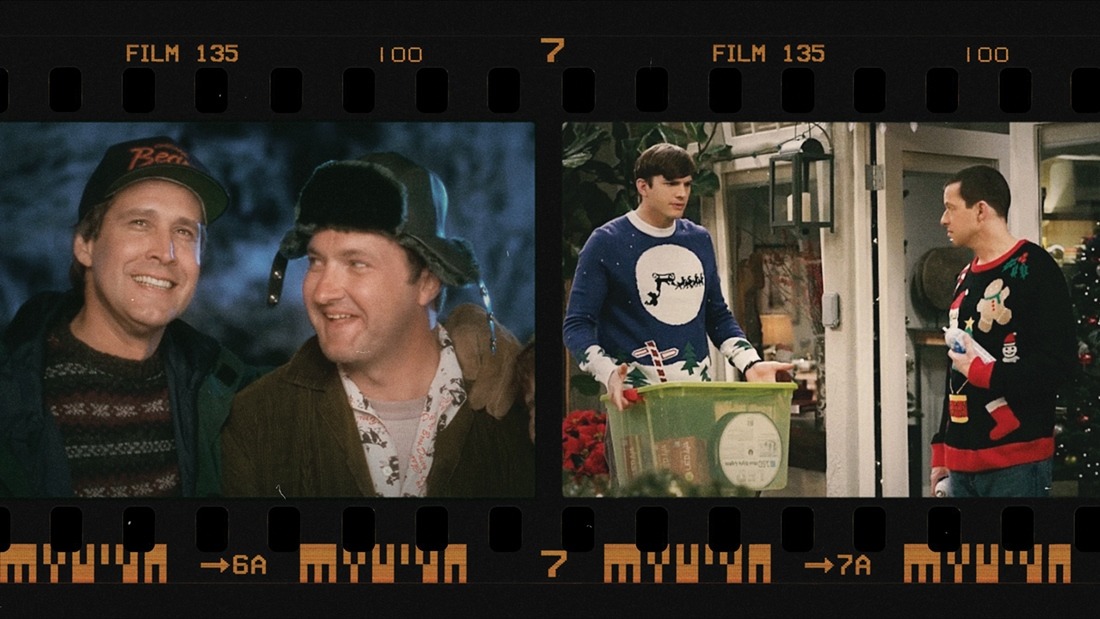
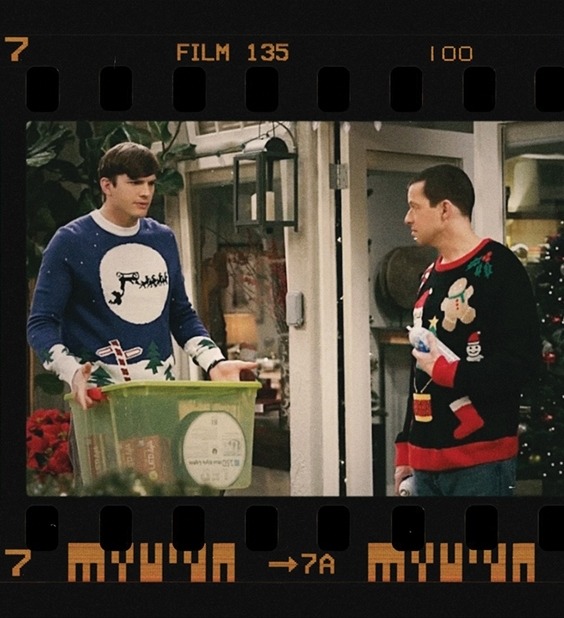
With the bold fashion of the 1980s came more daring style choices, and these unusual sweaters, once reserved for just a few holiday days, became part of everyday dressing. Their frequent appearances on screens and in pop culture also played a major role. The character of Cliff Huxtable from The Cosby Show, styled by Sarah Lemire, had a significant role in popularizing these quirky sweaters by wearing numerous designs by Koos Van Der Akker. Likewise, Clark Griswold, the cheerful father from the film National Lampoon’s Christmas Vacation, played by Chevy Chase, wore recognizable ugly Christmas sweaters. During this period, ugly sweaters ceased to be a fashion statement and, thanks to such on screen portrayals, gradually became the humorous item we know today.
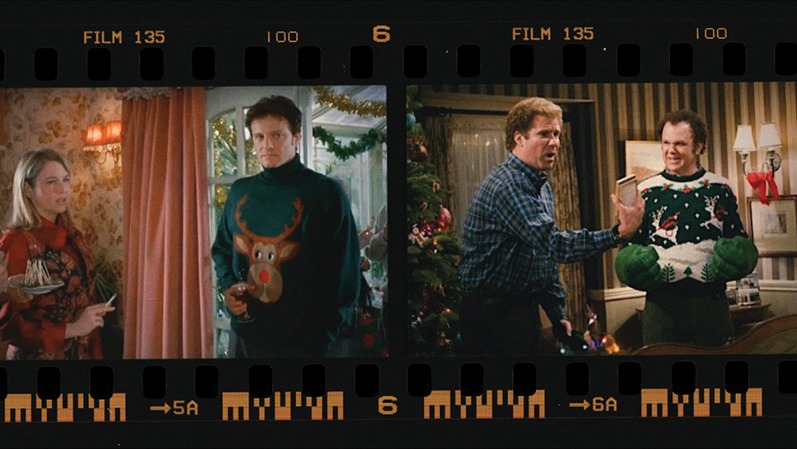
You certainly remember the iconic scene from Bridget Jones’s Diary when Bridget meets Mark Darcy at a holiday party. Watching him from behind, she briefly thinks he might be Mr. Right, a thought that lasts only a few seconds until Darcy turns around and reveals his dreadful fashion choice. It is a dark green Christmas sweater with a huge reindeer and a red nose, a motif the film’s creators selected carefully and over a long period of time. According to the filmmakers, since Darcy was quite a snob, the sweater had to be goofy and look hand knitted in order to achieve the desired absurd effect.
Many anthropologists consider this very scene to be the turning point that launched the popularity of ugly sweaters. Indeed, since 2001, these ugly sweaters have not only been part of holiday wardrobes but have grown into a kind of cultural phenomenon.
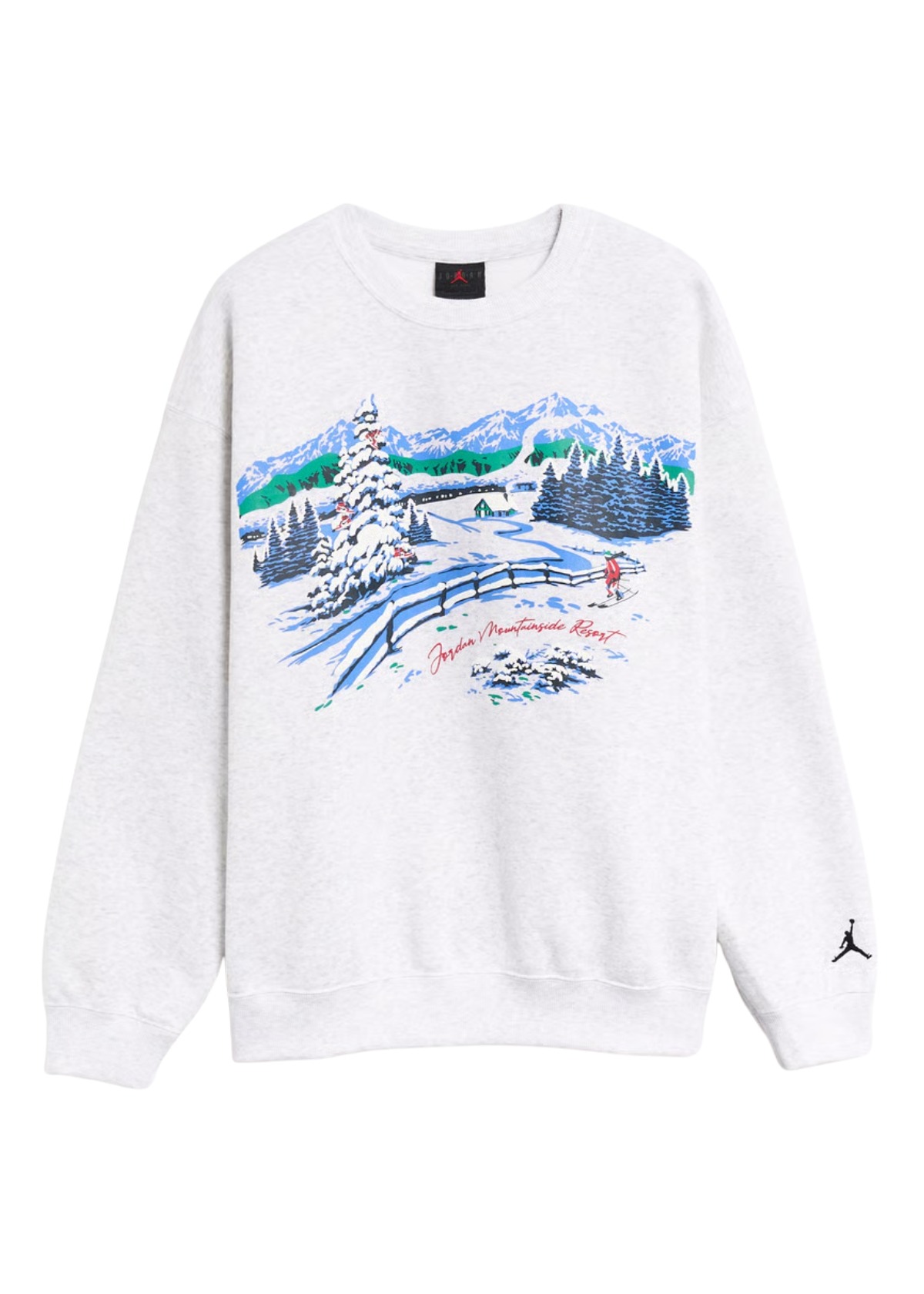
In 2002, the first ugly Christmas sweater party was held in Vancouver, where the main goal for guests was to wear the ugliest or craziest sweater. Today, such parties have become a standard event during the holiday season. This trend encouraged fast fashion brands to start producing sweaters that are intentionally ugly. A simple snowflake motif is no longer enough, as people want to see bold colors, illustrations, ruffles, and even bells. The kitschier, the better. When fashion brands fail to offer something extravagant enough, fans of these parties take matters into their own hands, trying to create the most over the top sweater possible using holiday decorations. In this way, these sweaters, once cute and modest, have become a true manifestation of the holiday spirit, cheerful, extravagant, and irresistibly fun.
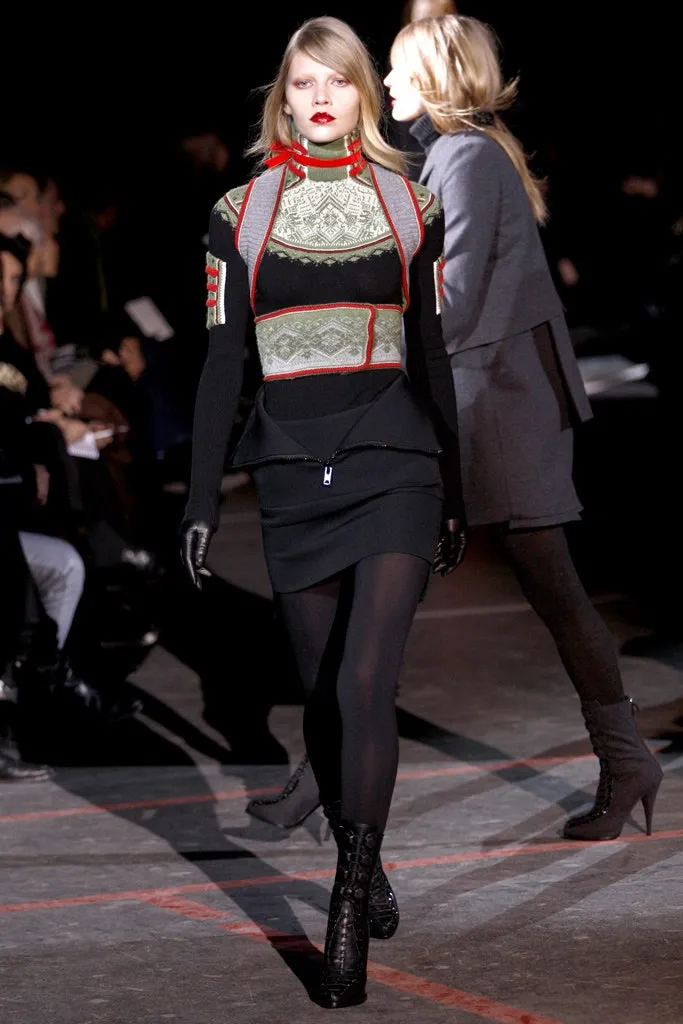
Givenchy
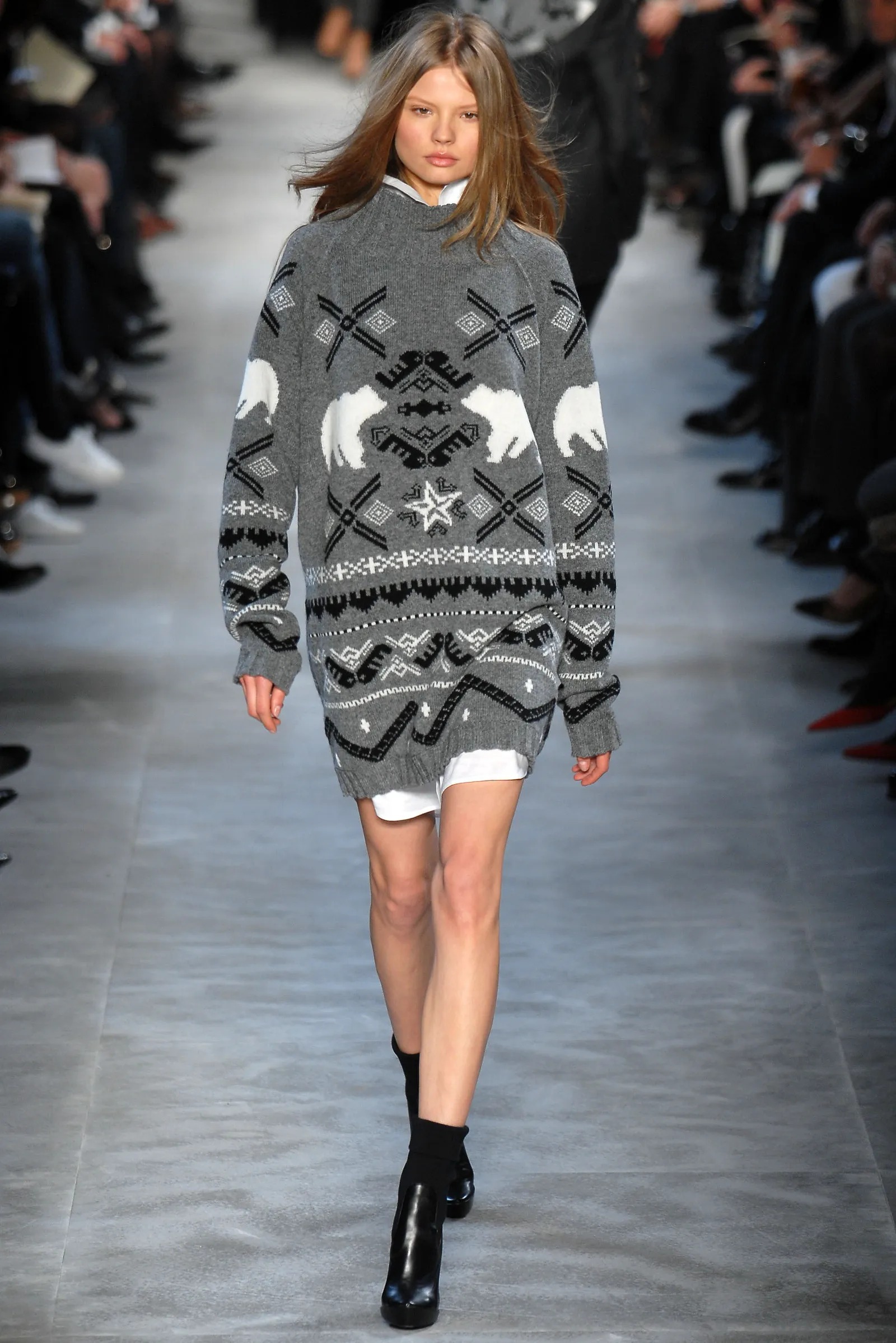
Stella McCartney Fall 2007
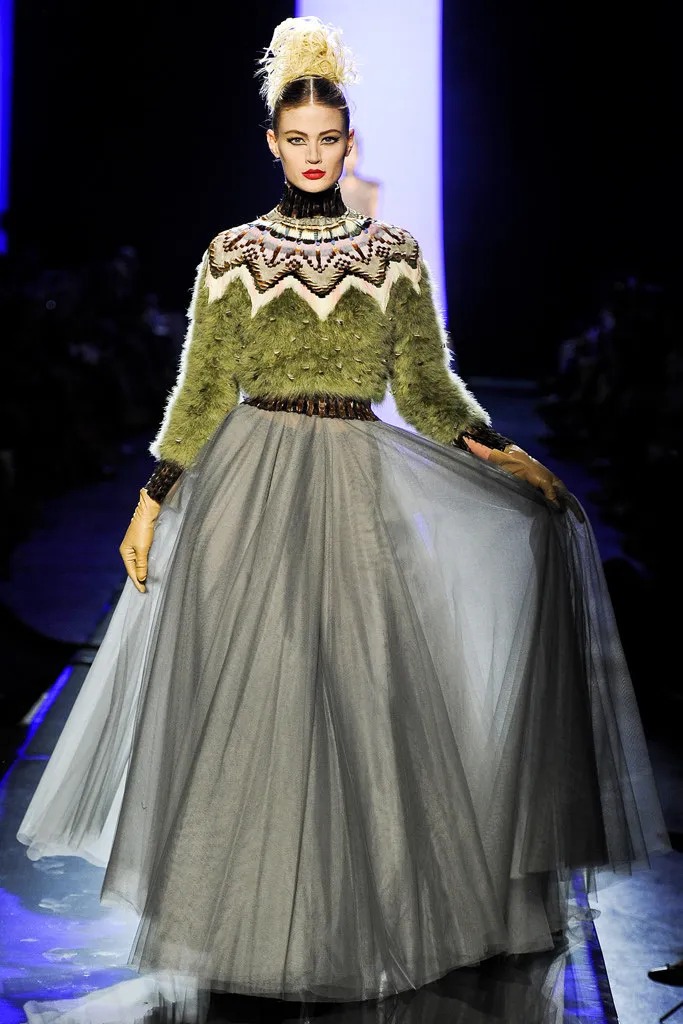
Jean Paul Gaultier Fall
The ambivalence these garments provoke is precisely the reason for their incredible appeal. Whether we want to admit it or not, no one is immune to a bit of well timed kitsch. This is also confirmed by the fact that this “ugly” item, whose charm lies in not taking it seriously, has found its place on fashion runways as well, proving that even the greatest designers cannot resist its holiday charm.
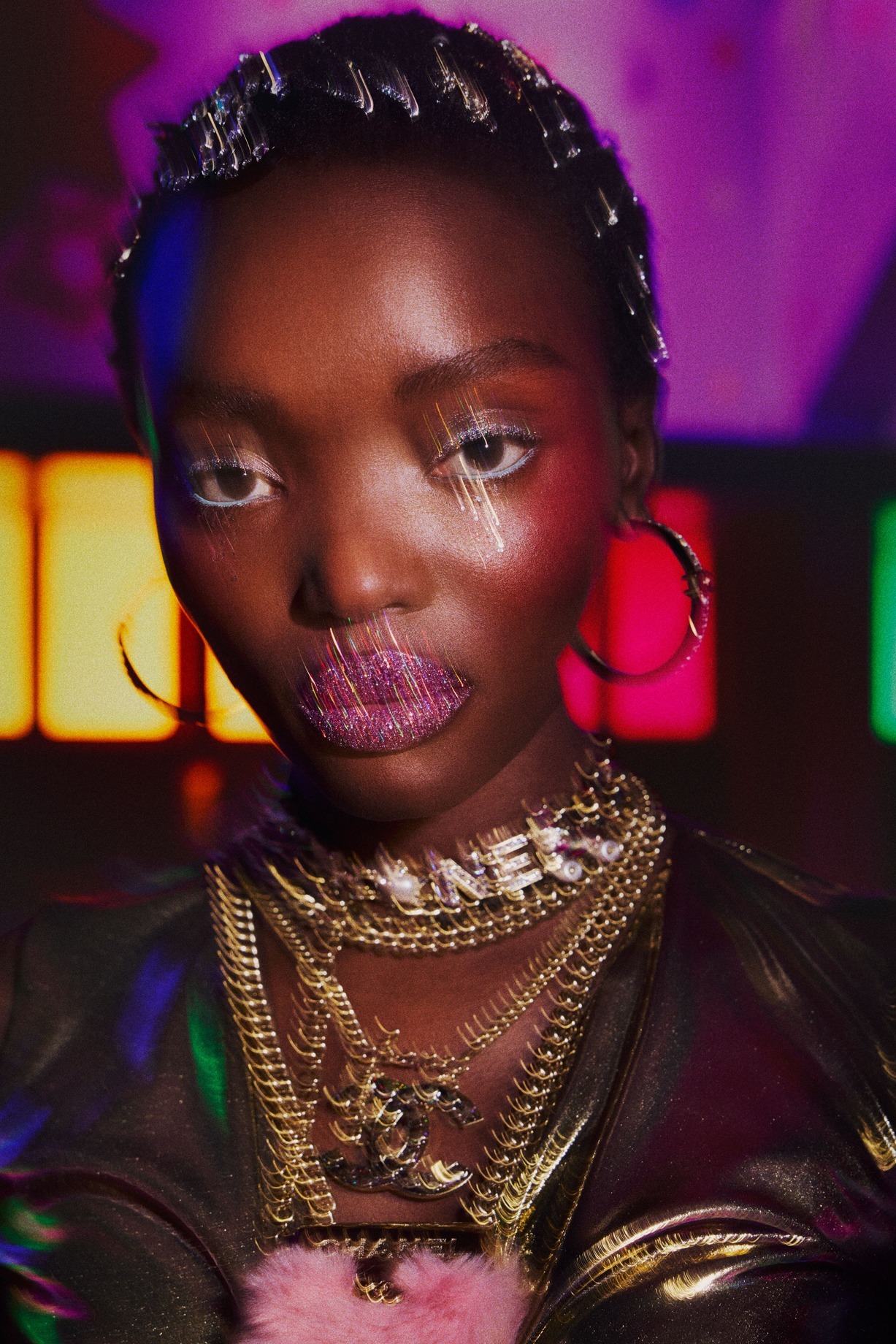
Riccardo Tisci found inspiration in ski inspired snowflake patterns for Givenchy’s Fall 2010 collection, which, thanks to the combination of red and green, strongly resembled Christmas sweaters. Stella McCartney presented sweater dresses adorned with embroidered snowflakes and polar bears in her Fall 2007 collection, while Dolce & Gabbana’s Fall 2010 collection took things to the next level by introducing a jumpsuit decorated with reindeer and snowflake motifs. Jean Paul Gaultier presented a sweater in his Fall 2011 Couture collection that could easily win a competition for the ugliest Christmas sweater. It was an impressive model made entirely of feathers, with an alpine patterned upper part, proving that designers can transform a fundamentally “ugly” item into a desirable fashion piece. Chanel presented several models inspired by Norwegian patterns in its Fall 2019 collection, more elegant than traditional Christmas sweaters, yet still carrying a recognizable kitschy note.
Today, Christmas sweaters, whether more or less ugly, are a completely normal occurrence and a perfect reflection of capitalism’s influence on the holidays. Some love them, others despise them, they are a bit of an eyesore to everyone, but the fact is that we buy them. Ugly sweaters have become an unavoidable part of the holiday season and mainstream winter fashion, further confirming their cult status.