In defense of everyday life and why Train Dreams could become my favorite film
Bojana JovanovićFebruary 3, 2026

February 3, 2026
For me, everyday life is the most beautiful thing in the world. That ordinary life that unfolds between major events, traumas, and the things that, in our final days, will replay before our eyes as some of the most important formative moments. You know that saying, perfectly tailored to Facebook aesthetics, which by now sits right on the edge of unbearable and ironic for all of us: “Life is what happens to you while you are busy making other plans?” I am sure you all know it. Sometimes sentences like that simply appear in my head after certain experiences, films, or songs. The point is not some deep romanticization of everyday life and the ordinary, but the possibility of presenting it through artistic expression of any kind without making it banal or pretentious. When it comes to film, I am most critical of films whose central subject is ordinary human life, those scenes where seemingly nothing happens, and where lovers of action or fantasy would say that I am a hipster or a poser who likes artsy, in a derogatory sense, films only for the status that watching such films brings within very niche and completely hypocritical and narcissistic groups of people. Fine, okay, let me be a hipster then? Even though I truly hate identifying with that, I think the biggest hipsters are those who try desperately not to be one, and I accept that there is a possibility that I sometimes step into that infamous category. One of my favorite films in the world is Yi Yi by Edward Yang, but a film with several internationally recognized awards, critical acclaim, and major global success cannot exist outside the mainstream. You can pretend that you are special and that you see something deeper in art, but the fact is that, aside from being quite delusional, you are simply too closed minded. Just enjoy good art without justifying to yourself why it is okay or not okay to watch something. Sometimes that alone is enough, and in the end, it is the only thing that really matters.
Related: 13 films that will shape the cinema landscape in 2026

Netflix
I drifted off topic, but trust me, I am coming back. This year’s Oscar nominations brought some of the most exciting films I have seen in the past few years, as well as some very quiet, slow, and introspective ones. In the sea of this dichotomy, where the chaos of revolutions, vampires, and aliens still prevails, in the most unexpected place of all, on Netflix, you will find one of the most beautiful, saddest, and most human films.
Related: What is new on streaming platforms in February?
The passage of time, love, suffering, family, loss, memory, and death were the first things I wrote down in my phone notes after watching Train Dreams. It has four Oscar nominations for a reason, and believe me, it is not boring, empty, or beautiful just for the sake of being beautiful. Perhaps if you consider your own everyday life empty and boring, you will not be able to find beauty in anyone else’s either. I said what I said. The point is that everyone’s life can be put on film. Every life is so ordinary and yet so special that it has the material to become a film, to become something that will remind others to occasionally ask themselves what a film about their own life would look like, without dramatization, without special effects, and without pretentiously philosophical, pseudo profound monologues.
Related: Pre Oscar watchlist: films from the past five years that deserve more attention
Related: How Sentimental Value helped me better understand my daddy issues
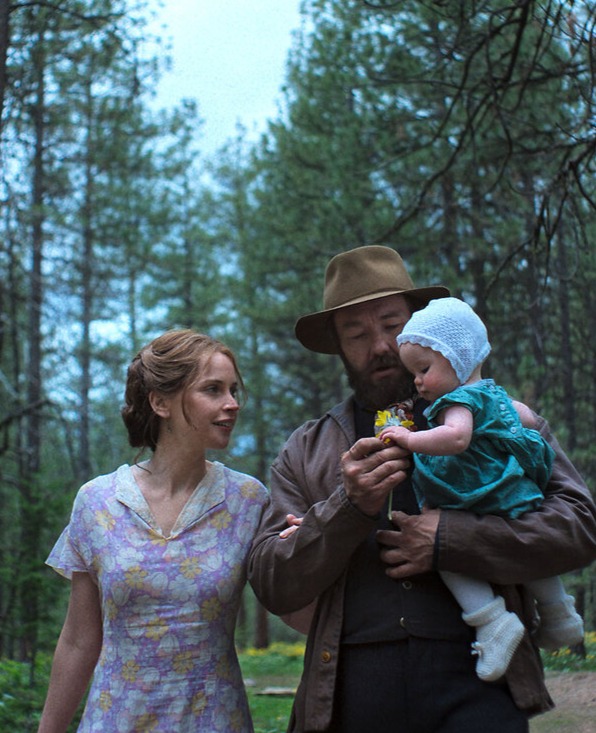
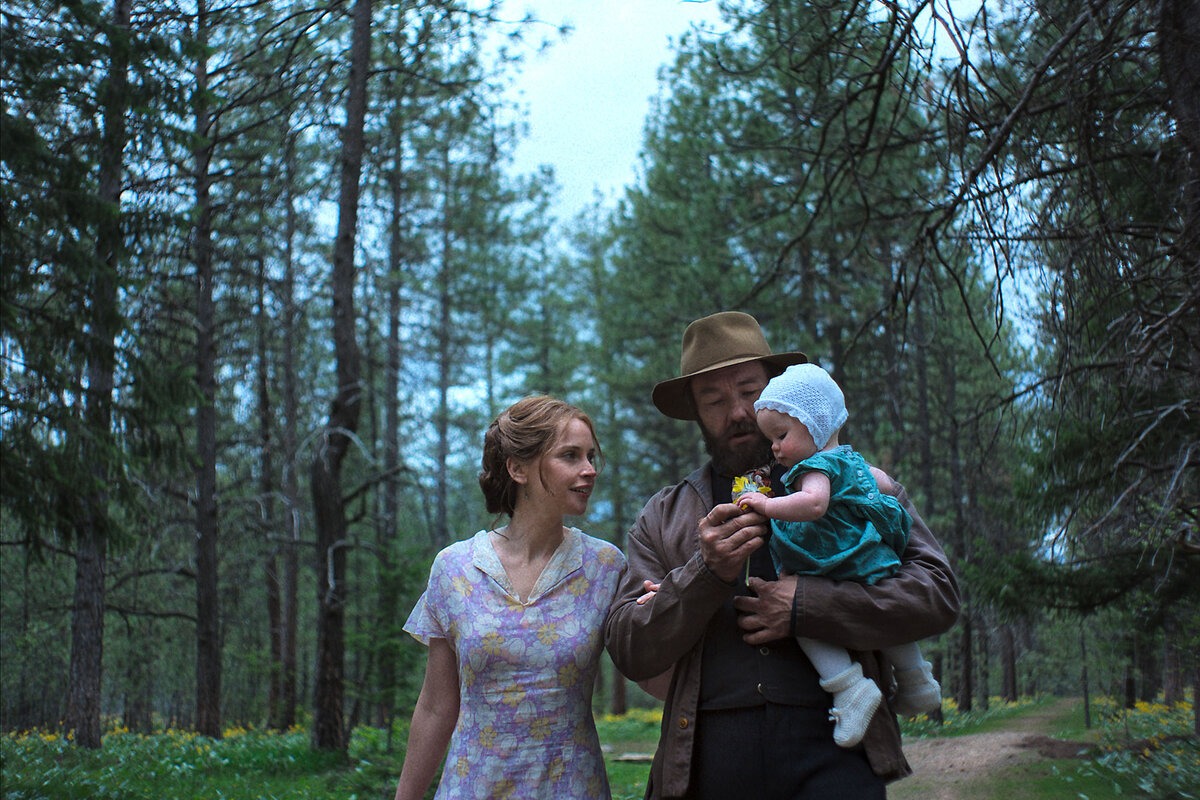
Train Dreams follows the life of Robert Grainier, an ordinary man from the early 20th century, a railroad worker and lumberjack, whose life unfolds quietly, in rhythm with nature, labor, and losses that are often deeply woven into his everyday experience and work. The film is not linear in the classical sense and does not offer clear dramatizations, but is instead built from fragments of memory, feeling, and time that passes relentlessly. It was directed by Clint Bentley and inspired by the novella of the same name by Denis Johnson, a text that is itself more a feeling than a story, more an inner flow than a narrative structure. This is clearly visible in the film. This is not a film like Perfect Days, one that will immediately make you smile and spark something you thought you had long lost, but the smiles that Train Dreams produces are not as different from that as they might seem at first. It is that almost imperceptible smile that appears later, one that reminds you that life, in its simplest yet most complex form, is actually beautiful. That it contains a lot of bitterness, a lot of loss and suffering, but also that perhaps one spring morning you will truly accept all of it.
Related: 13 Serbian films you need to know about
If you are a fan of this genre, you will quickly and easily recognize elements of Terrence Malick in the way the camera observes the world, in the slowness, in the silence, and in that deep acceptance of ordinary, non grand, average life which, precisely because of that, is filled with beauty and sadness. If you are like me, that will not bother you at all. Malick’s films hold a special place for me, even though I would not rank him among my ten favorite directors. Something makes me think about his films often, probably life itself. That very slowness, that sense of life, and the absence of any need for spectacle are what make him recognizable. In Train Dreams, there is one of the most precise and sincere portrayals of processing loss and suffering that I have seen on film. We do not observe the main character from a distance, but go through all the stages of loss together with him. We do not know the outcome in advance, we are not in the third person, we are him, his hope, his suffering, his deep sorrow, and a life that is inseparably connected to nature.

Netflix
Why do I think that Train Dreams has the potential to become my favorite film of the past five years? Because I am a total hipster, okay? Jokes aside, that is partly true when it comes to this film, but the real answer lies in the fact that this film gave me the most space to think about society, politics, life, meaning, and the very act of living despite everything. It stood out among last year’s major films and although it is extremely critically acclaimed, it may face prejudice simply because it is available on Netflix. Paradoxically, the opposite is true. This is a film that expects a lot from the viewer. It demands full attention, it demands involvement, it demands that you be present for almost two hours and live through someone else’s life which, after the film, will most certainly become a part of your own. If you find it boring, I cannot help you there. Watch TikTok during the breaks, I do not know.