Saying goodbye to MTV and to the era that shaped our childhood and pop culture
Jordan CvetanovićOctober 29, 2025

October 29, 2025
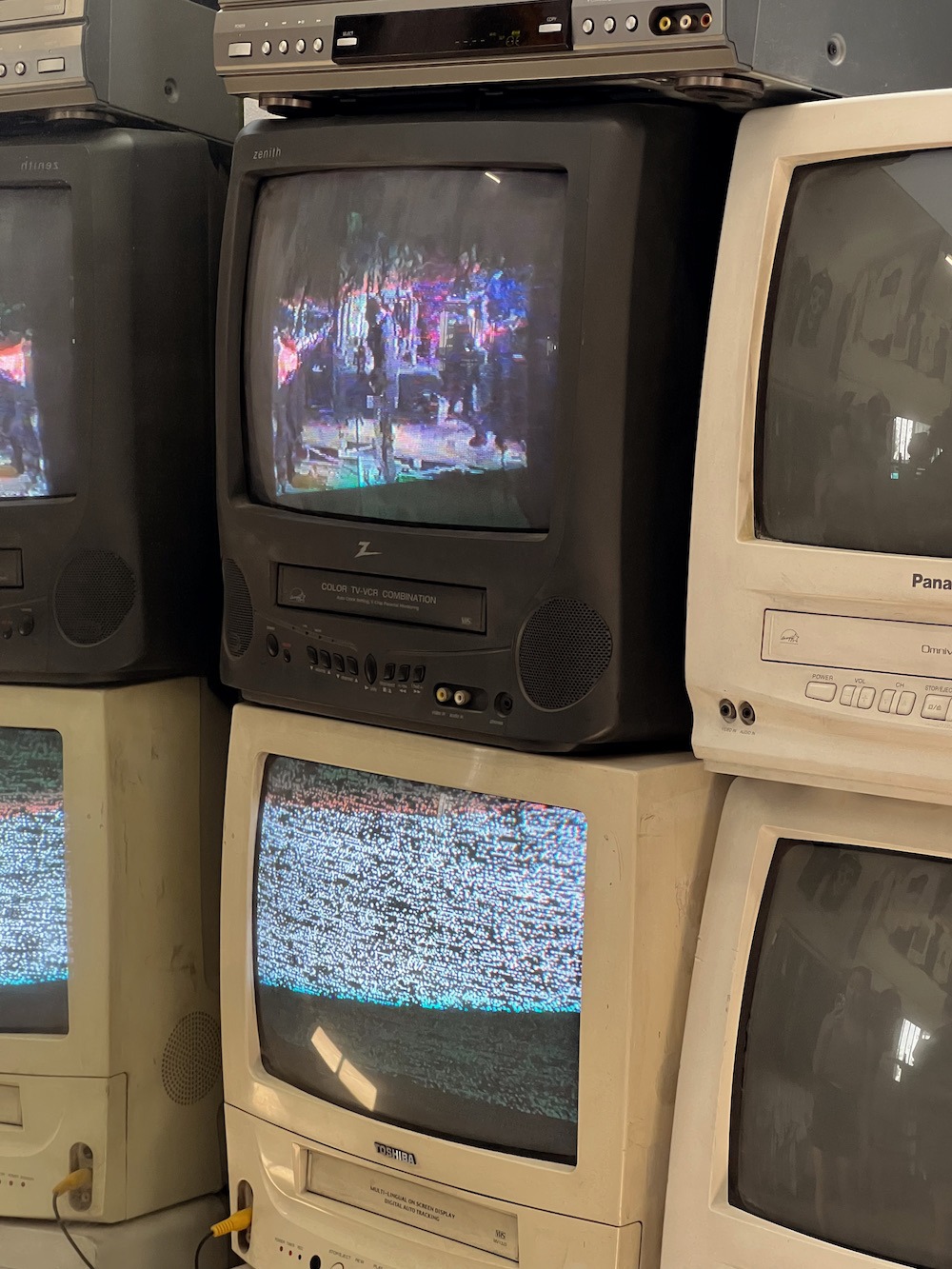
No one has ever been able to pinpoint the exact moment I fell in love with television, but I am convinced it happened the moment I opened my eyes. For as long as I can remember, television felt like a kind of magic, a substitute for my mother’s milk. My endless fascination with TV also showed in the fact that the remote control was always in my hands and no one was allowed to change the channel without my approval. I could stare at the cathode tube for hours without blinking, completely unaware of how much time had passed. For those my age who still have a good memory, it will not sound strange that television once had an end of programming. When the screen turned into static snow, it was the signal that it was time for bed. Then a new era arrived, with channels broadcasting around the clock, and among them was the music channel that changed everything for me. MTV.
A recent announcement confirmed that on the last day of this year, Paramount Global, the entertainment giant, will shut down the world’s first music television station after forty four years. Five popular channels will go off the air forever: MTV Music, MTV 80s, MTV 90s, Club MTV, and MTV Live. It is a decision that reflects shifting viewing habits. Music videos today are consumed mostly on YouTube or social media, and increasingly on Spotify rather than television. Even so, this news broke my heart. I felt sad and disappointed, much like former MTV editor Simone Angel, who expressed her disbelief even though she knows this outcome was inevitable. The end of music television marks the closing of an era for everyone who spent meaningful moments of their youth waiting for video premieres and indulging in the full spectacle of pop culture that this channel offered.
When Kukla Bogdanović, the director behind some of the most imaginative music videos in the Balkans, told me in a recent Vogue Adria interview that her love for directing grew from endlessly watching MTV, it made me think about how deeply that channel reshaped the way we experience music. It turned visual presentation, imagery, and storytelling into essential parts of an artist’s identity. I belong to the generation that truly devoured everything that aired, obsessed over charts, and recorded over old VHS tapes with the newest videos from our idols. I remember how I never dared to admit that I had taped over a family celebration with parts of the “Like a Prayer” video, just so I could watch Madonna dancing with the church choir whenever I wanted.
By the late 1980s and 1990s, the virus of MTV’s spirit had spread globally, with regional stations and localized shows. In our region this happened much later, but I still remember the moment MTV Adria began broadcasting. It introduced TV personalities like Galeb Nikačević and Ida Prester, and the now iconic line “Neću ovako najavu!” shouted by Nataša Bekvalac in the show Hitorama, hosted by Sergej Trifunović. Across many parts of the world, including Southeast Asia and the Middle East, MTV became a cultural bridge. It helped shape youth fashion, expand musical tastes and perspectives, and spark conversations around popular culture. These are only some of the defining dates from forty years of history that many of us still remember well. In case we do not, let us revisit the best moments together.
12:01 AM
At exactly that time, on August 1, 1981, a small cable channel from New Jersey launched its first broadcast with a cult, ironic choice: “Video Killed the Radio Star” by The Buggles. Many believe this debut was a prophetic signal of the dominance the channel would achieve in the music industry and the way music videos would go on to shape genres and artistic identities.
MTV AWARDS, MADONNA AND OTHER SCANDALS
From its early days, the MTV Video Music Awards focused on moments that became viral on their own. In 1984, Madonna crawled across the stage in a wedding dress, and in 2003 she shocked the audience by kissing Britney Spears live on stage. Perhaps the biggest scandal of all happened in 1995, when viewers witnessed something close to today’s reality TV. Courtney Love barged into a live program by throwing her makeup at the queen of pop while Madonna was giving an interview.
DAVID BOWIE UNFILTERED
David Bowie, who at the time had several music videos in heavy rotation, brought up a sensitive topic in a candid interview just two years after MTV launched. Without being prompted by the host, Mark Goodman, he suddenly said, “It occurred to me while watching MTV over the past few months that it is a solid venture and has a lot to offer. However, what concerns me is the fact that so few Black artists appear on it. Why is that?” His comment left both the host and the audience speechless, and once again placed the singer with the mismatched pupils in the role of someone who was always ahead of his time.
THE CROWNING OF THE KING OF POP
“Billie Jean” broke the racial barrier in 1983 through its heavy rotation on MTV, opening the door for Black artists. Because the channel played the video almost every hour, its popularity soared, leading to one million copies of the album being sold in just seven days.
NIRVANA’S FINAL PERFORMANCE
Nirvana’s MTV Unplugged concert in New York, recorded on November 18, 1993, was one of their last television appearances with Kurt Cobain before his death in April 1994. The show aired in December, and the live album was released later in November 1994, becoming one of the band’s best selling records and even winning a Grammy.
QUEEN CAUGHT IN THE JAWS OF CENSORSHIP
In yet another failure to embrace diversity, Queen’s video for “Body Language” became the first to be banned by MTV in 1982 because of its supposed “homoerotic overtones.” It is worth noting that the band members were fully clothed, yet even the slightest hint of anything non-conservative was enough to trigger censorship.
THE OSBOURNE FAMILY AS A LIFELINE
The revolution in music videos that MTV sparked was not always tied to artistic innovation. It became clear that there were formulas for producing successful content, which created a risk for MTV as spectacle began to overshadow substance. During the 1990s and 2000s, MTV’s editorial direction shifted from exclusively airing music videos toward gradually introducing reality programming, most notably through the pioneering show The Osbournes. The Osbournes captured pure chaos: dogs, arguments, swearing, family jokes, and genuine emotional moments. For the first time, viewers felt they were not watching a performance but reality, or at least a convincing illusion of reality.
JACKASS AND THE CREW
The show first aired on MTV in 2000, created by Johnny Knoxville, Spike Jonze, and Jeff Tremaine. Cast members including Knoxville, Steve O, and Bam Margera became known for pushing physical comedy to the extreme, turning pain, chaos, and absurdity into entertainment. For many viewers it was “too much,” yet the format they introduced marked a turning point in television entertainment.
MARIAH CAREY AT HOME
In the early 2000s, before social media erased the boundaries between public and private life, MTV Cribs opened the gilded doors of celebrity homes and invited viewers inside. Each episode promised something intimate, a glimpse into the lives of the rich and famous. In 2002, a historic moment took place when Mariah Carey decided to let the cameras into her Art Deco apartment in New York. With outfit changes assisted by a helper named Blair, a pause in the jacuzzi with a glass of champagne, a quick workout in ten centimeter heels, and a tour of her lingerie closet, this ultimate diva delivered an episode that became a landmark of pop and camp culture.
BEYONCE EXPECTING
In 2011, near the end of her performance of “Love on Top,” Beyoncé opened her blazer and revealed to the world that she was pregnant with her first child. She placed her hand on her stomach and smiled, while the audience fell into a state of complete excitement, including her husband, colleagues, friends, and even her rivals.
And now we reach almost the very end, because this is where the story closes. MTV will no longer exist, at least not in the form we know. The most significant factor is without question the digital revolution. The internet and the rise of streaming services have completely changed the way people consume music. The days of waiting for your favorite video to appear on TV are long gone. Everything is now available instantly and at your fingertips. You can pause, rewind, zoom in, do whatever you want. This shift has resulted in a dramatic decline in television viewership, including MTV, since more and more people turn to online platforms for entertainment. People simply do not watch TV the way they once did. They have become their own editors, creating personalized programming that suits them in the moment. We should not forget that MTV was more than just a television channel. It was the engine of an entire musical era, the foundation of popular culture, and the predecessor of the algorithm that now shapes our tastes. That is why, I do not know about you, but I will spend New Year’s Eve not with the usual lineup of romantic films, Hajde da se volimo, or the Vienna Boys’ Choir. Instead, I will welcome the new year with the final minutes of the channel that, after all these years, deserves to be seen off properly, with glamour and in grand style.