
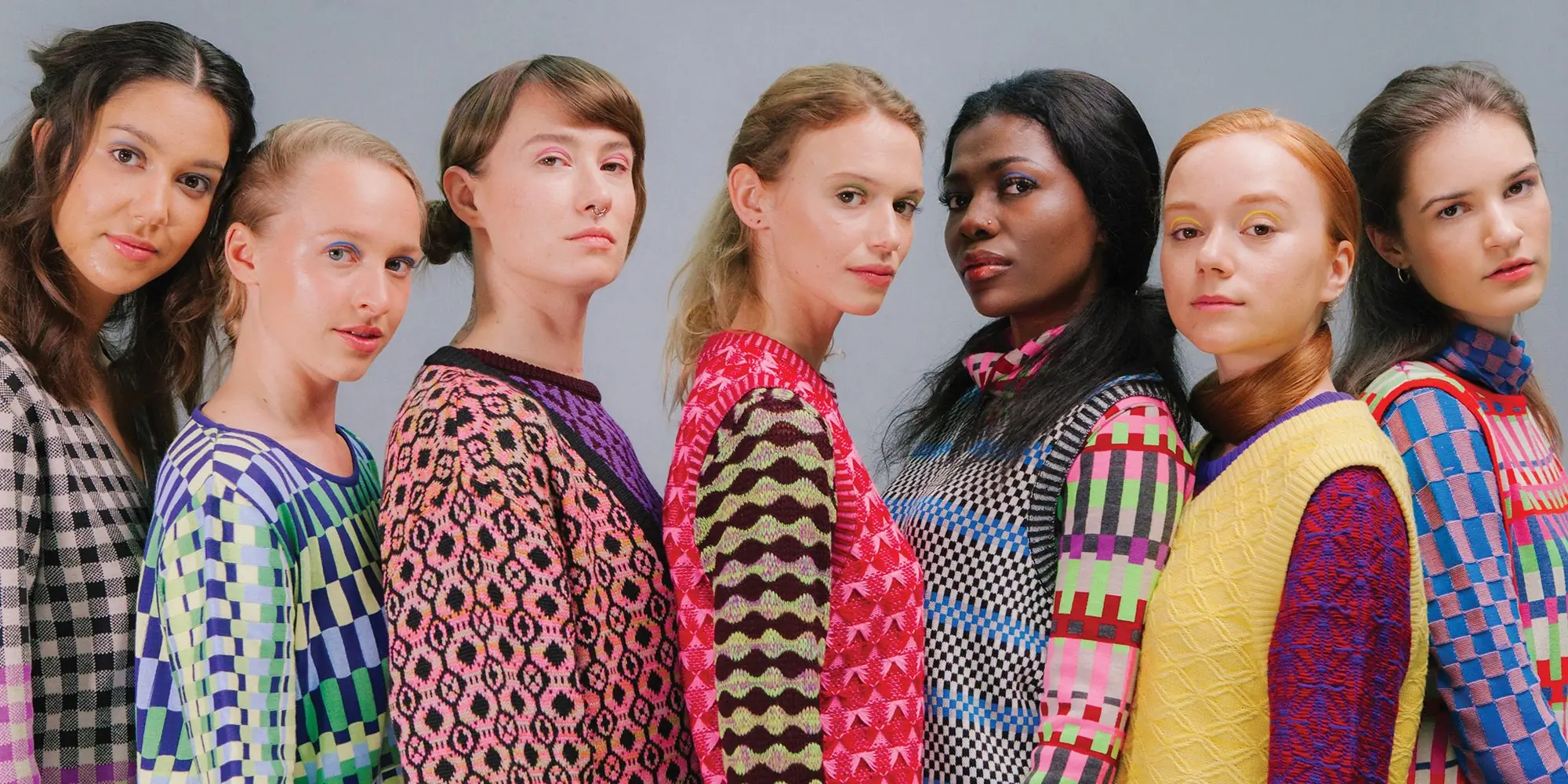
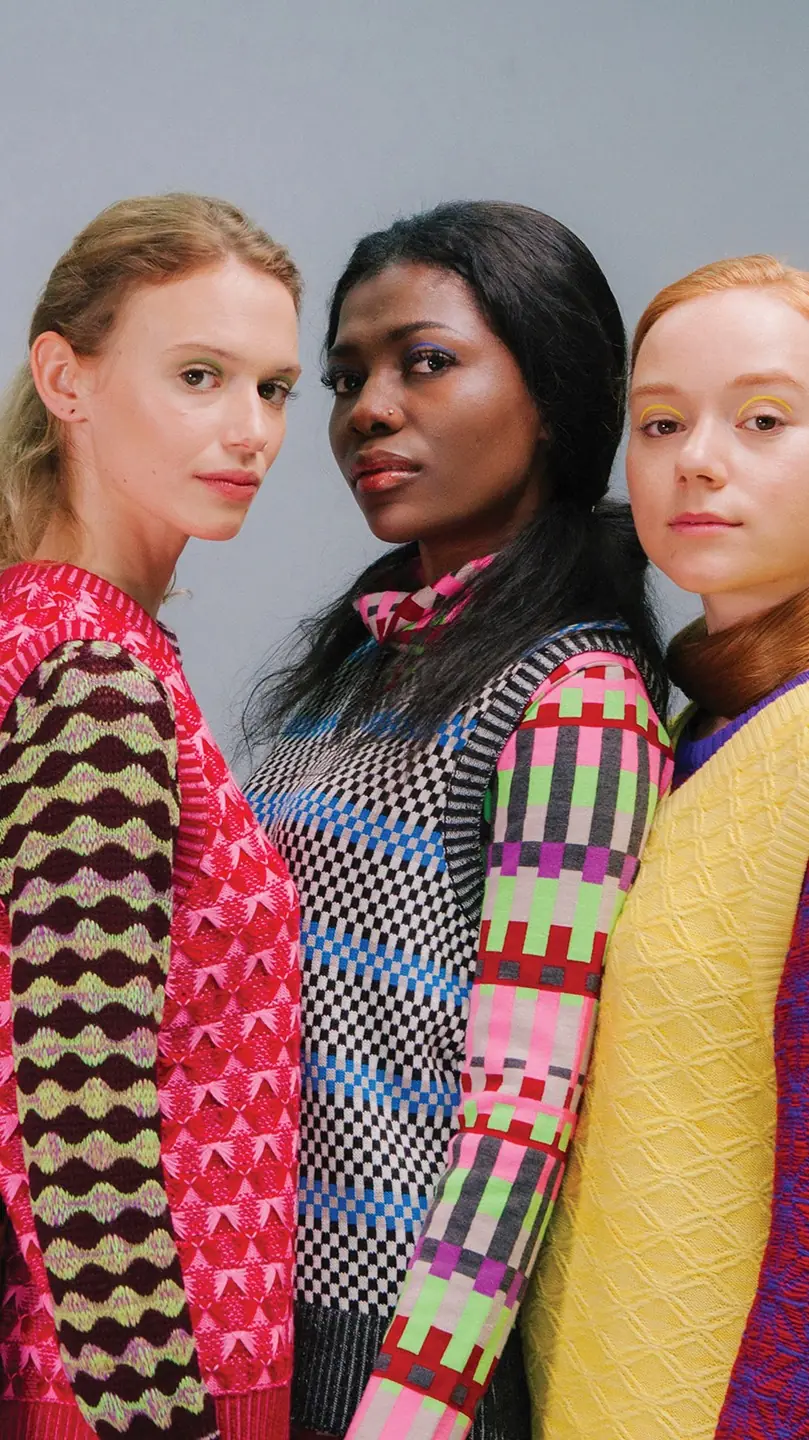
Three talents, three unique approaches, three individual signatures, one guiding thread. We spoke with three young Slovenian designers, Tanja Vidic, Lan Krebs and Jona Bednjanec, who are carving out their paths on the regional fashion map and beyond, in the world of knitwear design. Tijana Čvorak spoke with them about their process, approach and inspirations.
If I asked you which garment instantly takes you back to childhood, which smells most strongly of nostalgia and memories, what would you choose? The oldest garment I personally remember was a white sweater with a small embroidered girl in a purple dress. Interwoven with golden thread, it was, in my four year old eyes, the most beautiful piece of clothing I owned and the only one I still wish my mother had kept.
I honestly do not know if there is any other type of garment that carries as much nostalgia and memory as knitwear. Thinking about it brings to mind my father’s sweater from the 1980s, which I still keep in my wardrobe and which looks incredibly cool today. I also think of children’s mittens connected with a woolen string so they would not get lost. The very same ones that Jelka Reichman depicted again and again in her illustrations for Ciciban.
But knitwear has long since ceased to evoke only nostalgic memories. It is a leading player in autumn and winter collections that walk the runways in step with the times, freeing themselves from the established images of our grandmothers’ metal knitting needles. No longer reserved solely for winter months and ski resorts, knitwear is becoming an expression of contemporary design, experimentation and personal style. Soft silhouettes acquire new structures, production techniques push boundaries, materials redefine knitting, and knitwear becomes a stylistic statement that transcends seasonality.
In this spirit, we spoke with three young Slovenian talents who are redefining knitwear and giving it a fresh, contemporary form through innovative approaches and clear authorial signatures. Tanja Vidic, Lan Krebs and Jona Bednjanec revealed to Vogue Adria their design perspectives and approaches to knitwear.
I first wanted to know what associations the word knitwear evokes for them, and their answers unfolded in three very different yet equally personal directions. From patience and process, through comfort and childhood memories, to experimentation, mistakes and an element of surprise, knitwear reveals itself for each of them as an intimate point of departure, not merely as a material.
Tanja Vidic says that the first thing that comes to mind when she thinks of knitwear is patience, and a lot of patience. “Creating knitted textiles is a very slow and precise process. It is a completely different approach to garment design than most people are used to. You are not cutting garments from an already existing material or textile, but from a single strand of yarn. It takes time and a lot of practice to get used to this way of working and to make a mental shift so you truly begin to understand the process. Patience is also needed later in the work itself. It is a typical process of countless attempts, mistakes and discarded samples. Because everything is made from a single continuous thread, everything is connected, and at any moment it can all unravel and fall apart (laughs). If I think of other associations related to knitwear, a spider comes to mind. In a way we work very similarly, my studio sometimes really looks like a spider’s lair. The third association is Alaïa.” Lan Krebs views it through comfort and childhood memories. “For me, knitwear is above all synonymous with comfort. I associate it with many areas of everyday life. We often do not even realize how important it is to us and how difficult it would be to get used to living only with fabrics that do not offer such a sense of comfort. Knitwear also has a strong emotional note for me, it reminds me of childhood, especially striped motifs, which are very common in knitwear and, without exaggeration, accompanied me throughout my entire childhood. To be more specific, when I think of knitwear I first picture a white winter sweater with dark blue stripes and a jersey top with a pattern of orange stripes of varying thickness, repeating across the entire surface of the garment.” Jona Bednjanec observes knitwear as a process rather than just a final product. She connects it with slowness, repetition and observing how the material behaves, how it reacts to color, structure and use. “It reminds me of experiment, mistakes and surprises, which often lead to the most interesting solutions. What attracted me most was the softness and tactility of the surface and the fascination with how much can be created from a single thread. It is an interesting contrast between the simplicity of making and the simultaneous complexity of the final result.”
Related: Stylist Ana Nikačević has selected the 10 best pieces by regional designers of 2025.
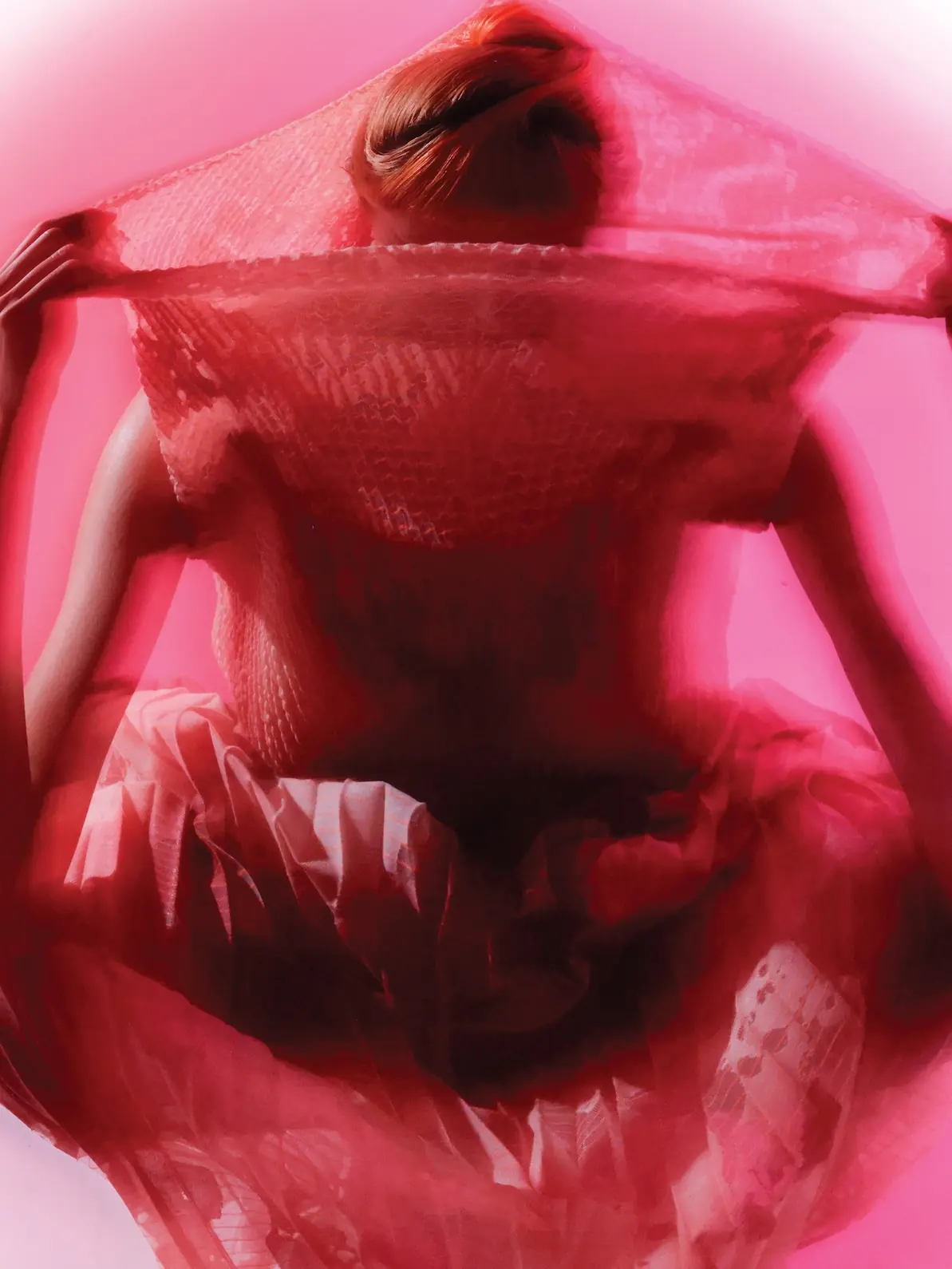
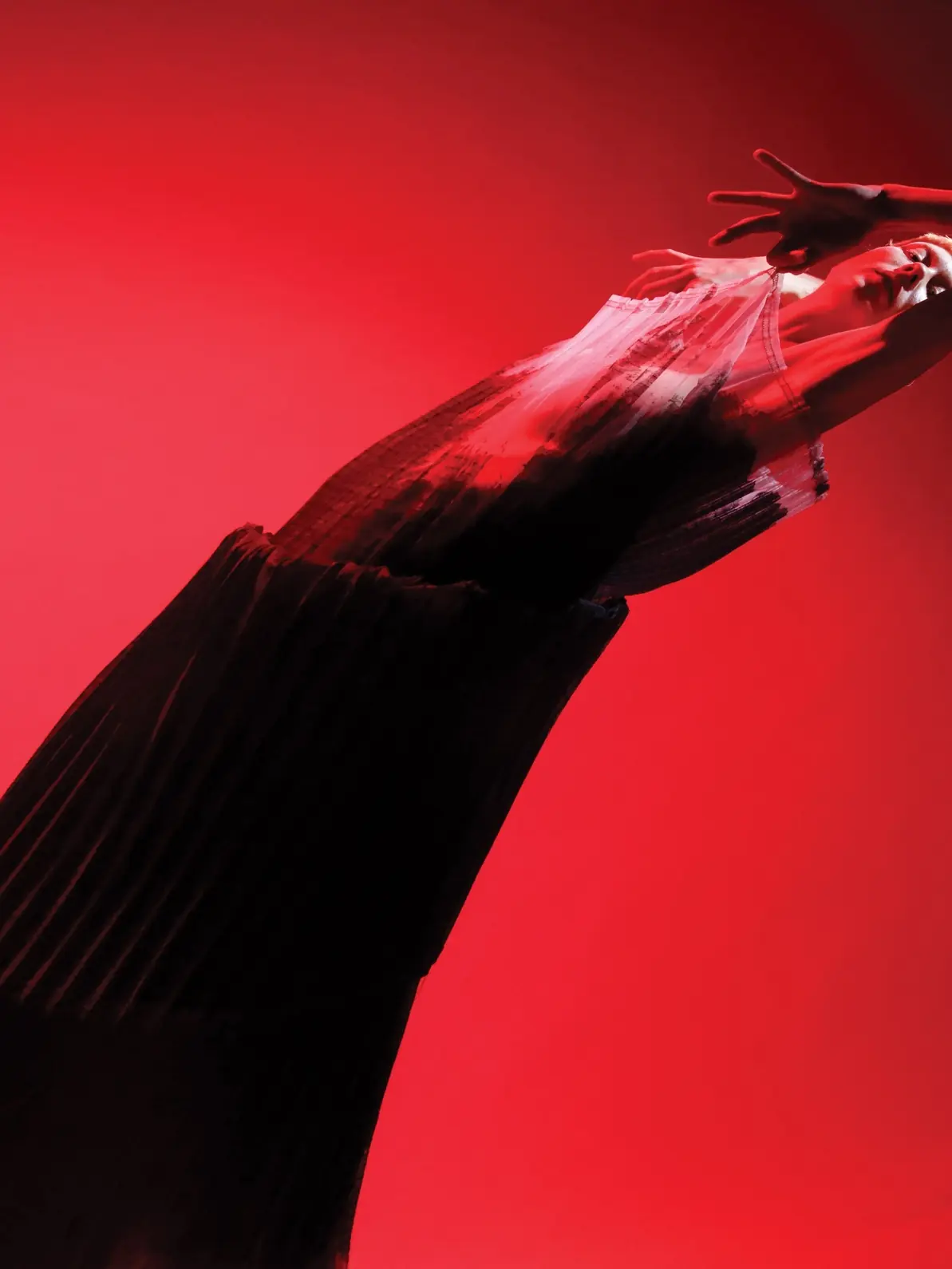
Three designers, with three highly individual approaches to knitwear design. Each of them is guided by a different thread with which they interweave and create unique pieces, so I wanted to uncover how they approach the design process itself. Krebs almost always creates new designs from his own inspiration and exploration of new techniques, structures and color combinations. “The process is driven by curiosity, complemented by boldness, and it is precisely their combination that shapes the final result. The charm of everything I am currently creating lies in the fact that the techniques used are difficult to control, and the final outcome is only truly revealed at the very end of the process. This unpredictability allows me freshness and authenticity in design.”
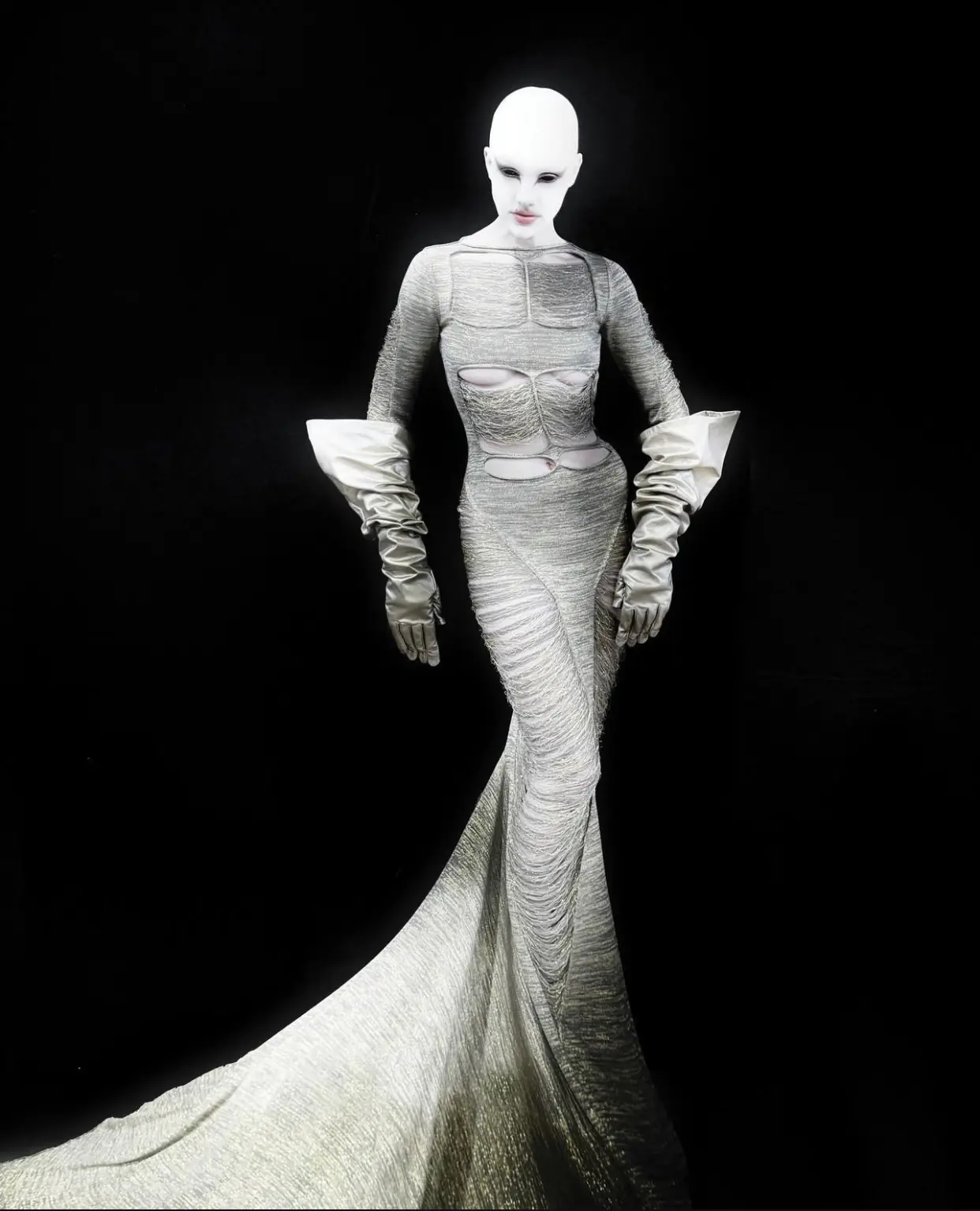
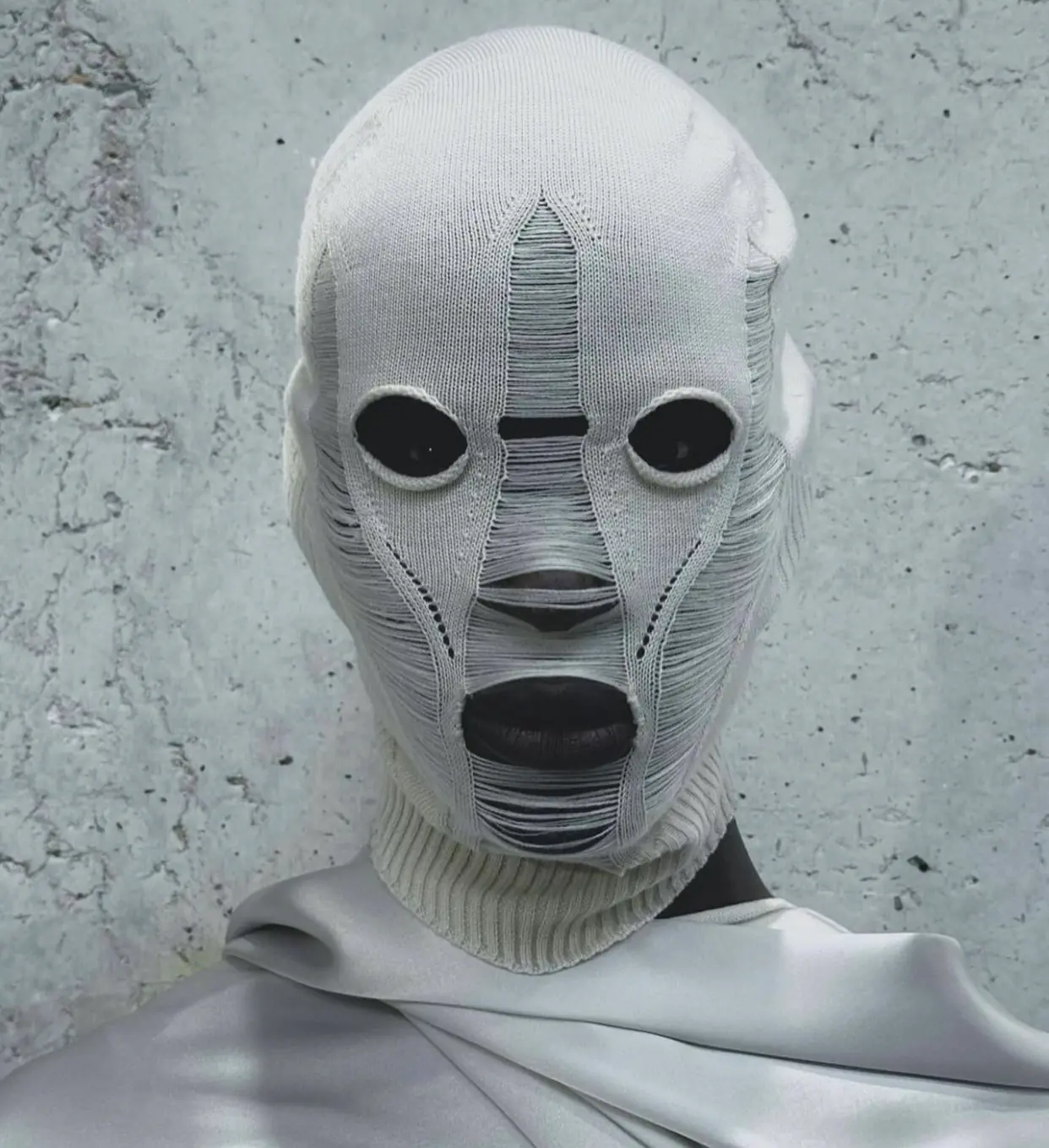
The design of Tanja Vidic is also very closely connected to the creative process itself. “For me, knitwear is an extremely subtle and light medium, because during the work itself a great number of unexpected results occur. From a single, simple knitted pattern, many different expressions can emerge. This unpredictability is what attracts me most. Ideas often come on their own during the work, but usually the most important step is simply to begin. Once I take the first step in the process, ideas begin to gradually reveal themselves. My inspiration is not tied to a single thing, it is a sum of everything that surrounds me. My style leans toward unconventional expressions, sometimes even futuristic ones. I am always looking for something I have not yet seen, an expression or a feeling I have not yet experienced or felt…” As she mentioned, what drew her most to knitwear was precisely its subtlety and the special approach to garment creation that it offers. Its ability to drape on the body is, as she says, completely different from other textiles and allows her to design pieces that can be closer to the body and more intuitive. “This slightly more alternative way of designing immediately captivated me and continues to inspire me today. I have always been interested in exploring materials and experimenting with all possible textiles, and knitwear allows exactly that, because you can dictate, shape and determine at every step what kind of textile will emerge, whether from a knitting machine or by hand. A traditional practice that in a way gives me a great deal of freedom.”
Jona Bednjanec’s design process depends primarily on her current interests and the phase she is in. “Sometimes I am guided by the desire to explore a new technique, other times mainly by play with patterns and textures. I always start from patterns and colors. That is my main inspiration, which is constantly changing. It depends on what inspires me in a given period. It can be a specific color atmosphere, a film or series I have just watched, my personal world and fantasies.”
Looking at their creations, it is immediately clear that although they all start from the same medium and, as they say, traditional techniques, their approaches to techniques and materials are distinctly different. The result is a broad spectrum of possibilities in contemporary knitwear design and a highly unique design signature that has also been recognized beyond the borders of our region.
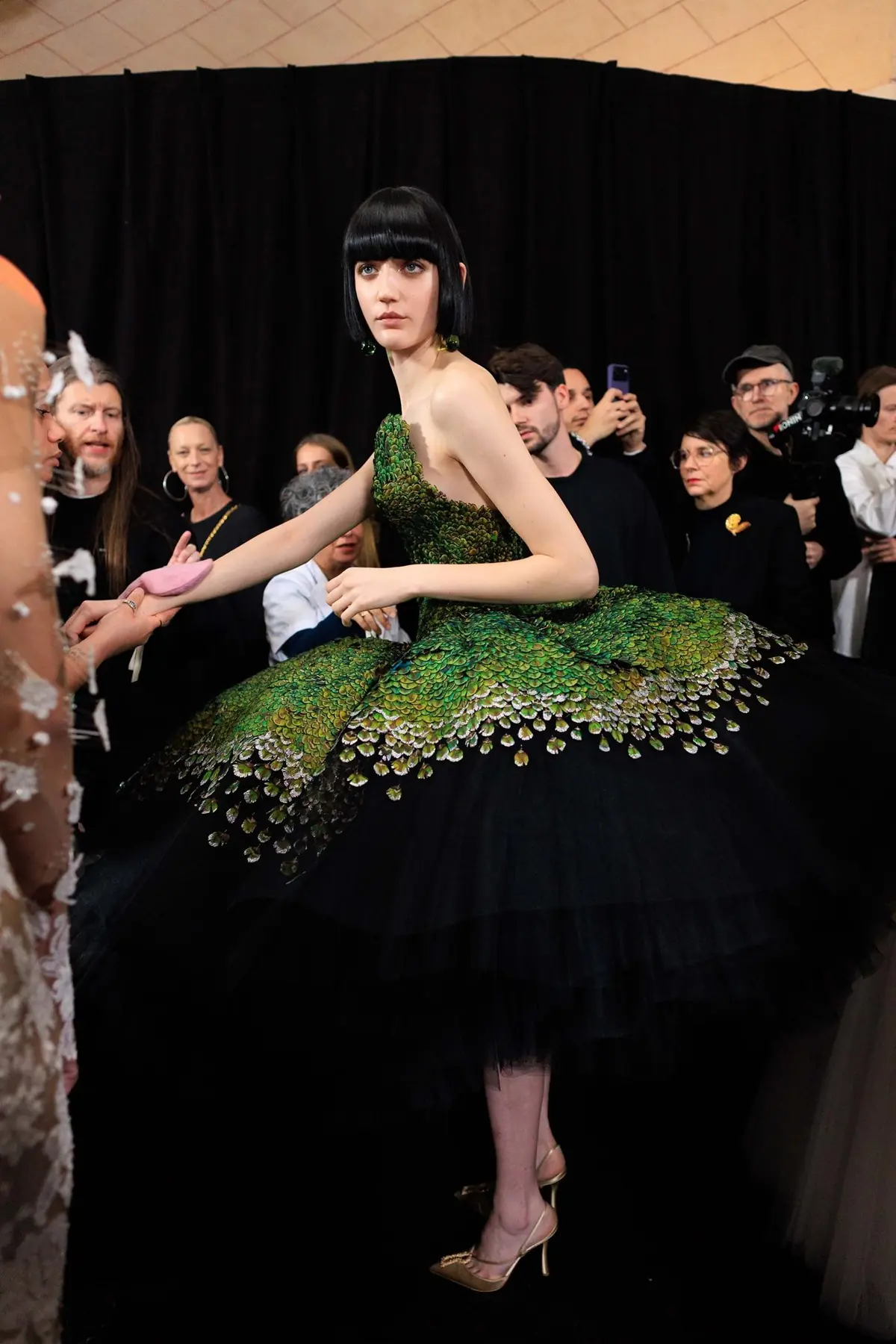
As Tanja describes the knitting techniques she uses, “they are not that different. They are actually very simple and traditional. It is the use and combination of them that is different and unconventional. This gives the final creations a new, fresh and unexpected expressiveness.” Within established techniques, Lan pushes the boundaries of the known and thus very thoughtfully builds his individual visual language. “In creating, I have always wanted to create my own material, one that does not exist anywhere else and is entirely mine. In many fields this can be quite limiting, mainly because of the complexity of production and processing that are, for example, characteristic of weaving. Knitting, on the other hand, offers me complete freedom already in the design process itself. The final product and the material are created simultaneously, directly from the thread, which can interweave into a wide variety of volumes and structures. In the process I developed and practiced while working on my master’s thesis at The Swedish School of Textiles, I combined circular knitting machine techniques, screen printing, spatial dyeing, dyeing with various pigments and pleating. Essentially, I used well known and established techniques, but through their combination I created a contemporary expressive language that defines me today and represents the starting point for my further work. On the circular knitting machine I knitted a tubular fabric that served as the base of the garment. On the machine available to me, I could only knit single color or striped jersey, so through various post processing methods I wanted to explore how jersey could also be a more dynamic material. In the resulting collection, all pieces are seamless and zero waste. I achieved this through the pleating process. In this process, I compressed the excess material into folds so that a surface about one meter wide became narrow and elastic enough to build an interesting form on the body. Even before pleating, I hand printed all the material with color pigments and burnout printing, which left organic, undefined and translucent imprints on the surface. The combination of all these processes ultimately works harmoniously and at the same time dynamically.”
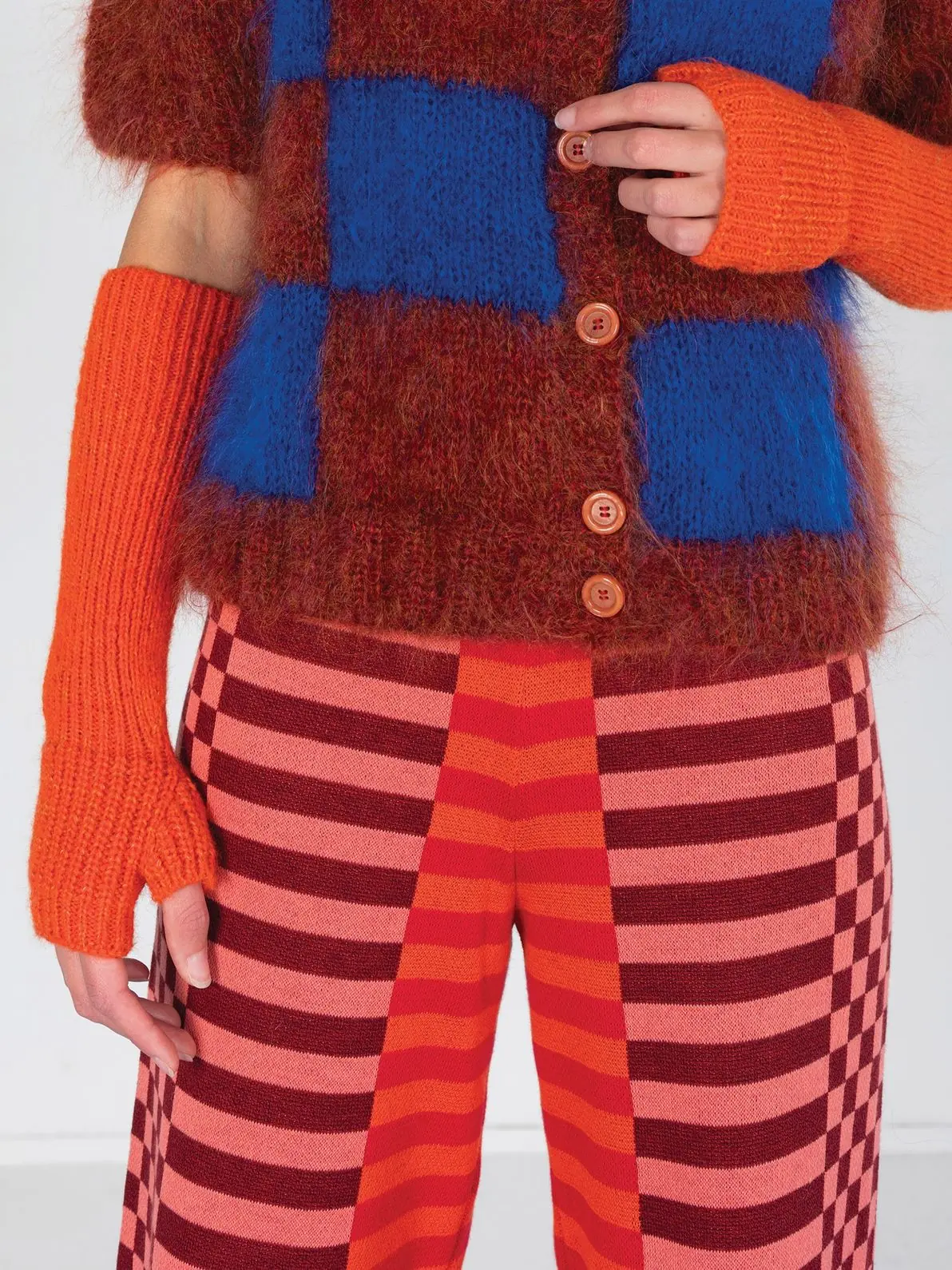
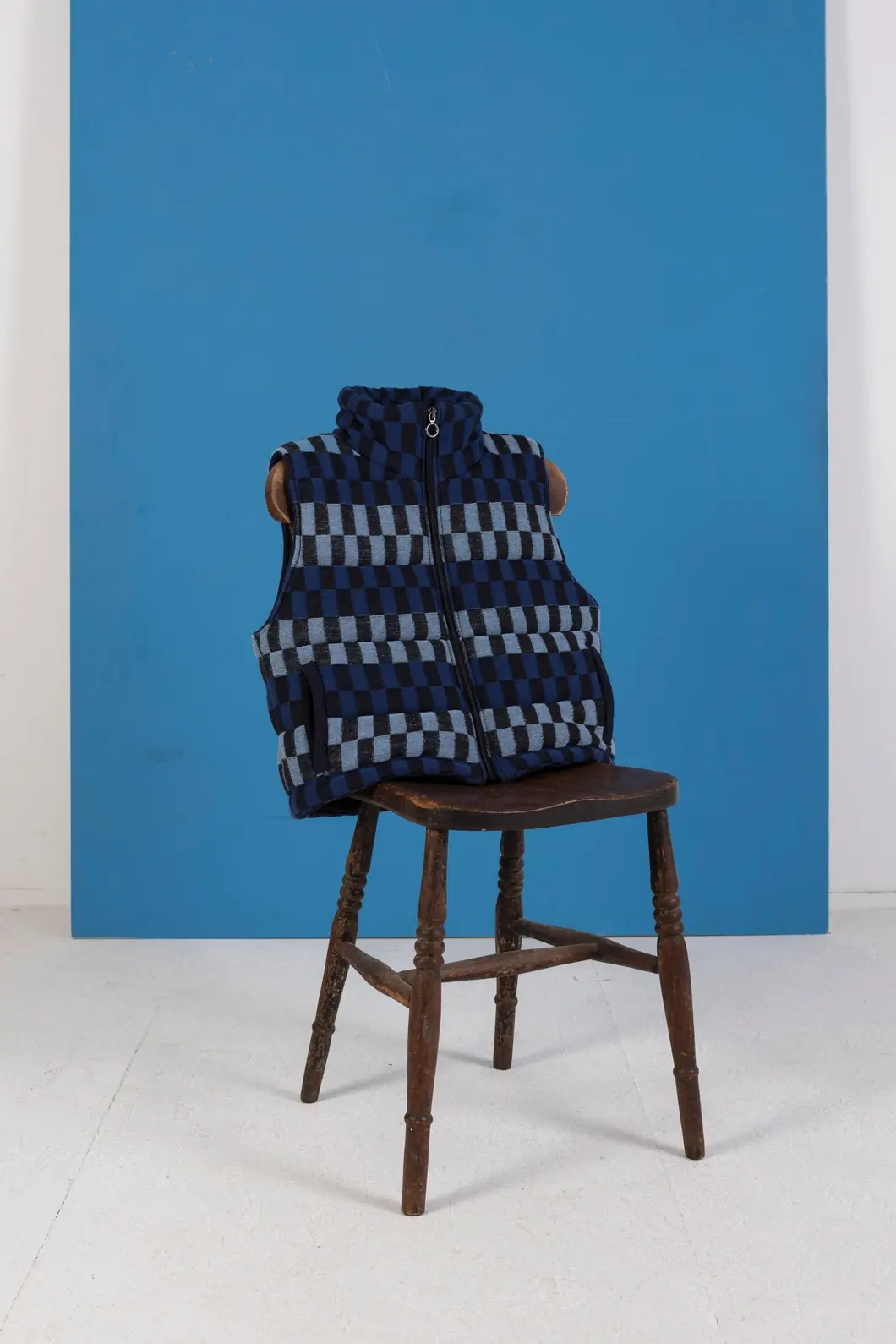
Jona uses techniques as tools for experimentation and the development of more complex structures. “The techniques and knitting bindings I use are traditional to a certain extent, while the contemporaneity of my work is reflected in the way I translate my own graphic patterns into the language of knitting. I then combine these with different color combinations, materials and structures. My process is based on transferring graphic thinking into knitwear. The knitwear is then machine produced. I work with the equipment I have available and explore everything this technology allows. Compared to traditional techniques, my work differs mainly in that I develop them a step further, toward greater complexity. I use all the possibilities offered by knitting machines and treat them as tools for experimentation and the creation of new structures.”
And while they allowed me to take a peek into their studios and sketches, I also wanted to hear their forecasts for the future and the year ahead, both in fashion and in their own plans.
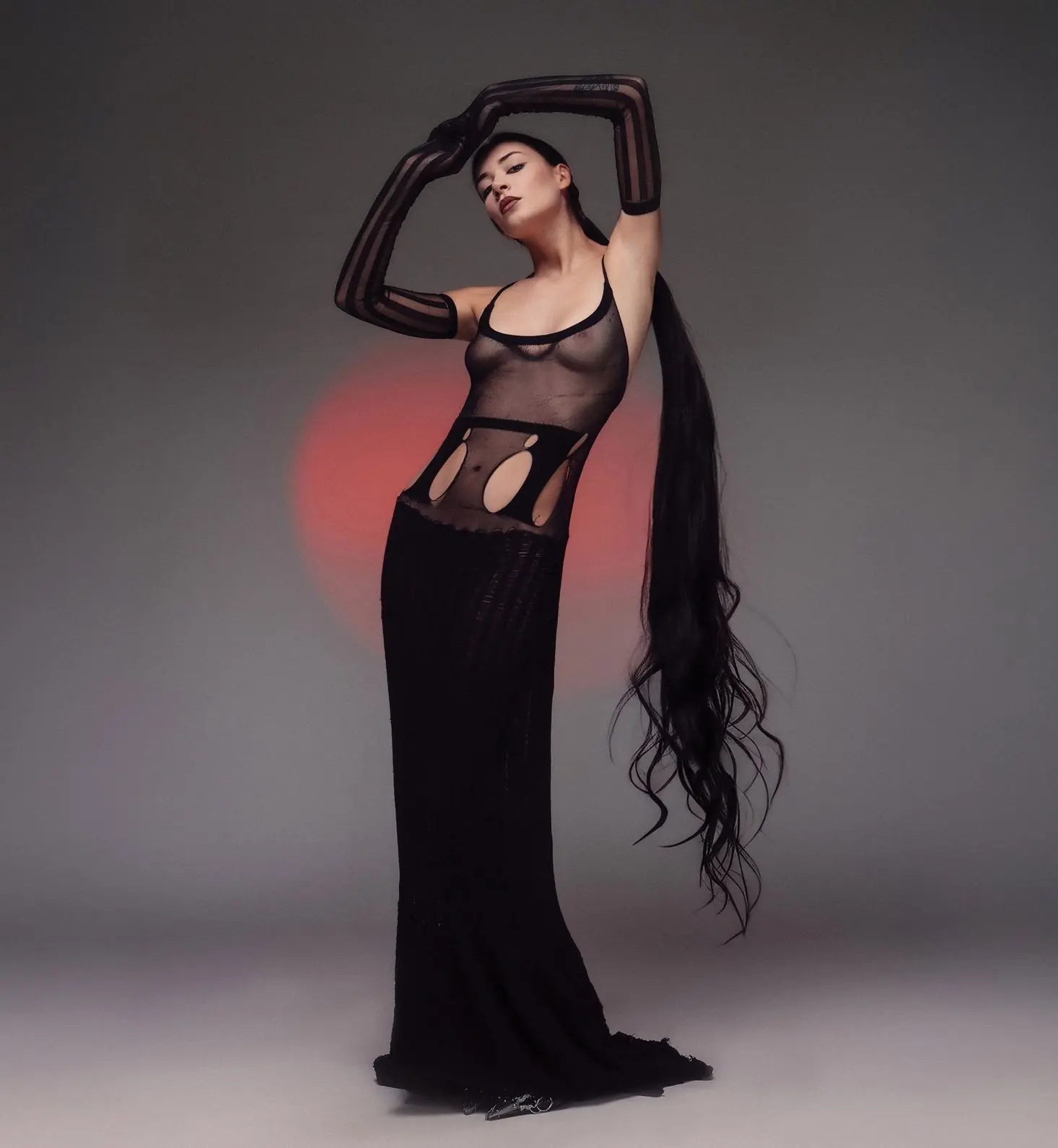
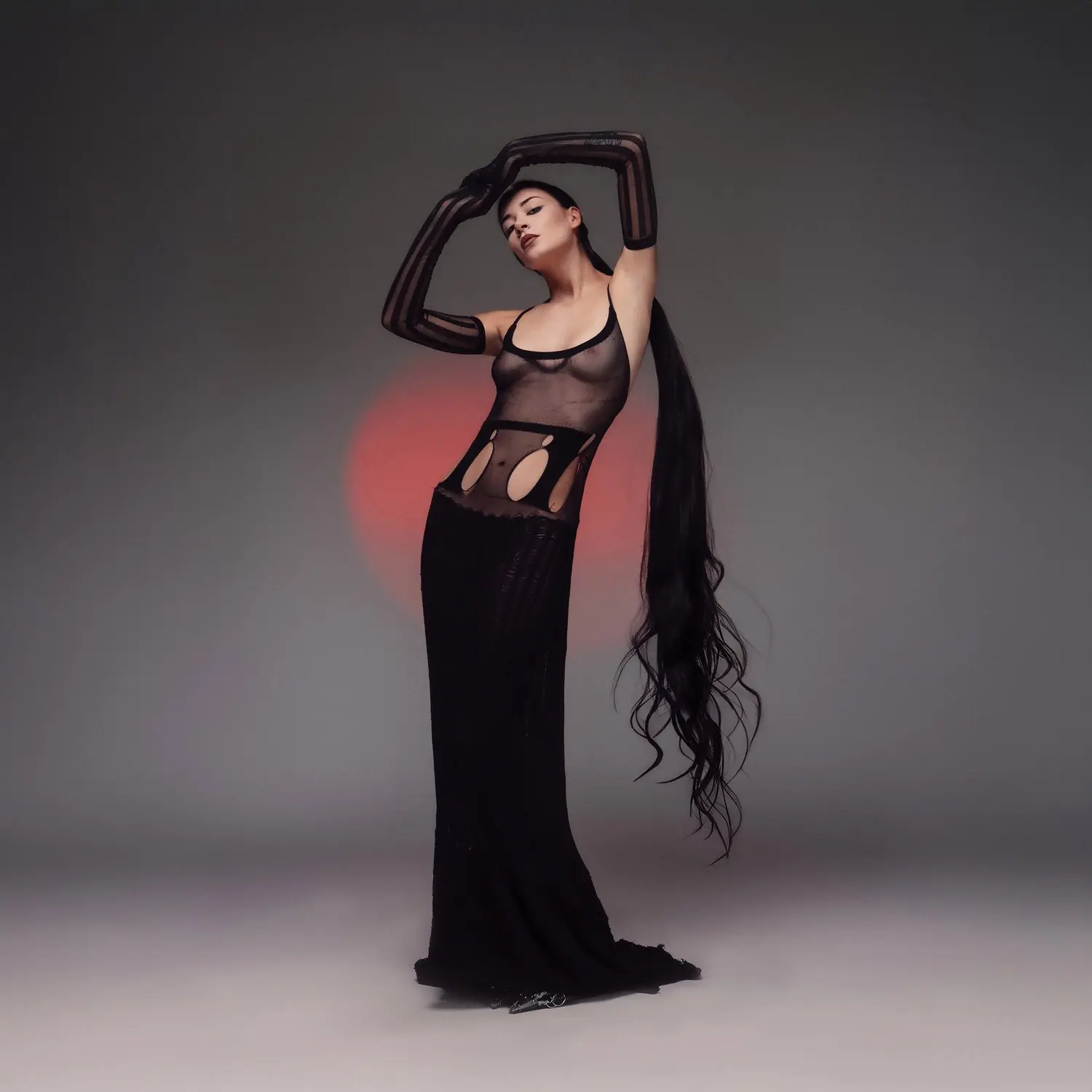
Tanja Vidic, whose portfolio includes collaborations with designer Rick Owens and a creation on the cover of Rolling Stone worn by musician Cardi B, has just launched her own brand, VIDIC, which we will be following very closely.
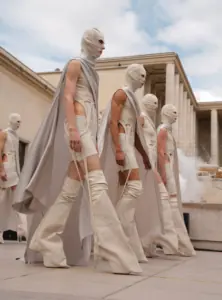
Tanja Vidic, foto: Emanuel Koroly
Lan Krebs predicts that in the coming year 2026 global fashion trends will continue to explore structure, tactility and a craft oriented approach. “Structures are becoming increasingly interesting, and knitting remains one of the hottest techniques, both in high fashion and among hand knitting enthusiasts. This connection between contemporary design and traditional knowledge seems extremely important to me. In my own work, I will remain faithful to my own sensibilities. I am drawn to dyeing, painting and printing on knitwear, especially the exploration of balance between fine, precise structure and a visually rougher, more expressive print. I am interested in how material and color can influence the perception of the traditional cable knitting technique, and where the boundary lies between the modern and the distinctly classic. In the coming year, I want to add an interesting contemporary twist to traditional textures combined with dyeing and transparency, and reinterpret familiar knitting motifs through a modern visual language.”
Jona admitted that she does not follow many fashion trends, but instead prefers to follow what interests and inspires her. “Trends and fashion directions return cyclically, but I notice that today there is no longer a single dominant trend, rather a mix of different influences. What was once a subculture can very quickly become mainstream today. I believe that more and more people, alongside fast fashion trends, will devote themselves to their personal style. On the one hand, I lean toward exploring more advanced knitting technologies, while on the other, I am still strongly drawn to hand knitting, which is how I started. I am interested in the combination of hand and machine work. The more I experiment, the more new paths and design solutions open up. On a business level, I want to firmly position my brand on the domestic and European market.”
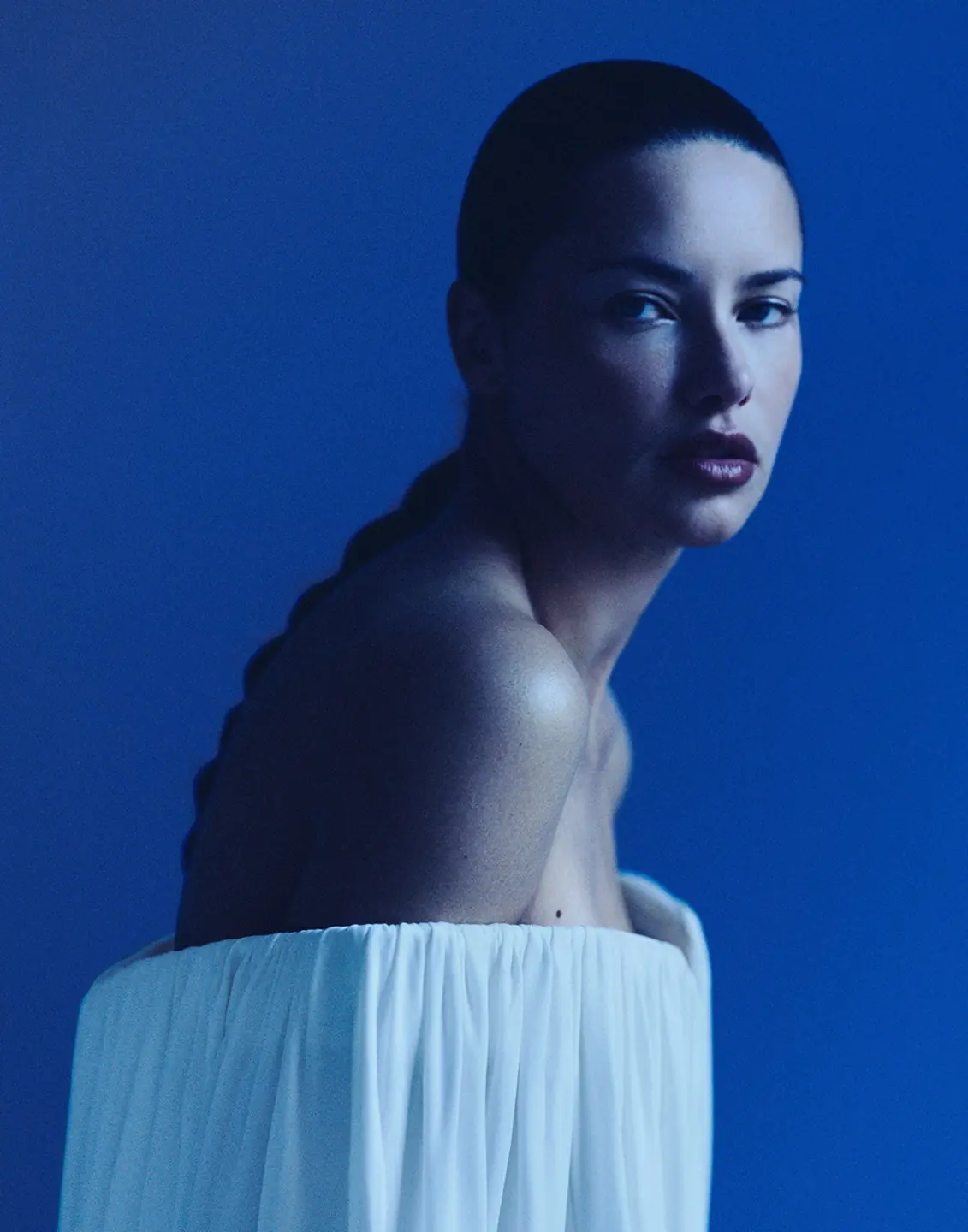
Cover photo: Jona Bednjanec, Lucija Rosc
VOGUE RECOMMENDS