

Society
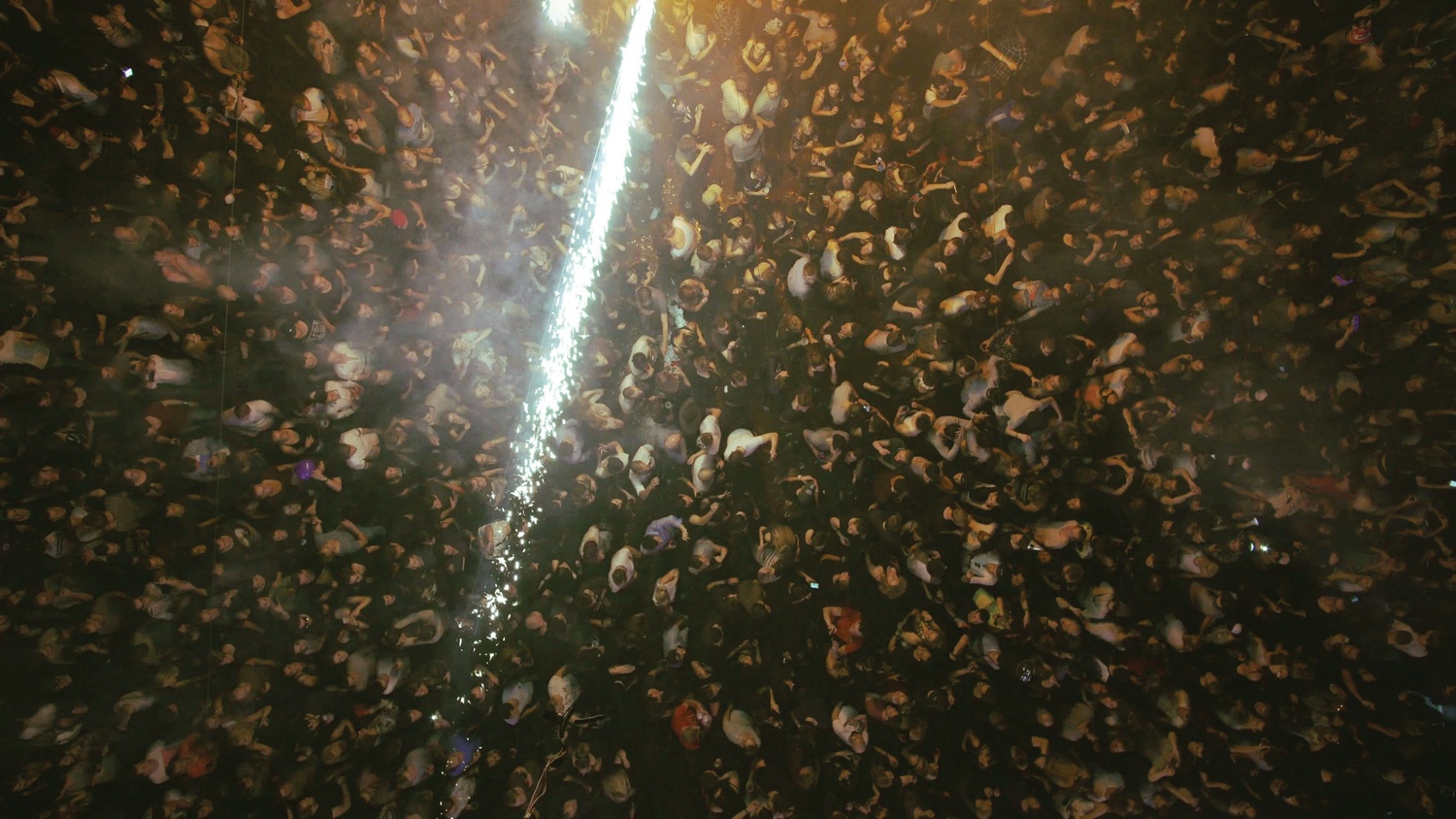
When a friend recently suggested that we add a Saturnalia celebration to this year’s December list of festivities, I immediately agreed, of course, and spent the next few hours searching for the most accurate description of these ancient celebrations, then a recipe for globules, which soon evolved into a deeper exploration of ancient Roman menus, and shortly after that into an investigation of the social role of such holidays. Even those who did not follow this research path are probably aware that around the world, and in its various forms—from carnivals to festivals—social inequality was often softened by entertainment and by making everything accessible, permitted, and possible for everyone for one or more days. Lines and classes mixed, rich and poor, busy and free, private and public, and direct contact temporarily became possible between all. I am inclined to think that the closest we come to this in the modern world is going to a club. The darkness of the club is no different from these manifestations in terms of the equality of those present at a rave, as well as the collision of opposites that meet on the dance floor. However, if clubbing democratizes while simultaneously generating the potential of the collective body, could the seeds of broader social change perhaps begin here? After all, hasn’t movement and the feeling of togetherness connected people throughout history?
In search of answers about the subversive potentials of clubbing and how nightlife can influence daytime life, making it bolder, louder, and more connected, I spoke with the artist Bogomir Doringer, whose Dance of Urgency is personally one of my favorite studies of the collective body and which, as Bogomir himself says, is evidence that dance does not necessarily arise from joy but from a much more complex set of emotions: pain, fear, pressure, the need to survive, which can be unraveled through movement and lead to a sense of belonging and connection. I also spoke with Samuel Douek, who has turned queer, sex-positive parties into an inclusive sex wellness brand with such strong awareness and principles that it borders on a movement.
Although at first glance their practices and positions seem distant, both found the beginnings of their thinking on the dance floor, in the communities that form around it, which represent imagining new spaces of freedom and testing new alternative methods of organization and connection. Is it then an exaggeration to say that the dance floor might be the most honest, least discriminatory, and most democratic space of freedom today? Can community be built through clubbing? “I would agree that the idea of the dance floor as an accessible, inclusive, and diverse space is what makes it powerful. Many events and parties throughout history, from the early 20th century, through the sixties and seventies, up to rave culture itself, carried these values. Yet today it is harder to claim that because of entry prices, strict door policies, and the music industry largely taking control over club culture,” Bogomir begins. “Certainly, I think you want to point out that the values of everyday life and the rules that apply during the day don’t operate at night—and that this very possibility for people to question their daytime roles, to embrace different identities or experiment with them, is what happens. That is why nightlife is particularly fascinating to me: it is essentially a ritual of masking and dance. Through such experiences we connect, often nonverbally, and we discover possibilities to imagine a different reality and create bonds and networks among people who might otherwise never meet—neither at work, nor at school, nor anywhere else in daily life.”
Related: The young rebels who stunned Britain and shaped contemporary pop culture
It is this sense of democracy that I have in mind. More than once, in clubs, carried by the same rhythm and the desire to shake off and release everything that no other form of intervention had freed from me, to let go, to grieve, or to celebrate, I found myself surrounded by people with whom I would probably never have shared life or intellectual space. Dance, however, allowed it. The night exposes, but also equalizes. “I think it is very important to pay more attention to nightlife and night culture because it is a vital part not only of culture but also of art, and it is an incredible space of togetherness,” Samuel adds. “Nightlife has been dismissed and denied as a ‘lower form,’ yet it is actually the birthplace of many subcultures. HOWL began from the desire to create a space where different communities under the LGBTQ+ umbrella would recognize a safe place that is also sex-positive. I often feel that queer spaces are fairly one-dimensional in demographics, and our idea was for HOWL to bring together truly diverse people who would celebrate pleasure and enjoyment. During and after the pandemic, when clubbing was existentially threatened, I thought about how the excitement, passion, and connection from the dance floor could be carried into the real world. That is how HOWL became a sexual wellness brand. We wanted it to bring a radical shift in the understanding of intimacy.”
The democratic nature of the dance space opened a path for Samuel to new reflections on the accessibility of the idea of pleasure. It sparked a conversation about shame and embarrassment, about liberating the mind, which can then be followed by a free body. Samuel and his team translated the principles they honed through organizing and hosting parties into the world of intimacy, highlighting the “Eight Principles of Liberation,” which deserve the status of a true manifesto. “These eight principles are our belief system.
We want to be loud, proud, and uncompromising and to spread them to people around the world, especially where life outside normative communities and ways of living is stigmatized.
‘Pleasure without shame’ is undoubtedly the most important principle because, regardless of gender, race, class, or age, we all feel shame, and very often in relation to pleasure. We want to address this issue of shame, to unpack it.” This is how HOWL became the first sex wellness brand to break into the cultural mainstream and collaborate with Tate Modern, Barbican, Universal Music. And it is not just a matter of collaboration but of normalizing conversations about intimacy. Political and social movements, their constraints and repressions, largely affect not only how we enjoy our own bodies and speak about them but also how we move them. “The way we dance, the way we move, depends on the spaces and areas where we see the possibility to exercise that freedom, but also on certain legal boundaries,” Doringer reminds. “There is always this kind of play: how can we be creative within the limits we are given? That is why it is often very interesting to observe how movement, almost like a fluid, moves and finds its gaps, its spaces, its boundaries—but also how it sometimes imagines those boundaries, or their shifting and breaking.” I shared with him that it seems to me these two words might even be key: “shifting” and “breaking,” which we almost unconsciously associate with boundaries. I also mentioned that I think it is precisely in that “movement” and the search for space that the only possible solution for mastering the future lies. Another important lesson of clubbing. “Underground communities are the most creative in that regard; they always find new ways. In more oppressive environments, the search for freedom is often much bolder,” Samuel concludes, and I note how striking it is that, despite apparent freedoms, boundaries seem to harden again, and it seems to me this also affects clubbing, and I cannot help but think of the connection it may have with disciplining the body. How much has clubbing changed recently? “Many say nightlife is dying, but I think that in my twenty years of partying, it has never been as alive and diverse as it is now,” he continues. “With new clubs and a new generation, after the pandemic, I felt that at least in London, rave culture is experiencing a rebirth and a strength not seen since the 90s. Only now, instead of one big wave for everyone, everything is much more niche, adapted to the needs of different communities. Nightlife and communities are inseparable. And they are definitely not dying but thriving.” That was somewhat comforting. “Clubbing is constantly undergoing transformation,” Bogomir adds before I even had a chance to nod.
Related: Zagreb has a new clubbing concept, and we spoke with Ben Colgan, the man behind the project
“Twenty years ago, clubbing wasn’t necessarily good, maybe ten years ago it was, and now again it isn’t.
And when I say it is or isn’t, I also look at how bodies move or don’t move, and what interrupts them. The presence of phones and technology on the dance floor certainly disrupts the ritual of dance. There are always forms of resistance to the time we live in. I always observe each individual on the dance floor as a story yet to unfold, but also every crowd of people.”
If we view dance as practicing freedom of movement, and people as stories waiting to open, can revolution, if not literal, at least conceptual, begin in a club? “Crowds of people are a bit like clouds—they bring change, whether in weather conditions or in the socio-political climate. I truly believe that dance can spark a revolution or engage in social and political change. I don’t just believe it, I know it does. In Georgia, the so-called ‘rave revolution’ was launched when people gathered for two days in front of Parliament to prevent the government from closing Club Basiani. That club was then, and still is, seen as a serious threat to the political project aiming to steer Georgia away from the European path and back toward Russia—which, unfortunately, is a process we are witnessing now. If we look at the collective Las Tesis, the movement against femicide in Chile, we see how singing and dancing to repetitive rhythms in public spaces grew into a global movement against femicide, domestic violence, and rape. Clubs and dance spaces serve as a kind of formal and informal training for the collective body and movement—places where something accumulates, is practiced, and prepared, so that if needed, it can spill onto the streets and into public space.” “For us, it does,” Samuel laughed. “In search of an answer to how to live a life free from shame, we went from parties to a brand. It’s hard for us as adults to unlearn things, but it’s not impossible. I think people can learn easily, but they are skeptical of change and feel it threatens their ‘moral compass.’ What we still need to learn is that change can disrupt the system, but if it makes life better for everyone, then it’s not a bad change. We try to spread that awareness through education, through Instagram as an information hub on various topics, through a wide range of ambassadors—from sex workers to DJs to educators. A new community is forming, and even if only one person feels better or understood after our text or event, or feels good in what they wear and who they are, that is wonderful. Inspiring just one person is already enough of a change.”
VOGUE RECOMMENDS