We watched The Pelicot Trial and all we can say is: THIS IS BITEF!
Jordan CvetanovićDecember 17, 2025

December 17, 2025
Thanks to the 2025 edition of the self-organized festival ne:Bitef, which took place after the institutional Bitef failed to happen for the first time in its six-decade history, audiences across the region were able to watch The Pelicot Trial exclusively, and entirely free of charge. According to international critics, it is one of the most compelling theatre works of the year. I don’t usually like clichés, but on Monday Belgrade truly felt like the center of the world. The more than four-hour-long, layered dramatization of the trial of the rapists of French woman Gisèle Pelicot was staged at the Mata Milošević Theatre of the Faculty of Dramatic Arts. In the spirit of the festival’s slogan, which insists that Bitef exists wherever we gather, the opening was followed across the region via a live online stream, as well as through self-organized public group screenings in Novi Sad, Ljubljana, and Skopje.
It’s hard to imagine anyone today who hasn’t heard of Gisèle Pelicot, after she waived her right to anonymity in order to secure a public trial against her former husband, Dominique Pelicot. For nearly a decade, beginning in 2011 in the southern village of Mazan, he drugged her until she was incapacitated and invited unknown men he contacted through online forums to rape her. In December 2024, he was sentenced to 20 years in prison, and guilty verdicts were delivered for all 51 accused men. Gisèle Pelicot, who stated in court that she wanted “society as a whole to be a witness” and that “shame must change sides,” was awarded France’s highest civilian honor, the Legion of Honour, in recognition of her determination to expose and challenge what she described as a “macho, patriarchal society that trivializes rape.”
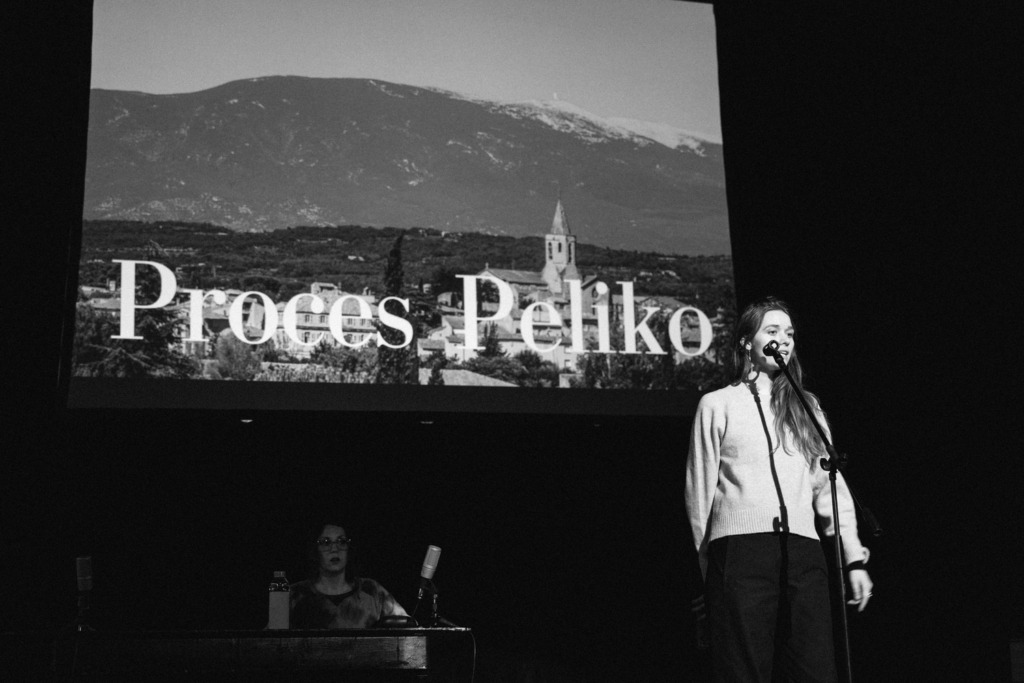
Photo: Jelena Janković
The four-hour production was directed by Milo Rau, a Swiss director and playwright known for his theatrical interpretations of court cases, including the Moscow trial of the Russian punk group Pussy Riot and the trial of Romanian dictator Nicolae Ceaușescu. Throughout the creation of the piece, the creative team worked with the ongoing support of Gisèle Pelicot’s lawyers as well as feminist organizations, and Rau himself has said that he felt compelled to turn the trial into a work of theatre. The production draws on an enormous body of material: 600 hours of court proceedings, thousands of photographs and video recordings, expert reports, testimonies, and archival documents.
We inspected the landscape, in depth, and then painted our own paint. We tried to keep the big picture; in its complexity, says Servane Dècle, the play’s dramaturg and co-author. Asked what it is like to collaborate with a director who has such a strong authorial voice, she adds: I learnt and learn a lot at his side ! It’s also amazing as a young artist to benefit from the trust people have in Milo’s work. I feel grateful; And I think that on this topic working as male-female duo brought a lot to the process.
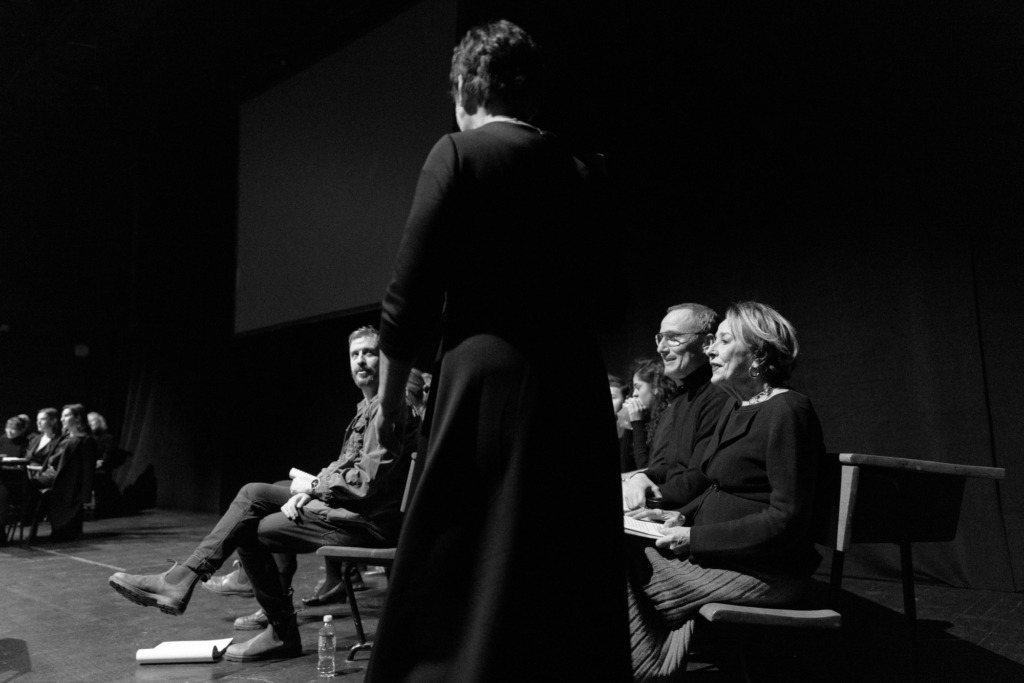
Photo: Jelena Janković
When Svetlana Bojković opens the performance by saying, “In the courtroom in Avignon, an abstract tapestry hangs on the wall, depicting Mount Ventoux,” I realize that it is in fact the same frozen image of the small, picturesque village of Mazan where the horrific events took place, the one I had been staring at before the livestream began on YouTube. I’m grateful that those of us who were unable to attend the performance in person were still given the chance to see it, even if only through a laptop screen. I usually fear the presence of a camera in a theatre space, but this time it doesn’t bother me at all. On the contrary, it deepens the experience. I have the sense that the words resonate even more powerfully from the stage, and that the ever-present, voyeuristic human urge to find out what the human species is capable of becomes strangely amplified, and therefore all the more unsettling.
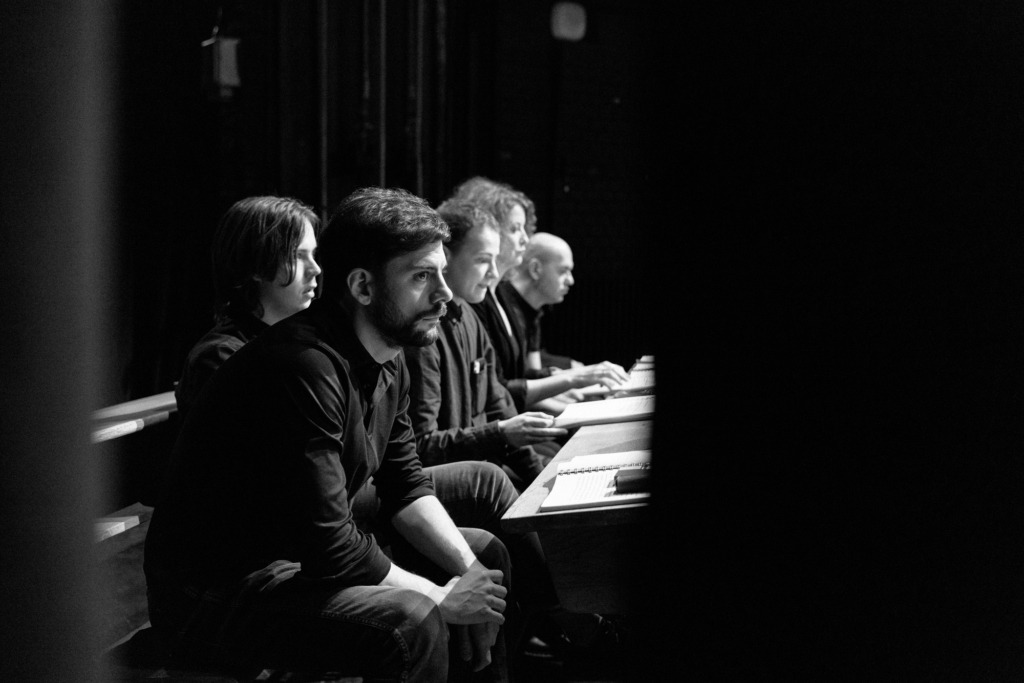
Photo: Jelena Janković
At first, though only for a brief moment, I catch myself thinking this might be just another in a long line of true crime stories. Very quickly, however, I realize that it is far more disturbing, more painful, and more frightening than that. The story goes beyond the fact that it happened to people we don’t know, and I begin to understand that it is about all of us. About me. As the uninterrupted barrage of words, facts, and data unfolds, I become aware of how, as human beings, we are almost all “convicted” and reduced to a single report, a piece of evidence, a testimony, a statement. I’m shaken by the sheer brutality of everything one woman, one human being, endured, how violent and warped it all is. I think it shakes everyone involved in this process. It feels as though no one can simply read this material. Everyone is swallowing hard, struggling with the weight of the text. And in that struggle, the act itself becomes elevated. It becomes art we stand in awe of, art that ultimately transcends itself.
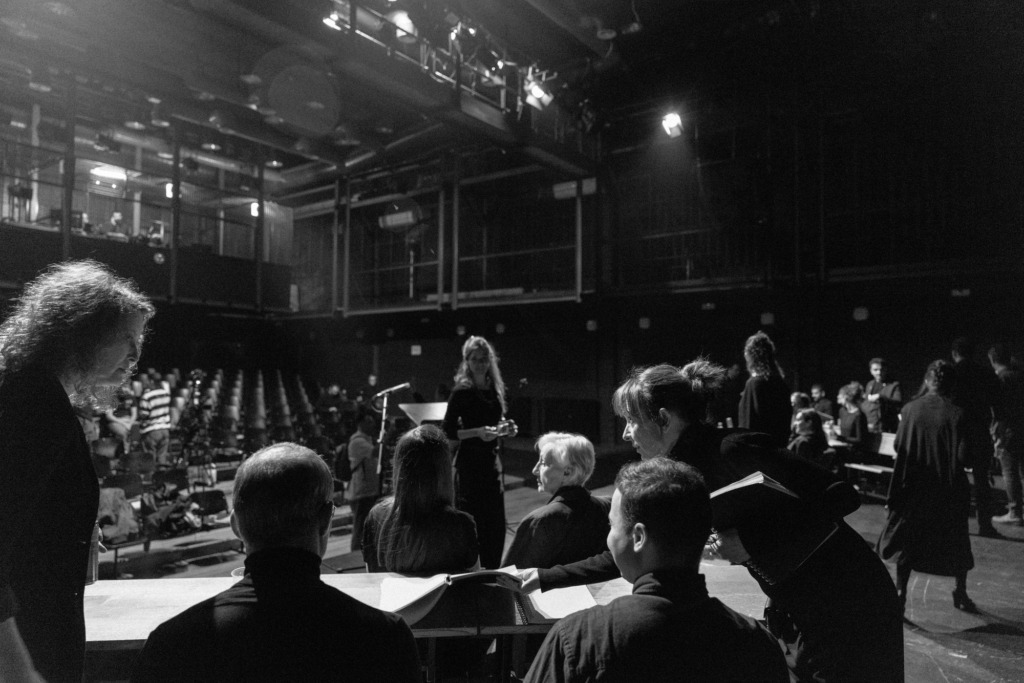
Photo: Jelena Janković
The performance focuses primarily on the cross-examination of the accused men, as well as their initial questioning by the police, revealing the shifting nature of their awareness of what is actually at stake. The authors have constructed a work that relies on verbatim excerpts from real court documents, police files, psychiatric reports, online correspondence, and media commentary to build a distinct narrative that resists traditional theatrical formats. Instead, it opts for a minimalist, restrained setup in which the actors devote themselves to reading through this vast body of material. In doing so, the rawness and, indeed, the brutality of the testimonies before us is brought into even sharper focus.
As the director himself has acknowledged, the piece makes it unmistakably clear to him just how “pervasive” rape is within society. In this context, the Belgrade staging of this major theatrical event amplifies the impact of the theatrical act even further, especially when considered against the specific circumstances and conditions under which this year’s ne:Bitef is taking place. This meta dimension is undoubtedly intensified by the appearance of Milena Radulović in the role of the judge-narrator, given that she is an actress who has been engaged for the past five years in an unsuccessful legal battle, attempting to prove the guilt of her former acting teacher, Miroslav Aleksić, who stands accused of multiple rapes of his students.
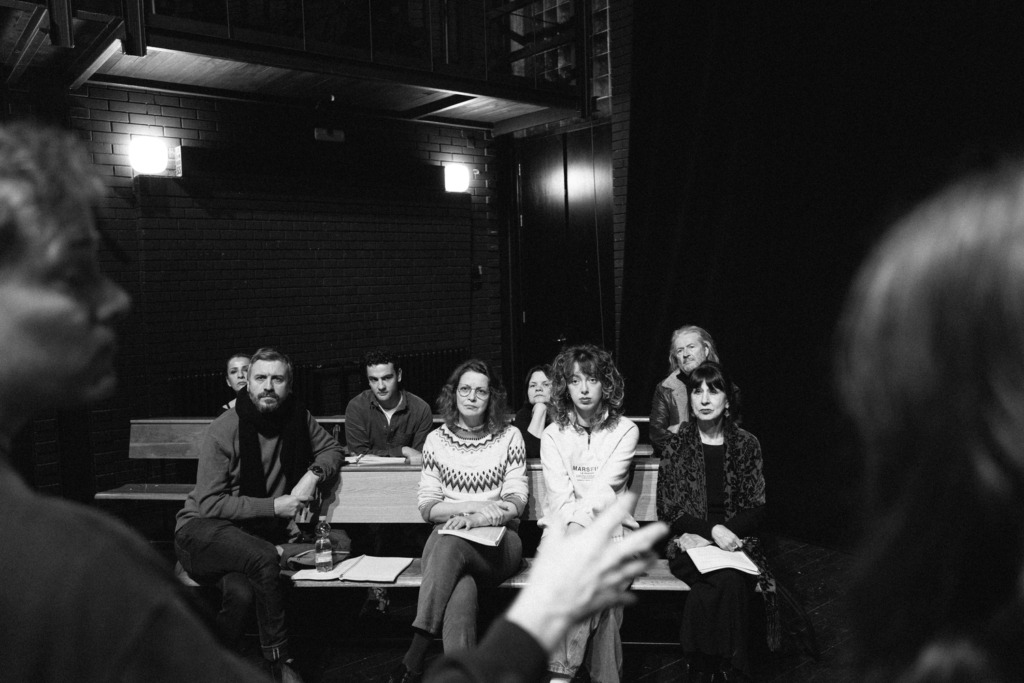
Photo: Jelena Janković
How could four months of court proceedings, which deeply shook French society and resonated far beyond its borders, be condensed into four hours on stage? How could every trace of spectacle or sensationalism be avoided? Gisèle opened the doors and asked to watch. We try to do the same.. The entire case is about the layering of ordinary and extraordinary, the known and the unthinkable. The men have ordinary lives, until you hear about their traumas, their acts or their
online chats; rape is ordinary but this case is actually not. In the oratorio, we navigate between these realities,”Dècle explains, describing the method and working process behind this demanding project, undertaken with the full awareness that at any moment they could slip into exhibitionism. Yet there was not a trace of it. Minute by minute, the creative team offered precise answers to every question, with unwavering rigor and absolute faith in the power of theatre, an art form that has been fundamentally tied to justice since its origins in ancient Greece. I can hardly imagine what the experience must have been like for audiences in France, sitting just steps away from the courtroom in Avignon where the real trial was taking place. No set design was needed to achieve a powerful performance and a guaranteed catharsis; everything unfolded through the spoken word. On a bare stage, actors dressed in dark clothing sat on two rows of benches placed to the left and right, like in a courtroom. Just as they did in Belgrade.
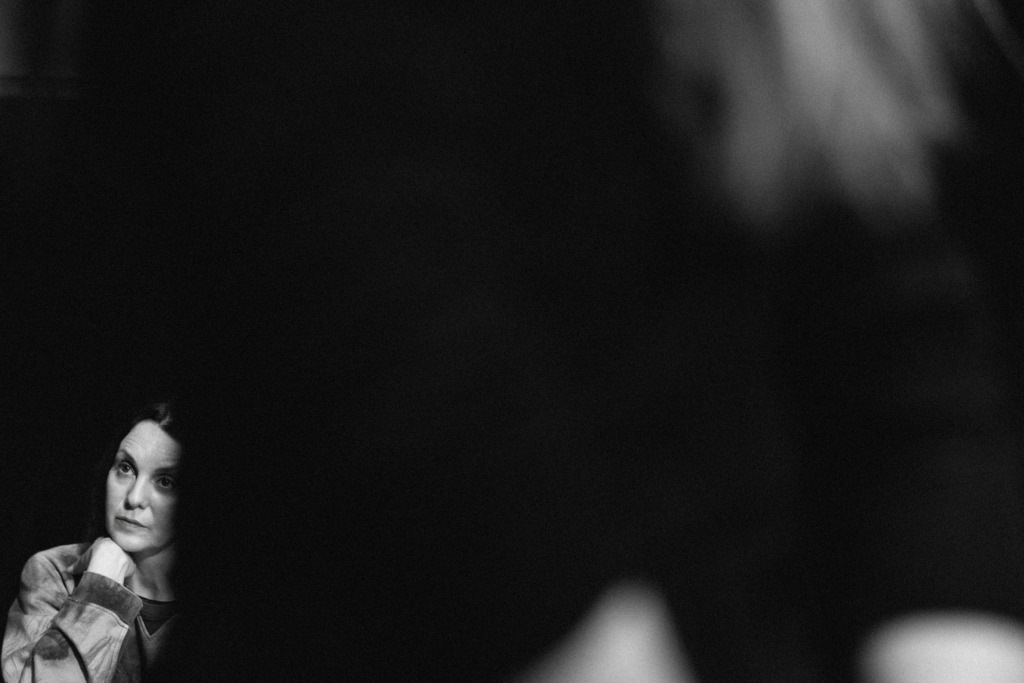
Photo: Jelena Janković
And so Svetlana Bojković, Vesna Trivalić, Marija Opsenica, Tihomir Stanić, Milena Radulović, Nada Šargin, Bojan Bulatović, Ljiljana Bralović, Nebojša Romčević, Igor Koruga, Jelena Ivetić, Nikita Milivojević, Marko Grabež, Jelena Mijović, Gabor Pongo, Eva Voštinić, Emina Spahić, Branislav Trifunović, Matija Stefanović, Nedim Nezirović, Jelena Stupljanin, Tamara Jovanović, Miloš Timotijević, Anđelka Nikolić, Milan Marić, Nela Antonović, and Milena Bogavac took turns on stage, reading to us, like a horror bedtime story, a saga of the downfall of an entire civilization.
The Pelicot trial is unquestionably an event that captured global media attention. Like a sociological case study, it demonstrates that in an entirely ordinary Western European setting, a small village in southern France, seemingly ordinary men from all social backgrounds and age groups are capable of committing perhaps the most extreme crime: the repeated rape of an unconscious woman. Gisèle Pelicot’s decision to make her trial public transformed her into a symbolic figure who forever changed the perception of what it means to be a victim.
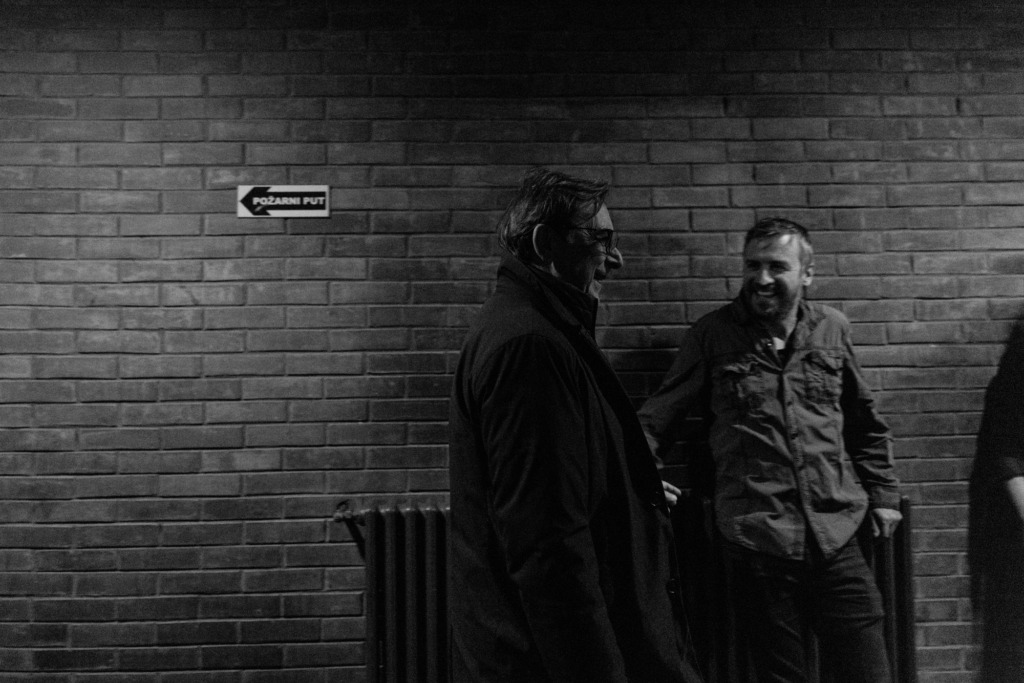
Photo: Jelena Janković
Through the staged reading of statements and interrogations from the trial, the evening of transcript readings that makes up The Pelicot Trial ultimately pays tribute to Gisèle Pelicot herself. And yet, what lingers with me long after witnessing this deeply unsettling production is a much larger question: has art itself ceased to exist in the forms by which we once recognized it, now that life has become so much more layered and unpredictable? Does this mean that, in the future, we will truly have to come to terms with the fact that the line between documentary and creation has largely been erased, that life has outpaced imagination, simply because the time has long since come when people can no longer even imagine everything that can, and does, actually happen? In that sense, what unfolded on Monday evening deserves a standing ovation, first and foremost for Miloš Lolić and his collaborators, but equally for the historic moment marked by the birth of a new, different, and genuinely provocative festival. After years of treading water, it feels as though it has finally returned to itself, to where it truly belongs: to new theatrical tendencies.
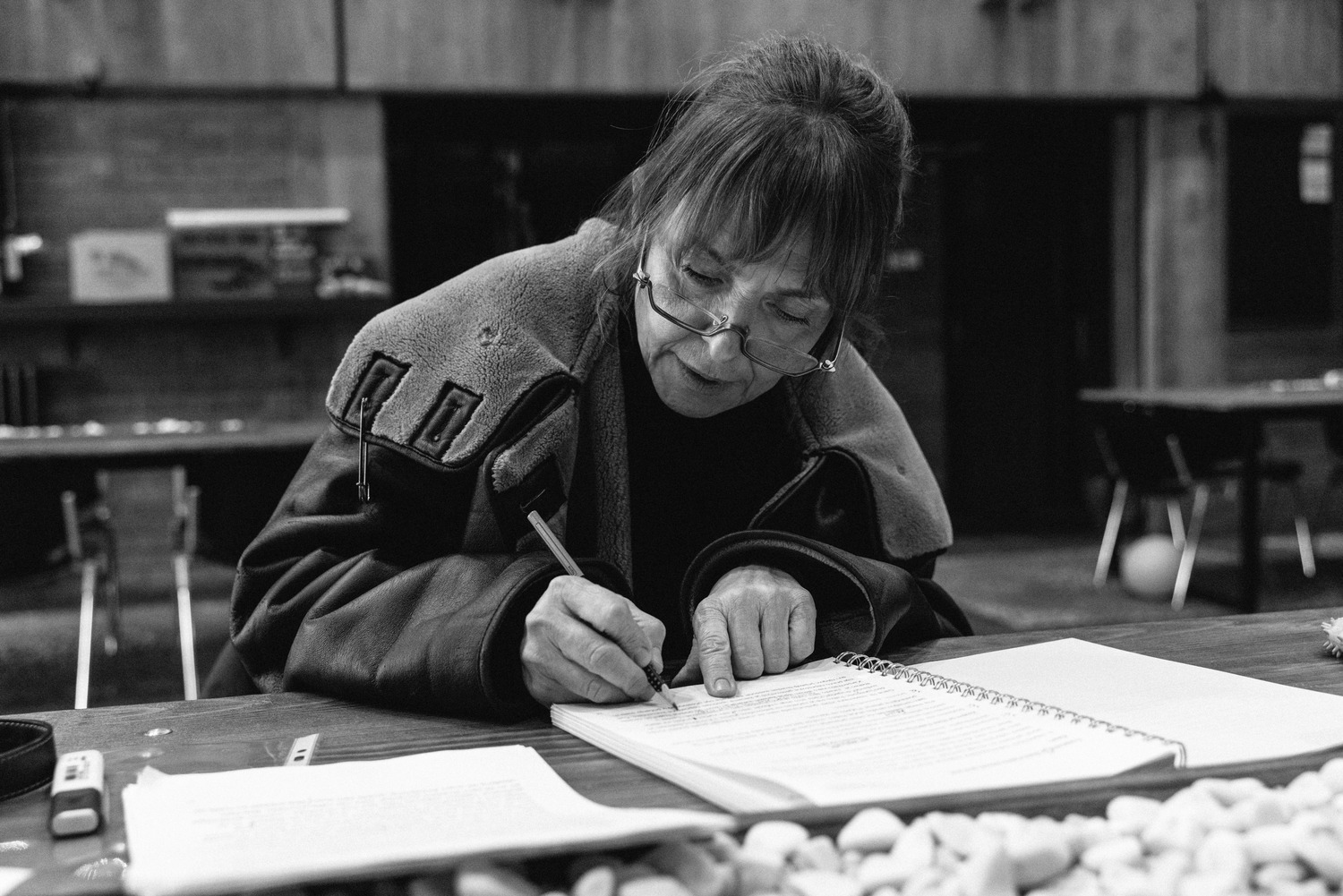
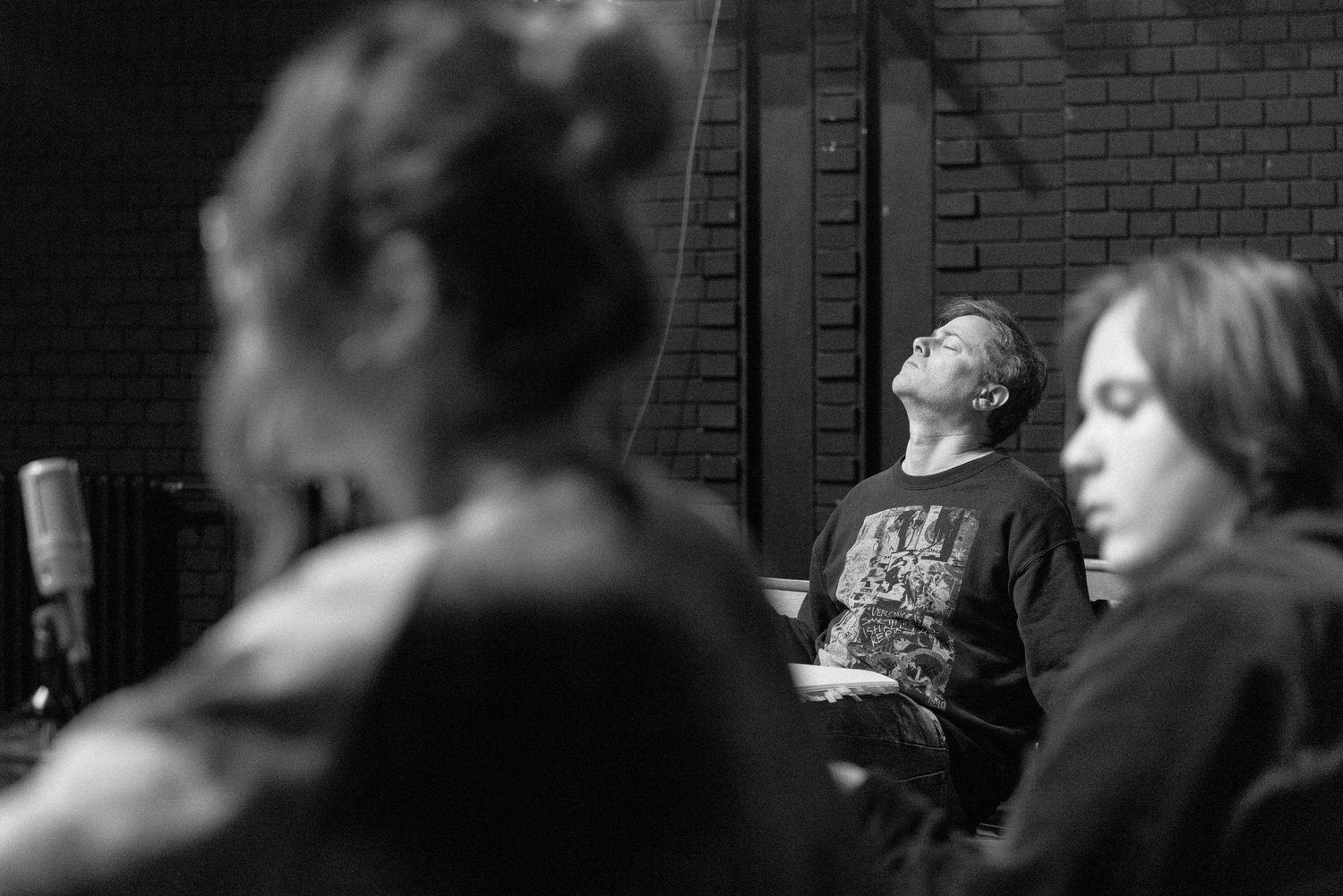
Photo: Jelena Janković