At the end of every year, my mind turns into a small storm of thoughts, retrospection, and wandering. I always end up thinking about everyone who, over those 365 days, lived through such different realities, and how I’m, in truth, in an incredibly privileged position. I get to write this. I get to look at the sky and wonder what color my tree will be. That small freedom, that ease, that choice. Ah, to be that free. It’s hard not to think about those who’ve had that taken from them.
Women in Afghanistan have been living in that reality for years. Since the Taliban returned to power, their rights have been erased one by one: the right to education, to work, to movement, to public life, to a voice, even the possibility of imagining their own future. The only thing separating me from them is that I’m here, and she is there. Nothing more. Any one of us could have been born in their place.
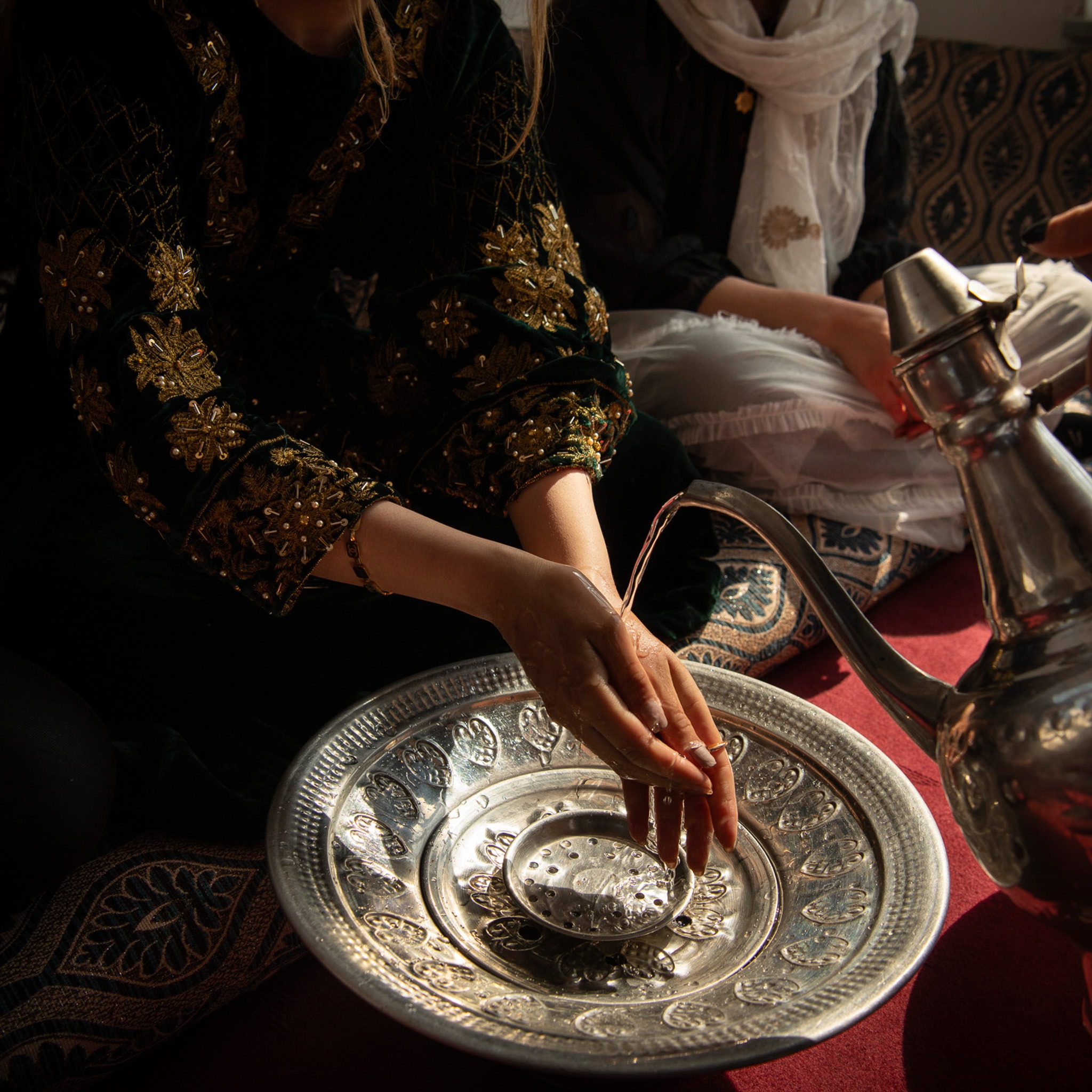
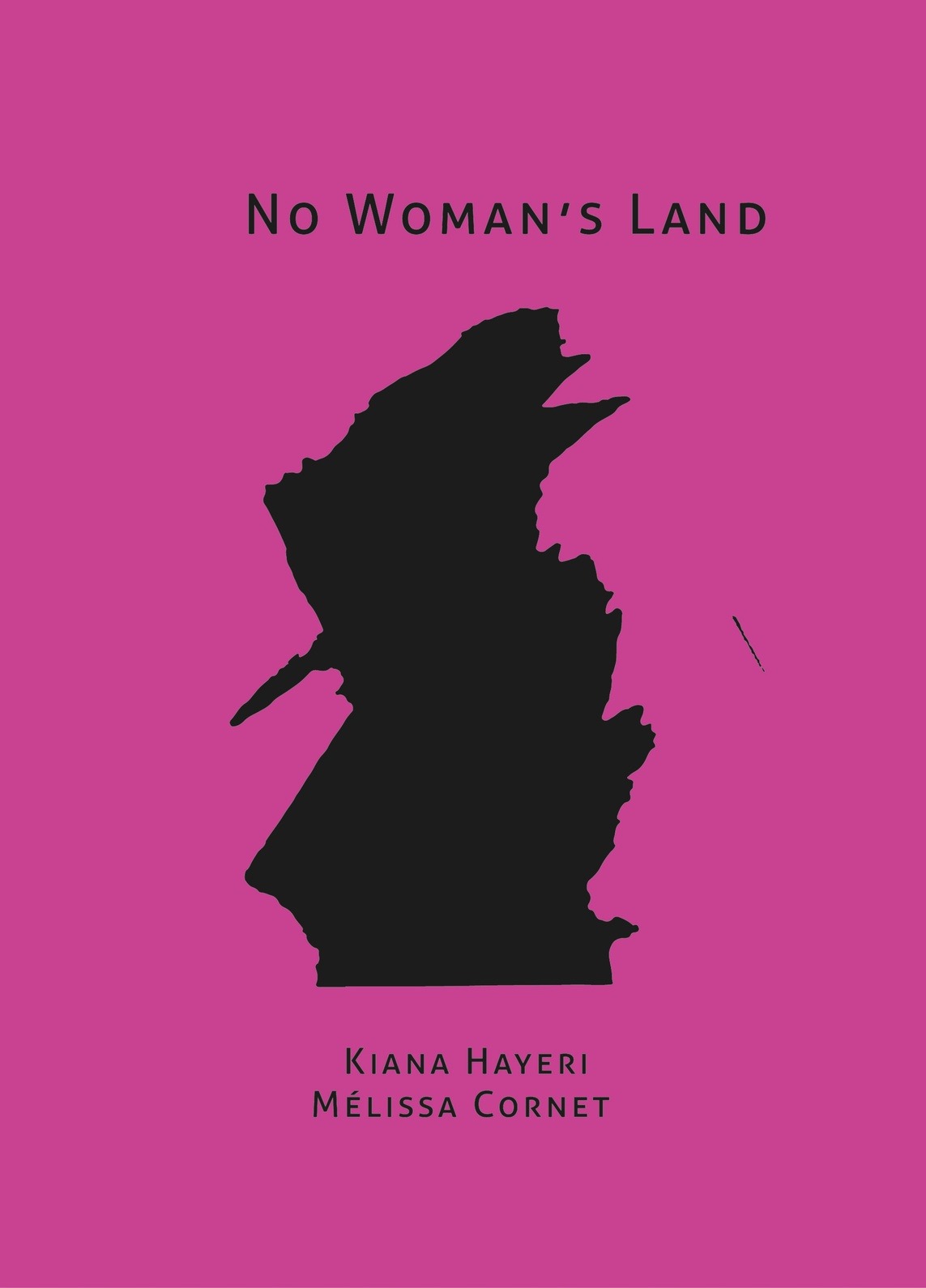
In that headspace, No Woman’s Land appeared, the book created by photojournalist Kiana Hayeri and researcher Mélissa Cornet, arriving at a moment when it was almost destined to land with force. They spent months traveling across Afghanistan, speaking with women and girls, more than a hundred of them, documenting lives that changed in an instant.
It’s a book about stolen freedom, but also about endurance. About what it means when someone shuts down your right to be part of society, to walk through a park, to go to school, to visit a hairdresser, to do the work you love, to speak in your own voice. Not metaphorically, but literally.
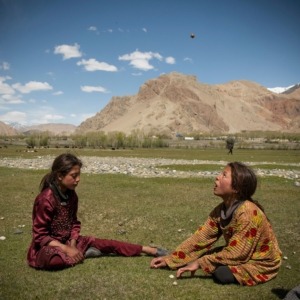
© Kiana Hayeri for Fondation Carmignac
Going through the photographs taken by Kiana Hayeri and reading the accompanying text prepared by Mélissa Cornet, it becomes clear very quickly that privilege isn’t luck. It’s geography, history, politics, a web of circumstances. It’s something you can lose, and something someone else never even had the chance to claim. And then every small choice I make, how I spend an evening, what I wear, where I travel, gains a certain weight. Not as a burden, but as a reminder that freedom isn’t universal. It only feels that way when you’re fortunate enough to have it.
With the new book No Woman’s Land, the challenges of approaching such a sensitive subject, and the deeply moving stories that shaped the project in mind, I sat down with Kiana and Mélissa. The first thing I ask them is how a project like this came to life, and whether they imagined it from the start as a documentary endeavor or as a way to capture and preserve something that was disappearing and changing before their eyes. Mélissa answers without hesitation: “Honestly, both. Kiana and I had been working in Afghanistan for years, and we were both documenting what was happening. Kiana as a photojournalist, and me as a researcher.”
But this collaboration began the moment the Carmignac Foundation announced a grant for a reportage on women’s rights in Afghanistan. That call, Mélissa says, sparked the same thought in both of them: maybe we’re the right team. “We decided to apply together, and it was thanks to that grant that we were able to create the reportage,” she says. The project was never meant to exist only as a record of the present moment, but also as something for the future. “The Foundation approached it with a lot of structure, negotiation, almost a legal framework for how a situation like this should be documented,” she explains. What followed became broad and layered: exhibitions in several cities, a book, a website, and now an educational component. They worked with Amnesty International and other organizations, carrying these stories far beyond museum and gallery walls. “We didn’t just produce this reportage,” Mélissa says. “Once you gather all these accounts, these stories and photographs, the work keeps living and evolving.”
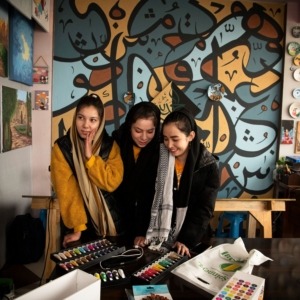
© Kiana Hayeri for Fondation Carmignac
Trust is, in many ways, the quiet framework of the entire book. So I ask them how they managed to build intimacy with women living in such fragile, unpredictable circumstances. Kiana answers with a clarity shaped by years of fieldwork: “Many of those connections came from our existing network. We’d already been in the country for years. We knew people.”
The first introductions came through NGOs, acquaintances, members of the community. One person would recommend another; someone’s cousin or neighbor would open the door to new encounters. But trust takes time, she says. “Real trust only comes with time. And we were lucky enough to spend a lot of time there. With the young girls, for example, we photographed their birthdays, we kept going back again and again. So the trust was built long before they allowed us to make those photographs.”
It was that constant returning, that steady presence without any sense of rush, that created space for honesty. The book itself moves like a dialogue between different worlds, between image and text, between what is seen and what is spoken. When I ask how they found the balance between these two layers, Mélissa explains that their work was inseparable from the start. “We did everything together, Kiana and I… it was truly a joint project,” she says. After each day of interviews and photographing, they shared impressions, letting the project evolve naturally. The photographs, with their unexpected beauty and color, create an entry point for audiences who might never reach for a research report. “They actually open the space for us to talk about the situation. They’re the first thing to catch your eye and spark curiosity about the stories behind them,” Mélissa says. “And we worked together on the exhibition as well. We built the whole concept around interior and exterior space, and we focused on elements that really struck people. For instance, we created a wall listing nearly a hundred decisions made against women and girls. People had strong reactions to it. It’s something they would probably never google, never read on their phone or on some website. But because we were able to bring these stories together visually, and then add more information, I think we truly managed to create a space for conversation. Whenever we gave talks or guided tours, we often had an hour, sometimes even more, to speak with people, and that’s rare today. That’s why it meant so much that we were able to create that space.”
Kiana describes the book as an object meant to be returned to again and again, created in collaboration with Colombian designer Santiago Escobar-Jaramillo. “We wanted the book to be something you could come back to over and over. We didn’t want to break the flow or distract the reader. We wanted to take them on a journey, a purely visual journey.”
The layout unfolds like a visual passage, with text woven in as pauses for history, context, LGBTQI narratives, and family stories. Kiana goes on: “To me, it’s almost like poetry. You read a poem one day and, depending on your mood or what you’re going through, you interpret it one way. Then six months later, you read that same poem and it becomes something else entirely. And with everything happening in the world, with women’s rights being rolled back in so many countries — in France, in the US, everywhere — this book carries that kind of resonance. Someone who looks at it today will experience it one way, and half a year from now, they may see it in a completely different light.”
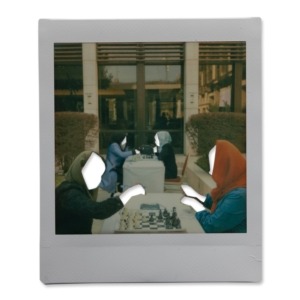
Mélissa jumps in just as I’m about to move to the next question. “And let me add something,” she says. “I was reminded of what a photo editor once told you, Kiana, something that stayed with both of us. He said: we’re doing this project, we’re documenting the situation, but it’s not going to change the lives of these women on the ground, because the Taliban don’t care whether there’s a documentary, a photograph, or a video about the condition of women in Afghanistan. So the question of impact always comes up. And it’s hard, especially when you’re emotionally attached to a place, to accept that no matter how good your work is, it won’t bring immediate change. It might help through donations, or by helping some women get visas — which is small, though important. But that editor told us: you may not see it now, but you are documenting a page of history, and that will matter enormously to future generations. That’s why this work is important, especially now, because there are still journalists going to Afghanistan, but producing something truly substantive, especially on women’s rights, has become incredibly difficult. Even while we were working on this reportage, we watched the window of access close right in front of us.
That’s why we’re grateful we made it in time and managed to complete this work, because we hope it will continue to matter in the years ahead.”
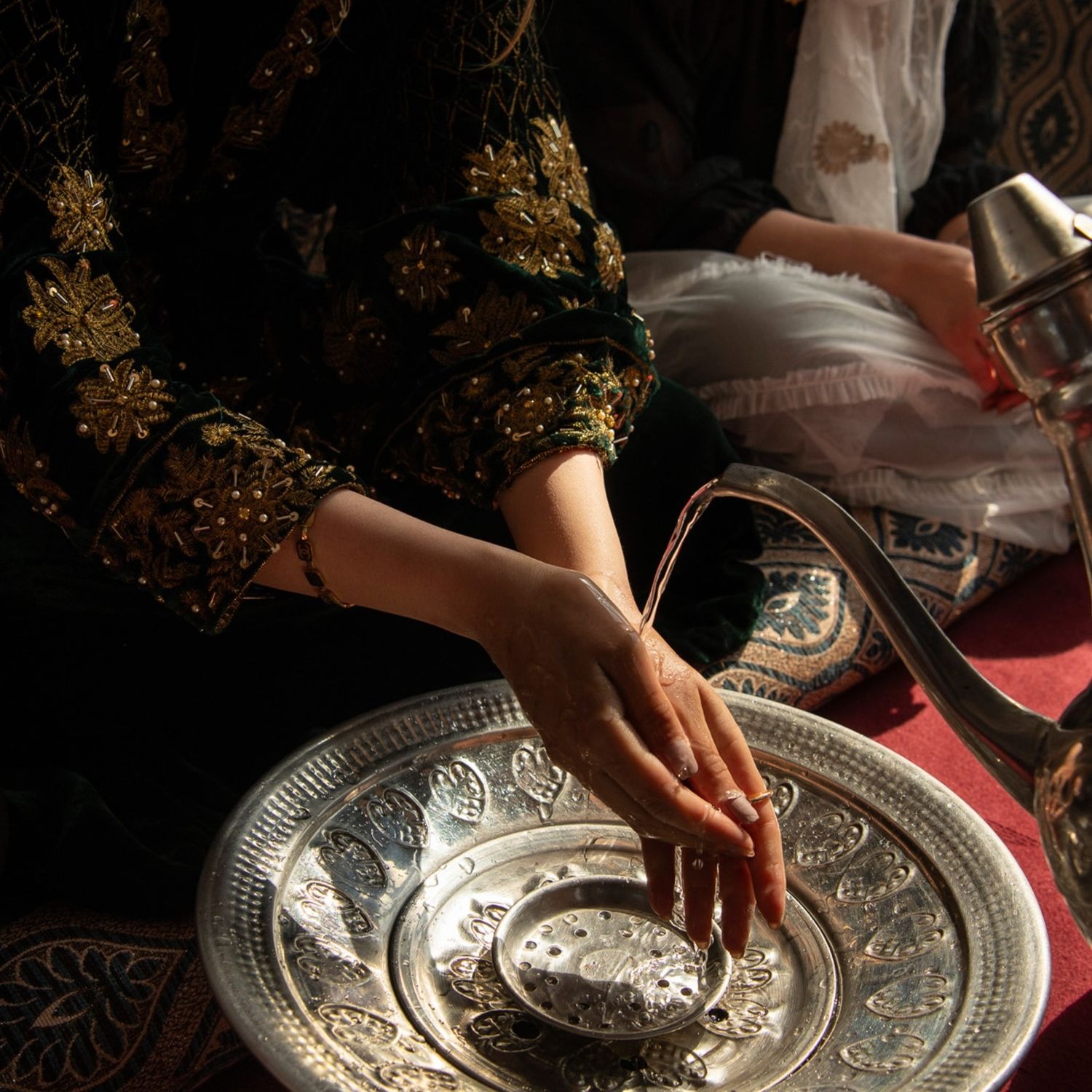
What naturally comes after their previous words is the question of why they chose to focus on gestures, fabrics, textures, and everyday life instead of images of extreme trauma. Mélissa speaks first: “All these stories are heavy on their own, but we wanted to tell them with respect, dignity, and even love.” The captions that accompany the photographs reveal the seriousness of the situations women find themselves in, girls who can’t go to school, women banned from working, mothers going hungry, survivors of violence. But the visual narrative refuses to strip them of dignity. She points out that resistance is often projected onto Afghan women as a label, when in reality many of them simply have no choice. Kiana expands on their shared philosophy: “For us, dignity always comes first, not those typical images of women in burqas.” The more exotic the image, the more distance it creates. But motherhood, a birthday, a shared smile, an ordinary moment in the day, those are universal. “Pain becomes closer that way, easier to understand.”
Documenting these lives carried both ethical and emotional weight. Mélissa describes the constant calculation of risk — where to meet, how to communicate, how to store notes safely. “For example, Kiana’s photographs didn’t have captions at first, and I kept all the notes… only once we left the country did we sit down and pair each story with its photograph.”
The question of personal autonomy was another delicate issue. Some women wanted to show their faces as an act of defiance, but they couldn’t always grasp the long-term consequences of global visibility. Kiana explains: “A photograph may be safe today, but ten years from now, it may not be… so we talked, and there were moments when Mélissa and I had to make a decision on their behalf.” Once an image is on the internet, it can’t be pulled back, and the security landscape in Afghanistan can change in a single day.
I ask them which story stayed with them the longest, and their reactions reveal the emotional weight of the project. For Mélissa, it’s the story of an activist. A woman who, before the fall of Kabul, lived a happy life as a mother, a wife, the owner of a small beauty salon. She had a marriage built on love. She had a young son. After the Taliban took power, beauty salons were shut down. She protested. She was arrested and beaten. That same night, when her husband learned she had been taken, he suffered a heart attack and died. “We’ve been following her ever since. She went to Iran. Then she was deported and had to return. Now she’s trying to leave again. She can’t work in Afghanistan. She’s barely surviving. And I think what makes it even harder is that we’re still in touch with her almost every week. It’s not just that her story is dramatic, that she’s lost everything, it’s that week after week we hear how she’s simply trying to survive, literally looking for any job to feed her son. And that’s so painful, because this economic crisis isn’t only the Taliban’s doing. It’s ours too, the West’s responsibility. It still hurts so much, because it’s about something so basic and essential: to work, to earn, to feed your children. And even that is being taken away from women right now.”
Kiana’s strongest memory is connected to a parent and child living on the very edge of safety. “We spoke with a parent and a child. The parent is biologically male but identifies as a woman. Because of the bans and taboos, they were in a heterosexual marriage, had a family, but also lead a parallel life. They party, they dance, they put on makeup. They also work as a sex worker. And the child, born biologically female, identifies as a boy. The heartbreaking irony was that we met them a few months before the end of the school year, and the child, who is officially a girl on paper, has to wear a hijab and attend school, they’re in sixth grade, but next year they won’t be allowed to continue because education for girls is banned, even though this child does not identify as a girl at all.”
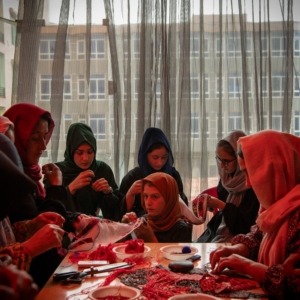
© Kiana Hayeri for Fondation Carmignac
“I think that’s something many LGBTQI people can relate to: living in a body that doesn’t feel like your own. But in Afghanistan, the next level of the problem is that this body also denies you the most basic rights — the right to exist, to be educated, to work. This family is now outside Afghanistan, which is good, and we hope they’ll have a chance for a new beginning. And I’d add something else: LGBTQI+ rights in Afghanistan have never truly existed. It’s a deep taboo. Society discriminates against them. But before the Taliban took power, during the 20 years of occupation, there were NGOs that offered them shelter and medical support. All of that disappeared when the Taliban returned. Those small pockets of safety no longer exist. And throughout Afghanistan’s history, LGBTQI people have always been discriminated against.”