In those days Shanghai was living, breathing, loudly proclaiming art! And that is well known about this “city of the future,” especially at the time when Shanghai Art Week takes place in November. The main events include ART021 Shanghai and West Bund Art & Design, fairs that bring hundreds of leading galleries and institutions from around the world to Shanghai. On top of that, exhibitions, openings, and gatherings are buzzing all across the city, and in a sea of invitations it is hard to imagine having to choose one thing and miss another, not recommended for those with strong FOMO. Guided by intuition, without much prior knowledge, but with the fact that I regularly follow the program of the international contemporary photography museum Fotografiska, that Thursday the decision was made to attend the opening of the exhibition SPACE: Internal Illuminations at FotografiskaShanghai. I love how life surprises me when I move through it without expectations, and this exhibition became far more than I could have imagined at that moment.
The exhibition began its journey in Stockholm, then traveled to Tallinn, and has now arrived in Shanghai in an expanded curatorial version by Johan Vikner, Fotografiska’s Director of Global Exhibitions, and independent curator Iris Long. Themes of space have gained a new visual meaning, and for me they broadened the understanding of what photography as a medium can engage with.
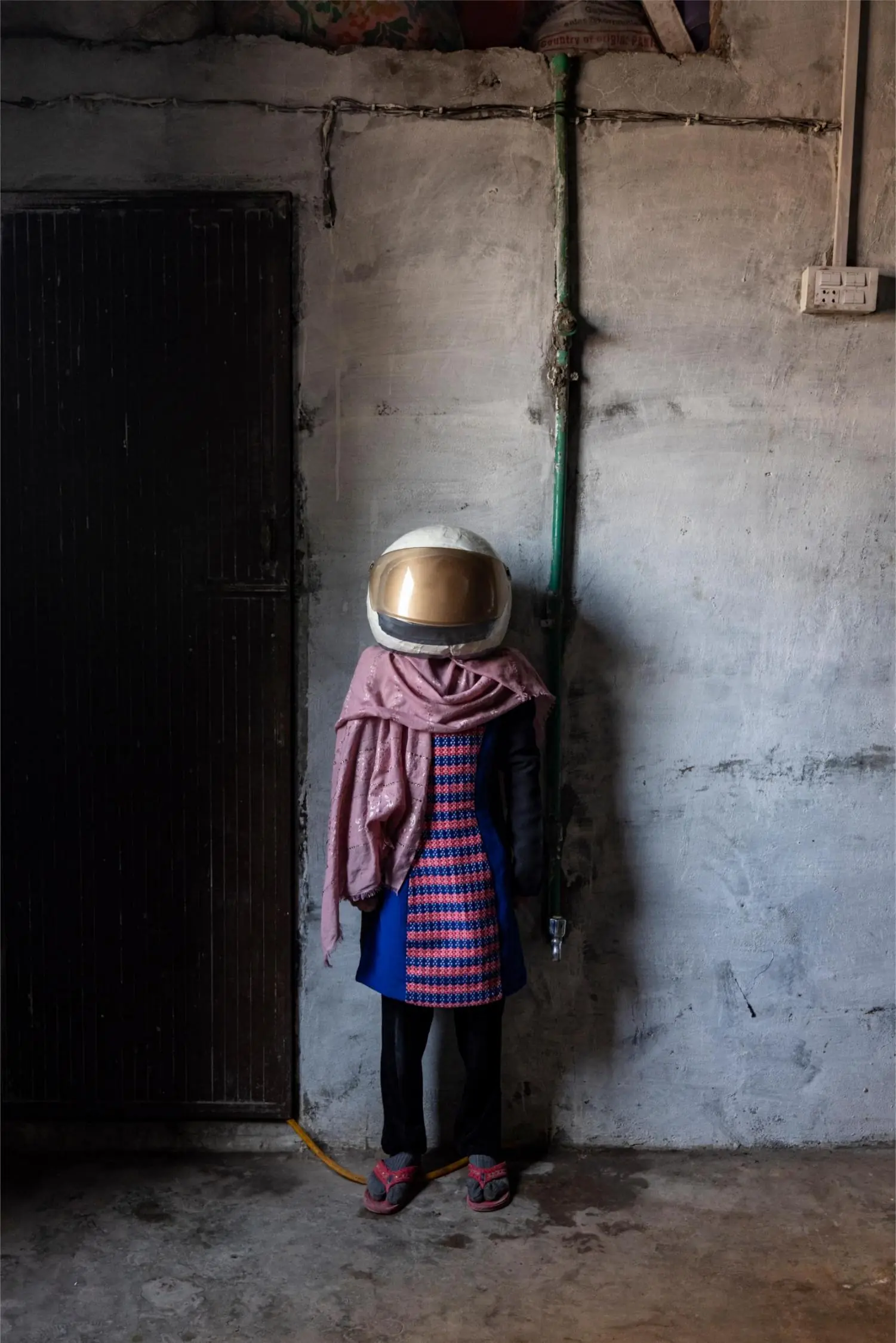
A young student imagines space on a rooftop in central Lahore. The child is part of the educational outreach led by Yumna Majeed, founder of Exploration, a STEM organization advancing space education in Pakistan.
Look up at the stars and not down at your feet. Try to make sense of what you see, and wonder about what makes the universe exist. Be curious, Albert Einstein once said, unaware that he would provide a perfect introduction to an exhibition that explores the celestial boundary where artistic expression meets scientific research, capturing the magnificence of the universe through artistic interpretations. Twenty artists and artist collectives from around the world have channeled meditations on space through this exhibition, from echoes of ancient myths and religion to visions of future space travel. Within this latter theme, one name stood out to me on its own, you can guess why. Matjaž Tančič fits in perfectly here with his series of photographs Mars on Earth, a project he has been working on for six years, documenting people who live in simulated Martian landscapes in preparation for an actual journey. The Slovenian photographer, who has called China his second home for 13 years, has discovered, photographed, and interviewed a new generation of space explorers, revealing a diverse and engaged community of scientists, entrepreneurs, and creatives.
Matjaž Tančič / Photo: Pei / Courtesy of Fotografiska Shanghai
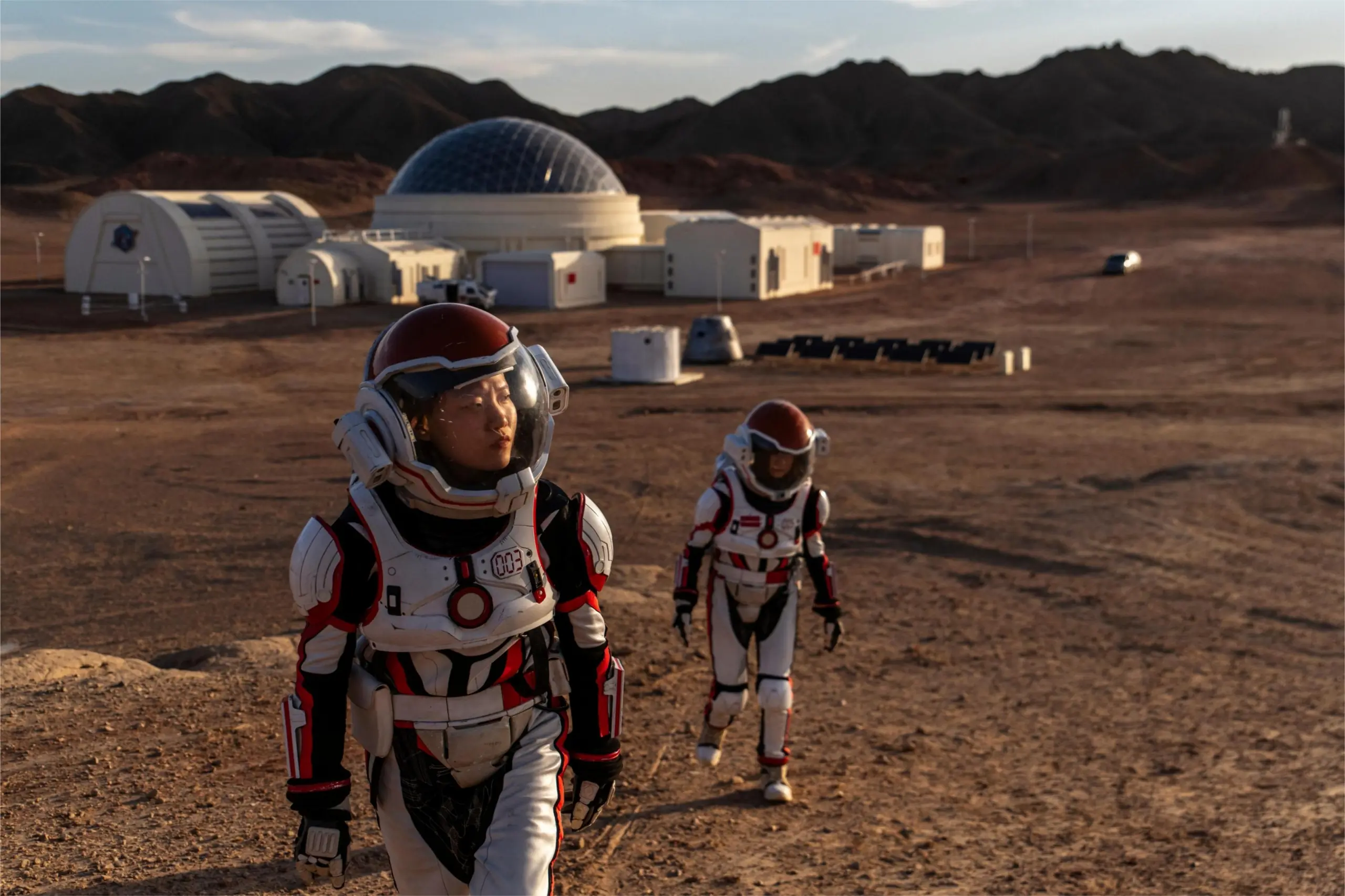
He became interested in the topic in China when he visited the Mars Simulation Base in the Gobi Desert, he tells me. “I saw that it was opening, and it sounded really exciting, because you know, it is a desert landscape and an incredibly scenographic Mars simulation base. It was extremely photogenic and surreal, and I love those kinds of stories. I thought it would be just one shoot and done. But shortly after that I traveled to Los Angeles and out of pure curiosity googled MarsresearchLA, and to my surprise hundreds of results came up. I realized that ‘Martian’ farmers, architects, lawyers, doctors, designers, and even watchmakers already exist, so many professions I would never have thought of existing even before we have actually set foot on Mars, which we do not even know when will happen. That is when it struck me that this could be a good story, told from a real human perspective.” What is interesting about Matjaž’s discovery is that Mars research is not happening only in global superpowers like China, the USA, and Russia, but also in small countries such as Slovenia, Mongolia, Pakistan, and countries across Africa. “In all of these countries I have already photographed people connected to space. Through this I am trying to show that if you want to be part of the new, let’s call it, space race, you do not have to be a PhD or an engineer in the USA, you can live anywhere and still contribute to space innovation.”
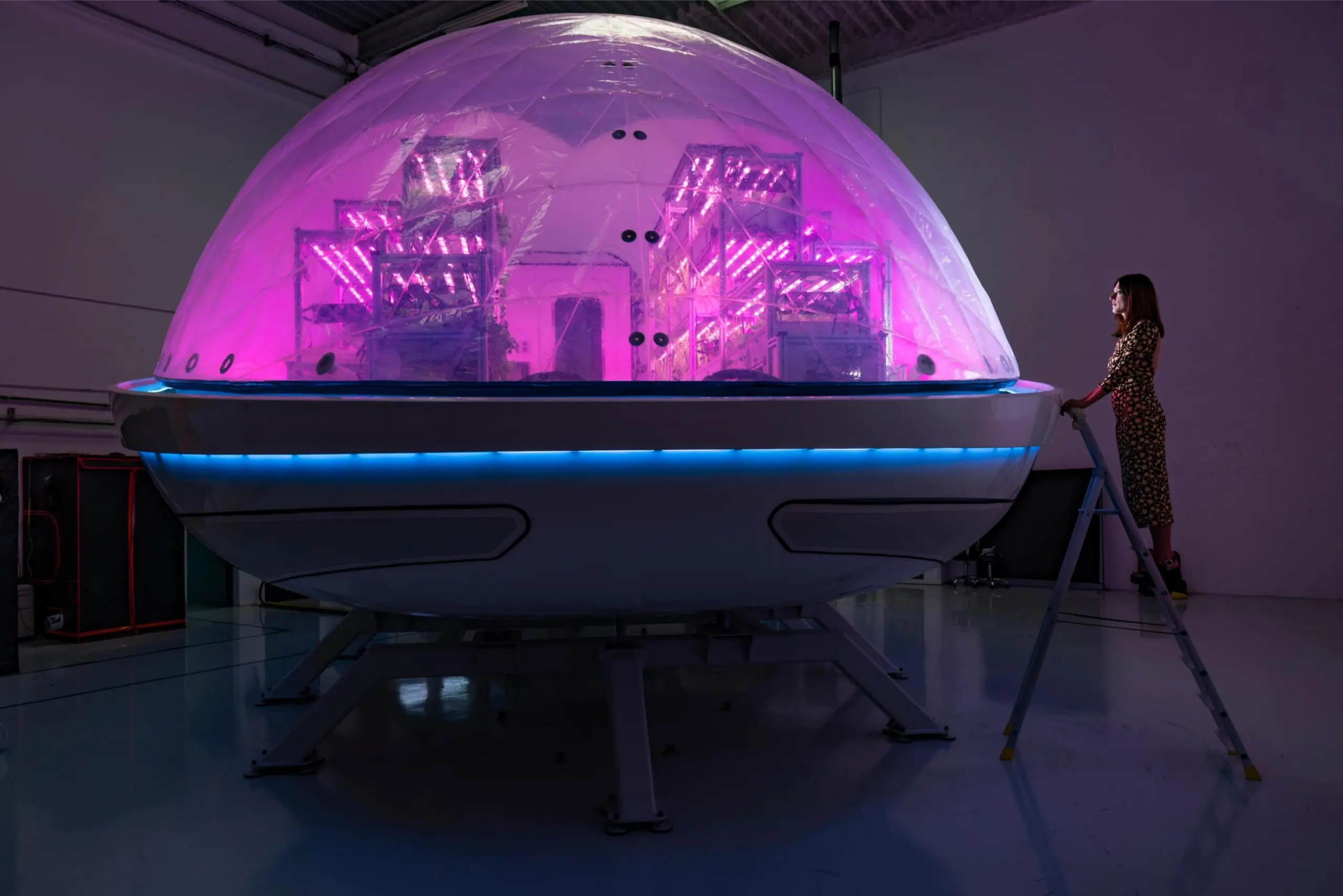
Recalling some of the most otherworldly experiences down here on Earth, Matjaž continues. “One of the photographs shows Barbara Belvisi from Paris next to a large illuminated dome for growing food. Inside, climatic conditions are precisely controlled to simulate almost any environment. Although it was developed for space missions, the technology is already being used on Earth. For example, winemakers in France use it to test grape varieties that can withstand warmer climates, given global warming, and pharmaceutical companies grow rare medicinal plants under controlled conditions.”
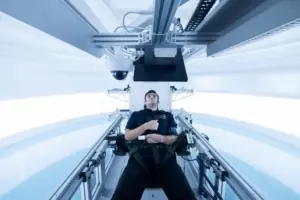
Riccardo Sorrentino, PhD student and assistant researcher, testing artificial gravity at ESA’s Short-Arm Human Centrifuge in Planica, Slovenia, simulating conditions for long-duration space missions. Planica, Slovenia.
Another compelling photograph comes from Planica in Slovenia, where Dr. Igor Mekjavić and his team are researching how long stays in space affect the loss of bone density and muscle mass. “Since astronauts currently have to exercise around three hours a day, experts are developing a rotating mechanism that creates artificial gravity, which is crucial for training. If they do not train, it can happen that after a year spent in space they return to Earth, step outside, and their bones break because they have lost density, or they simply collapse because the muscles no longer support them,” Matjaž explains to me some scientific facts I knew almost nothing about. “The innovations scientists in Slovenia are currently working on can significantly speed up rehabilitation after injuries, so although they are intended for life in space, they actually help life on Earth,” Matjaž emphasizes, highlighting one of the key points he wants the project to communicate.
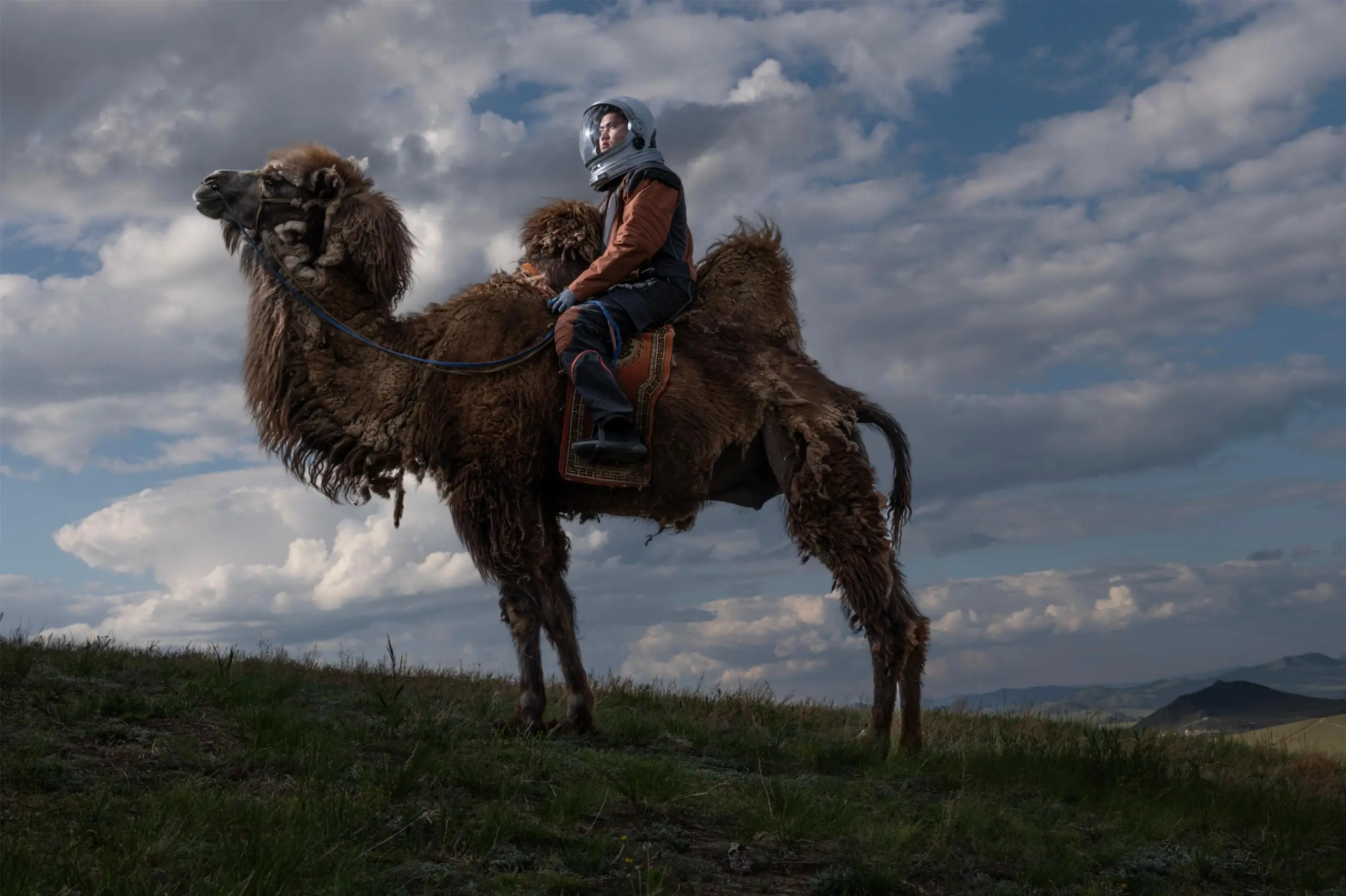
I ask him if he has a favorite photograph of space wonders on Earth. “One of my favorites was taken in Mongolia and shows an astronaut on a camel, because a team of engineers is planning to create a Mars vehicle inspired by camels, animals that move perfectly through sand, can endure extreme conditions, and have enough energy and stamina for long routes. They want to translate that into robotics while creating autonomous vehicles for Mars.” Matjaž also reveals that in South Africa there are more than 200 space startups. “I visited the project building the largest radio telescope in the world, a joint initiative between South Africa and Australia. The system will function like a gigantic satellite antenna spread across two continents. It was completely surreal to be in the middle of an endless landscape filled with satellite dishes, driving among them and not being allowed to use any digital devices so as not to disrupt the signals.” How insanely interesting this all was, I honestly thought at that moment as he was telling me.
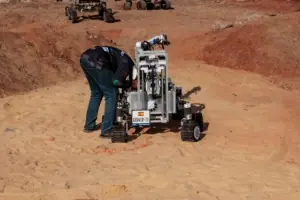
Students from technical universities worldwide test self-designed rover prototypes on a geologically realistic Martian terrain during an international competition. Kielce, Poland.
Beyond documenting scientific facts, Matjaž’s photographs of simulated life on Mars, though shot here on Earth, depict almost cinematic scenes, yet they are real moments frozen in time. This is precisely why the artistic value of the project is so striking. The images dance on the border between reality and the surreal, just like the idea that one day we might set foot on Mars. “The photographs I make are inspired by science fiction, by scenes we know from films and comics. I wanted to present them in a way that is recognizable and accessible to everyone, not too scientific, which could alienate viewers.” I also ask whether he plans to finish the project, hoping for exactly the answer he gives me. “I assume it will never really be finished because new innovations keep coming. At the moment I have a small framework for the project and plan to visit all continents to show that innovation is happening globally, with a particular focus on Australia, South America, Europe, and the USA.”
Slovenian designer Miha Artnak, who created flags for all the planets, planted his Mars flag in a cave system simulating Martian lava tubes—potentially ideal habitats offering protection from radiation and sandstorms. Rakov Škocjan, Slovenia.
As we talked on the beautiful terrace of Fotografiska Shanghai, a lower building surrounded by skyscrapers whose lit office windows act like visual jewelry for these glass giants, reminding us of progress and prosperity, I learned that Matjaž studied fashion photography in London, and that his graduation project was a fashion documentary in 3D technique, at a time when 3D glasses were a special technology. “One day an email arrived from China: We saw your 3D project, because it had been exhibited many times, and we invite you to exhibit in China. At first I thought it was a joke, but I soon realized they were serious. So my team from Slovenia and I traveled to China for ten days and shot at the Great Wall, the Bird’s Nest Olympic Stadium, and other locations.” After the shoot Matjaž returned home, and a month later came back again for the opening. “It was a very ceremonial opening, red carpet, celebrities and so on. I thought: OK, not bad for a student, I could get used to this,” Matjaž laughs. He later moved to Beijing, and a few years after that further south to Shanghai. “They were eager to learn from us, and we were just as eager to learn from them. There were many collaborations between art and the commercial world, and it was a very exciting place.”
A young student imagines space in central Lahore. Girl is part of the educational outreach led by Yumna Majeed, founder of Exploration, a STEM organization advancing space education in Pakistan.
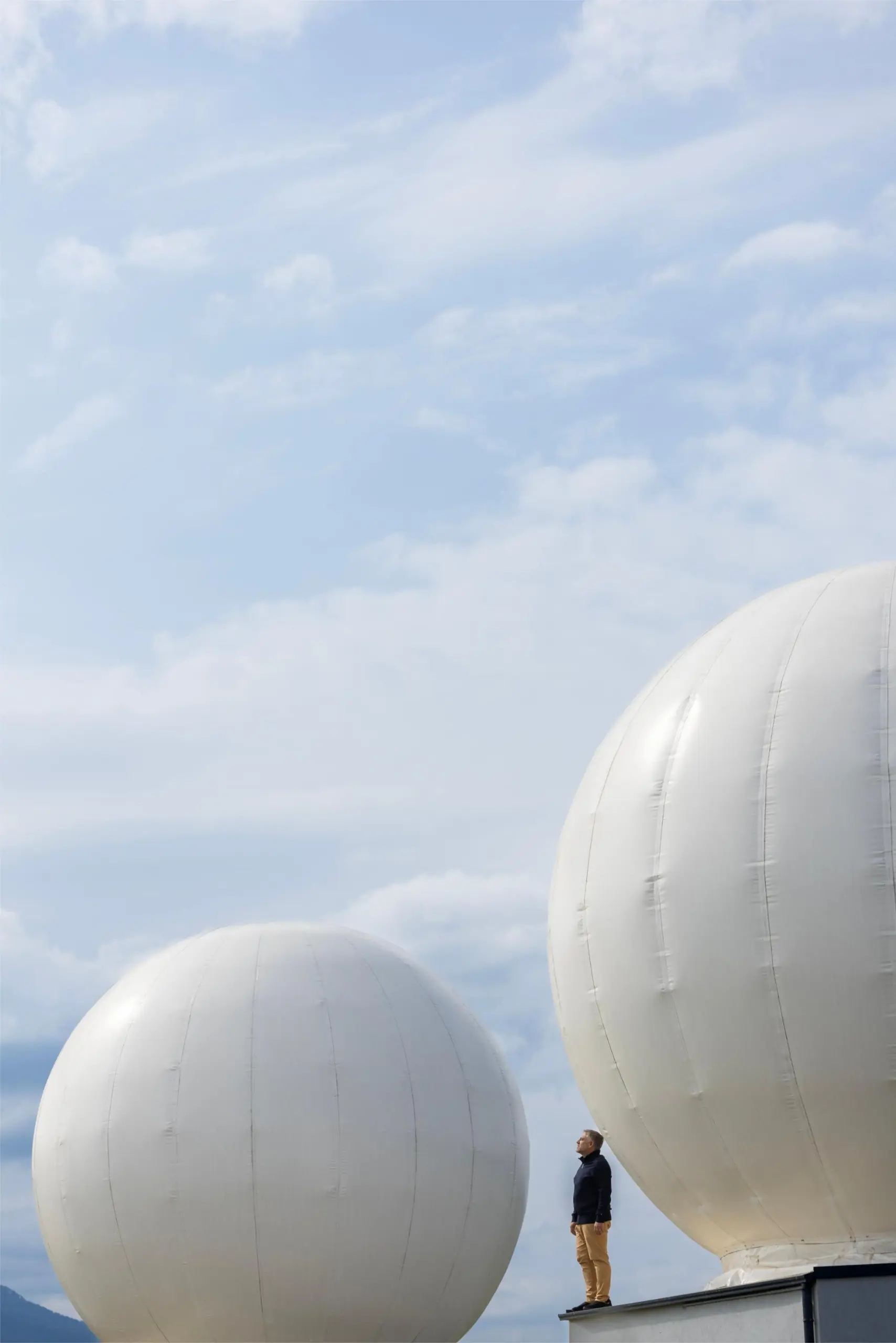
Iztok Kramberger from Slovenian company SkyLabs, specializing in miniaturized space tech, stands by the inflatable antenna system communicating with the TRIsat-r satellite. Maribor, Slovenia.
I ask him whether living in China ever pushed him out of his comfort zone. “I would not say that anything really pushed me out of my comfort zone. Maybe you get a little annoyed every day, but every day also brings a smile to your face. People here are very kind. Before coming I knew almost nothing about China, and we all actually have many misconceptions about the country. But people are very curious about us, open to communication and collaboration. Wherever you travel, people will help you or invite you for a drink or dinner. So it was not a huge shock,” he answers, recalling some charming anecdotes. “It is interesting that when you say you are from Slovenia, former Yugoslavia, older people often react with ‘Walter Defends Sarajevo!’ They say it in Chinese and sing the song from the film. That film was extremely popular in China because it was the first foreign action film shown there. Since I myself was born in Yugoslavia, some things initially felt familiar to me, especially in rural areas. Today, of course, it is different. Shanghai is a city of the future and there are almost no traces of socialism or communism, except perhaps in state institutions.”
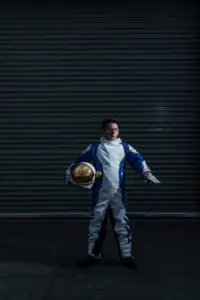
Westley Brooks from Global Effects Inc. wears a space suit designed for TV; the company has also created suits for NASA photos and films like Ad Astra in Los Angeles, USA.
Although he studied fashion photography, Matjaž had previously worked as a documentary photographer for Mladina and other media. China was the ideal place for him to return to it, and I learned why. “I photographed, for example, the first bodyguard school in China. With the rise of the middle and upper classes, elites began sending their children to schools where they have personal security guards, which was quite surreal. Then there was an etiquette school where they learned how to properly pronounce Versace, Louis Vuitton, or Dior, and how to use cutlery when you have five forks and three knives. It was fascinating to observe China in development,” he recalls, adding more facts that were extremely interesting for me to hear. “I also photographed the first Chinese female surfers. At the time it was a complete novelty, and today they already have representatives competing in the Olympic Games, which clearly shows how quickly the country has developed. I also worked on stories about the so called Chinese Hollywood, an incredible city full of film sets, including a 1:1 replica of the Forbidden City, where I had the opportunity to be on set with thousands of extras.”
On the other hand, Matjaž also dove into the commercial world, where he worked with almost all luxury brands, Versace, Louis Vuitton, Prada, Dior, as well as Apple, Porsche, and Ferrari. “That is exactly what I liked about China. It was extremely inspiring for personal and documentary projects, but at the same time it offered that other side, commercial, grand, and luxurious. So one day I could be photographing coal miners in Shanxi, and the next day shooting Bernard Arnault of Louis Vuitton at the presentation of a new collection in Beijing. Or Donatella Versace at the opening of a hotel in Macau, with a private concert by John Legend, as well as Lewis Hamilton and Tommy Hilfiger, just some of the people I had the pleasure of photographing.”
The conversation continued, and there was no shortage of fascinating stories with Matjaž. As we both delighted in the fact of where we were from, in the middle of vast Shanghai, he told me that he had been in Croatia just this summer, satisfying my curiosity about how often he visits our region. “I worked intensively on a project about beavers in Slovenia and Croatia. Beavers were reintroduced to Croatia in 1996, and since then they have spread to Hungary, Slovenia, and Austria, so today there is almost no river without beavers. That project took me again to beautiful places, for example to the area around Karlovac, along the rivers Dobra, Kupa, and Mrežnica, regions in Croatia near Slovenia that I had never visited before,” Matjaž told me, adding, “I love returning home, I love the whole Balkans.”
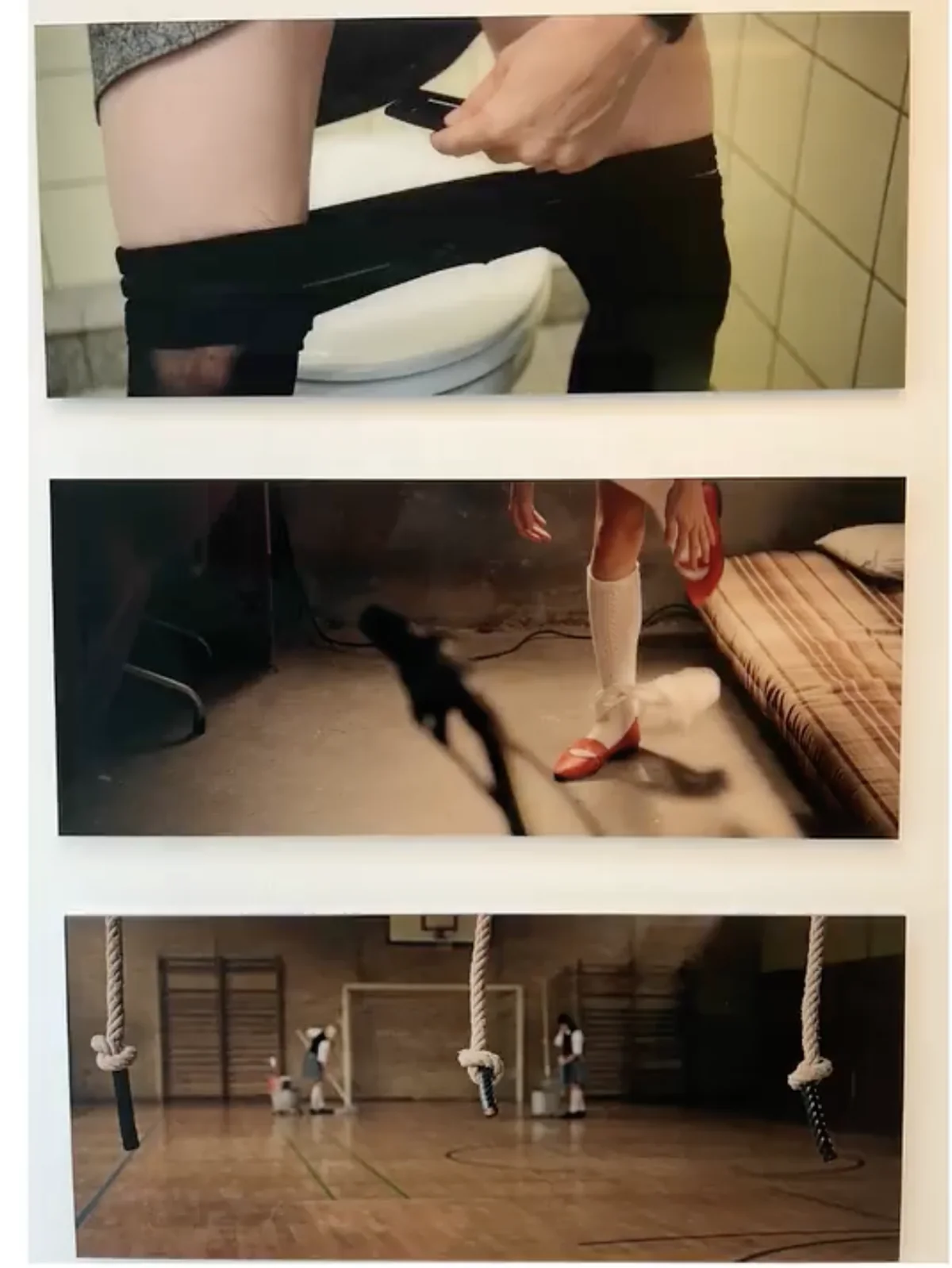
Finally, he revealed that now, after 13 years, he is also considering a change. “We will see what comes next. But since we met in Shanghai, you can see that it is still my second home. I still want to keep returning, whether for personal or commercial projects. I am not closing the China chapter completely, just refreshing it a little. Let’s put it that way.” A few days after our conversation, an exhibition opened in Paris, Sex and Politics, curated by Slavica Veselinović and Danila Tkachenko, in which Matjaž was also exhibiting, and by the final completion of this text Matjaž had already landed in Ljubljana for the holidays.
And as I am still reflecting on all my impressions from China and on the fact that life somehow always finds a way to surprise me, I am waiting for the continuation of Mars on Earth, definitely one of the most interesting projects I have heard about this year.