Chef Off Duty: Marko Turković on fire, pressure and a new restaurant - from a tattoo studio
One of the founders of the street food project Hook & Cook, Marko Domgjoni, takes us behind the culinary curtain in a conversation with acclaimed chef Marko Turković, who is about to open a new restaurant in Zagreb.
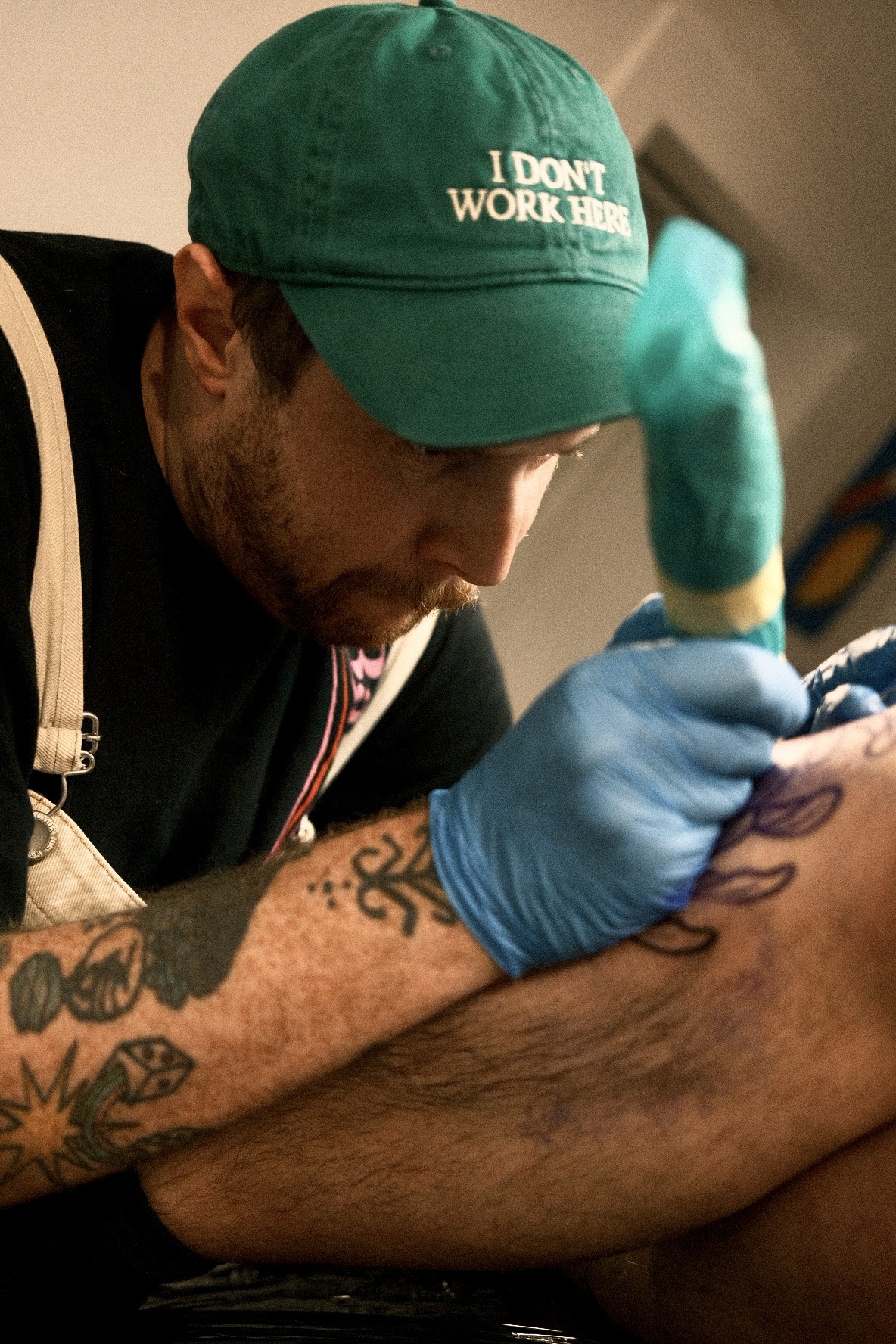
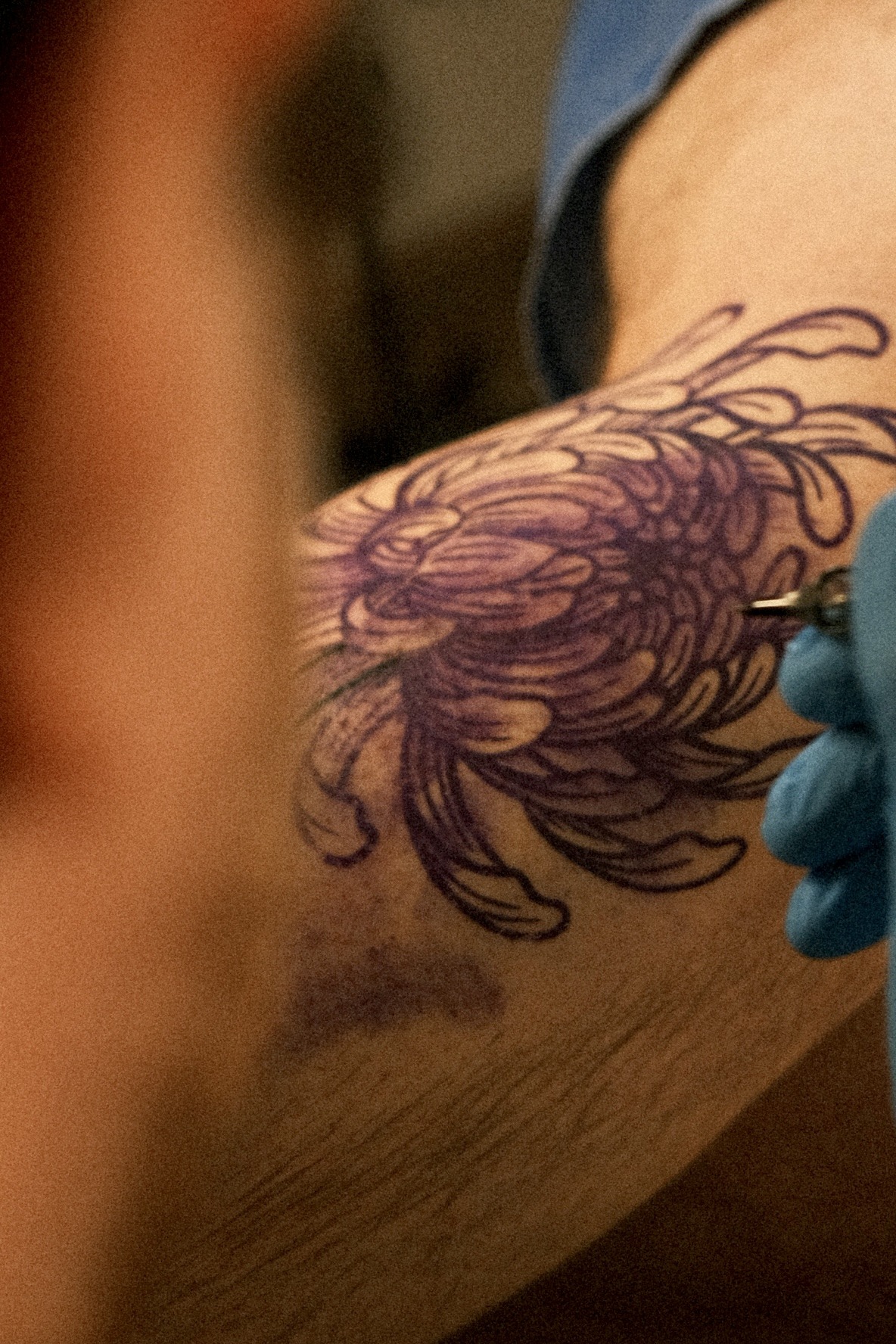
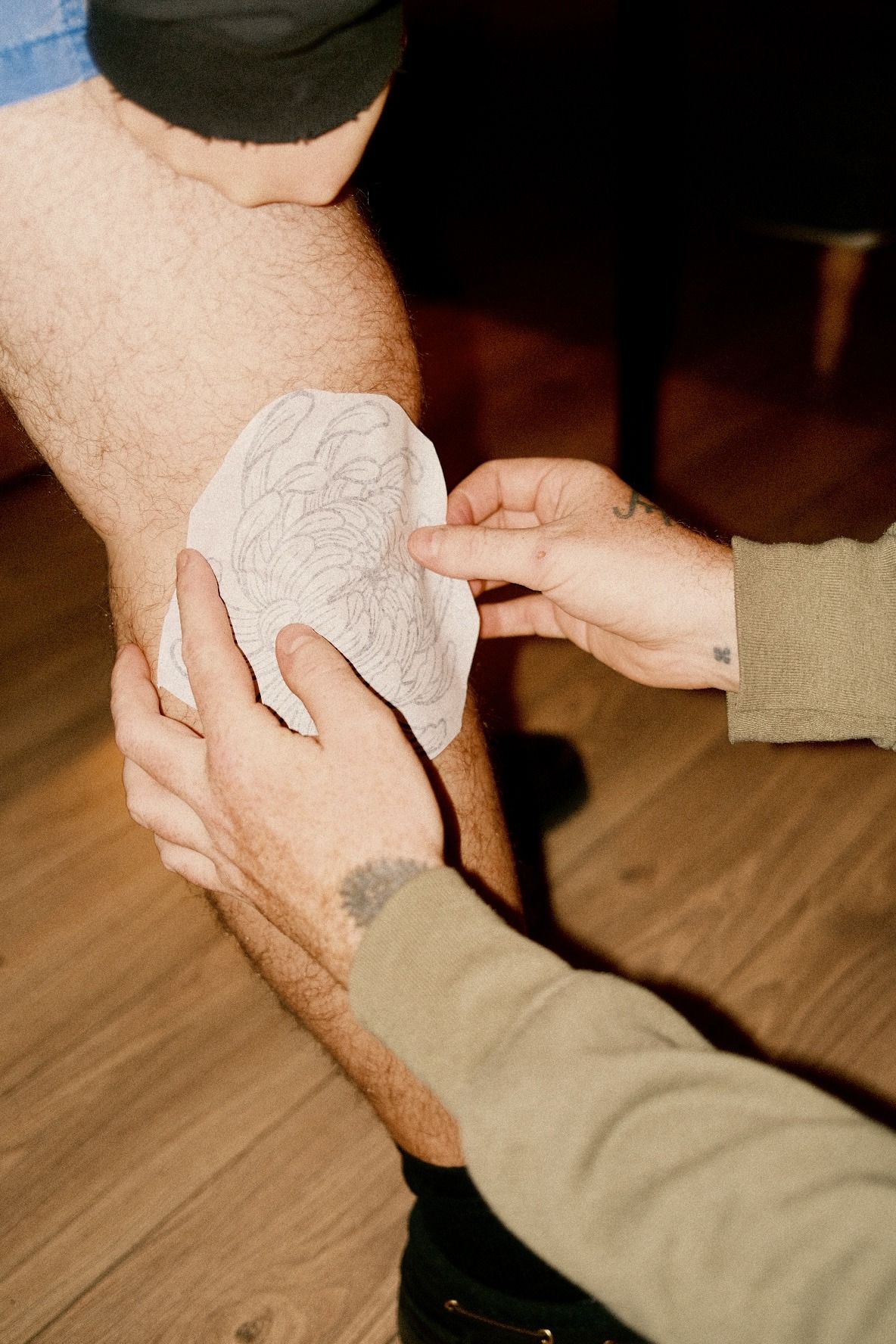
In a Zagreb tattoo studio, on a table covered with protective paper, Marko Turković is lying on his side without his trousers. Tihomir Krklec Afrika, the MasterChef star who handles both a wooden spoon and a needle with equal confidence, is outlining a chrysanthemum on the calf of his right leg. In this unusual setting, the conversation unfolds. A chef who is lying down, a chef who is tattooing, an interview that takes shape alongside the motif slowly emerging on the skin.
Turković is now one of the most recognizable names in Croatian gastronomy. A Michelin recommendation for Bekal, the opening of Fogo by Bekal with Tvrtko Šakota, numerous guest appearances, and the recent relocation of Bekal to the former restaurant Gola are the latest milestones in his professional journey. Yet here in the studio, none of that is present. There is no kitchen noise, no service rhythm, and the air carries only the soft, sharp scent of antiseptic. Marko lies still and answers calmly, adjusting himself from time to time so Afrika can reach the next angle with more precision.
Marko, people love a good origin story. Was your path as picturesque as the popular food documentaries we watch? A childhood spent in your grandmother’s kitchen, a glass of good Greek wine, and rolling out homemade pasta? What was the main catalyst that set you on this culinary path?
The turning point was the classic summer job in a kitchen. Earning some cash while soaking up the long hot island summer. The menu was almost always the same, grilled meat, fish, only the owner’s daily catch. I remember thinking, why is this so good? At home, no one paid much attention to cooking. There was no broad interest or very proper technique. We ate well, but my grandmother and mother adapted depending on what was available at the time. After working in that konoba, I started paying attention and waiting for the right opportunity to enter the world of kitchens and gastronomy. A few seasons of grilling fish in various konobas, and in the meantime I read everything I could find about food and cooking. Working with Tomislav Veseljak showed young me that there are no rules in the kitchen if everything on the plate works in synergy. It opened my eyes to the creative potential of the job.
Photo: Marko Domgjoni
During that period I was still figuring things out, so I went to university where I briefly and unsuccessfully studied psychology before accepting that I would most likely spend the rest of my life in the kitchen. I took some time and sent applications for internships in restaurants that seemed interesting and technically demanding. I was lucky, I got accepted at De Kromme Watergang, which at the time had two Michelin stars and a team of seasoned professionals who had worked in some of the best kitchens in Belgium and the Netherlands.
I would usually come home during the seasons. I loved being home, spending time with friends and family, and applying what I had learned. I led kitchens in Korčula, and later went to Schloss Schauenstein. There I had the pleasure of spending time in their test kitchen, which is separate from the service kitchen and exists for experimentation. After that, the path led me to Mirazur. The famous Mirazur was so fierce and intense that at one point I thought I would stop cooking. It is a three Michelin star system, you only work and give everything you have and everything you do not have. After that I returned to Korčula, this time to recover. After Korčula I went to Ghent to cook with Kobe Desramaults. There I encountered a philosophy of purity in open fire cooking. I could not believe you could create twenty different courses over fire. I thought it was complete nonsense, but then it turned out to be a masterpiece, the only right way in my opinion. A nonclassic French approach shaped by a Japanese drive for precision and minimalism. In contrast to the other restaurants I worked in, Kobe used very few elements and everything worked perfectly and with incredible intensity. I returned to Croatia again, first to Mano2, then briefly to Boškinac, and then to Sopal. Now I am at Bekal, and here I am exploring a kind of reductionism that I believe is the direction I truly want to pursue. We cook in a compact, simple way, yet still complex, with strong flavors and aromas. I enjoy cooking with ingredients that are in season, with fire and smoke bringing out what excites me most in them.
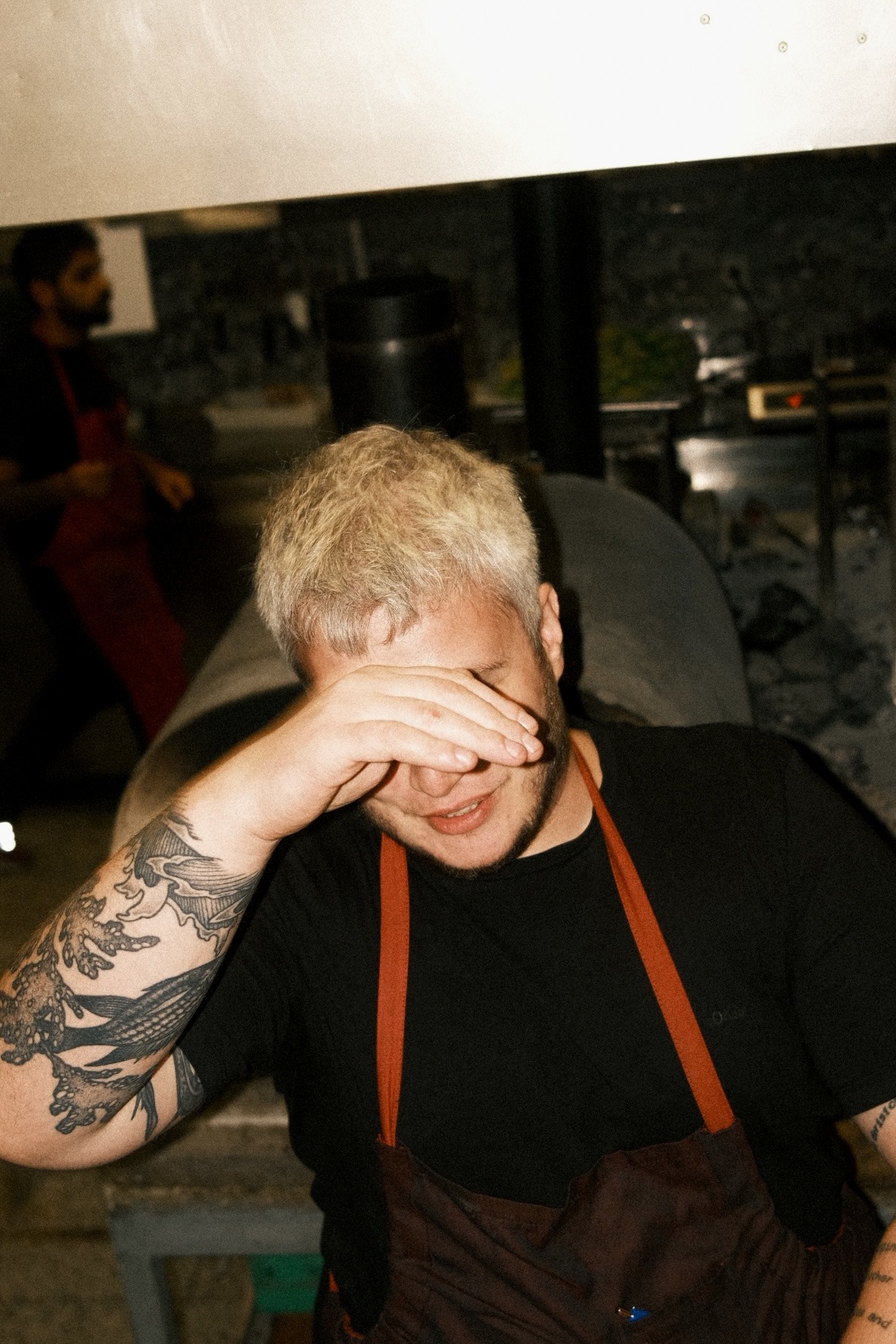
I jot down all those restaurants, google them, and feel disappointed that I have no idea about any of them even though I like to think I know something about gastronomy. Every one of them is top of the top, the crème de la crème, the dream of every chef, and Marko talks about them so modestly and casually. Although maybe his gray hair tells a completely different story. Yes, Marko does not bleach it, despite what some people think.
I am very curious outside the kitchen too. I like knowing things, the desire for knowledge, knowledge is happiness. When I get into something, I like to study it down to the smallest detail. The kitchen is a nice place to be, but the job is not easy. You sacrifice a lot, especially in your private life. Cooking is the way I communicate with the world and the way I justify my existence. For now I don’t think I could do anything else or feel this fulfilled doing something else.
Okay okay, so you have had a really varied and interesting path. What did you take from all of it the most, some organizational skills, an approach to food, a cooking style, recipes, what?
My friend, the ability to adapt is the trait of intelligent organisms. At Sopal we worked on two induction hobs and a small grill and we managed. That is a personal victory for me because with such limited kitchen conditions I managed to build a healthy, solid story. I think the biggest stylistic problem young cooks have today is taking someone else’s signature dish and treating it as their own after adding even more unnecessary elements. I think it is perfectly fine to be inspired by something, but this is how I filter it. I have never copied plate elements literally, I pick up what inspires me and think about how I could prepare it differently so that it influences my own signature dish. I go back to Patrik Wasser in the test kitchen. You can make a beef dessert there if needed. In Kobe’s restaurant I understood that everything needs to be stripped down and brought to something minimal but high quality. Experience is everything, not only kitchen experience but life experience too. Exhibitions, conversations, listening to music, watching films, inspiration can be found everywhere.
Photo: Marko Domgjoni
The people I was surrounded with during those formative years, often students of Heston Blumenthal or similar chefs, were usually monomaniacal. They were good only at what they were taught, but incapable of much else. That always puzzled me. I like living outside the kitchen as well, walking my dog, talking about art and the philosophy of life. That monomania and lack of life experience, not that I want to offend anyone, but for example insulting or hitting someone because something did not leave the kitchen on time, throwing things in their face, none of that makes sense. I believe it comes from fear and a kind of Stockholm syndrome that comes from knowing that this is all they have and that it defines them in life, meaning their job defines them. For me it is the complete opposite, what matters is that the food is good and that people in the kitchen feel like part of my collective and that we are creating together.
I completely agree. The whole concept of gastronomy and hospitality is fascinating. There are huge expectations from guests and everyone around you, and the smallest mistake can lead to catastrophic consequences in the form of reviews and criticism. Today everyone is a critic, and people generally know very little about the industry and follow whatever is hyped. Hospitality is so much more than the food itself. There are many restaurants and bars. Of course they cannot all be equally good or equally consistent. I think hospitality, meaning guest care, has become everything except what the word actually stands for. There are very few professionals who want to do this job because they love it. But to make things even crazier, you decided to take it a step further and in Bekal you push the boundaries of classic restaurant norms. Everyone already knows that you cook over fire, so what is the biggest challenge in that?
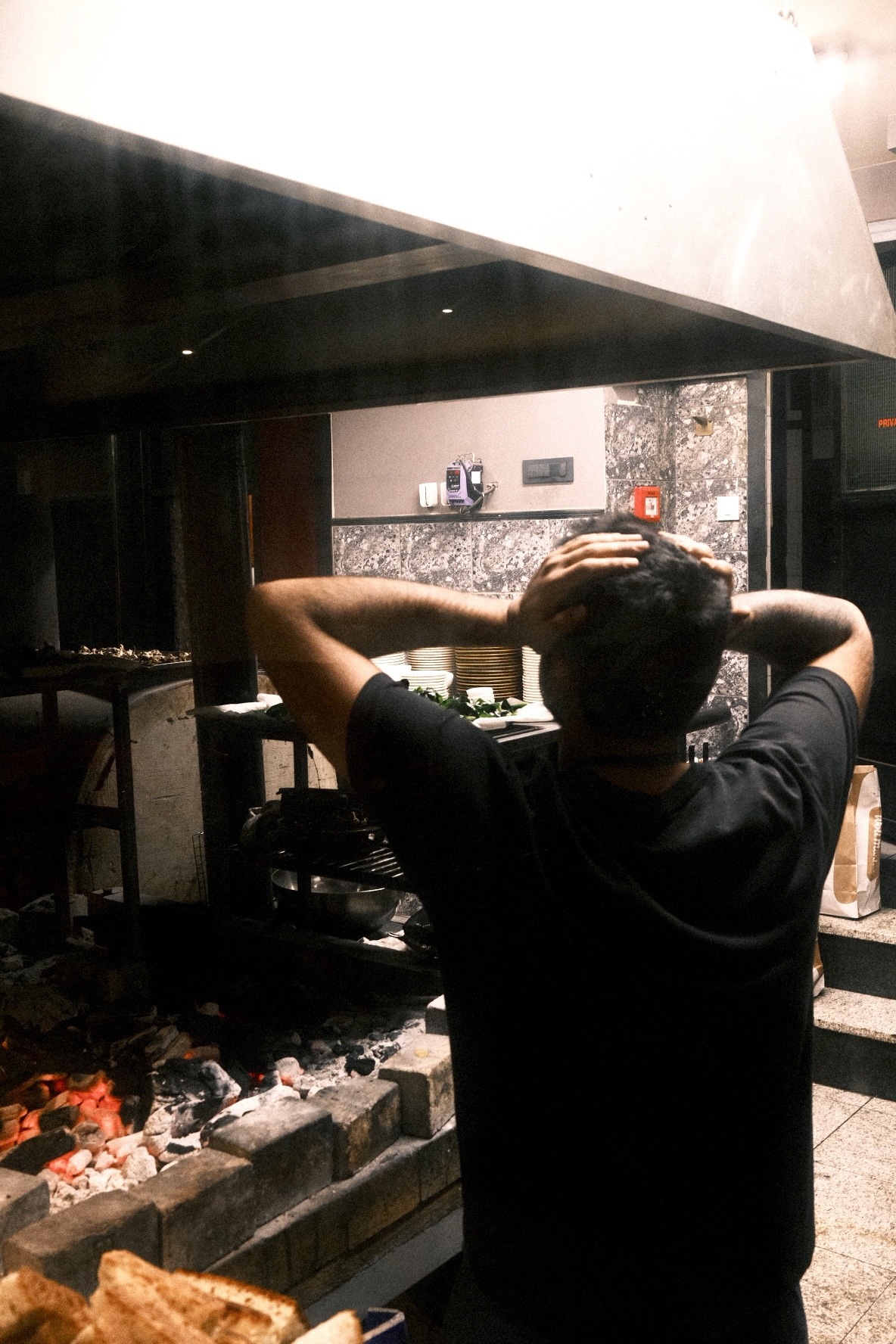
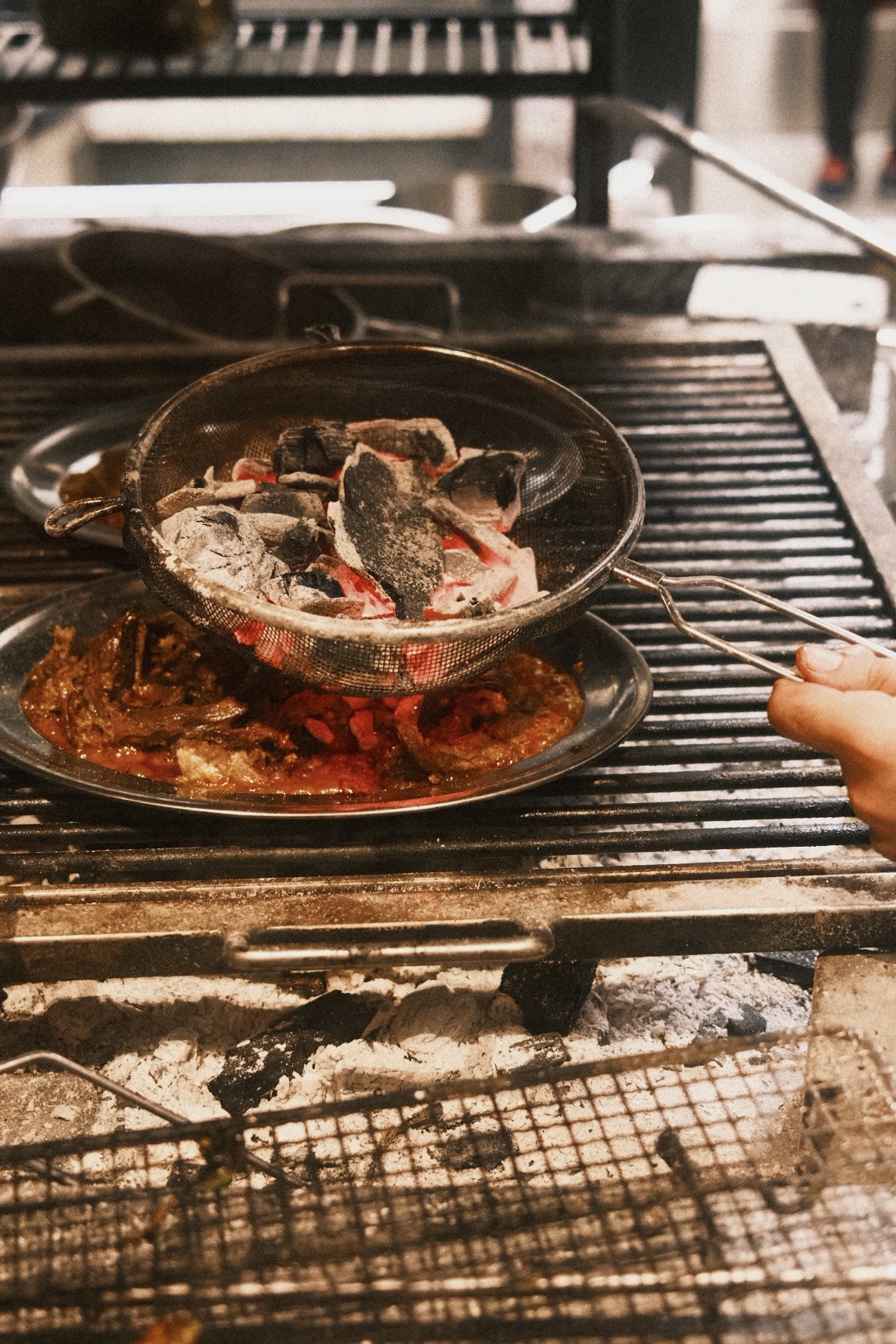
Hospitality has always been a mess (laughs). Not many people have gone through the systems we have gone through. Many big systems are collapsing because their practices have been banned. Working eighteen hours while people throw pans and peanut ladles at you and while you have no energy left for your private life is not normal. COVID changed the collective mindset even further because many restaurants closed. People switched to something else. They cook at home for friends, they do other less stressful jobs and they do not lose their minds in restaurants anymore. For example, at Mirazur there was a morning roll call like in the army so they could immediately see who had run away during the night. People literally disappeared every day under the weight and madness of that pressure. In Bekal I find joy in tending the fire in the middle of Trešnjevka and cooking without a menu. In Fogo I find joy in the fact that Tvrtko and I managed to turn the worst possible restaurant concept (pizza, pasta, grill on the beach) into something genuinely good.
Nothing creative is a problem, the real challenge is finding good ingredients and surrounding yourself with good people who know or want to learn this job. We cook with pleasure, first and foremost for ourselves, the way we would like to eat, and then for the guests. It is a privilege when a guest likes our dish, but that is also where the satisfaction of hospitality comes from. Instant gratification.
Everyone knows that critics like you. It is interesting how you walk that fine line between unexpected flavor combinations and classic restaurant mainstream. You make relatively simple dishes that are perfectly infused with culinary technique. Do you think the audience understands this concept, or are portion size and plate fullness still the most important thing here?
It is not quite that simple. It may look like it, but I do not like to manipulate the original ingredients too much. A good ingredient is the best ingredient, there is no need to fuss with it. I cook with it in a thoughtful and intelligent way. We let the ingredient come out exactly as we envisioned it in that moment. There are not four creams, there is one, stripped down and brought to its maximum. The vast majority of guests understand our system. In Bekal everything comes out in a more relaxed format. We have a tasting menu that guests often do not know in advance, which is our current norm. This is something that grows slowly, but with time it finds its place. The problem in today’s restaurants and hospitality in general is the belief that everything is fast, easy, and accessible. But a quality story takes time to build, and it is even harder to recognize.
We know you received a Michelin recommendation for Bekal. How do you feel about that now, does it create any added pressure?
To be honest, the recommendation came completely unexpectedly because Bekal looks like AKC Medika. It does not create any pressure for me because I try to create that pressure myself anyway.
There is talk that Bekal is moving to a new location. Is the entire Bekal philosophy moving with it, or will you use the opportunity to change the concept a bit? The recommendation does not transfer automatically, but I believe knowledge and character do. How do you plan to keep the concept?
The cooking philosophy will stay the same, even though we have to leave the fire pit behind. The location does not change the knowledge, the approach, or the motivation of the people who will be cooking at the new space. I think there will be no problems at the new location in justifying the popularity of the old one.
Do you plan any additional projects in Istria along with Fogo by Bekal?
Right now I am preparing something that deserves a completely separate conversation that we will have once the project reaches its final stage.
Great, I cannot wait. What does your creative process look like? Do you wake up at night and write down recipes? Where do you find inspiration?
Često i intenzivno razmišljan o tom pitanju skoro svaki dan. Za mene kreacija ideje nekog tanjura počinje ili nekim naoko I think about that question often and intensely, almost every day. For me, the creation of a dish begins with what seems like a random memory of an aroma, a moment, or a technique. More often it starts when I see an ingredient at the market that is at its absolute peak. I would feel bad not using it on the menu because the next chance might only come next year.
Besides feeding guests and giving them a good experience, do you see yourself professionally somewhere else, in some new projects?
One day I would like to open a small restaurant back home in Korčula. Something more intimate, cooking only for a few people. Similar to Bekal but even more intense, more intimate, and more local.
We all love watching food shows. From documentaries to cook offs and all kinds of culinary programs. It is interesting to follow people’s stories, and it is fun to watch others cook. I guess that fascination with food is something instinctive in our DNA. In Croatia, TV cooking has a long tradition. From Stevo Karapandža to David Skoko, MasterChef, Dinner for Five, haha. It seems to me that everyone in Croatia today wants to be an instant culinary star. Do you think this has influenced the popularization of gastronomy here and increased dining out beyond the comfort of one’s home? Are restaurant visits now mainstream or still reserved for special occasions?
Especially here in Croatia, everyone wants to be a star. Every creative scene is a big ego scene. But it is impossible to create without ego. It is hard for me to talk about the average here because I think differently. What is normal to others is not normal to me. After the first MasterChef there was a huge boom of cooks. But a chef’s place is in the kitchen, learning and working. Those shows created an unrealistic picture of kitchen life. Everyone expects that after two years of work you will start building molecular cuisine, but in reality you will probably not even master the basics. I primarily love my profession, cooking. I devoted myself to it and it has given me everything I have today. TV shows have definitely influenced the popularity of gastronomy, that is not in question. Food is embedded in us, as you said yourself. We are sensory beings, if we see something we want to consume it. What people do not understand is that what they see on TV is not necessarily real. Food is great, you can arrange it and decorate it and it will look fantastic, but in all those shows the winner is usually the most popular and audience favorite, regardless of the food. What matters is that chefs understand that taste is what needs to dominate above anything else. That is our industry, period. The guests at Bekal prove that. They are willing to try something new, something different, and they do not want to stuff themselves until they cannot walk when they leave the restaurant.