A rare chance to see Leonardo’s masterpiece up close during restoration in Milan
The long-hidden mural by Leonardo da Vinci will finally be open to visitors during the Winter Olympic Games in Milan.
Tara ĐukićJanuary 27, 2026

The long-hidden mural by Leonardo da Vinci will finally be open to visitors during the Winter Olympic Games in Milan.
Tara ĐukićJanuary 27, 2026
If there is a most exciting geographical point to be in February this year, it is Milan, not only because of its prestigious fashion week, but above all because of the Winter Olympic Games, which Italy is hosting for the fourth time in history, most recently in Turin in 2006. These are the first Olympic Games to officially have multiple host cities, including Cortina d’Ampezzo, as well as the first Winter Olympics since Sarajevo 1984 to hold the opening and closing ceremonies in different locations. Somewhere between the preoccupation with figure skating, alpine skiing and biathlon, with athletes and results from the region, special attention will also be directed toward Milan’s artistic, cultural and lifestyle scene, especially if you find yourself there in person.
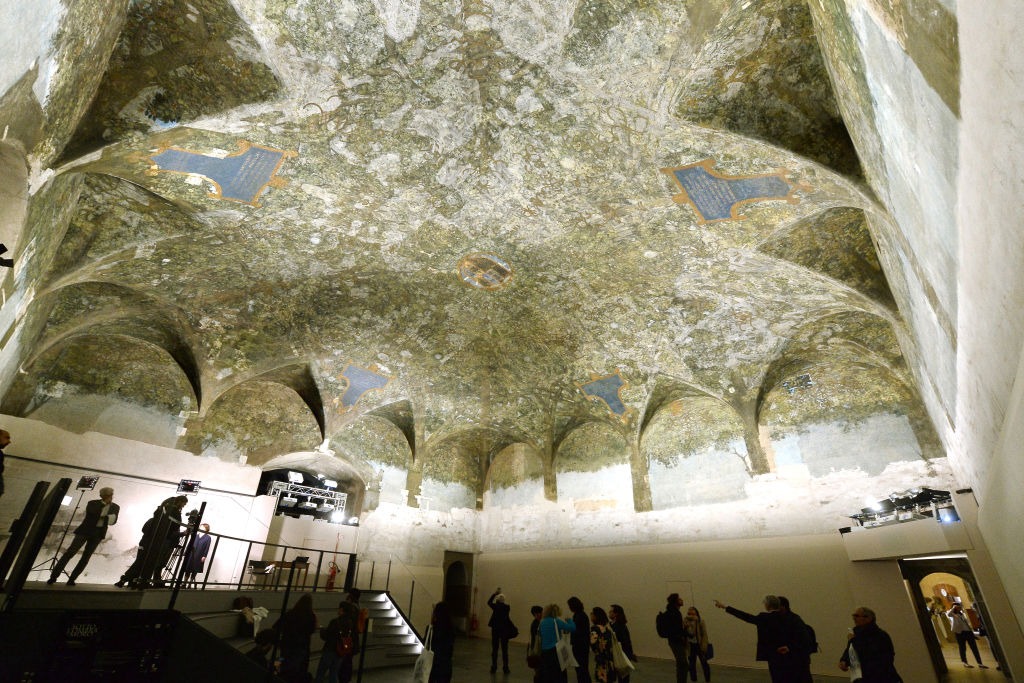
Accordingly, news arrives that from the start of the Winter Olympic Games on February 7, an imposing Leonardo da Vinci mural on the ceiling of Sforza Castle will be unveiled, hidden for centuries and long in the process of restoration. For five weeks, visitors will be allowed to climb a scaffold about six meters high inside the Sala delle Asse in order to observe restorers at work on Leonardo’s mural. After that, the space will be closed again for another 18 months, making this limited opportunity a rare chance to see the work from close range while it is still undergoing restoration.
Related: Who represents the region at the 2026 Winter Olympic Games?
The painting, begun around 1498 and long covered by a layer of plaster, has only recently been reassessed as an authentic work by the Renaissance master. According to historical letters from the Milanese duke Ludovico Sforza, the room was painted in 1498 by Leonardo and his workshop, richly decorating the walls and the domed ceiling with motifs of intertwined grapevines beneath a pergola, a canopy formed by 16 trees, as well as monochrome depictions of roots and rocks. However, in 1499 Milan was taken by the French, forcing the Sforza family, as well as the artist himself, to flee.
Over the following centuries, the castle served military purposes, and the walls of the Sala delle Asse were whitewashed, causing the memory of the painting to fade over time. Only at the end of the 19th century were traces of the original layer of paint discovered. Later restoration work throughout the 20th century fully revealed the mural, but the tempera technique in which it was executed proved extremely fragile. Today, restorers use Japanese rice paper and demineralized water to remove salts that have penetrated the walls and to clean the surface of the painting.
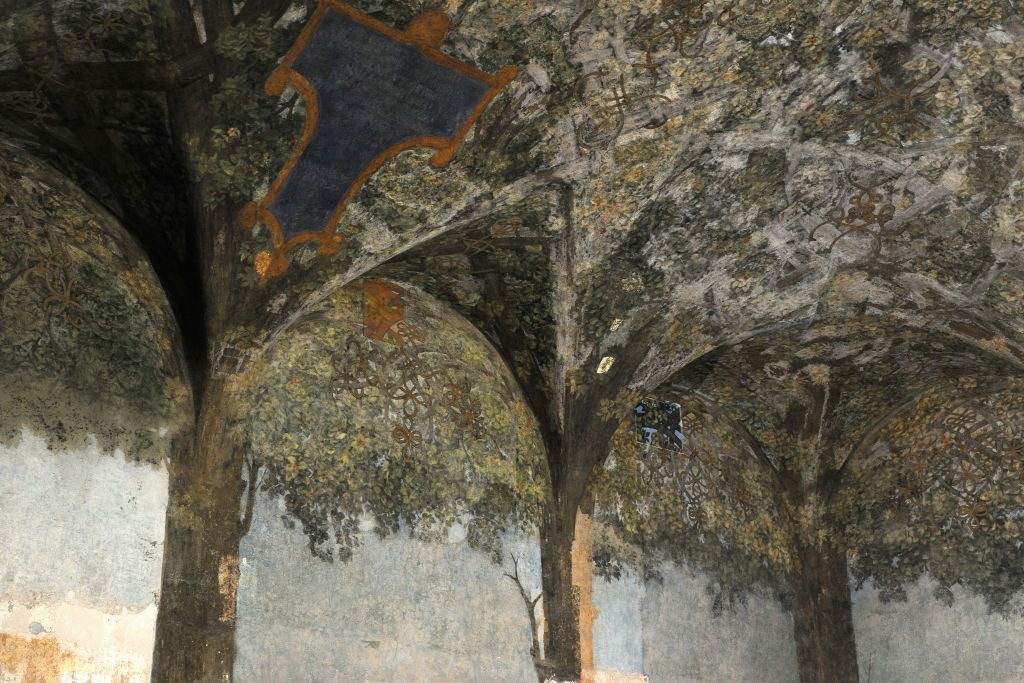
Photo: Getty Images
During the Olympic weeks, the castle will launch a special program of guided tours in the final phase of the hall’s restoration. Visitors will be able to observe the richly painted lunettes of the space from the scaffold and from a distance of just a few centimeters. “This is a way to rediscover the long and intense relationship between Leonardo and the city,” they said.
At the same time, a new multimedia installation will be presented in the castle’s panoramic halls, showcasing the history of the Sala delle Asse and Leonardo’s role at the Sforza court. After all, the artist was a favorite of the duke, and at the same time he painted The Last Supper in Milan, in the church of Santa Maria delle Grazie.