
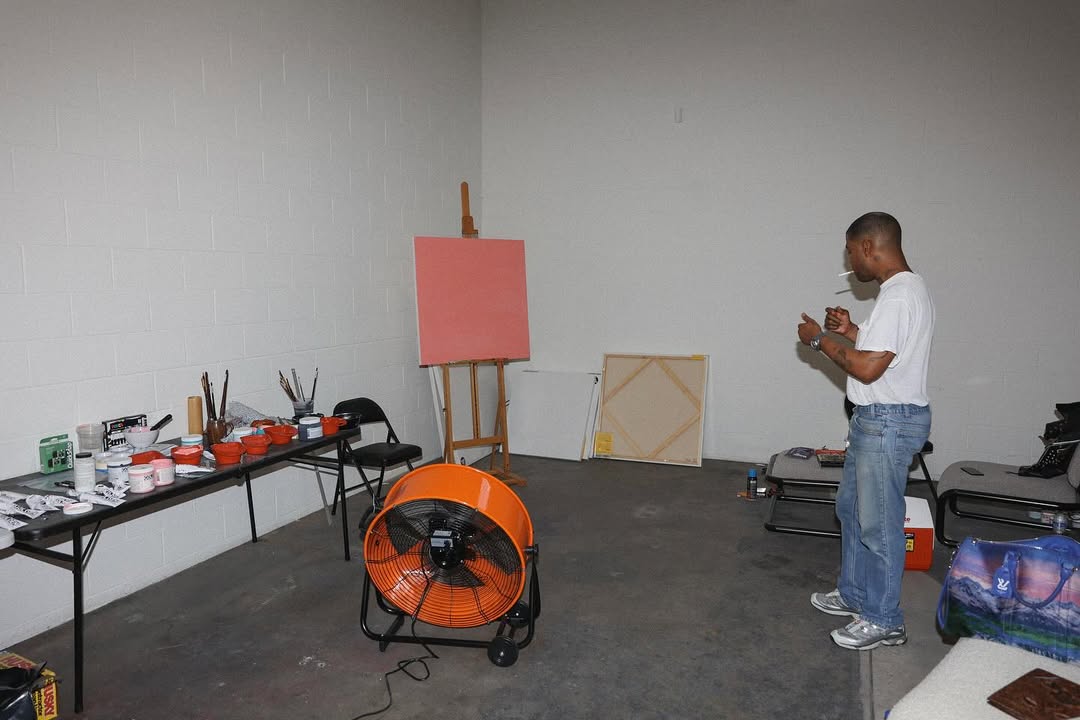
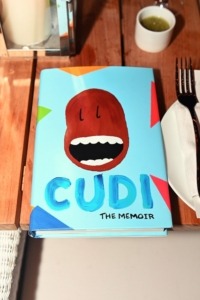
He says that over the past year he has been intensely focused on painting, traces of that process already visible on the cover of his memoir Cudi: The Memoir, in which he wrote openly about depression and addiction, his “demons.” Only now, however, do those demons gain color, form, and space on canvas.
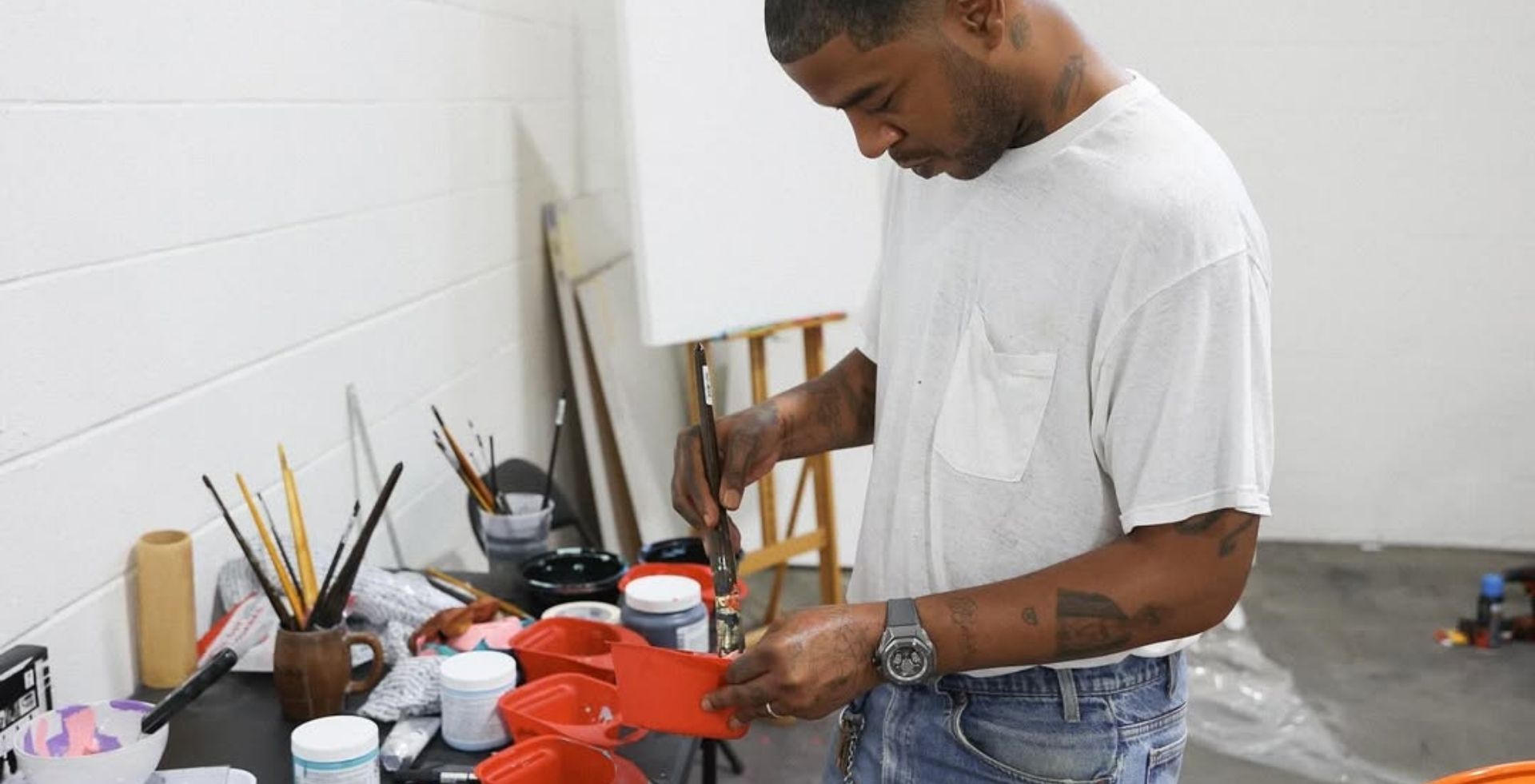
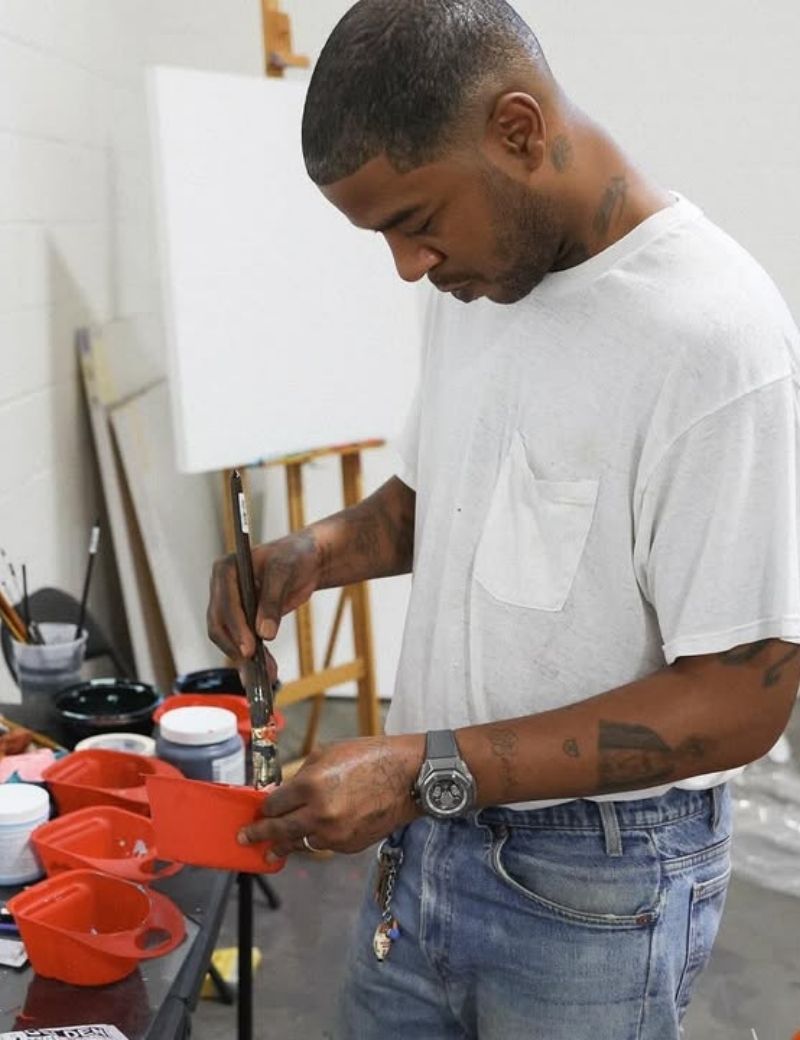
There are artists whose transition from one medium to another never comes as a surprise. You simply notice it and think: of course this happened. For some reason, Kid Cudi feels like exactly that kind of artist. Since his early days with Day ’N’ Nite, Kid Cudi has consistently blurred the lines between music, fashion, and art. After launching his own brand, Members of the Rage, he is now turning to painting. Under the name Scotty Ramon, he rekindles a childhood passion for drawing and cartoons, infusing it with the maturity and experience that have accumulated over the years.
Painter Scotty Ramon
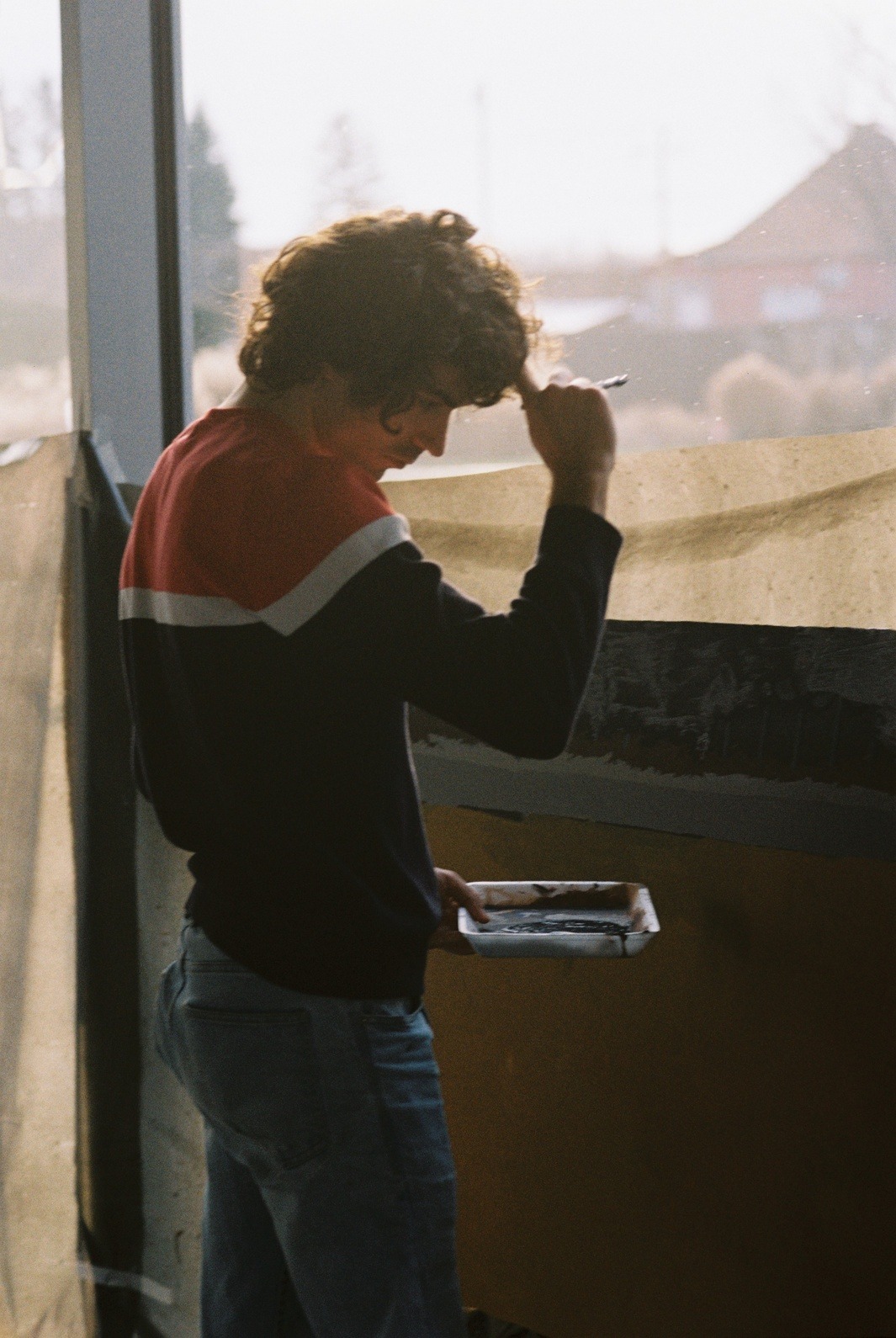
Just over a year ago, Scotty Ramon, better known as Kid Cudi, tried his hand at painting for the first time. He quickly began a body of work that visually translated what his music had long expressed: joy, introspection, and self-confrontation. Those early paintings marked the beginning of a new creative path, one in which every gesture and every color becomes a tool for exploring emotion and the inner world.
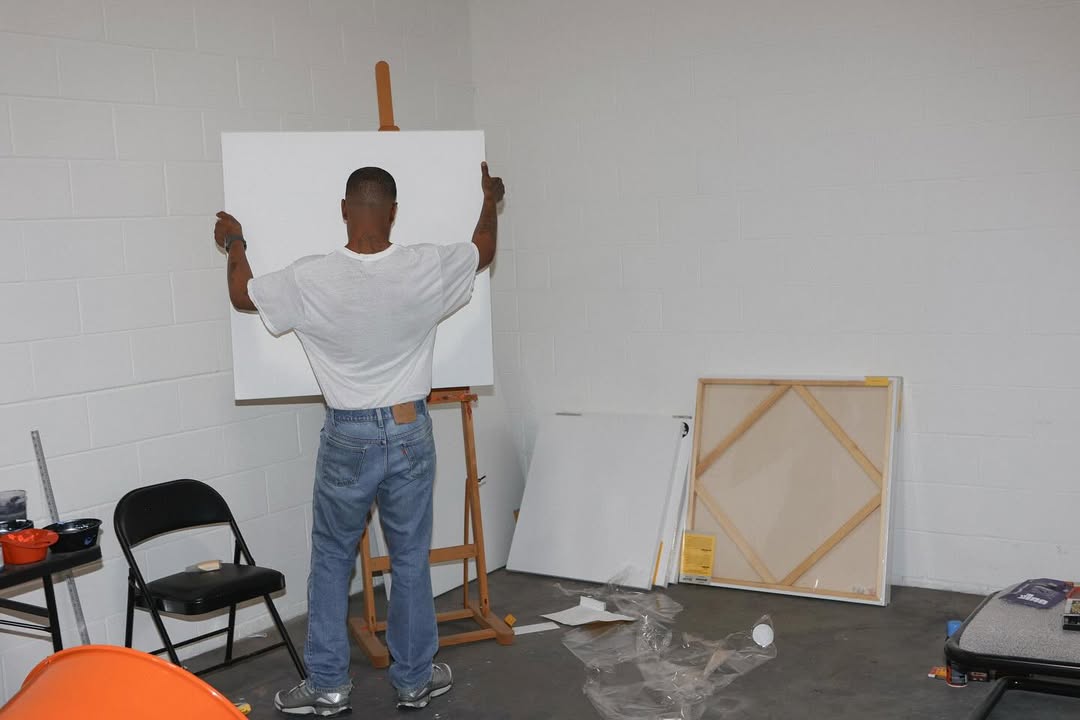
His painter alter ego, Scotty Ramon, was introduced to the public through a screening of the documentary Echoes of the Past, held on December 5 at the Miami Beach EDITION hotel. The film offers insight into his creative process and preparations for his first solo exhibition in Paris, opening on January 30, 2026, and the screening was part of EDITION’s Art Basel Miami Beach program, which has for years positioned itself as a platform for cultural dialogue.
Painting as a form of introspection
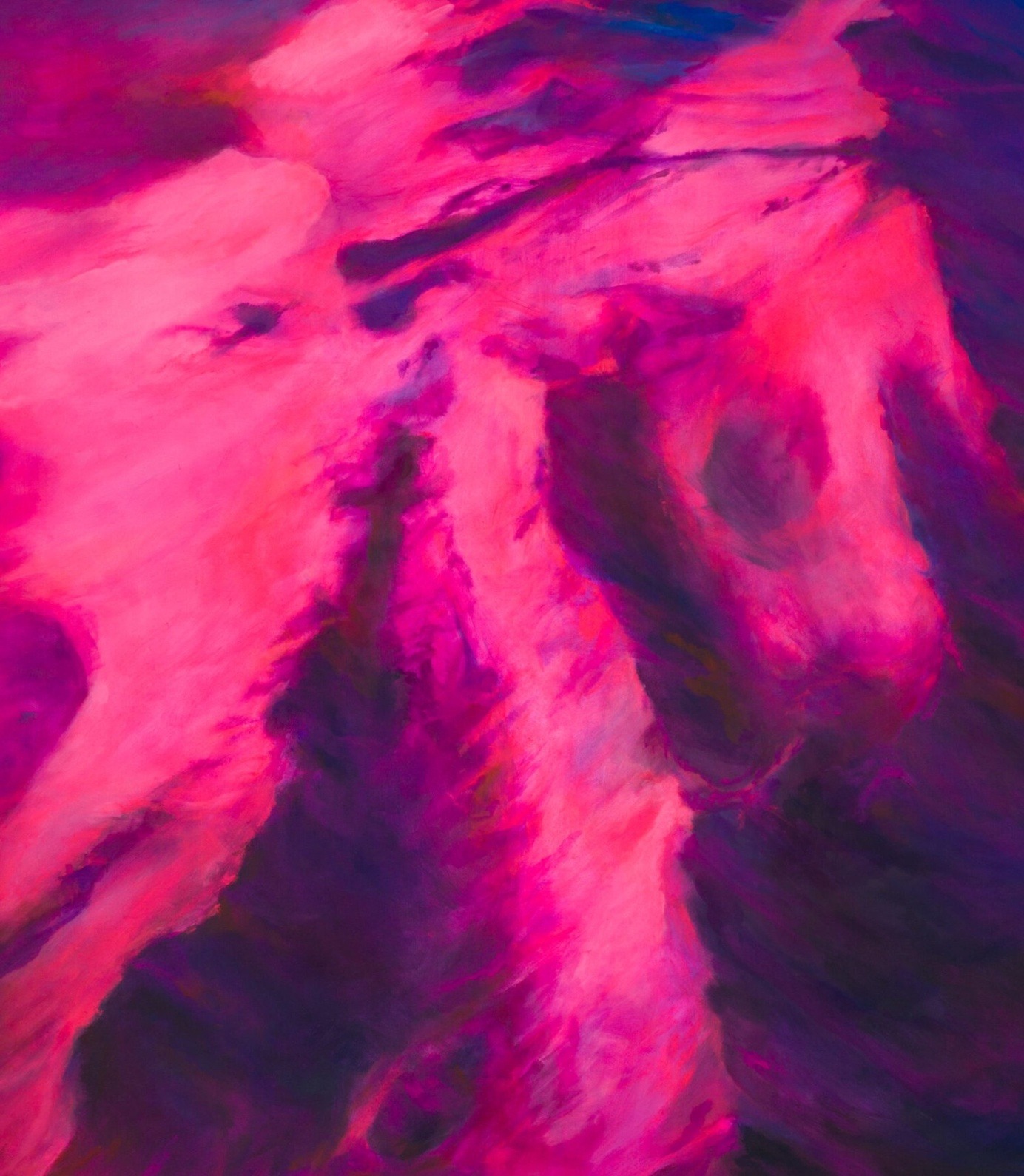
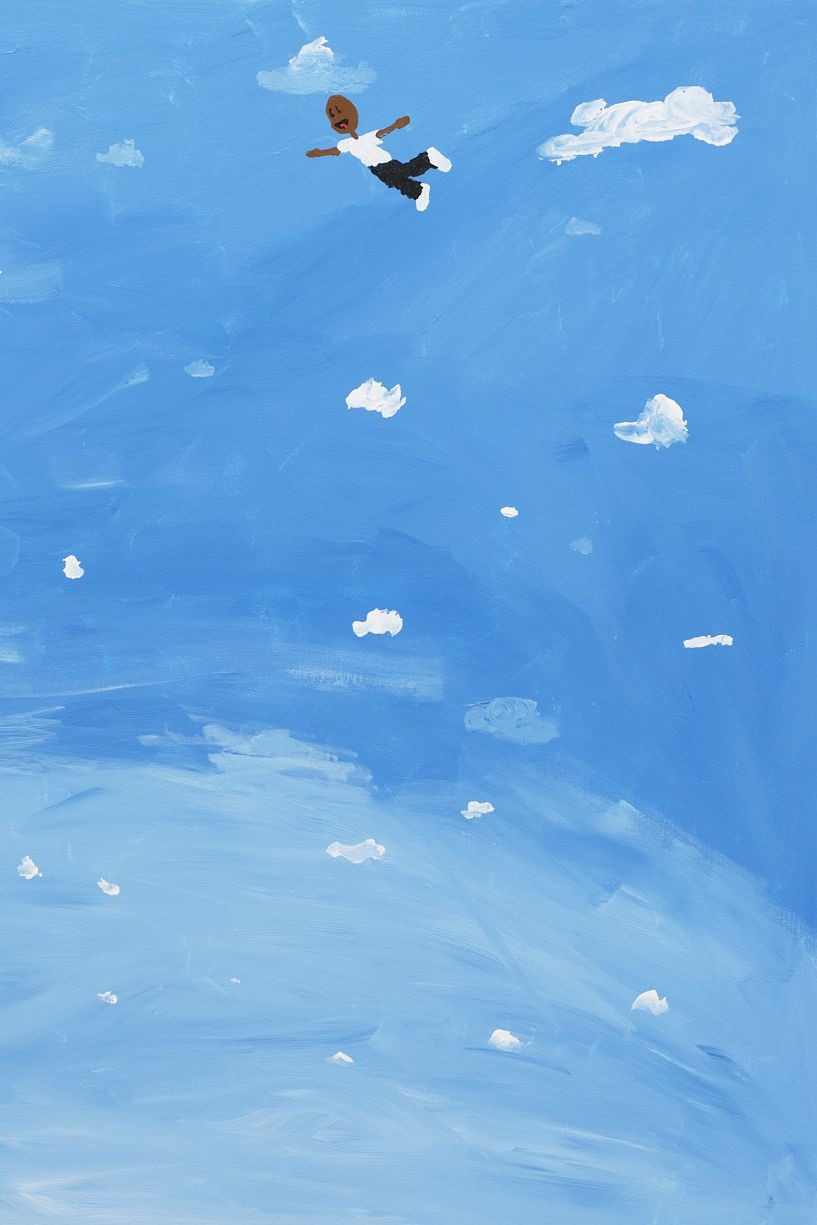
Curators describe his canvases as existing on the boundary between abstraction and narrative, combining geometric forms with bold, vibrant colors. Kid Cudi composes them with a sensitivity close to music, each shape and nuance seeming to correspond to a specific note or rhythm. This synesthetic approach reveals his ability to translate complex emotions into images, into a visual language that naturally extends from his musical expression.
At the center of his work is Max, his alter ego. This figure runs through his works like a red thread, embodying the tension between light and darkness, dream and reality. Sometimes a simple silhouette, sometimes a more developed character, Max reflects a search for identity and a longing for inner freedom that shapes Ramon’s world.
To complete the experience, Ramon also created an original soundtrack. Atmospheric, immersive, and electric, it follows the viewer’s gaze and expands the world of the exhibition beyond the visual. Much like his music, synthesizers and pulsating rhythms amplify the emotional charge, transforming the exhibition into a fully sensory experience. With Echoes of the Past, Kid Cudi opens a space for audiences to enter a more intimate layer of his artistic practice. Painting and music enter into dialogue here, with each work becoming an inner journey, a way to reexamine identity and reconnect it with emotion and personal history.
The exhibition opens on January 30 at the RUTTKOWSKI;68 gallery in Paris and runs through March 1.
VOGUE RECOMMENDS