Inside Olivier Theyskens’s stunning reinterpretation of Erin O’Connor’s 2000s dress for Vogue Adria
Tara ĐukićDecember 10, 2025

December 10, 2025
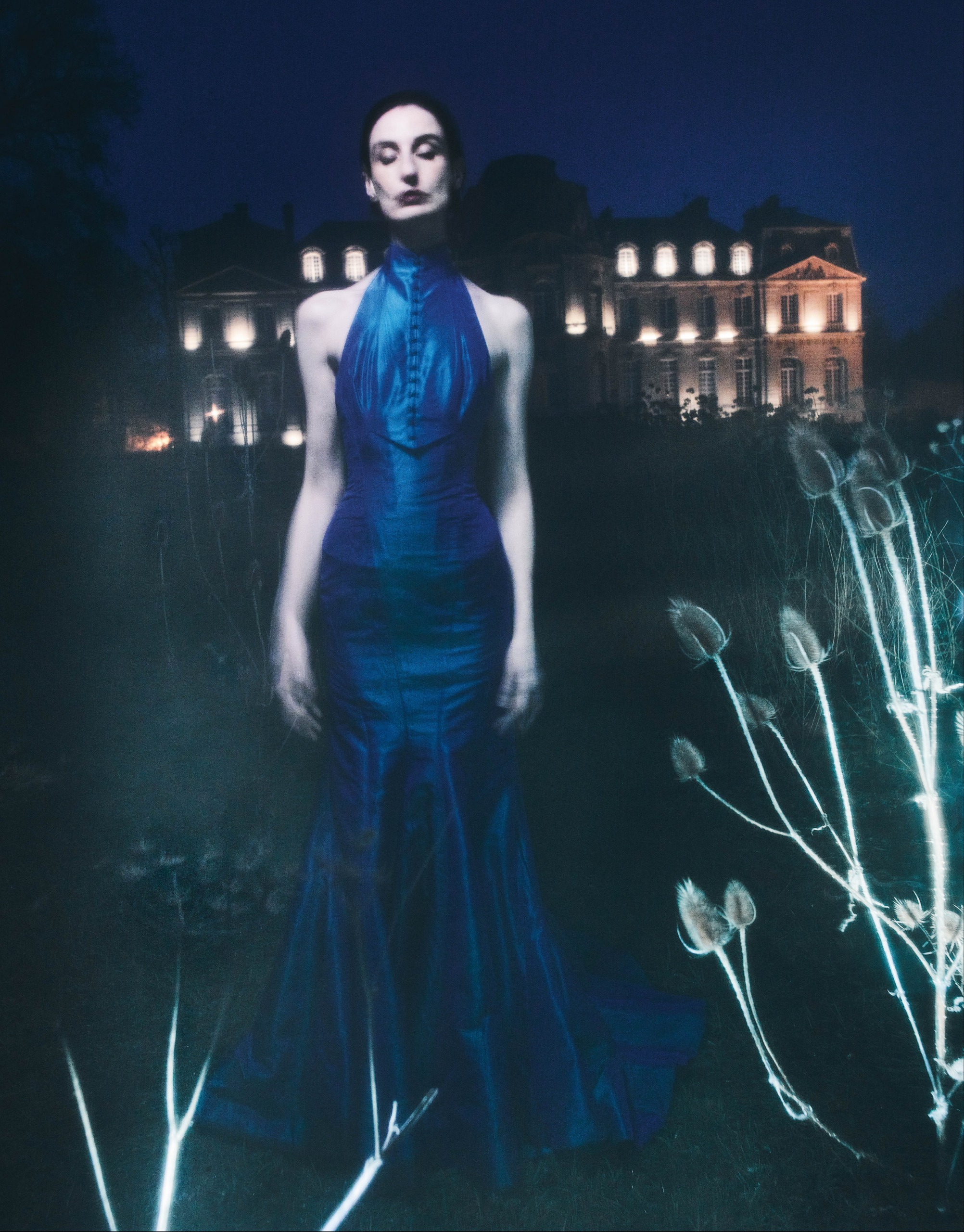
The last poet of fashion. I came across that phrase while preparing for this interview with Olivier Theyskens, and I thought how those five words could sum up everything I see, feel and hear in his presence and his work. Suzy Menkes once called him darkly romantic, accurately describing his design but not his character. That is the first thing I think about when I see him on screen, as his gentle, cheerful and almost ethereal energy suddenly becomes present in my space, even though we are in different geographic locations. When Vogue Adria fashion director Taylor Angino envisioned the December cover with Erin O’Connor last month, the supermodel who is celebrating 30 years in high fashion this year, he knew that this fashion lyricism had to begin with the mysticism and mastery of Olivier, the Belgian designer who founded his brand in Paris in 1997 and went on to become creative director of Rochas, Nina Ricci and Theory, returning to his own label in 2016. Inspired by the iconic look Erin wore in his fall winter 2000 show, Olivier created a contemporary custom reinterpretation for the Vogue Adria cover story from the identical fabric he had found by accident, if you believe in accidents, in his parents’ home a year earlier.
The dress Erin wore was from the winter 2000 collection, and we made it in Belgium. We saved all the cutouts from the original, and the dress was so large that there was very little material left over. I think my mother probably folded them neatly, put them in a box, and a year ago I found those remnants perfectly preserved at my parents’ place, Olivier begins. In fact, there is a small room in their house dedicated to my sewing things, and that is where I found them. I thought this material means everything to me because it is exceptionally beautiful, and it was produced by a French haute couture textile manufacturer that no longer exists. I always felt that no one could ever recreate this. I wondered what I could do with those scraps and how, because from tiny pieces you need to create a shape that can be assembled into a whole. You have to adapt the way you construct clothing so that it works like a puzzle. And I was very happy, because when you have quality material, it does not age.

Sleeping Beauties: Reawakening Fashion at The Metropolitan Museum of Art, photo: Julien Claessens and Thomas Deschamps
The material is the same, but the design differs. The first version was very futuristic and very voluminous, and from the small amount of fabric that remained, I tried to make as much as possible. I wanted to create some kind of knot. The first creation I made back then was a huge crinoline inspired by the mid 19th century. This time I developed it further. I wanted to create a bodice in the style of a Victorian jacket with a kind of butterfly sleeve, completely buttoned up, while the dress follows the line of the body with pronounced volume in the lower part. It has a slight hint of the historical, but it is still modern, created with the intention to feel modern and creative. It was clear that this fabric could not be connected to anyone other than Erin. She was the only one, with her short black hair, on whom that material worked so well. And as I held it in my hands, two and a half decades later, I felt it was linked only to her in my memory, and nothing about that had changed.
I do not tell him that in my own mind the vision of his first runway show is equally unchanged, the one where models walked down a dark runway wearing garments embroidered with the human circulatory system, symbolizing complex and fragile emotions. Even in his beginnings, he was called a gothic designer, openly studying Florentine anatomical studies, the 17th, 18th and also the late 19th century in all its volume, trains, vintage and toile de Jouy fabrics, pearls and lace that contrasted with firm, provocative leather. His path in fashion has always been unconventional and experimental, which I suppose is more innate than calculated. I like the idea of designing something in a specific moment, and that people later say it is timeless. But you cannot design with the intention of creating something timeless. You can have that ambition, but when you design there has to be that energy, the urge to create exactly this, now. It is strange, but that feeling drives me every day. It matters to me to create what is relevant now. When you look back, some things grow stronger with time, some look worse than you thought and you change your mind. It is very bizarre. But I think it is important to stay flexible and not get stuck in the belief that something cannot be done now or has to be done a certain way. It has to be intuitive.

I am fascinated by his awareness of the origins of his own impulses for constant creation. The final goal is not a desire for validation, but certainly a desire for an exchange of love. You know, when you are a child, your interaction with adults is such that as soon as you do something and see that people are excited, it pushes you to do more. I was always very creative and good at sketching, and that feeling stayed with me. I am driven by a desire to surprise, to bring something unexpected, something better. This is perhaps the relationship I had with my parents and friends. You create something, you give it to them, and through it you receive a kind of love, which is a bit unsettling when I think about it, he laughs, but I think the same thing still drives me. When I work, I want it to be the best it can be. Somewhere in the background is the hope that it will move someone, that someone will love it and find it beautiful. Although I am a loner, I can truly spend long periods alone, I still feel that everything I do, I do for the outside world. There is also a lot of unspoken passion there, I add. Absolutely, it is never difficult for me to go to the studio and work. I never feel like I am going to work. When I have meetings, I try to be professional and punctual. But my natural way of existing is creating. That is my normal.
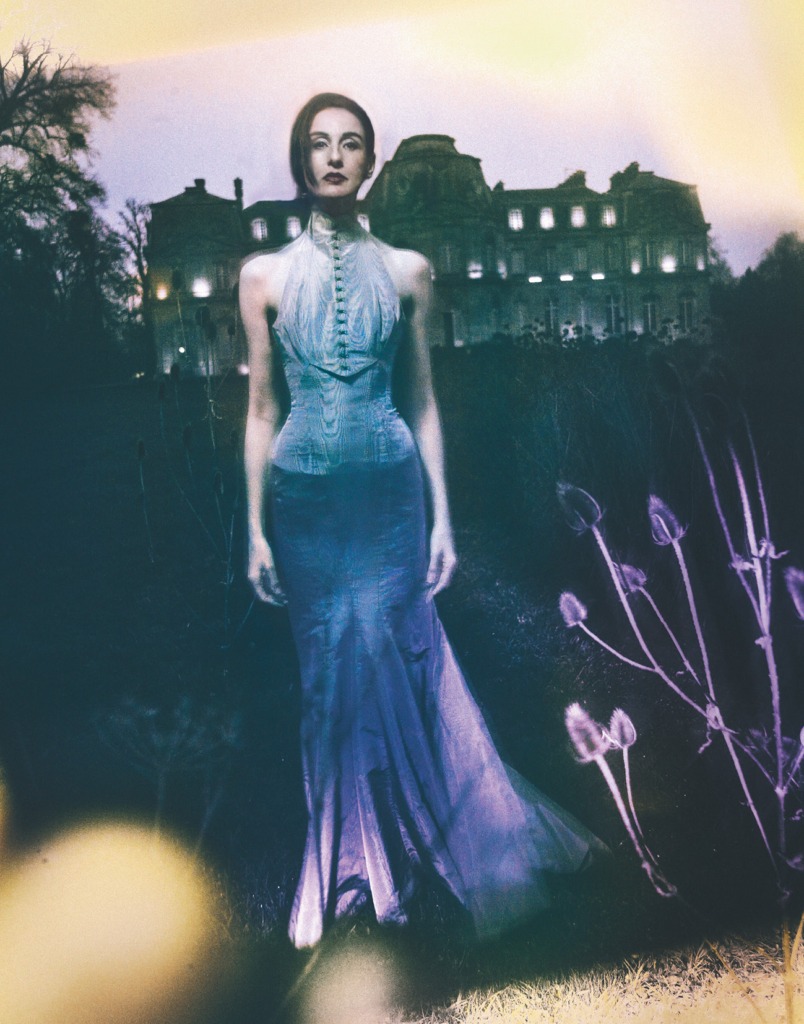
Photo: Dougie Irvine, Vogue Adria December 2025
Is there something he still dreams about, I ask, before we unexpectedly drift away from the topic. When it comes to fashion, I am driven by the desire to achieve more, to improve and to do better. But of course, in a broader sense, I have many other wishes related to this world, because I can very easily distance myself from fashion and see what is happening globally. Finally, unexpectedly, Olivier asks where I am from, and then immediately after if Nataša Vojnović is from there. I tell him she was on the first Vogue Adria cover. Wow, I met her when she was just starting out, at a time when things were still very difficult in your region, and she was going through all of that. I remember her very well. You know, I have her old Polaroids, taken backstage before shows, when I was assisting another designer in a Parisian atelier, working as an assistant. I took that photo of her then, funny but completely in tune with her energy. I would really love to see her again, I tell him. And you know her, with some completely wild expression, we laugh and say goodbye as Olivier promises he will visit Belgrade soon.
Photo: Douglas Irvine
Fashion: Taylor Angino
Model: Erin O’Connor @Heroes Models
Casting: Kathryn Costigan
Makeup: Anna Payne
Hair: Chiao Chenet
Manicure: Lora de Sousa
Creative Producer: Marita Bobelj
Photo Assistants: Paul Jedwab, Jeanne Le Louarn
Stylist Assistant: Robbie van Mierlo, João Bengala
Hairstylist Assistant: Erika Kimura
Production Assistant on Set: Gabriel Driot
Location: Château de Champlâtreux thanks to MR Agency i Métier Maison