
Society
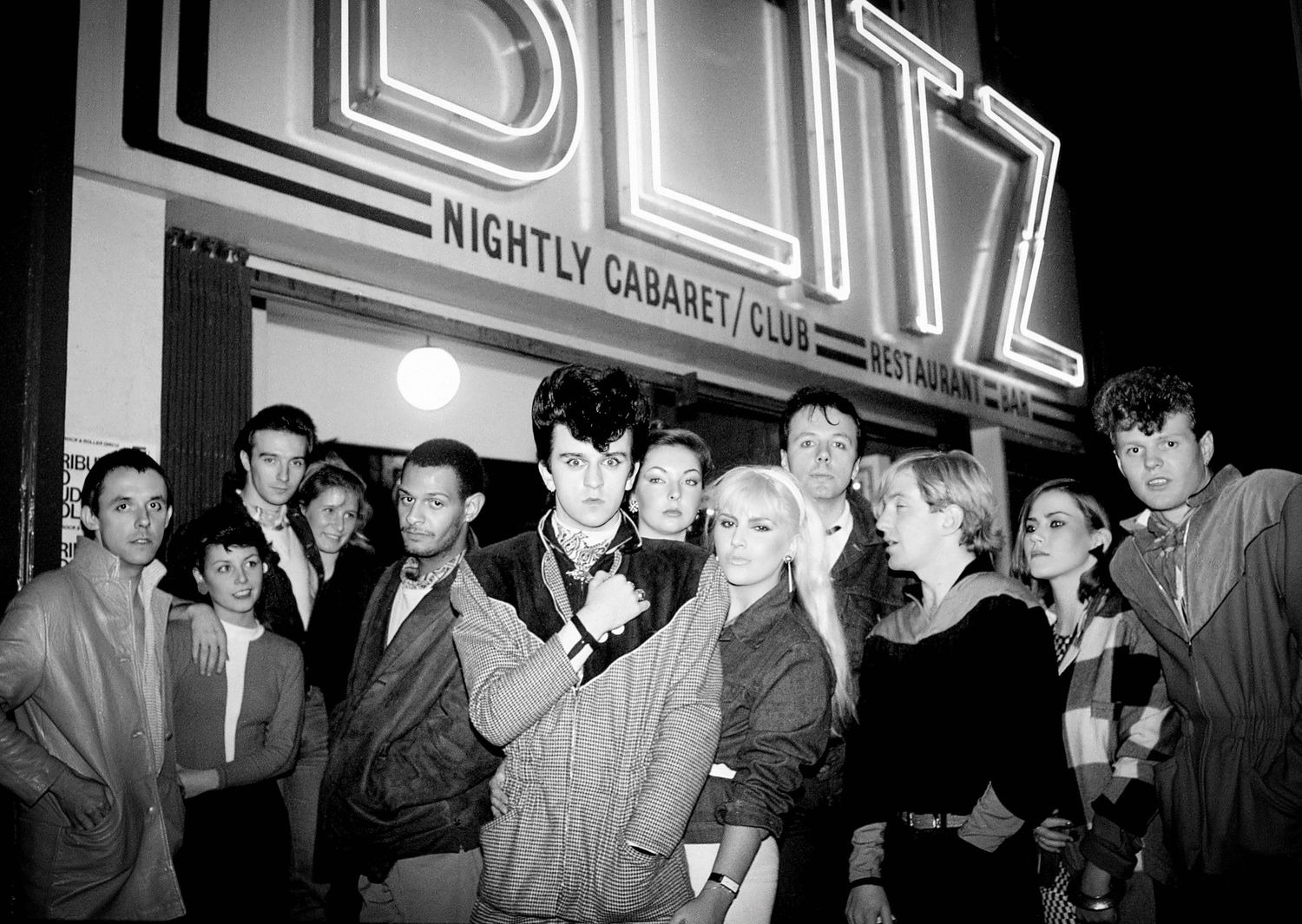
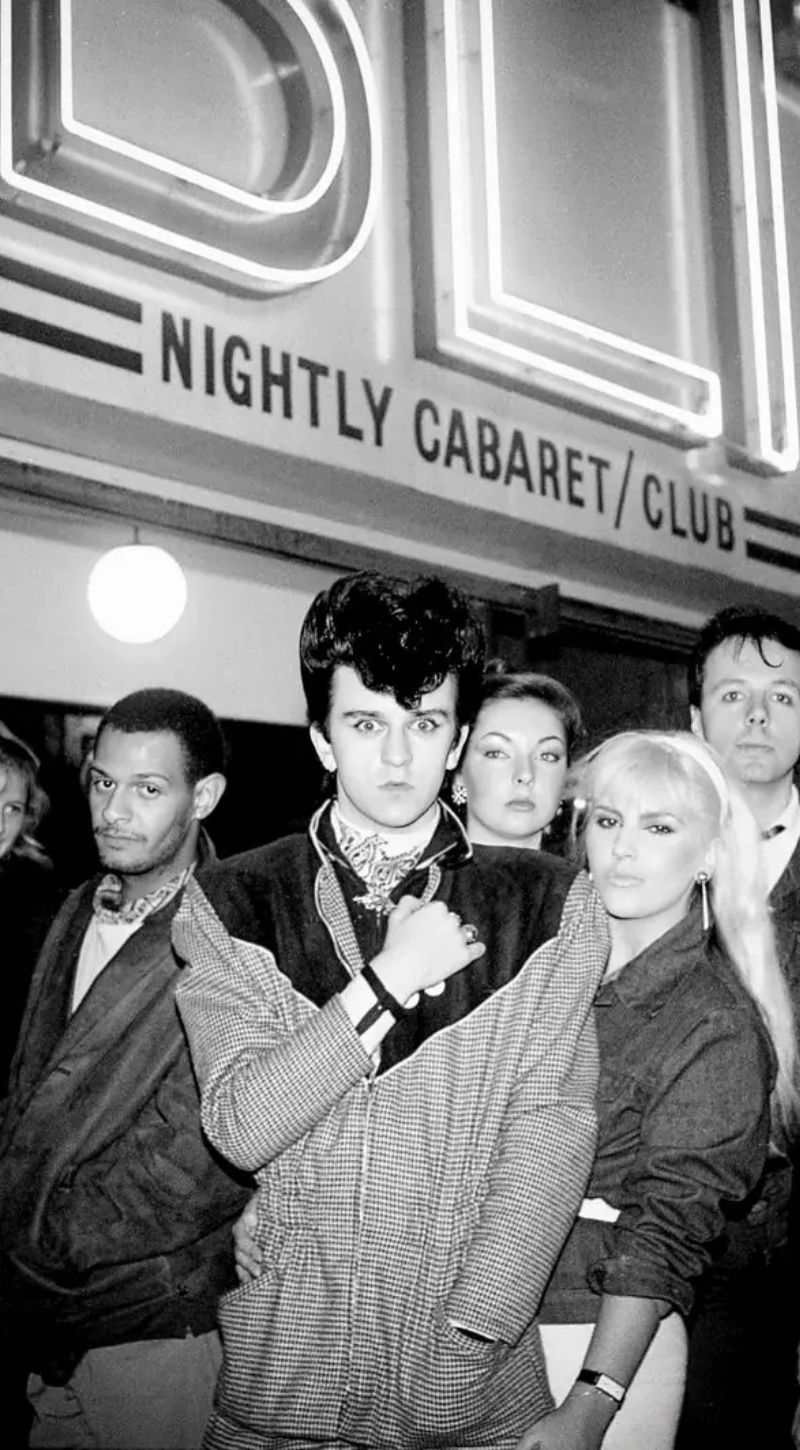
I went to Blitz Club.
A sentence I never thought I’d say. Especially when the legendary London spot closed more than forty five years ago. Yet there I was, standing in the Design Museum, showered in flickering lights, surrounded by a very realistic recreation that felt impossibly distant and shockingly alive at the same time. In the room next door – costumes and memorabilia gleamed behind glass, catching the light like the spark they used to ignite after dark.
And there it was – a familiar name: Iain R. Webb. One of the original Blitz Kids. Fashion editor. Provocateur. Legend.
“I mean, at that time, it was about coming to London to find other people like yourself,” he tells me. Outsiders, mostly. Kids from small towns, suburbs, even villages. Drawn to the city by a hunger for belonging, for a space where they could be other, be different. “The club scene gave us that.”
Unsurprisingly, Blitz Club’s regulars read like a who’s who of 1980s avant-garde cool: Boy George, John Galliano, Marilyn, Stephen Jones. Blitz was pure and unapologetic escapism. Glittering refuge from the bleak realities of Thatcher’s England. That such a tiny space could nurture the creative energy of a whole generation, one that would go on to shape global culture, feels almost dream-like.
Think about clubs like Studio 54 in New York, which became legendary not just for music and its vibe, but for the sheer eclecticism of its crowd: Halston brushing shoulders with Karl Lagerfeld, Liza Minnelli dancing alongside Andy Warhol. A shared moment of collective glamour and chic. Across the Atlantic, La Hacienda in Manchester would emerge a few years later as the euphoric, gritty home of acid house and post-punk energy, while The Roxy in Los Angeles stood as a rare space where punks, disco queens, and rock’n’roll legends mingled under one roof. These weren’t just nightclubs; they were melting pots of creativity and fearlessness, where fashion, music, and art fused to define an era’s style and spirit. Blitz belonged to that lineage – London’s own incubator of daring, audacious self-expression.
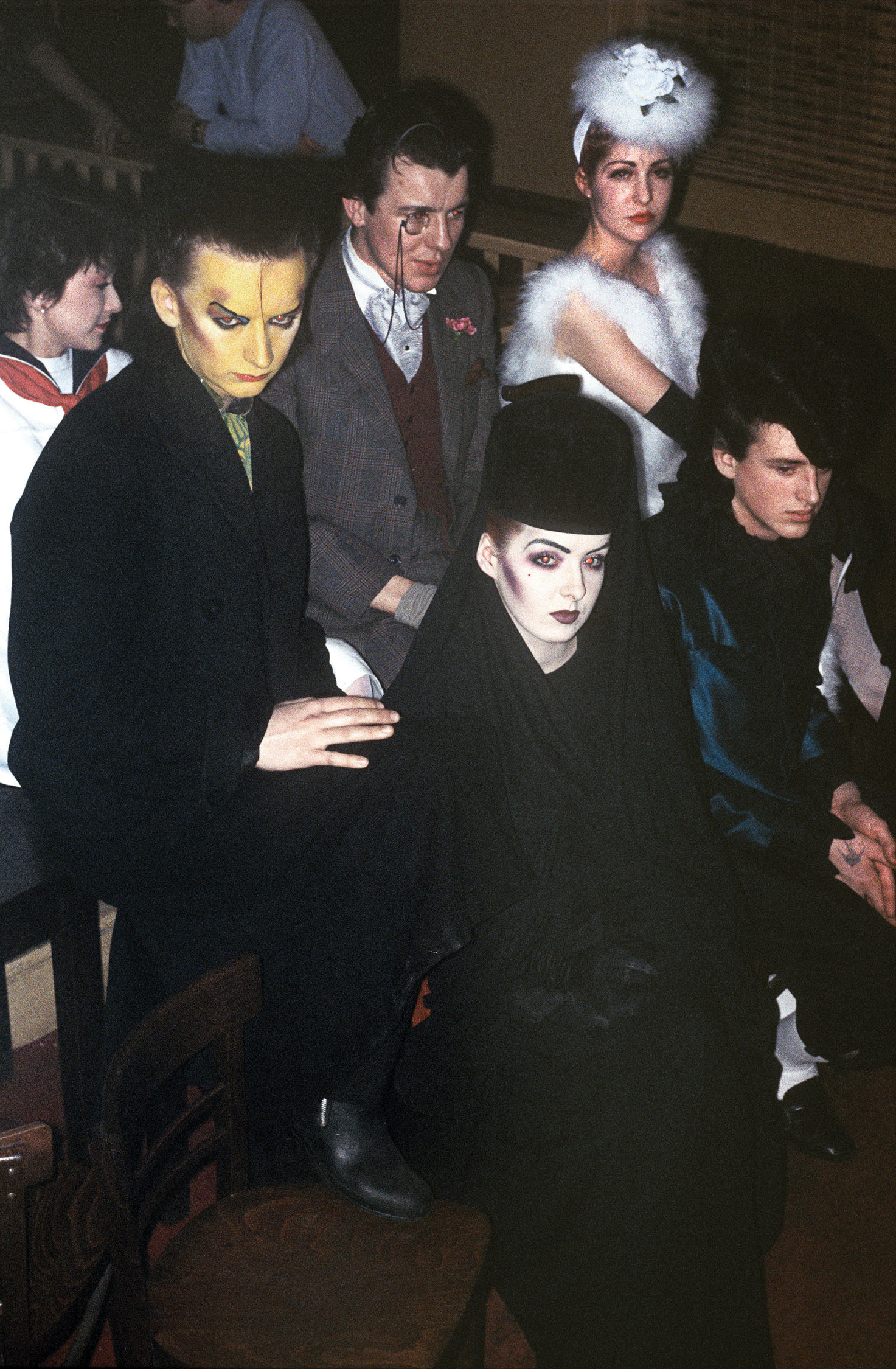
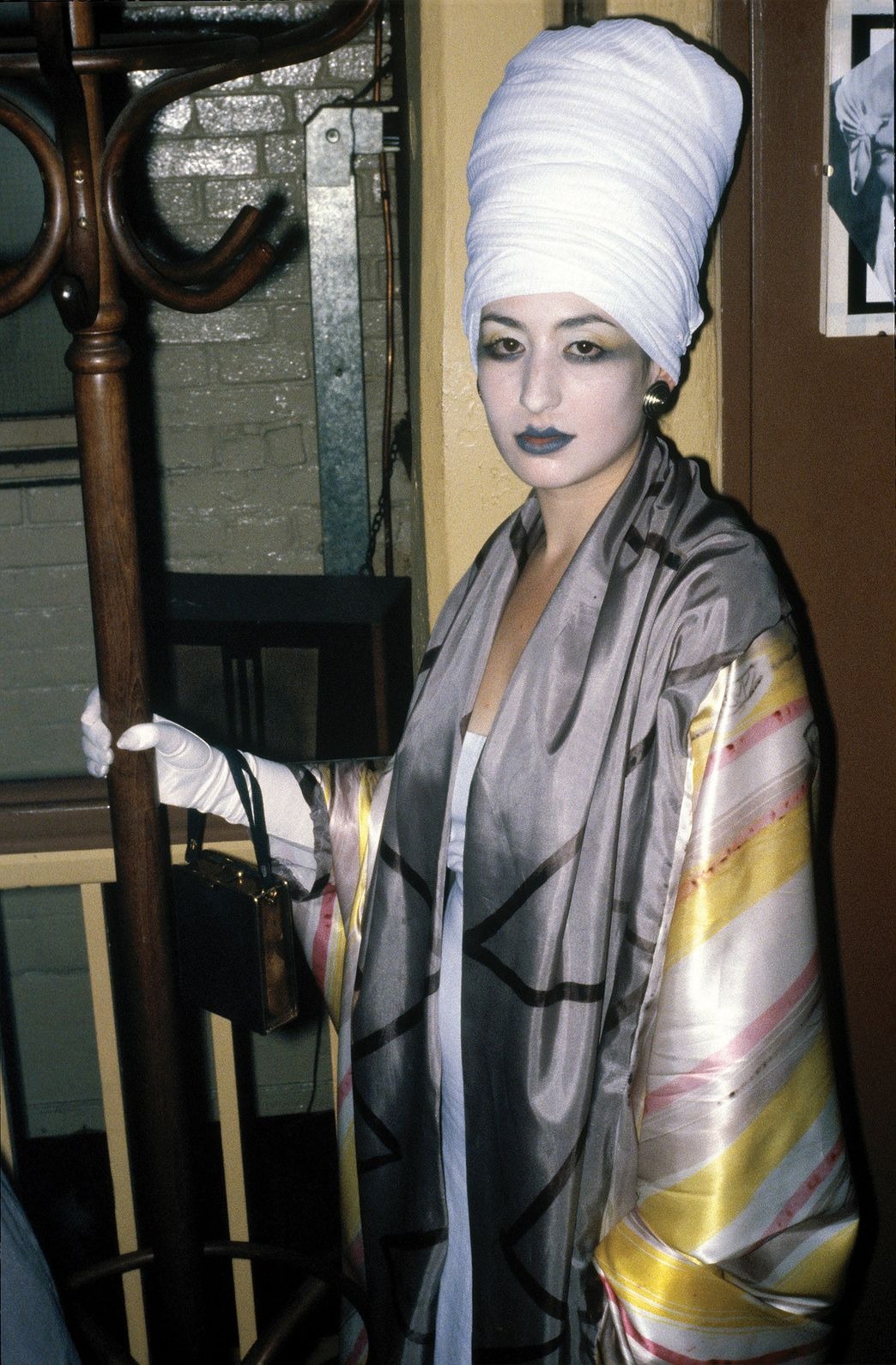
The club didn’t exist in a vacuum. It was born from the zeitgeist, filled with austerity, anger, alienation. Punk had already exploded through the mainstream with nihilistic DIY energy. When the chaos had settled, Blitz emerged with its raw, inventive, uncontainable energy.
“The whole punk thing,” Webb says, “was about doing it yourself. Creating your own persona because you had nothing to lose.” And that, that was Blitz’s heartbeat.
Walking through the exhibition, I could feel it. Art-school bravado. Post-punk arrogance. The clothes weren’t costumes. They were acts of rebellion. Weimar decadence, film noir, Kabuki, surrealism – all fractured, all colliding in glorious, shimmering chaos. Webb: “It was a little postmodern patchwork… like Andrew Logan’s broken mirror brooch, which we all lusted after.” There’s a sense of possibility in every corner. “There was always that thing of wanting to be someone else,” Webb continues. “We made up job titles because designer, makeup artist, filmmaker – those weren’t real careers where we came from.” They didn’t wait for permission. They became who they wanted to be.
And yet, Blitz came with a cost. Webb admits: “You know, it definitely did come with a cost at the time. It wasn’t easy. Mostly, I have to thank the people who came before us. When I was a teenager in my little village, I used to get a magazine called Ritz – a kind of newspaper – and in there I read about Zandra Rhodes, Andrew Logan, Dougie Fields, David Hockney, Anthony Price… all the fabulous fashion, art, and media people. I came to London, met them, became friends, collaborated with them. Amazing. But they were pushing boundaries before we arrived. They set things up so we could carry the torch. That’s always passed on to the next generation.”
And pass it on they definitely did. Webb has carried that influence through his work in magazines, inspiring young creatives. “I still get people coming up to me who read Blitz magazine in the ’80s and say, ‘You were the thing I looked at in my little village, when I didn’t think there was anybody else like me.’ That gave them the reason to push forward, follow their dreams, and know they could.”
Peter York’s Them in Harper’s & Queen, his book Style Wars – these were blueprints for an alternative world. Webb remembers reading them and thinking: I want to be part of this. This culture is on the outskirts of the mainstream. “Always a continuum,” he says. “The spotlight moves, but the spirit persists.”
The exhibition brings that same mindset to life. Many of the original Blitz Kids were emerging from art school in 1980-81. Webb recalls sketching, sewing, creating outfits in class, obsessing over what to wear that night as much as what to submit for coursework. “A lot of collections crossed over with what people were doing at Blitz. Myself included with my final collection which was inspired by Duggie Fields. It’s lovely to see that work alongside one of Duggie’s paintings in the show.”
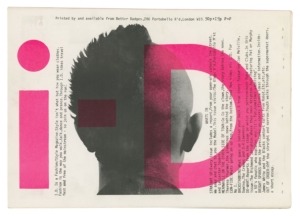
Blitz wasn’t just fashion, just rebellion. It was art in motion, a living experiment in self-invention. Glamour wrapped in danger. “You took your life in your hands walking out the front door dressed up,” Webb admits. “But it made us stronger. Because we had something to react against.” This is why Blitz didn’t just escape Thatcher’s Britain, it actually transformed it. “We were kind of Thatcher’s children,” Webb laughs. “Making it up as we went along. Creating our own world.”
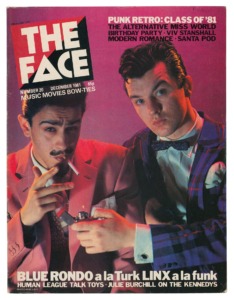
The legacy of this era is dazzling. Boy George. Stephen Jones. John Galliano. Leigh Bowery. Icons. Rebels. Creators. Yet not all was preserved. Corrugated cardboard dresses. Polaroids. Cobbling together outfits from what the city discarded, making the remnants of the night a living testament of their raw, resourceful, unpolished and revolutionary attitude. And heaven knows we need that spirit now more than ever. In an age of algorithmic sameness and curated social media personas, the ingenuity of the Blitz generation reminds us of the transformative power of creative freedom, a vision that didn’t just reflect its time, but helped shape the decades that followed.
The exhibition is open until 29 March 2026 at the Design Museum in London.
VOGUE RECOMMENDS