This new hotel pool is calling us to dive straight into summer
Tina KovačićekFebruary 2, 2026

February 2, 2026
One of the few countries I have visited twice in my life is Mexico. It was my last trip before the pandemic and my first after the borders reopened. Symbolically, and in two completely different scenarios. What I can say with certainty is this: I am going back to Mexico.
The reason might also be the new Hotel Sevilla, recently opened on the Yucatán Peninsula, where you will most likely arrive and land if you are coming from Europe and have not bought a direct ticket to Mexico City. Cancún is a well known tourist gateway for travel from Europe, but from here I honestly recommend escaping by car to Mérida, which is a three to four hour drive inland on the Yucatán Peninsula.
Hotel Sevilla is the latest project signed by Grupo Habita. They have already spoiled me with the eco brutalism of Hotel Humano, which under their direction on the other side of Mexico, in the surfer town of Puerto Escondido in Oaxaca, embodies barefoot luxury.
Courtesy of Grupo Habita / © Fernando Marroquín
This time, continuing their tradition of collaborating with different creative teams for each property, they chose the interdisciplinary studio Zeller & Moye and Salomón Sacal, who designed the hotel’s architecture and interiors. The best thing about this building? Historic architecture that has been completely renovated into a hotel, while preserving the layer of history in which you can now spend the night. “The pool, bar and concrete spiral staircase introduce a contemporary character to the space and connect beautifully with the carefully preserved original details. At the heart of the hotel is a two storey atrium with two spacious courtyards, home to a relaxed Mexican cantina and a more refined bistro. Minimally designed rooms and a spa inspired by Yucatán wellness traditions offer a peaceful refuge from the hectic rhythm of the city,” say the architects.
Courtesy of Grupo Habita / © Fernando Marroquín
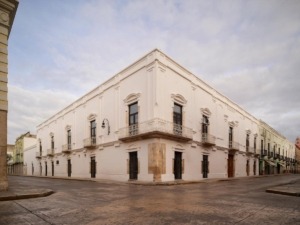
Built in the 16th century as a private residence and later converted into a hotel, the corner plot hacienda, an architectural monument and homage to the haciendas near the main square of the historic center, was practically in ruins when Grupo Habita found it seven years ago. Christoph Zeller and Ingrid Moye preserved the colonial facade and interior layout, respecting history while introducing contemporary comfort in the rooms and new elements in the bar, pool and spa. “As a group, we are known for giving neglected spaces new life, and that is also the story of this hotel,” says Carlos Couturier, co founder of Grupo Habita. “We kept the soul of the building, but added comfort and elements that look toward the future through contemporary design.”
Courtesy of Grupo Habita / © Fernando Marroquín
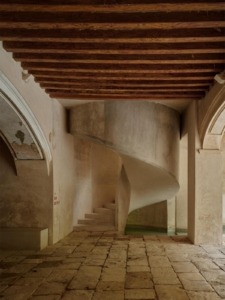
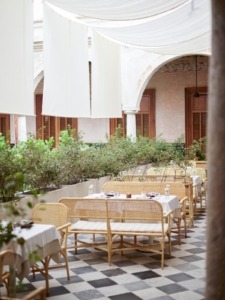
Guests enter through a bright lobby, where stone floors, white lime washed walls and a concrete reception desk set the tone for what awaits them. Windows open onto the central atrium, the social heart of the hotel. Four almond trees provide shade for the relaxed outdoor cantina, while a new spiral staircase leads to a 24 seat bistro serving French Mexican breakfasts and daily prix fixe menus prepared with fresh local ingredients.
Courtesy of Grupo Habita / © Fernando Marroquín
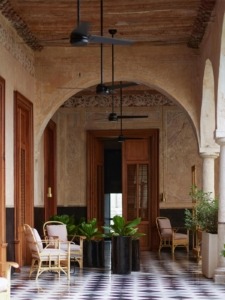
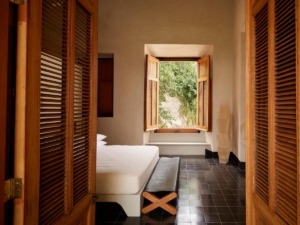
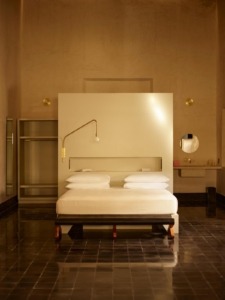
All menus are overseen by French chef Marion Chateau, who also runs the previously mentioned Hotel Humano in Puerto Escondido. At the bar, classic cocktails are based on Mexican spirits such as mezcal and tequila. Large plants in terracotta pots bring a natural element to the cloister like corridors with preserved ceilings and tropical wood doors leading to 17 rooms and four suites. The rooms vary in size and shape, but share a material palette: floors of polished ceramic tiles inspired by traditional Yucatán homes, custom furniture made from local wood, lighting by designer Luca Salas, and traditionally woven henequen used for chair upholstery and lampshades. Each room also features a television that functions as a virtual concierge with recommendations for museums, galleries, restaurants and bars, along with a QR code to download the hotel’s music playlist. The bathrooms combine gray concrete walls in a brutalist style, still a strong hotel trend in that part of the world, with brushed brass details, while the lobby sells the group’s own cosmetic products.
Courtesy of Grupo Habita / © Fernando Marroquín
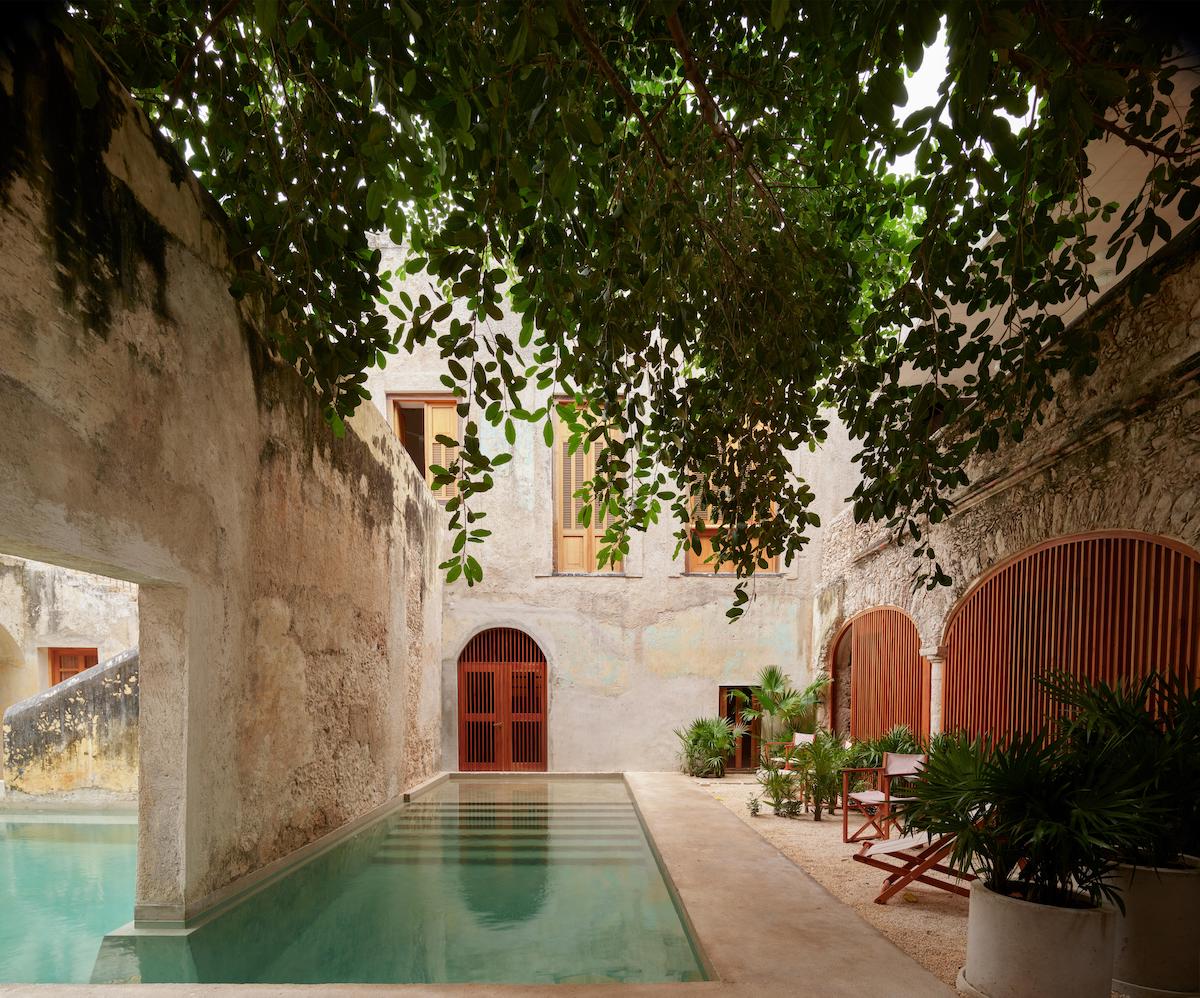
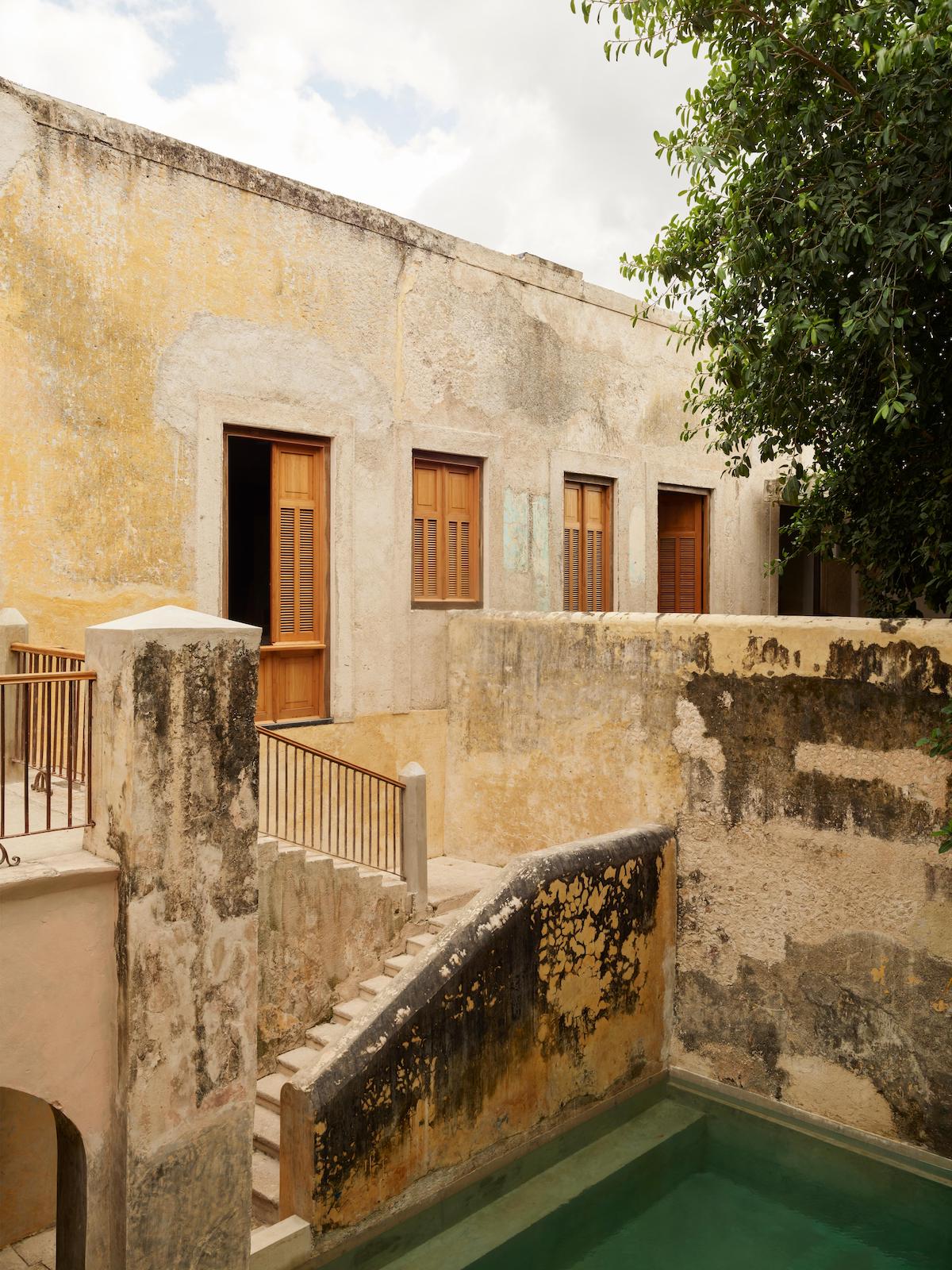
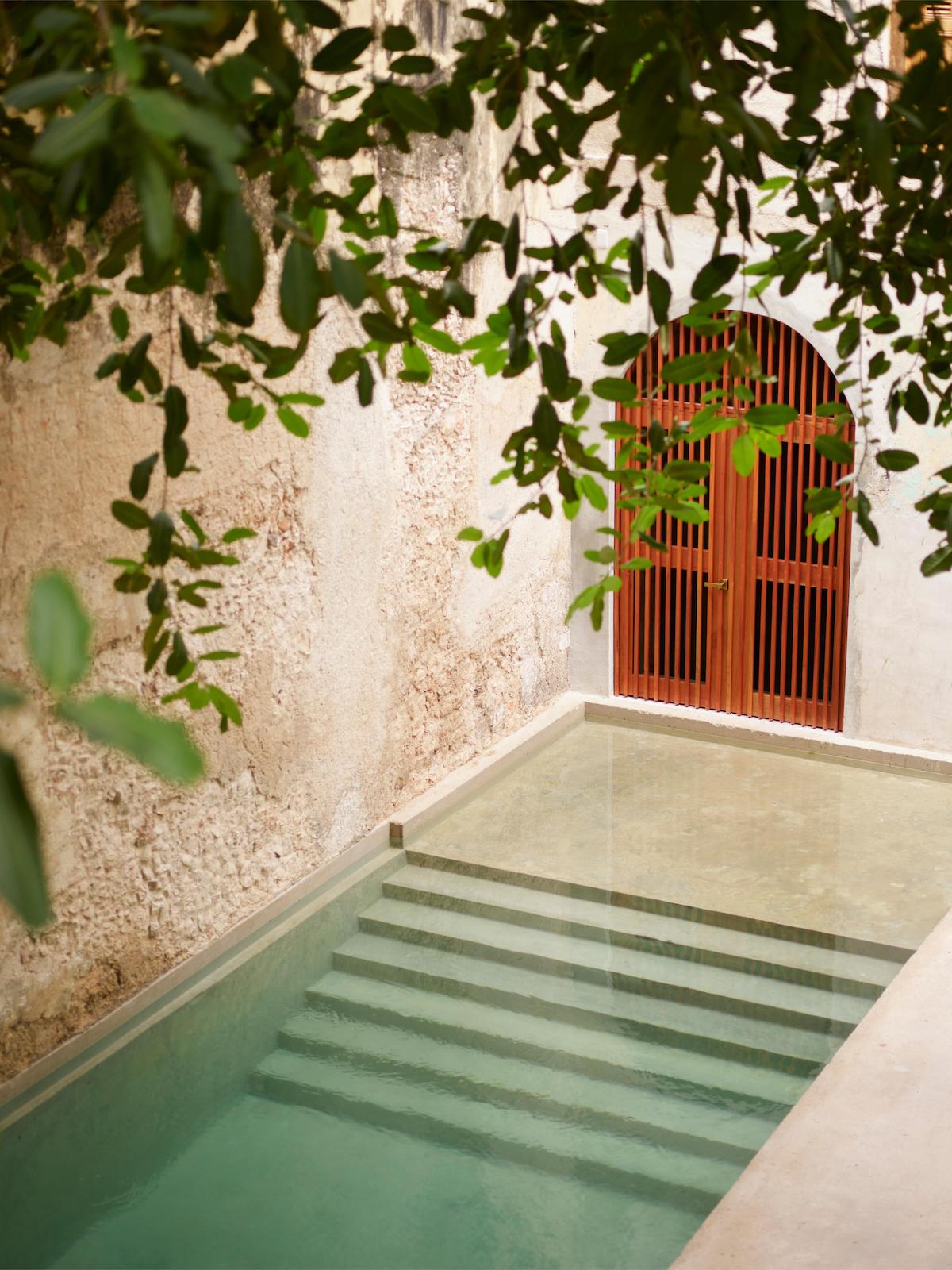
One of the most important structural interventions is located behind the hotel. Former stables have now been transformed into a private courtyard space with a concrete pool. “We decided to use on site concrete construction, a common material in Mexico, for all new architectural interventions to ensure durability and strength,” explain Zeller & Moye. “Rather than blending in with the historic architecture, we want to clearly distinguish the parts of the hotel shaped by a contemporary language, so that old and new can coexist.” The pool is divided into two zones of different depths, with an existing stone wall that you can swim through.
There is also a new spa, with a Tuj, a Mayan sauna, and a cold plunge pool, offering private or shared sessions, including options for external visitors with day or hourly passes. Guests can also purchase a DIY set for a deep thermal ritual: sea salt, local mineral clay for the face, a gentle sponge and a herbal drink, either relaxing or stimulating. In room treatments are also available, including deep tissue massage, reflexology and scalp massage.
Courtesy of Grupo Habita / © Fernando Marroquín
Hotel Sevilla is located above the remains of the Mayan city of Tihó in Mérida, which has the second largest historic center in Mexico and is known for its Spanish colonial architecture and cultural landmarks. The hotel is one street away from Plaza Grande, the main square with the cathedral, Casa de Montejo and regular live music performances. The distance to other attractions, such as Paseo de Montejo and the local market Mercado Lucas de Galvez, is also easily walkable. So perhaps this is an idea to swap cold days for sunshine and travel to Mexico.