How to do makeup for hooded eyes? Three principles that have visually opened my eyes since 2016
by Kristina Mikulić GazdovićJanuary 19, 2026


January 19, 2026
It was 2016. I used every free moment to learn makeup techniques. Not the quick, viral tricks, but functional methods that genuinely make the face look better. Wayne Goss was one of the few creators whose advice went beyond viral trends. His content was the most useful to me.
From him, I learned how the right foundation brush can turn any formula into a blurring finish, as well as how to set makeup so it looks fresh for hours, regardless of the conditions. By learning, observing, and then tirelessly testing these techniques, it was in 2016 that I first realized my eyes had a characteristic we now call hooded eyes (drooping lids).
That discovery explained all the frustrations I had previously attributed to my own “lack of skill.” Every time I tried to replicate looks rich in eyeshadow, precise transitions, and graphic details, my hooded lids would visually “eat up” all my effort. The cut crease, then the most coveted makeup look, simply did not work on eyes like mine. Ombre transitions inspired by the Instagram aesthetic of the time disappeared the moment I opened my eyes. What I had seen as a problem was, in fact, just a different eye anatomy. And that is where the real story begins, about practicing skill and adapting trends to your own face.
Makeup for hooded eyes does not have to mean limitation. Looks may be more subtle, but in many ways also more creative, as they invite play with textures, light, and precise product placement.
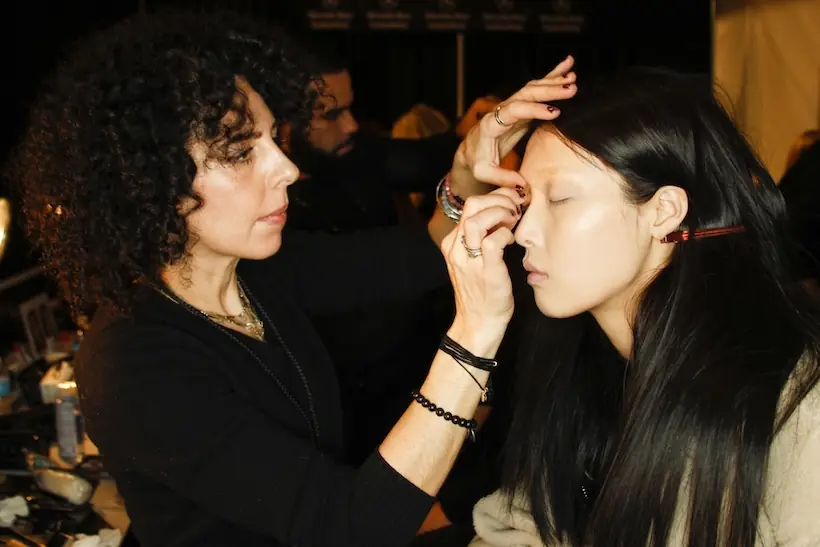
Photo: Sonny Vandevelde
The advantage of the hooded eye shape lies precisely in its structure: it does not require layered techniques or hours of blending. A single shade of eyeshadow, carefully chosen textures, and strategic accents often deliver a far more elegant result than complex color combinations. Hooded lids are actually very simple and easy to apply makeup to.
Matte eyeshadows in mid tones are an ideal base, while shimmery or satin formulas are best used selectively at the center of the lid or in the inner corner of the eye, where they naturally catch the light. If you opt for glitter or metallic finishes, precision is key. It is best to stick to one shade applied across the entire lid.
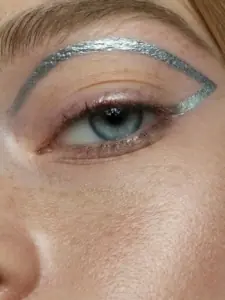
Photo: Tatan Zuleta
Although most of the lid is covered when dealing with hooded eyes, the inner corner of the eye remains visually open and therefore deserves special attention. This area catches the light most effectively and creates the impression of a more awake and refreshed look.
Eyeshadows in gold, silver, or white tones are ideal for highlighting the inner corner, as they visually open up the eye. Shimmery and subtly glittery textures further enhance light reflection and provide a sophisticated finish. A small amount of pigment, applied with precision, is enough to achieve maximum effect without weighing down the eye.
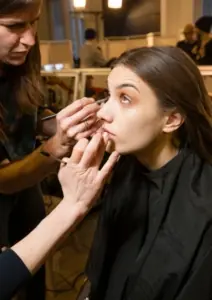
Photo: Sonny Vandevelde
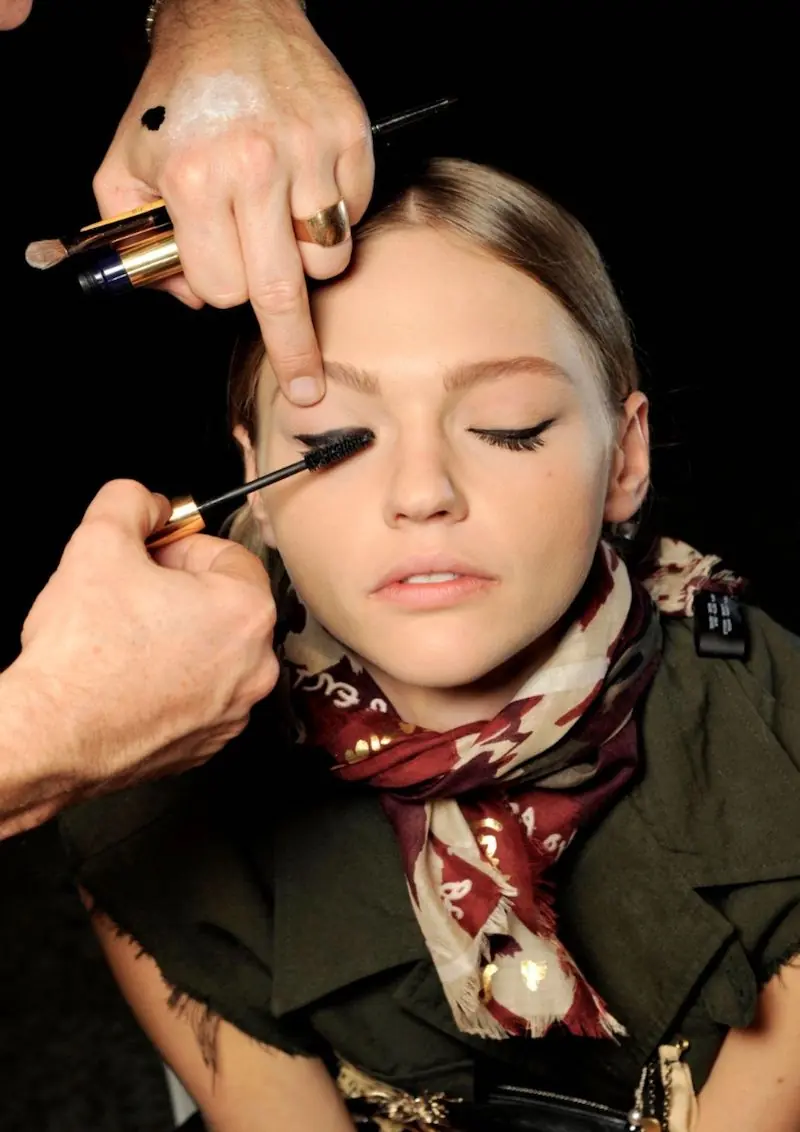
Photo: Gorunway.com
When it comes to hooded eyes, mascara is the most powerful ally. A good eyelash curler makes the difference between a tired and an open look, and when choosing a mascara, the focus should be on volume and curl, especially on the outer lashes, which further enhances the lifted effect of the eye. Waterproof formulas often hold the curl better, but they should be applied carefully to avoid clumping.