The ’80s films that shaped Stranger Things and the references you likely overlooked
Tara ĐukićDecember 11, 2025

December 11, 2025
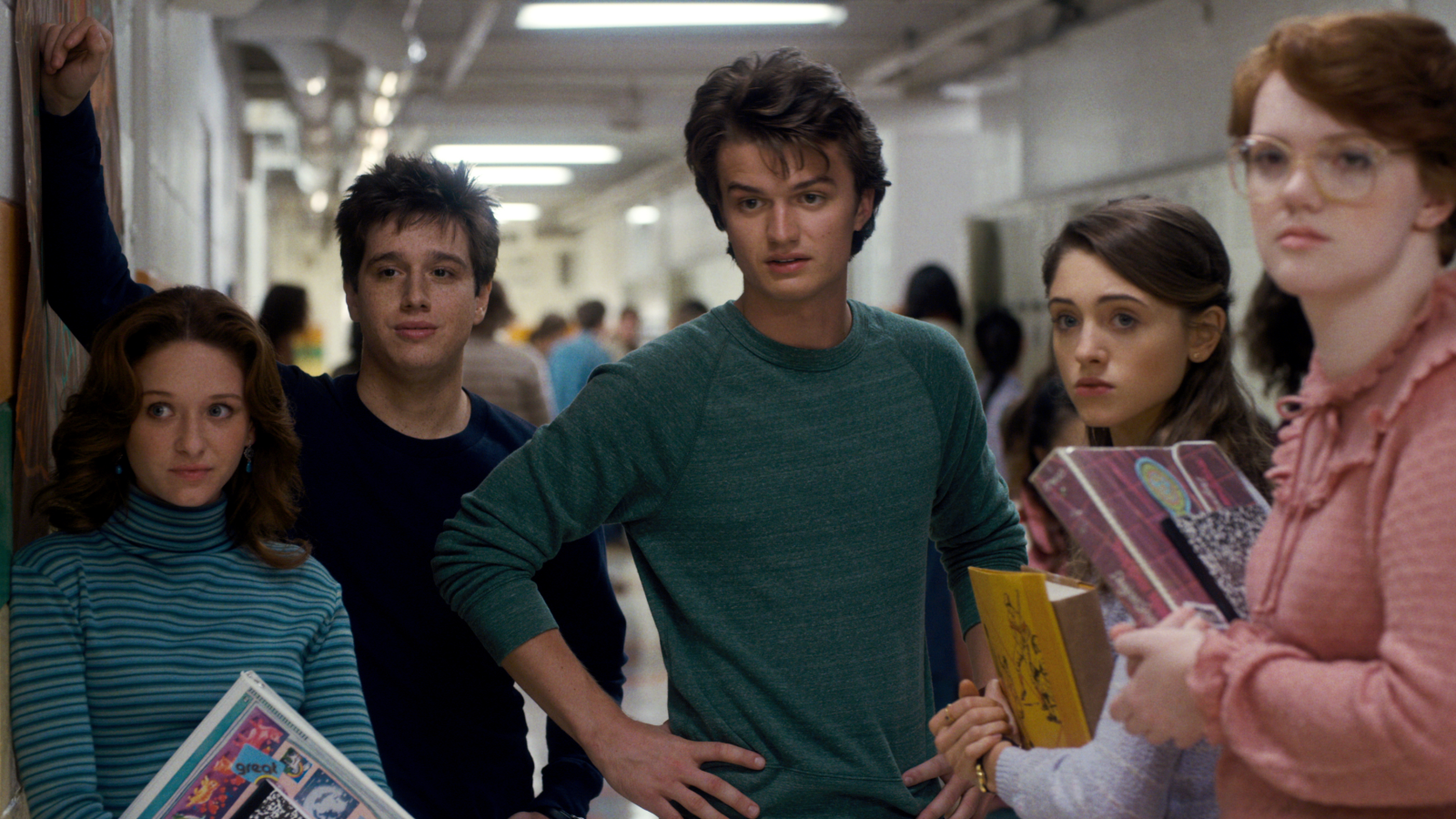
Have you ever watched Stranger Things and felt a sense of déjà vu? When the series first premiered in 2016, it was already clear that it was a modern masterpiece paying tribute to everything we loved about the eighties. Retro hairstyles and neon fashion, character action, atmospheric settings, music and even the villains in this science fiction series were inspired by the pop culture and films of that era. What initially looked like nostalgia was in fact far more deliberate. The Duffer brothers created a cinematic mixtape of the films they grew up with. Spielberg’s adventures, King influenced thrillers, John Hughes’s teen dramas and John Carpenter’s tension are all there, carefully woven into the DNA of the series. Below, discover the brilliant eighties film references that remind us why we fell in love with Stranger Things. You still have plenty of time to revisit them before the series finale at the end of December.
Related: The show’s final season is not the end for the Stranger Things universe
This cult series has paid tribute to the work of Steven Spielberg since the very first episode. Tim Ives, director of photography for the first season of Stranger Things, said that one of the earliest scenes was an homage to E.T. the Extra Terrestrial. In E.T., Elliott goes to the shed when he looks for the creature. Will tries to escape the monster and hide, Ives explained. There was a scene, very similar, that served as an homage. There are many other parallels too. Disheveled kids riding bikes through suburban streets, government agents armed with pistols and wearing protective suits, episodes rarely go by without borrowing some element from E.T. More than the visual cues, the series shares the same core message as the film. Friendship can prove stronger than fear.
Stranger Things borrows many elements from John Carpenter’s The Thing, especially in the way it presents fear as something that slowly creeps into familiar surroundings. The body horror scene in which the Mind Flayer absorbs people in the third season is directly tied to the grotesque transformations in Carpenter’s film. Even the appearance of the creatures from the Upside Down, slimy, strange and difficult to perceive, feels inspired by the monster in the kennel scene. The Duffers also openly referenced the film by placing its poster on the wall in the first season.
Just as Roy Neary follows patterns that he cannot explain, Joyce strings up Christmas lights on her walls, convinced they are messages only she can decipher. Both stories turn domestic spaces into channels of communication with another world. And just like in Close Encounters, the abduction scenes evoke feelings of wonder and awe. The series conveys the idea of believing in something no one else can see, making the world feel magical and dangerous at the same time.
What Stand By Me brings to Stranger Things is a vision of childhood as a frightening form of growing up. The Duffers adopt the same kind of honesty, the idea that a group of kids can confront something enormous simply because they face it together. Both stories understand that the real adventure is not only the mystery but everything that happens between the walks, the shared secrets and the lessons about whom you can trust. Just like in Rob Reiner’s film, Stranger Things treats childhood as something fragile yet fundamentally important.
References to Ridley Scott’s 1979 original and James Cameron’s 1986 sequel run throughout Stranger Things. Look at the first scene of the first episode, in which a man, nervously staring down an industrial hallway, is pulled upward through a lift ceiling, just like the colonial marines in Aliens. And in the final episode, we learn that, similar to the xenomorphs in the Alien universe, the show’s multi toothed creature uses organic tendrils to lay slug like larvae into human stomachs, although they usually slip out of victims’ mouths instead of bursting through their chests.
The Goonies also explains Stranger Things’ vision of childhood. A chaotic group of friends is thrown into an adventure bigger than themselves, driven more by a sense of togetherness than by logic. Their spirit and sense of discovery echo the group of friends who stole our hearts in the 1985 film. Both stories turn ordinary kids into unexpected heroes. It is not surprising that The Goonies influenced the series. Matt and Ross Duffer even worked on a pitch for Goonies II before starting Stranger Things.
The affection for The Goonies grew even stronger once Sean Astin, one of the stars of the cult film, joined the series as Bob Newby. He and the Duffer brothers even included a reference. When Bob looks at the map of Hawkins that Will drew and asks, What is at the X? Pirate treasure, he is nodding to the epic adventure from the film.
Ghostbusters gave eighties kids a guide to courage. Ordinary kids in costumes facing the supernatural. The Duffer brothers admit that the series borrows that mix of comedy and tension with monsters. Both stories celebrate quirky teams who solve impossible problems through bravery, friendship and improvised gadgets. Visually and tonally, Ghostbusters taught Stranger Things how to balance neon lit eeriness with a slightly goofy charm.
Billy Hargrove, played by Dacre Montgomery, undoubtedly left a strong impression on viewers. The development of his character was unique, and although there were moments when we wished we could jump into the screen and stop him, there is no denying Montgomery’s talent. The Duffer brothers reportedly advised the Australian actor to draw inspiration from Jack Nicholson’s performance in The Shining.
His entire career, Montgomery said. Every role he has ever played. Because he has that unpredictable nature. That is what the Duffers mentioned to me. The inspiration was obvious in the tense scene in the third season in which Eleven and her friends lock Montgomery’s character in a sauna while he is possessed by the Mind Flayer. His despair, as he becomes increasingly agitated, recalls the scene from The Shining in which Nicholson’s character tries to break through a wooden door with an axe.