
Home
I remember the first time I saw Dunja Janković’s work. It was one of her prints in Zagreb’s 36 Mountains gallery. Something about it drew me in intuitively, geometric, colorful, exciting. I probably could not have explained much more than that, but it was enough to make me want her work on my wall. And here we are, I am not exactly sure how many years later, sitting in her living room in Barcelona, and I am still a big fan of her work. I made sure she knew that right at the beginning of our conversation.
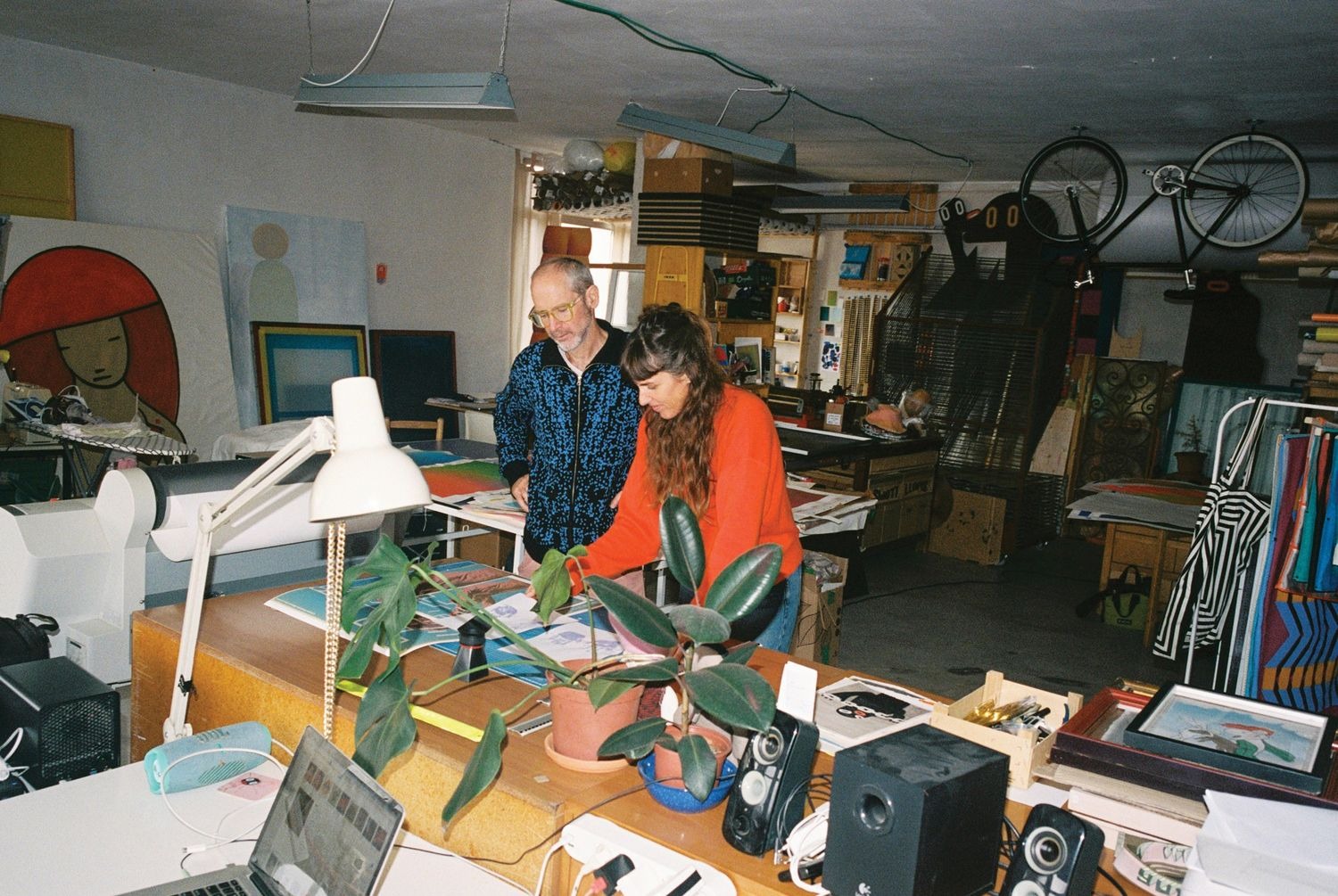
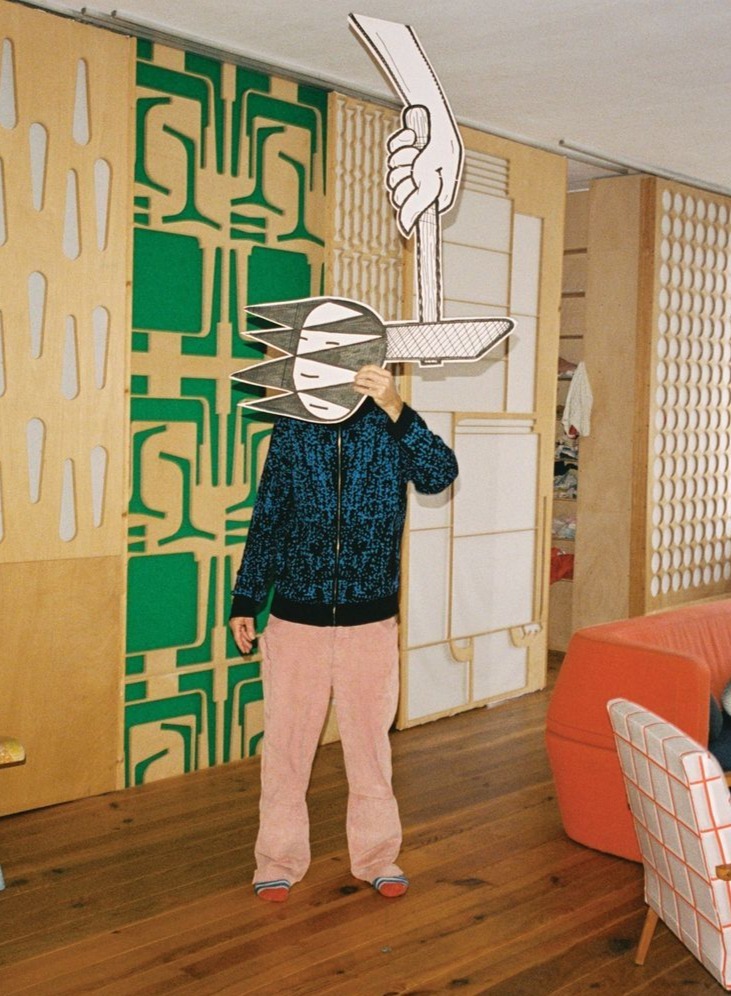
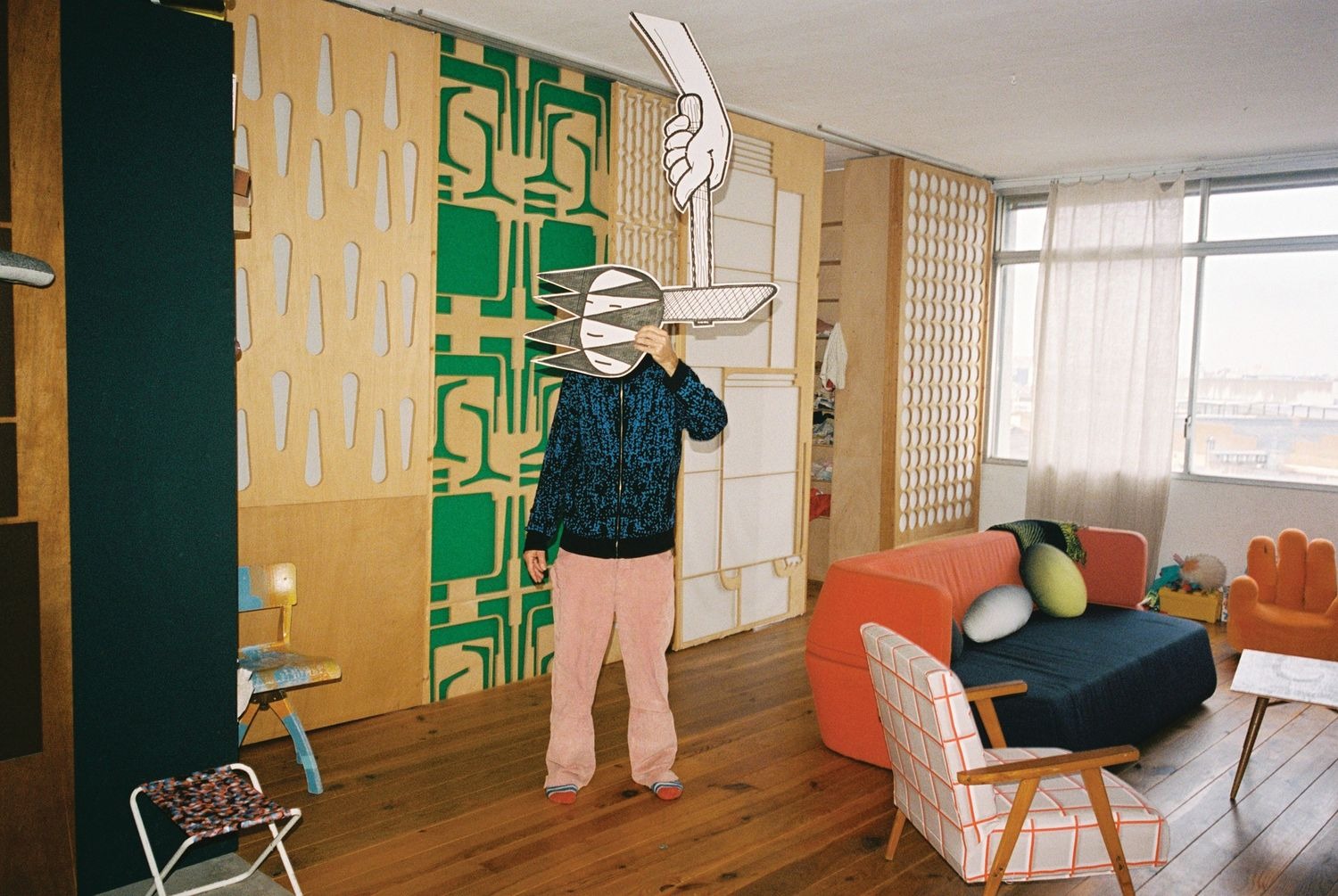
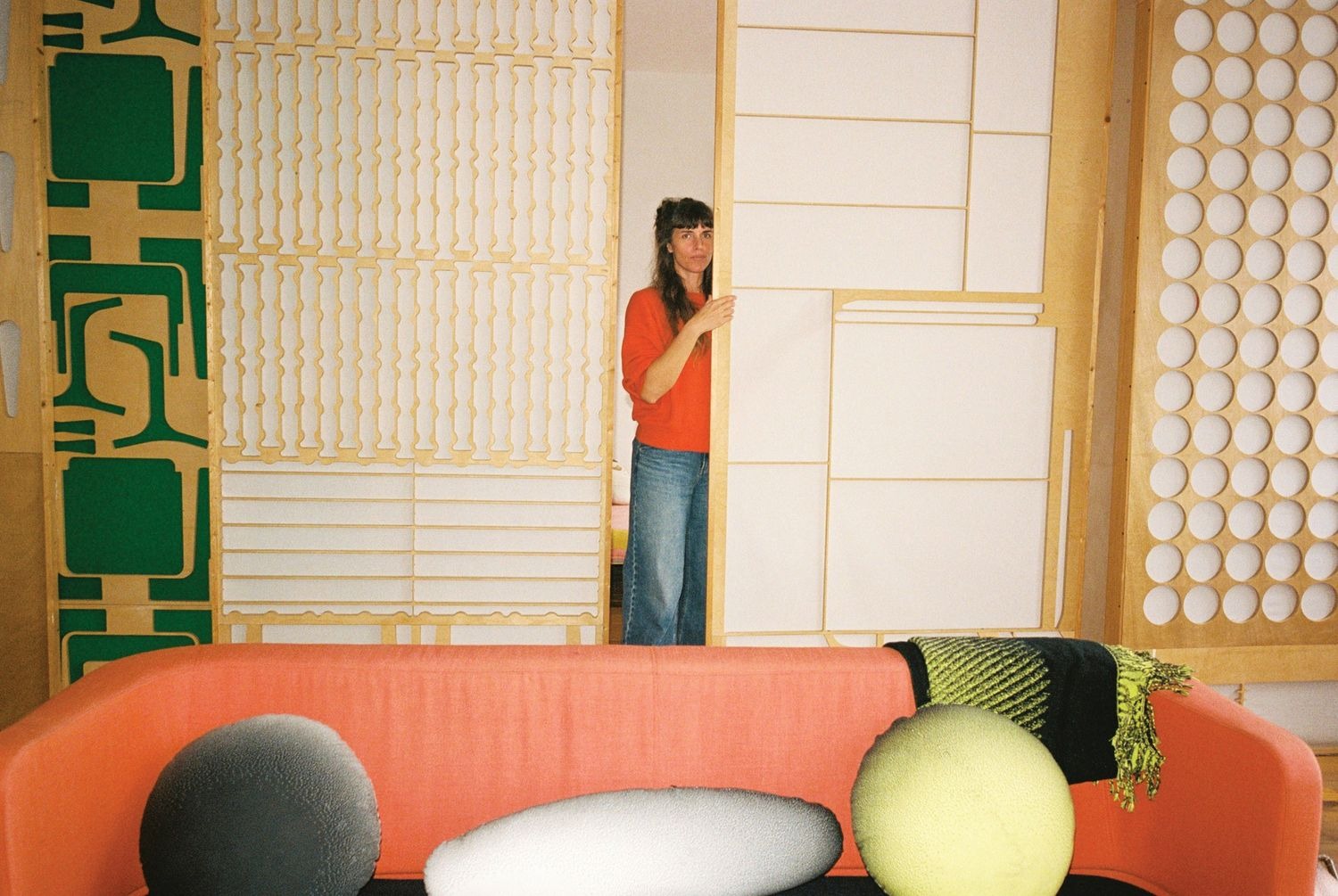
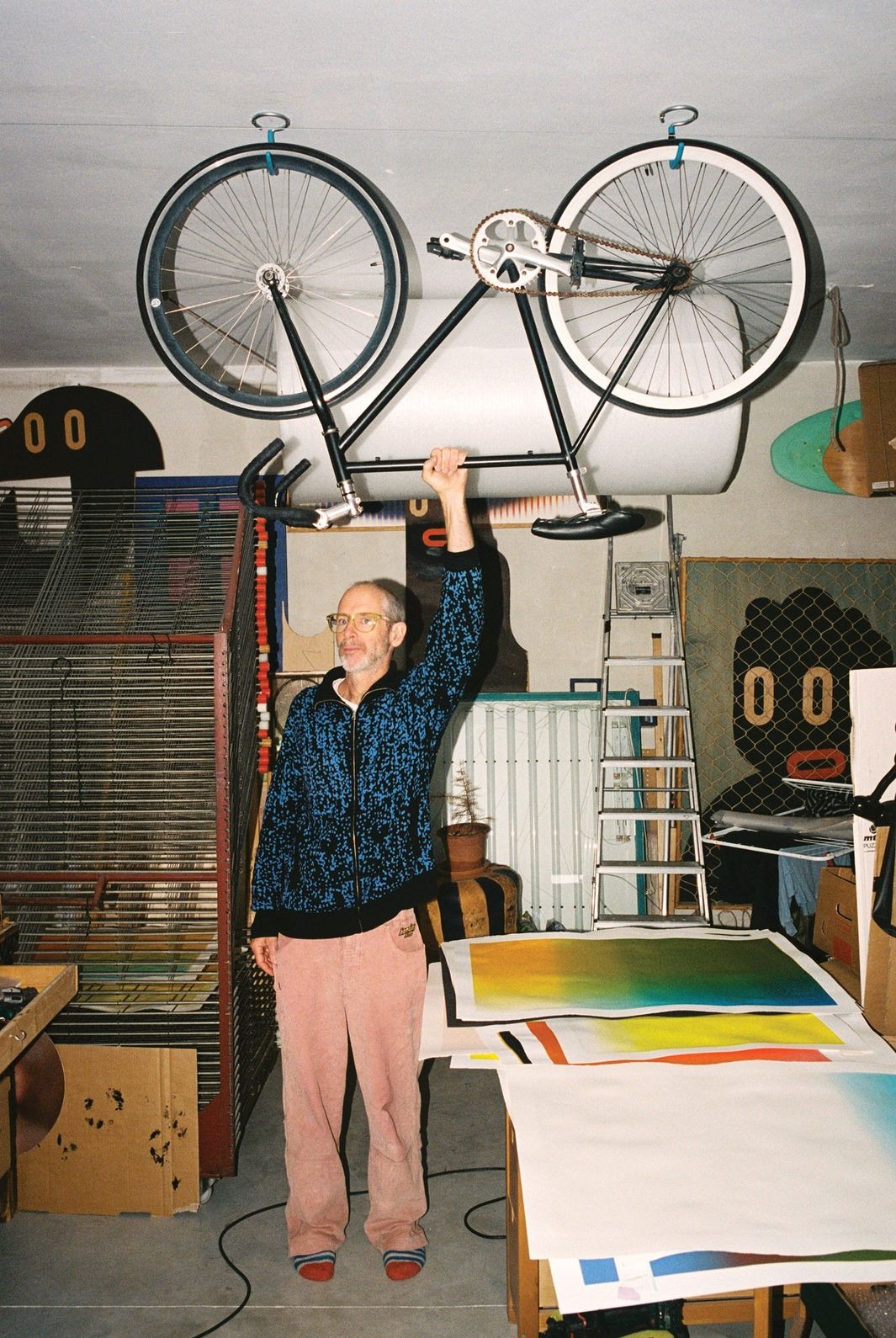
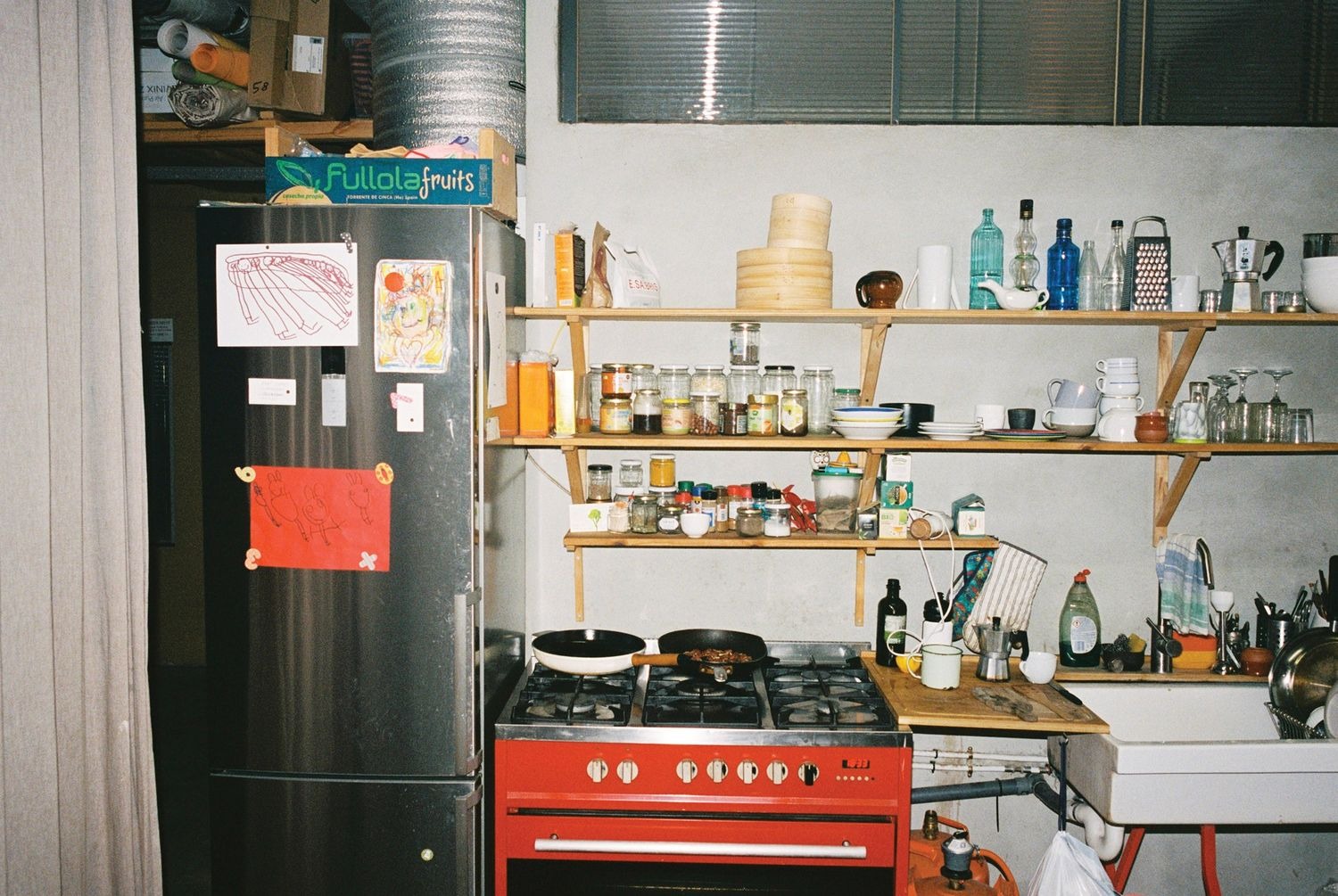
At the far end of Sant Martí, toward Badalona, in a charming industrial neighborhood, she shares both her living space and studio with her partner Boris Hoppek, also a multidisciplinary artist, originally from Kreuztal in Germany. We laugh at the very start when Dunja admits that, for this occasion, they finally tidied up the apartment, which normally has no rooms, walls, or partitions. The only movable partition is the one separating their bedroom, while everything else remains a light-filled open space packed with wild details and color, with a hammock swing in the living room. During the shoot, their three-year-old daughter Luka is at kindergarten. Her name, while grammatically feminine, evokes a harbor, specifically the harbor on the island of Lošinj, where Dunja is originally from and where she and Boris still spend part of the year, dividing their time between Lošinj and Barcelona. I ask her whether it is a good idea to have work and private life in the same space. “It was an excellent decision, and a conscious one. I wanted a child, and it was clear that paying separately for an apartment and a studio, and constantly losing time moving between locations, would be complicated. So we decided to combine everything. Today it is very practical. From the kitchen I am immediately in the studio, with no wasted time. Of course, there is no clear boundary between work and private life, but since we do what we love, the workspace becomes a space for play. In the end, that is not bad at all.”
Looking at everything around me, I felt as if I were on their playground. Both independent artists, both characters who dislike limitations, both creative minds, I asked Dunja where they actually met, sensing there was a good story behind it. “We met on Lošinj, believe it or not, when I returned to the island after seven years spent in America. I lived in New York and Portland, but nostalgia won out and I decided to come back home. On Lošinj I worked, ran a gallery, and organized the Škver festival. Boris contacted me while he was in Zagreb during the MUU street art festival and wanted to come to the island, where he himself had spent his childhood and youth. We realized we shared the same memories and the same places where we swam as kids. We might even have crossed paths back then. Out of that unusual connection, love was born. Although we stayed on Lošinj for a while longer, we soon felt the need to live outside the island again,” Dunja tells me. Seven years ago she moved to Barcelona, where Boris had been living since 2003. “I had never thought about Barcelona before. It seemed a bit like a Spanish cliché. And then I fell completely in love with the city, but completely. It turned out to be a cliché, but a really good one.” A cliché you end up loving, I add, remembering my first trip to Barcelona. “It is warm, the food is great, people are fantastic, warm, the social fabric is strong. The beach is in the city. For Boris and me, the sea is important because he surfs, and so do I. That really matters to us. At this point in life, that is my base. Sea, sun, food, people. And the city,” Dunja continues about the place where she feels at home. Despite the fact that they both work and exhibit all over the world, Dunja tries to be as locally engaged as possible and to be part of the local scene. I ask whether she manages to do that and what the creative scene in Barcelona is like. “I am currently collaborating with several galleries and working on smaller projects with friends. The scene is good, both art and street art. Maybe not as commercially or economically strong as Madrid, but it is lively and fun. It is relatively small, made up of several ‘bubbles’ that overlap, so you are not limited to one genre. You can move between print, street art, architecture, and design, which suits me very well.”
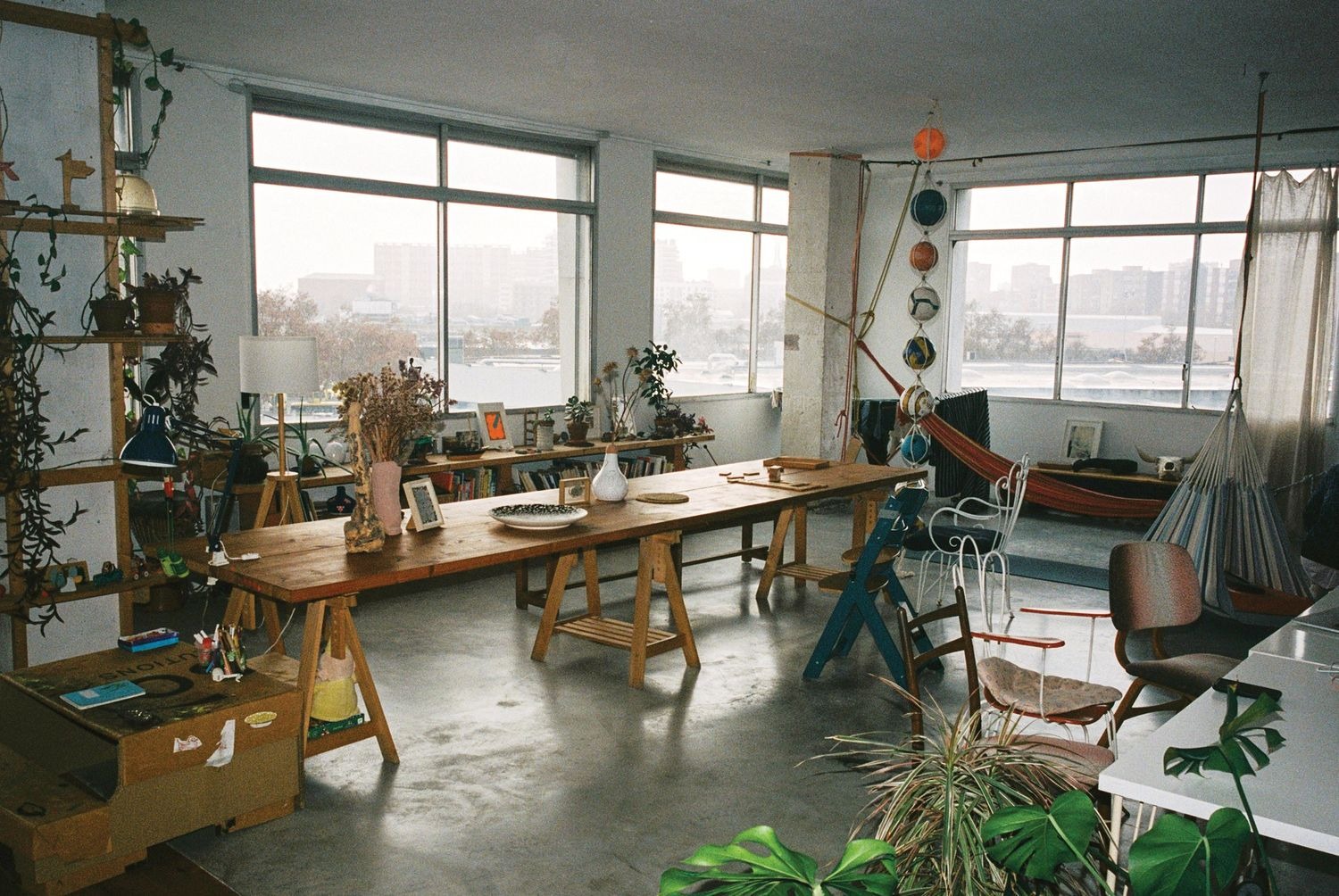
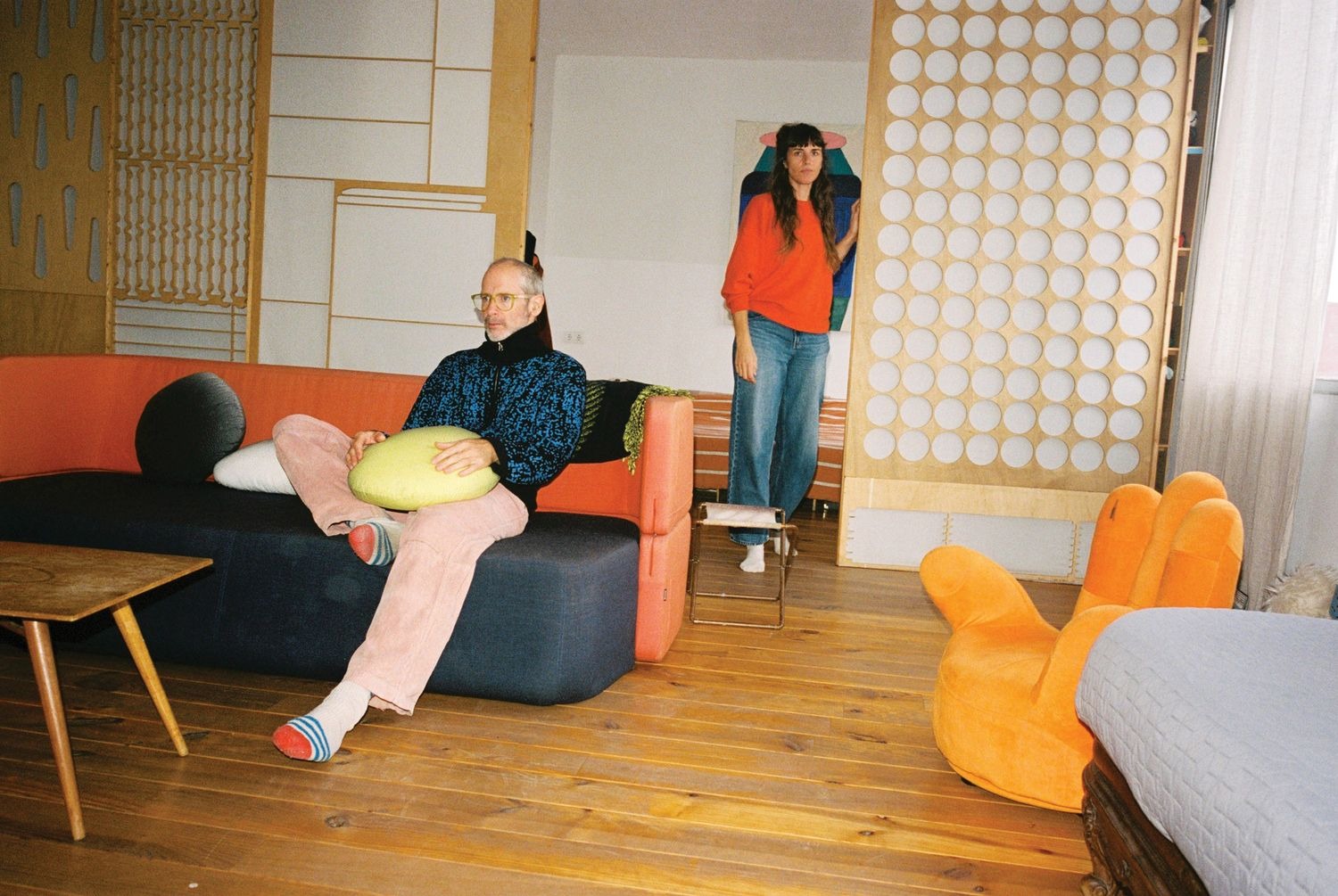
I think that the diversity and curiosity with which Dunja and Boris observe the world around them are woven into their living space as well, intertwined into a vivid environment. “It all came together quite organically. The apartment is actually a large industrial space, more than 200 square meters, and from the start we did not want to put up walls or divide it into separate units. Flow is important to us, that the space remains open, fluid, and natural. At first glance, someone might think that having everything in one space is ‘too much’, but because of its size and openness, it does not work that way. We often have guests, sometimes five or six people, and still there is no feeling of pressure or excess energy. The space remains pleasant, calm, and clear. You can always see where everyone is. Everything feels natural, almost intuitive.” Another interesting aspect of their apartment is that everything is movable and on wheels. “Especially the workspace,” Dunja adds. “It changes constantly, depending on the project we are working on. Only my screen-printing corner is fixed. Everything else, tables, photo backdrops, materials, all of it changes.”
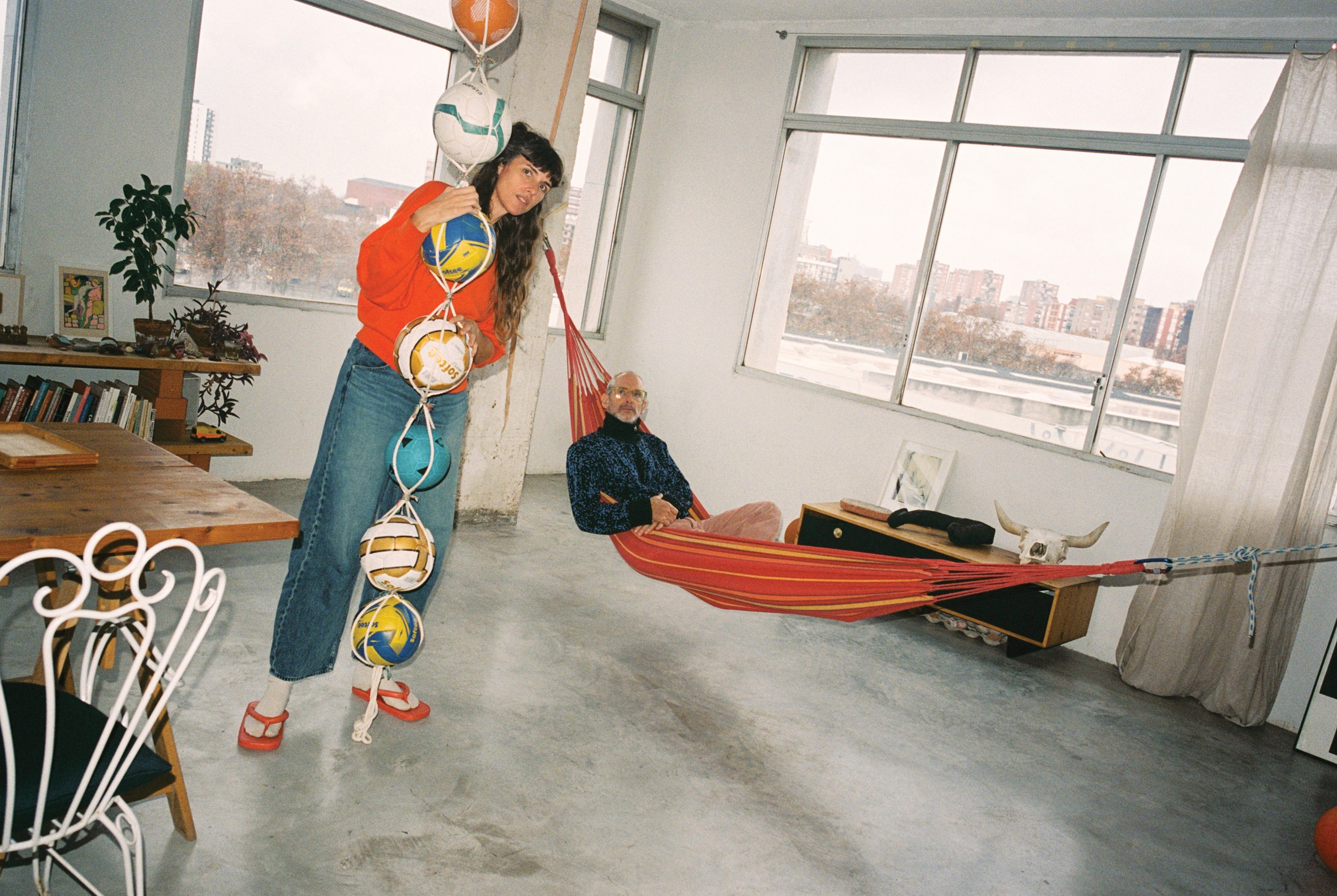
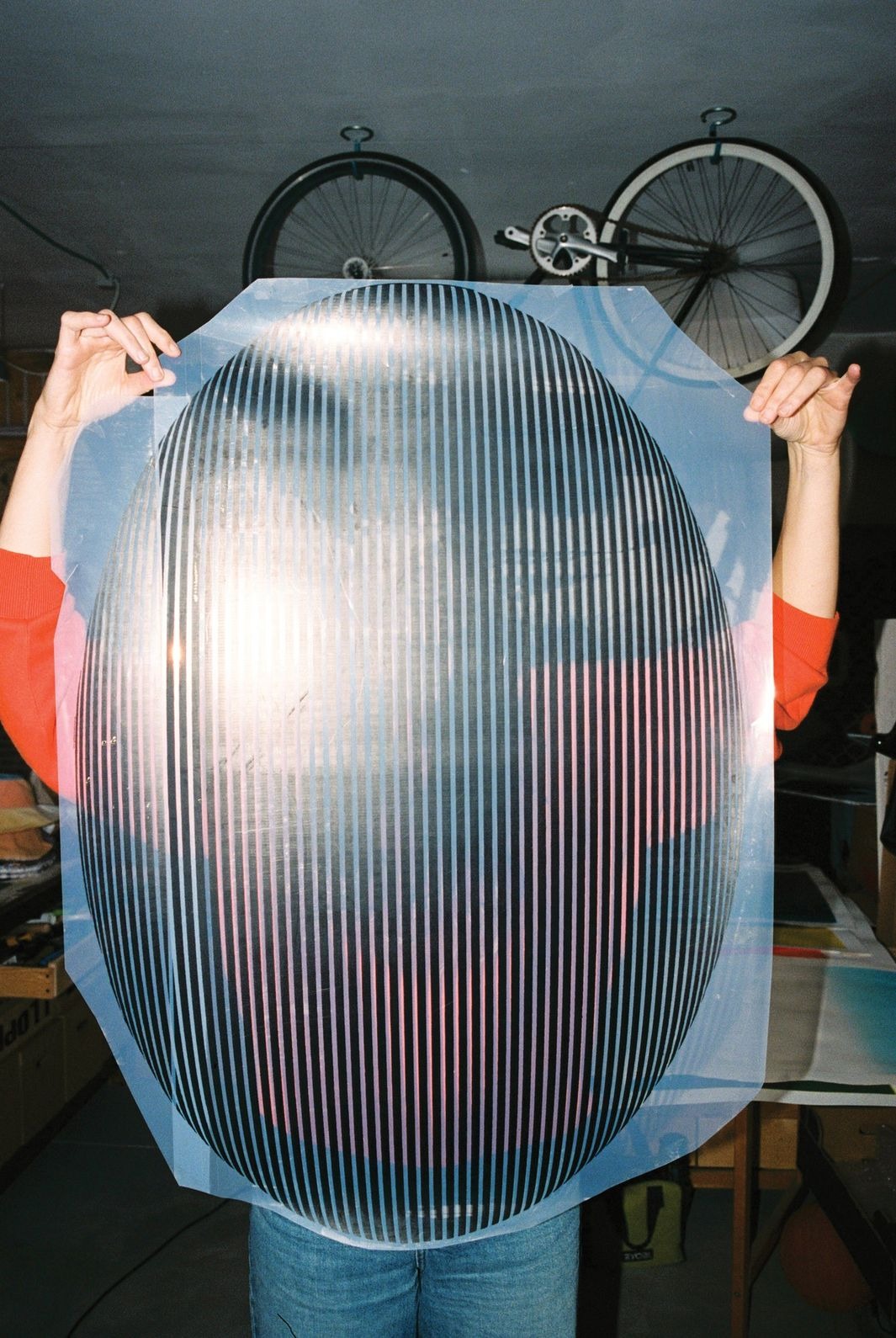
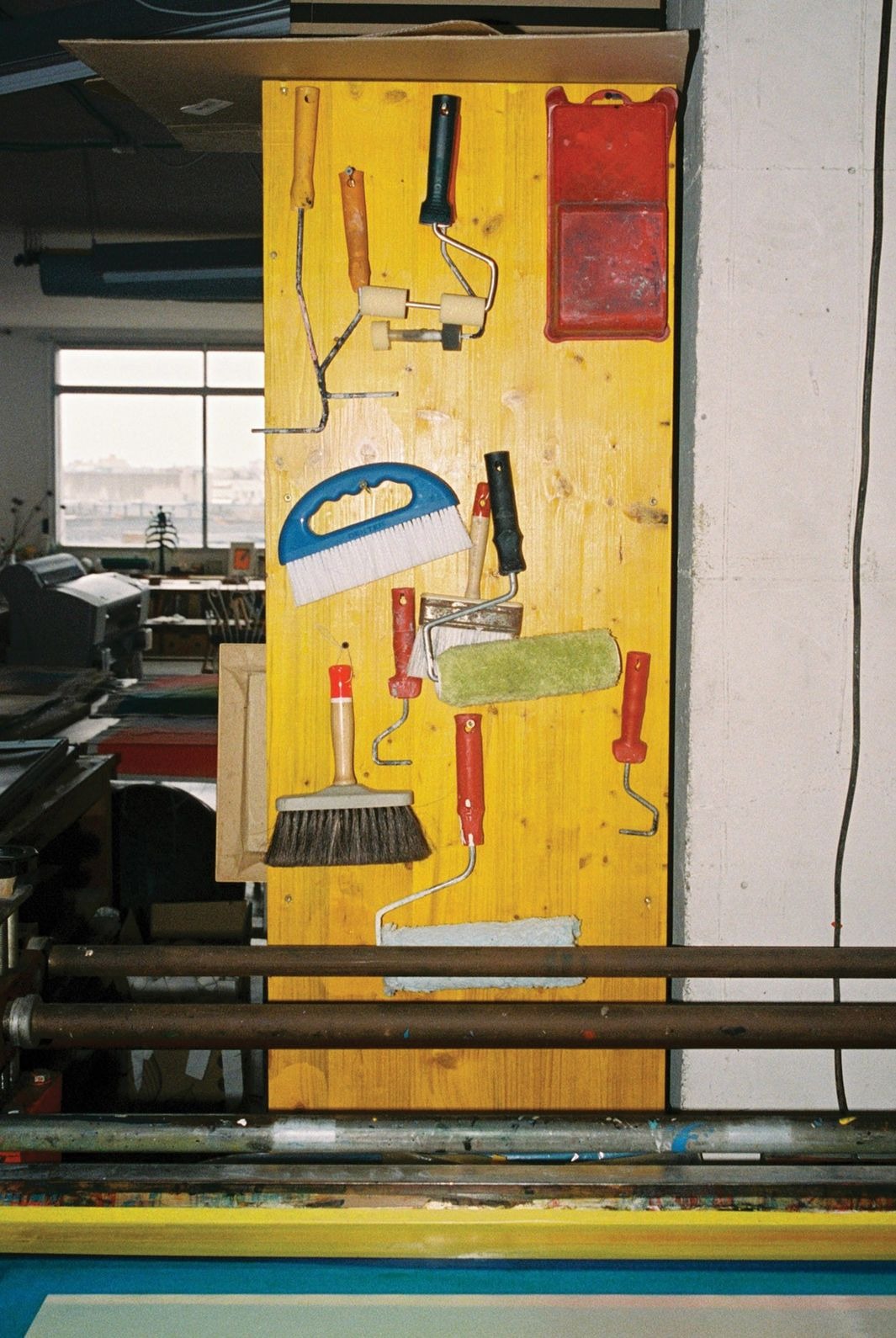
Dunja’s work is strongly interdisciplinary. She moves between screen printing, collage, illustration, comics, installations, and site-specific interventions. Boris comes from a street art and graffiti background, which over time developed into a strong conceptual and socially engaged practice. Their artistic languages remain somehow symbiotic. “The most important thing in my work is play, experiment, discovery, something new, the moment of surprise. That constant jumping from one medium to another gives me the freedom to explore. I do not burden myself with defining a rigid style. I am more interested in the process and the possibility of surprising myself while working. It is a kind of play, the way a child plays,” Dunja explains, adding that after comics, which she studied at the School of Visual Arts in New York following the Academy of Fine Arts in Zagreb, she loves making books the most. This year she completed The Mouse Story based on a text by Dubravka Ugrešić in collaboration with the Oaza collective, and she would like to illustrate the collection of children’s statements The Pencil Writes with the Heart, published back in the 1970s. “The book is full of incredible ideas from small children’s minds, from that exciting phase when a young brain creates its own connections and playfully questions the rational,” she says, thinking out loud about what attracts her to it so much. “That probably comes from working in comics. I love those juxtaposed pages, the rhythm, the way you read them, and the fact that you only have the complete work once you finish flipping through it. And I love printing, I love screen printing. That is my technique because it has so many stages. Between them you can change things, experiment. There are many layers you work through over time.”
As she says this, we are standing in “her” corner of the apartment. “I also love screen printing on fabrics. The dresses I made in Shanghai are actually prints you can hang on the wall or wear. That play between high art and low art interests me,” she says, recalling an interesting collaboration with the brand 3ge3. On another occasion, she and Boris exhibited a joint project, This Is Not a Copy of a Church, at the Museum of Modern Art in Shanghai, the Power Station of Art. He created a cardboard church structure, and she designed the visuals for the interior of the spatial installation, conceived as a conceptual critique and discussion of symbols and their destruction. At the end of the exhibition, the installation was deliberately and ceremonially destroyed as part of the artistic concept.
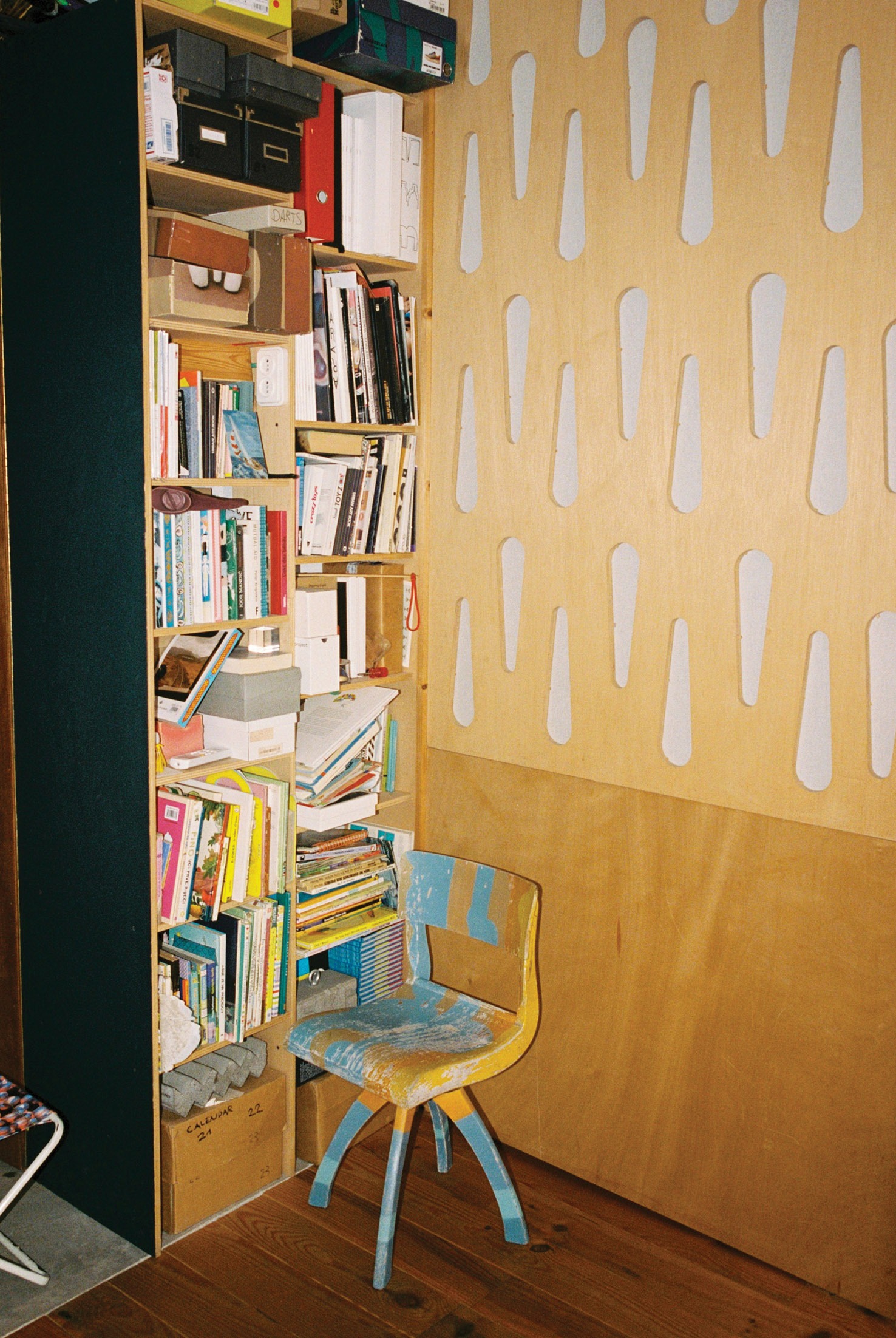
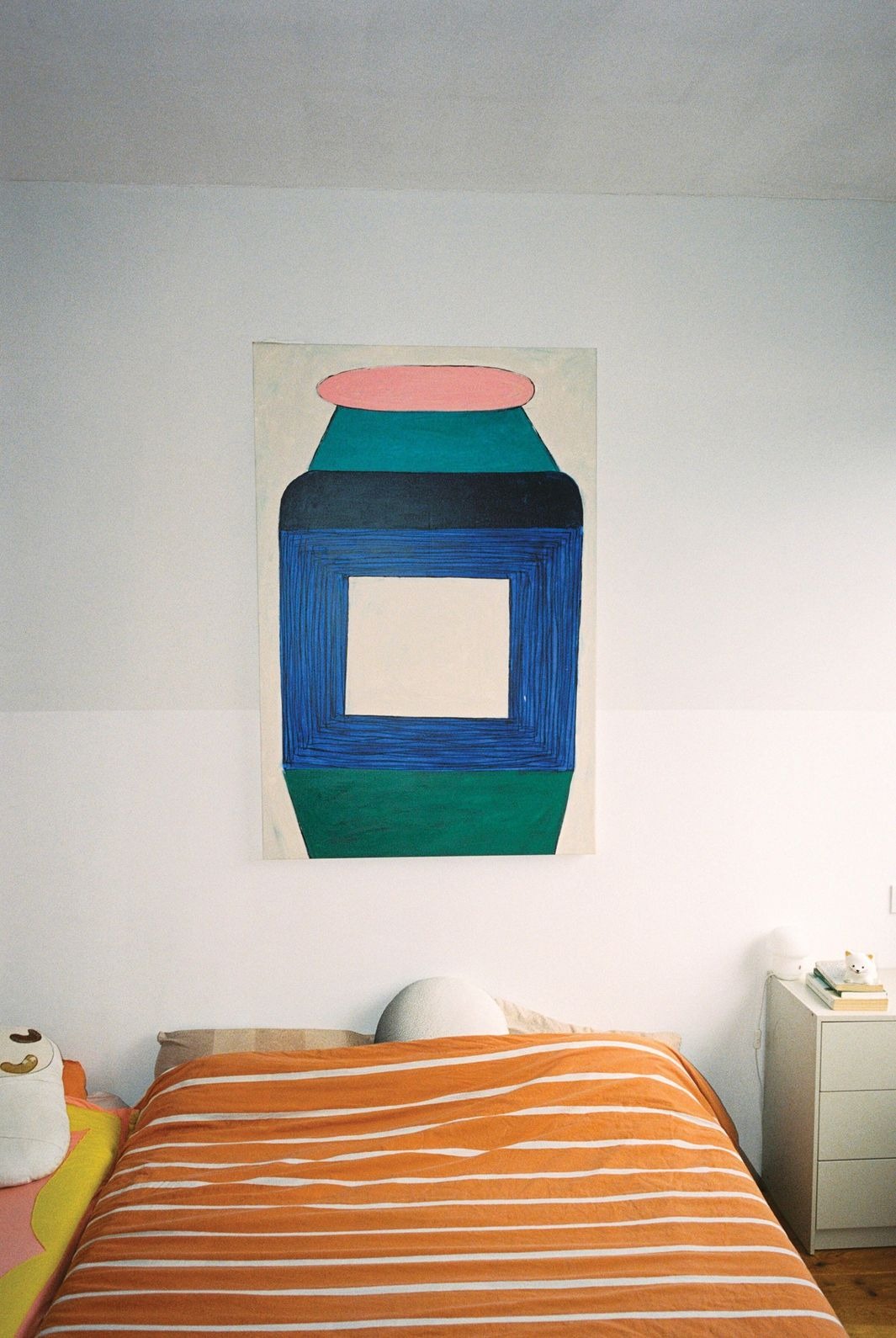
I ask Dunja what it is like to share life with another artist, to work together, live together, be together all the time. “You know what, it is great. I have never had this kind of relationship before. My previous partners lived and worked separately. With Boris, from the very beginning, I realized that many things are important to us in the same way. We have the same taste, a similar lifestyle, a love for the sea, art, humor. All those basic things line up, so it was not complicated to be together all the time. Of course, over time you always have to fine-tune a relationship, but he handles that really well. Believe it or not!” she laughs. “Some things we do not do together at all, but we help each other or collaborate on specific projects, for example when we work on dresses and bags. He knows how to sew and brings in his ideas, so we collaborate on those projects, while other things we develop separately. It is all a real symbiosis.” You can feel that in their living space as well, which is simultaneously a studio, a home, and a place for a child, and everything works in a very artistic and natural way. I add this with the quiet confidence of someone who feels quite comfortable surrounded by artistic details, from cushions made from her geometric patterns to the Bimbo figurines that have become his trademark.
Looking around the apartment, which at times resembles a humanoid printing press producing the most attractive colorful pages, and at other times an endlessly interesting gallery you do not want to leave, I ask Dunja how she has been feeling in recent months, knowing that she took a break from work due to pregnancy. “I am good now. During Luka’s second year, I tried to return to creating, but I was somehow outside my usual rhythm. It took me several months just to understand what I was doing. Every day I forced myself to sit down and draw. I knew something would come out of it, but for a while I was very frustrated. I literally did not know what I was doing. I felt completely lost. Then I realized I had to create from a new place, not the old one. Something had changed, shifted, and I slowly came back. I was patient and not afraid to be gentle with myself. Now that more than a year has passed, I feel I am back. I know what I am doing and where I want to go. Everything is somehow clearer because I had to eliminate the unnecessary. There is less time, so only the essential remains. And it is as if an inner voice opened up that tells me exactly what I want and what I do not want. More clearly than ever. And that is a good feeling. You know what you are doing and you are confident in it.” I knew what Dunja was talking about because I had been through that period myself. Our conversation naturally branched out in many directions, from surfing, which she pursued persistently, to growing up on Adriatic “waves”, to the fact that you can surf on Lošinj too, and all the way to China, which is fascinating and where we could both imagine living in Shanghai for a while. We lingered longest on travel. Since this small family of three has a van with which they have already traveled extensively, enjoying a slow travel rhythm, I asked her where they had been, hoping to steal an idea or two for a road trip. “We have traveled between Croatia and Barcelona a thousand times. Before, we would drive the entire way ourselves, sometimes through France, Italy, even Switzerland, choosing different routes. Now we have discovered the ferry from Barcelona to Rome, the port of Civitavecchia. The journey takes about 20 hours and is a great experience, like the good old days in Yugoslavia. And from Rome to Lošinj there is only a short stretch left.” Of course, I wrote that down.
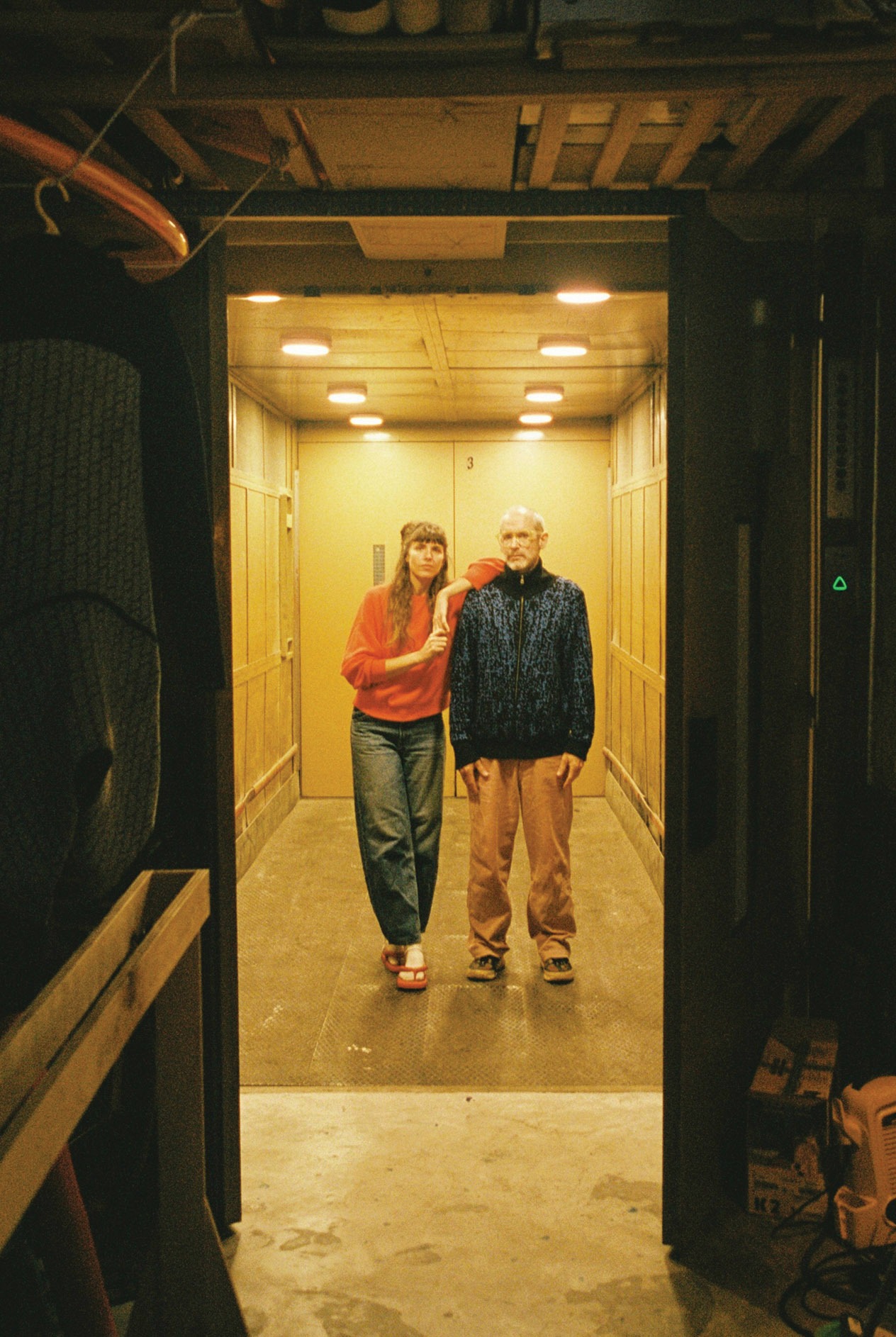
We saved one special detail for the end of the shoot, something that revealed itself naturally when looking toward the enormous elevator that goes up to the floor where their apartment is located. “Our van fits into that elevator. We take it out of the elevator and park it crosswise in the kitchen. Crazy, right? We even have curtains so that when my mom comes, we can hide the van. The van is made for travel, it has a bed and everything you need inside, so we can also use it as a guest room. That way, guests have their own privacy,” Dunja tells me. I immediately shared how unbelievable it is that the van goes up to the third floor and fits without a problem, even though it is heavy and huge. It was just one of many lifestyle details of this artistic couple that reminded me of all the creative ways a life can be lived.
Photo: Carlos Roca
Creative productions: Marita Bobelj
VOGUE RECOMMENDS