
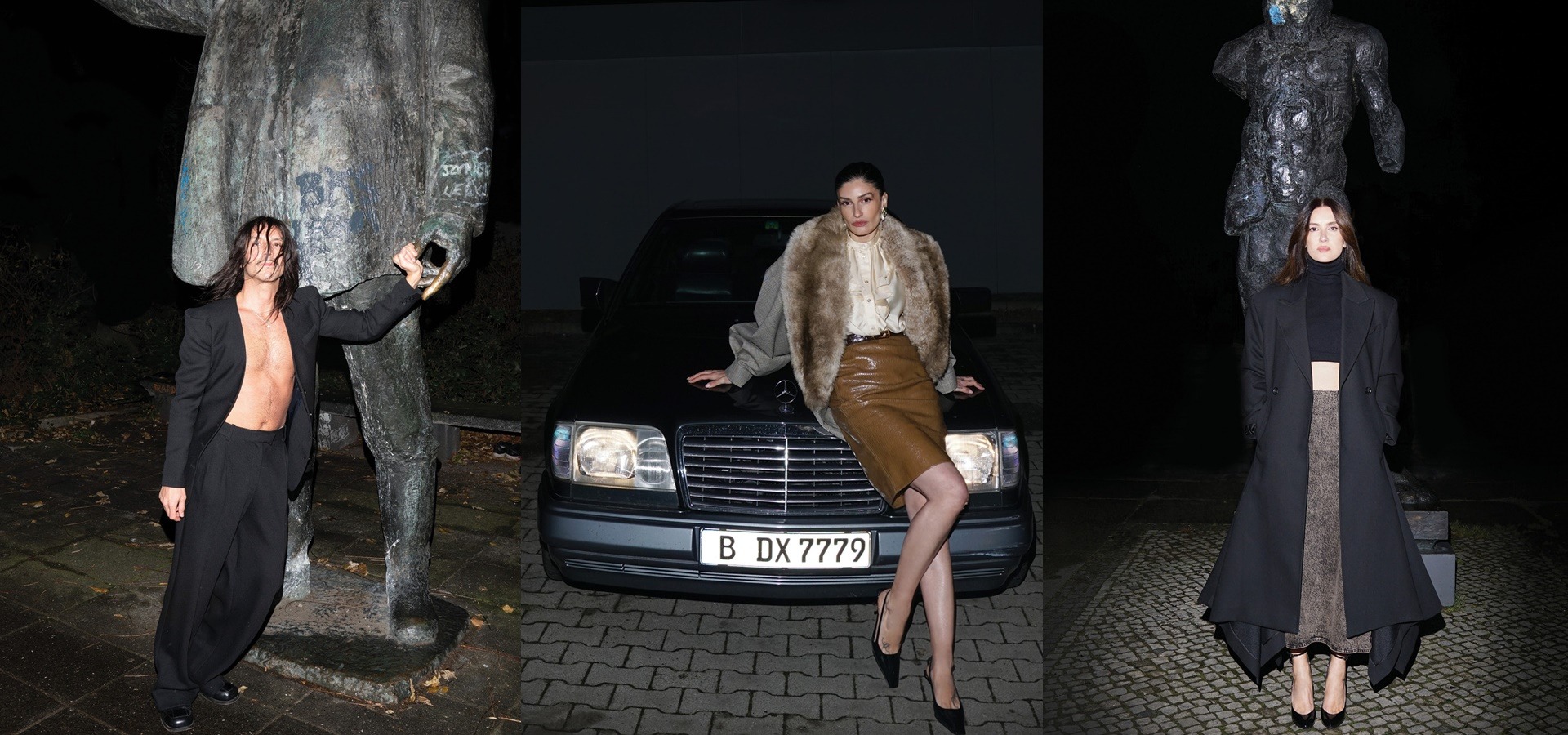
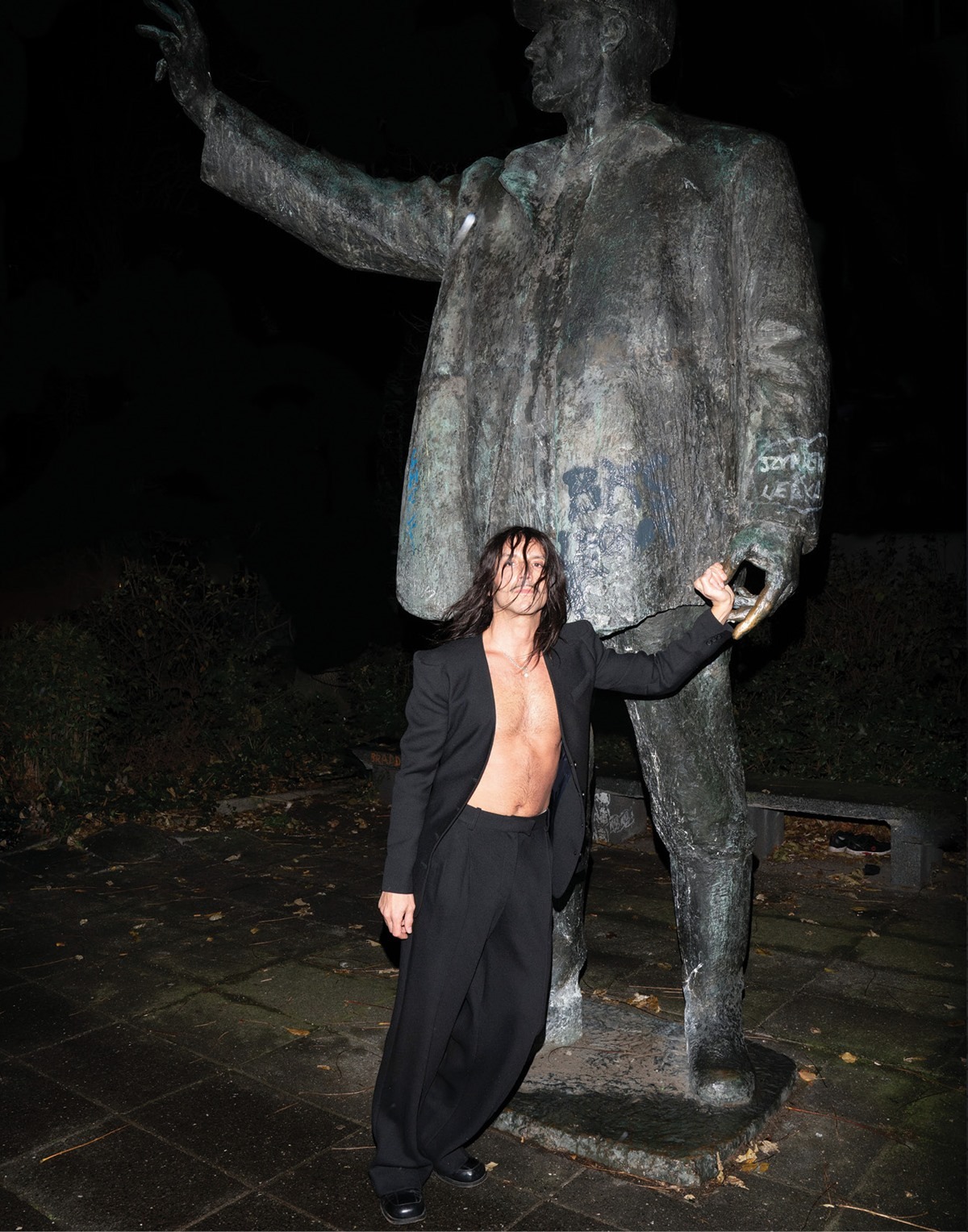
Berlin’s creative scene keeps expanding, fuelled in part by its multicultural energy and by the many creatives of Balkan heritage who have made the city their home.
Photo: Boris Kralj
Free-spirited, honest, open, at times harsh and dark, decadent and rebellious, sometimes loud and hectic, unsparing yet unmatched in its diversity. That is Berlin. A city that knows how to surprise you countless times and serve up stories on a platter, stories retold like the plots of the most gripping novels, the kind that shake you and become a part of you forever. If you surrender to it, Berlin is a city after which you will no longer be the same, and what makes it so special and different is its unique fusion of subcultures, movements, multiculturalism, a club scene built on the foundations of a search for freedom, cold and long Berlin winters, the weight of history and the resistance that blossomed from it… Exactly as it is, Berlin is fertile ground for creativity, for inspiration that is born not from something like beauty but from the city’s energy. Here, creativity flourishes, fueled by the freedom to let go and find your way to everything you are and everything you can become. In such an atmosphere, the Berlin fashion scene also grows and thrives, shaped over the years by the work, visions, and talents of many creative souls with Balkan roots.
Helena wears a skirt, silk blouse, jacket and sandals, all Gucci
Helena Narra
Occupation: hair stylist and makeup artist
Helena Narra grew up between two cities and two cultures: half her childhood in Munich, half in Berlin, with Mediterranean heritage from her mother and Sarajevo roots from her father. That mix taught her early on that she didn’t need to fit into one definition and could feel at home in difference. She started her professional path young. “I trained in hairdressing, make-up, nail design and cosmetology, and began freelancing at 18,” she recalls. By 21 she was working at MTV while building the portfolio that would later become impressive: shoots for Vogue, DAZED, Numéro and ELLE, collaborations with photographers like Juergen Teller and Mert & Marcus, and runway work for brands such as Prada, Dior, Valentino, Miu Miu, Versace and Dolce & Gabbana…
Her days still rarely follow a set rhythm. “I just came back from a three-week trip: Mexico, Morocco, Paris, Munich. Sometimes I miss my friends, but I’ve always loved travelling.”
Alongside fashion and beauty work, Helena also consults: she creates marketing concepts, builds strategies, leads digital representation and develops social media content for clients.
“Berlin is a city of possibility for me. I’ve tried every style. Youth and freedom allow it, and Berlin encourages it.”And the secret to her current style? She laughs: “SPF 50+ and sunglasses.”
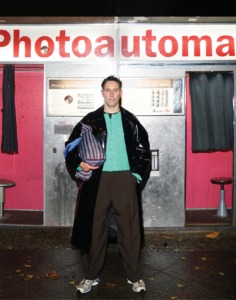
Saša wears a Nike Pro Rash Guard T-shirt, cardigan and coat, all Edited, Bershka trousers, Salomon Lab sneakers, bag as a souvenir from South Korea
Saša Hortig
Occupation: Senior Fashion Designer at the fashion house Edited
“My Berlin story is a love-at-first-sight story,” says Saša Hortig, who moved to Berlin in early 2021 after living in Stockholm. “I visited Berlin a few times and immediately felt connected to it. Not long after, I got a job offer from EDITED, and the rest is history.” Born and raised in Đakovo, Croatia Saša began working in fashion design as a university freshman, presenting his first projects at key local fashion events. “My generation’s drive to disrupt the local fashion scene was something magical.”
That curiosity led him deeper into the industry: first to the IO studio of Ivana Omazić, then an internship at ACNE Studios, followed by years at & Other Stories, where he moved from assistant to designer. Today he is a Senior Fashion Designer at EDITED, and Berlin is his endless source of inspiration. “What influences me most is Berlin street style and the clubbing scene. There’s a kind of freedom here that’s rare elsewhere. If you know where to look, you’ll see moments on the street that exist only then and there – and will probably never appear on a fashion platform or social media.”
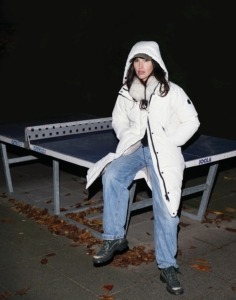
Rafaela wears a Quartz Co jacket, Bimba y Lola jeans, Prada x Gyakusou shoes
Rafaela Kaćunić
Occupation: creative director, co-founder of This is Badland magazine
Born in Split, raised in western Germany, and arriving in Berlin from Paris 11 years ago, Rafaela was looking for a city that embraced more freedom, courage and fewer hierarchies. “Berlin won me over with its openness, its contrasts and that defiant spirit that makes no one feel pressured to fit into a predefined box.” She first studied fashion design, then completed a master’s in visual communication in Paris, landing her first job at Dior Homme in the set design department.
“When I moved to Berlin, I suddenly had a range of opportunities to explore my skill set – from art direction to styling and writing.” Today she works across styling and photography, but her main focus is creative direction. Co-founding This is Badland is what she sees as the biggest turning point in her career. “It grew from my desire to merge all my interests and to give a platform to aesthetics and stories from our southeastern region, but without the stereotypes.” Her greatest joy is watching ideas take shape. “Berlin pushes me to experiment and think broadly, and not to fear imperfection. The city’s aesthetic lives in contrasts: industrial and gentle, monumental and intimate – and maybe that’s exactly what comes through in my work.”
Related: Redefining the Adriatic Narrative with Rafaela Kaćunić
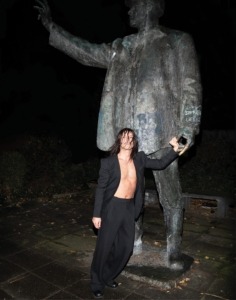
Dushan wears a suit and shoes by Situacionist, necklace by Milko Boyarov
Dushan Petrovich
Occupation: hair stylist
After 11 years in Belgrade, Dushan felt it was time for a change. He already knew Berlin through friends, and moving there felt like a natural next step. What was meant to be a while turned into a new chapter. His journey began much earlier, when he enrolled in a secondary hairdressing school, then spent ten years working in salons. That technical foundation later carried him into the world of fashion, where he has worked on countless campaigns, from Balenciaga, Diesel and Calvin Klein to editorials for AnOther Magazine, Re-Edition and DAZED.
One of his defining career moments was being nominated for the New Wave Creative Award at the British Fashion Awards at Royal Albert Hall. Dance has always been his parallel discipline. “Everything connects back to touch and movement,” he says. This awareness of rhythm and physicality shapes both his communication and his visual ideas. As Berlin Fashion Week grows in relevance, attracting new talent from all over the world, inspiration comes naturally. “Here we encourage each other with our authentic sensibilities.”
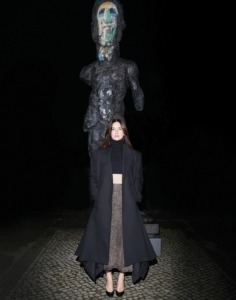
Lada wears a turtleneck, skirt and shoes, all Alaïa, coat H&M x Glenn Martens
Lada Seletković
Occupation: buyer and consultant
Born in Slavonski Brod, Lada moved to Berlin after living in Vienna, where she completed her economics degree. She had visited Berlin for Fashion Week over the years, always drawn to its rawness and authenticity. “Berlin isn’t a city hiding behind a perfect facade. It embraces difference and lets you be entirely yourself.” After Vienna’s more conservative atmosphere, the freedom she felt in Berlin made it feel like home. Her career began in Zagreb at Peek & Cloppenburg. “Sales wasn’t my first choice, but it gave me a solid foundation – a deep understanding of customers – which shaped everything I’ve done since.”
She continued working as a buyer in Vienna, from accessories to premium brands like Max Mara, Burberry and Armani. A headhunter later brought her to KaDeWe, where she spent almost eight years before founding her own consultancy. “What fulfils me most is working with people who have poured their hearts into what they do, into their brand and story. I love the closeness and trust that develops, and being there as they grow.” Berlin’s fashion scene remains her constant inspiration. “Techno culture has a particularly strong influence. It gives Berlin fashion its edge and a unique sense of expressive freedom. That blend of rawness, creativity and individuality inspires me endlessly.”
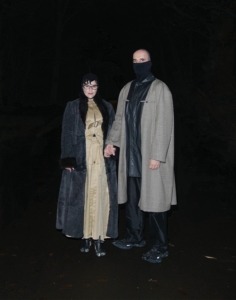
Paula wears a Junya Watanabe Comme des Garçons dress, a vintage coat, a Madomorpho hat, Maison Margiela Tabi shoes. Marko wears a CP Company sweater with a mask, a Comme des Garçons Homme Plus coat, silk trousers by Vaida Voraitė, Balenciaga reptile shoes
Paula i Marko Pavlović
Occupation: owners of the vintage store Slina
“Berlin lets things exist as they are, without pretension. Your decisions and ideas can take shape here because the city is raw and open enough to receive them,” say Paula and Marko Pavlović, who left Zagreb for Berlin in 2019. After completing their master’s degrees in economics, they realised corporate jobs weren’t for them. Berlin simply made sense.
Opening a physical store came naturally after several years of Berlin life and a successful online shop. They found an address for Slina in Neukölln, and today their vintage store attracts artists, musicians and anyone who sees clothing as an expression of identity.
It all began with Paula’s love of clothes, instilled by her grandmother. “She sewed everything she wore. When I visited, we would go through her jewellery, knitted gloves, fur coats. I inherited my eye for detail from her.” Marko learned alongside Paula. “I followed her point of view and learned to recognise details, collections and ideas.” Over the years they’ve handled countless rarities, but two Comme des Garçons pieces hold a special place in their memory: a coat from FW2012 and a sculptural dress from the AW22 Black Rose collection they found in Tokyo after an exhausting search. “This job is twenty percent romance and eighty percent logistics,” they say with a smile. And why the name Slina? “That’s our little secret. Or simply: why not?”
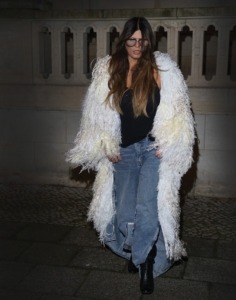
Suzana wears a Lena Voutta wool coat, Chanel boots, Gucci sunglasses, H&M x Glenn Martens jeans, Versace ring
Suzana Holtgrave
Occupation: fashion photographer
Suzana Holtgrave arrived in Berlin in 1986 from sunny Pula, a Mediterranean town on the edge of Istria, where she already knew as a child that she would one day become a cosmopolitan. She used her aunt’s sewing machine to make clothes and secretly dreamed of becoming a fashion designer. Love is what brought her to Germany. She fell for a German man in a Pula nightclub and left without hesitation, even though her vocabulary at the time ended with guten Tag and Barke fahren. “Berlin in the 80s and 90s was the wildest and most creative. Surrounded by the Wall, we danced like there was no tomorrow,” she recalls. Suzana began her fashion journey as a model, working in the legendary Dschungel until dawn and heading straight to the runway.
Eventually she switched sides and found her place behind the camera. “It happened completely spontaneously. It felt like the camera found me, not the other way around. I picked it up and started shooting instinctively, as if I’d always been doing it.” Over the years she has worked for magazines like Vogue Hong Kong, ELLE, Harper’s Bazaar and Schön! Magazine. One memory stands above the rest: working with Helmut Newton during the filming of his biographical documentary in Berlin. He remains her greatest inspiration. “My aesthetic changes are like life itself, fluid and without rules.” Berlin gives her freedom, though she likes to say that no matter what, she remains a Mediterranean soul – Berlin meets Ibiza.
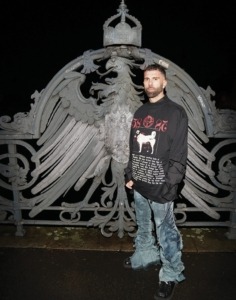
Boris wears a shirt, T-shirt and jeans, all Guovarde, CamperLab shoes
Boris Kralj
Occupation: fashion photographer
Born in southern Germany, with Croatian and Serbian roots that are an important part of his identity, Boris moved to Berlin over two decades ago to study photography. Since then, he has watched the city evolve visually and culturally. He fell in love with fashion almost accidentally, hanging out with Vivienne Westwood’s students at Universität der Künste, who came to class dressed as if walking a runway.
But his photographic journey began much earlier. “My father took amateur photos of my mother, so I started staging shoots with friends when I was very young. It was my way of escaping into a world of my own,” he says. Boris has collaborated with many renowned magazines and luxury brands and photographed figures like Karl Lagerfeld, Susan Sarandon and Heinz Mack. Yet one of his most meaningful works remains his photobook My Belgrade. In the traces of Yugoslavia he documented in Belgrade, he found a personal story about roots and identity. “The book came from a deep longing for a memory or feeling I could only experience during summer holidays as a child and teen. I couldn’t describe it well, but I rediscovered it in Belgrade in the 2000s.”
VOGUE RECOMMENDS