What the main couples of Bridgerton taught me about love
Anja StankovićJanuary 31, 2026

On the eve of the premiere of the fourth season of Bridgerton, I realized that alongside the impatient anticipation and the giggling every time someone mentions this now well-known world, I also feel a slight sense of unease. Namely, from the second season onward, it became quite evident to me that Bridgerton does not represent an easy-to-consume fantasy of love, but rather a persistent, almost uncomfortable reminder of everything I have learned, misunderstood, or consciously ignored over the years when it comes to emotional relationships. London high society and the couples in focus became a space where I do not seek escape, but a visual representation, an explanation, a language through which I can more precisely name my own romantic delusions.
To explain this more clearly, it is important to note that I was only 18 years old when the first episode of this series aired. And as you can assume, in the six years that have passed since then, I have gone through various phases in love. While most viewers reacted terribly to the fact that waiting for the next season sometimes lasted as long as two years, in my case this allowed me to grow alongside the series in certain ways. It is strange how much one can conclude about oneself simply by observing how one reacts to a work of art over the span of a few years. And yes, I called the series Bridgerton a work of art, even though some might label it a teen show.
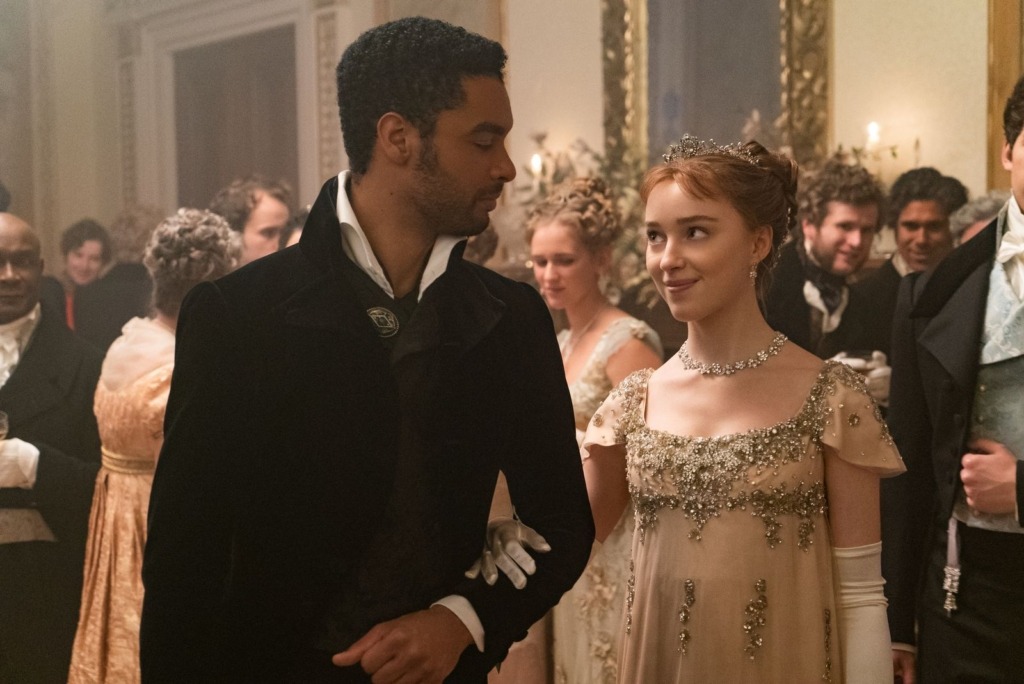
Photo: Liam Daniel/Netflix
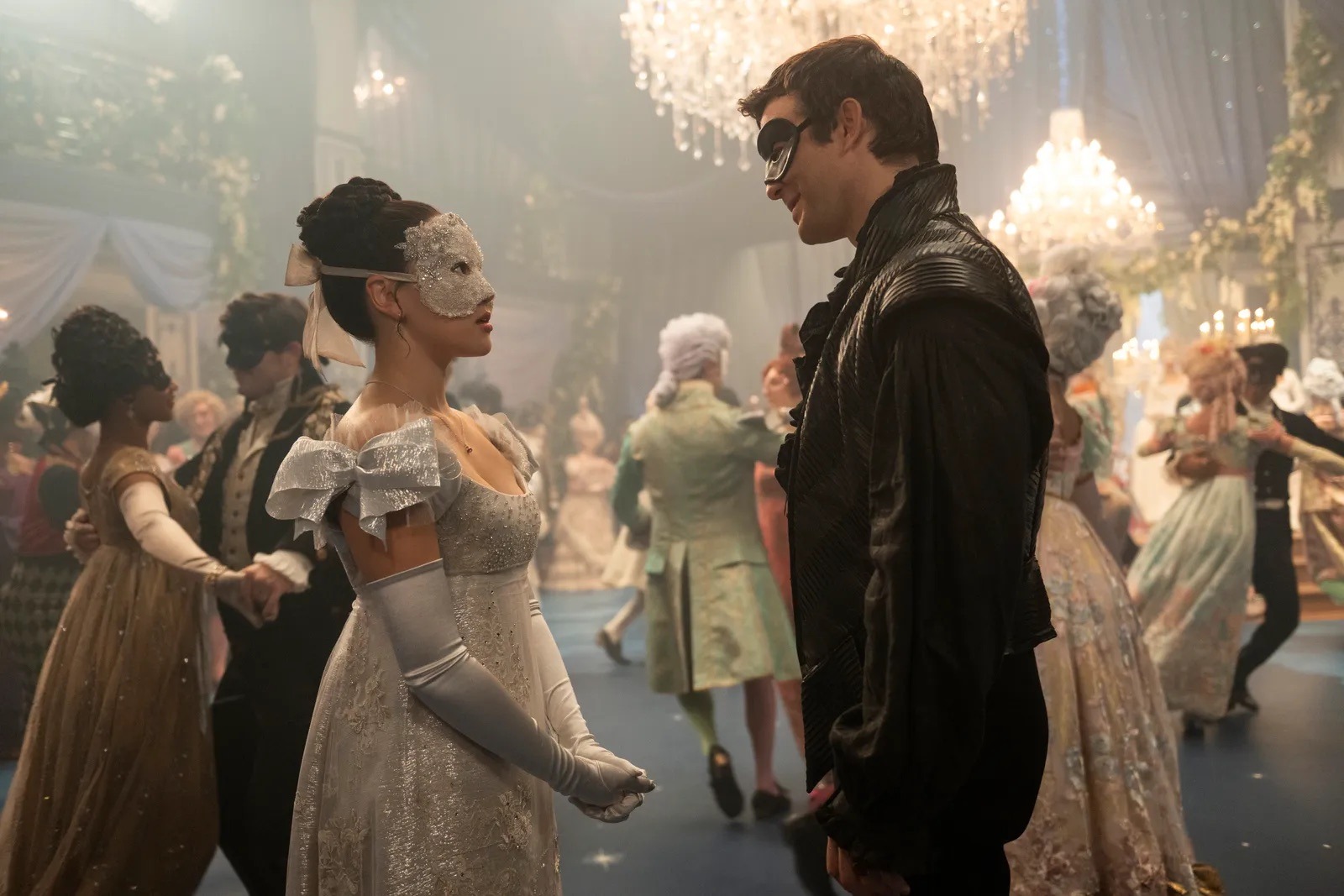
Full of insecurity and youthful arrogance, the very beginning of the series confronted me with my deeply rooted need for control. The relationship between Daphne and Simon, which began as a rational arrangement, felt more familiar to me than I would like to admit. The idea that emotions can be restrained by rules and that risk can be minimized if we define boundaries in advance seemed comforting. But as their relationship unraveled under the pressure of unspoken words and false assumptions, it became clear to me how often that need for control is merely a sophisticated form of fear. Simon’s emotional unavailability and Daphne’s belief that love would be enough to change him exposed a romantic myth that I myself had often fallen into: that persistence is the same as closeness, and that one person’s desire is sufficient to sustain a relationship.
The second season, however, struck me deeper and louder. Having just come out of my first stormy and long relationship, the dynamic between Kate and Anthony automatically returned me to the very beginning of my own healing process. Their attraction, manifested through their inability to allow themselves what they truly want, was a visual representation of everything I was feeling. Even now, I feel as though I can recall how strongly my heart was pounding for the two of them. In the tension they built within the first few minutes on screen, I recognized my own already well-developed intolerance for waiting. How many times had I experienced silence and waiting as signs of rejection rather than as spaces in which something is being built. This season taught me that slowness is not necessarily the absence of courage, but sometimes its most demanding form. That attraction does not need to be loud to be real. Through Anthony’s dilemma between duty and desire, it became clear to me how often we romanticize the idea of a reasonable choice, not because it fulfills us, but because it protects us. Stability as a survival strategy, rather than a conscious decision. Within that dynamic, I recognized my own compromises, which I had labeled maturity, even though they were often just a form of emotional withdrawal.
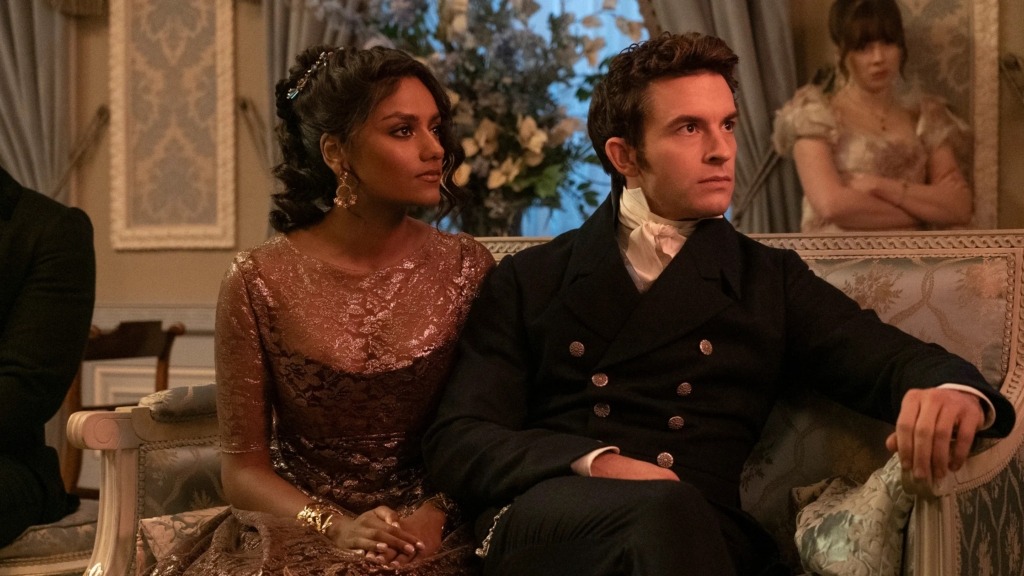
Photo: Liam Daniel/Netflix
As if Kanthony had not pierced my heart enough, the brilliant Shonda Rhimes released a short spin-off series that further destabilized my romantic illusions. Queen Charlotte: A Bridgerton Story brought us the story of the love between Queen Charlotte and King George. It certainly does not belong to the classic love stories we are accustomed to, but rather to one of the most realistic and difficult narratives ever presented in this format. A story about the decision to stay when it would be easier to leave, about accepting limitations that love alone cannot remove, but can only make more bearable. Their relationship made me question how willing we are today to admit that love does not always have to look beautiful to be real. In fact, that true, great loves often are not beautiful at all. That love does not last only as long as things run smoothly. And that stability does not exclude passion, but often requires letting go of the fantasy of perfection.
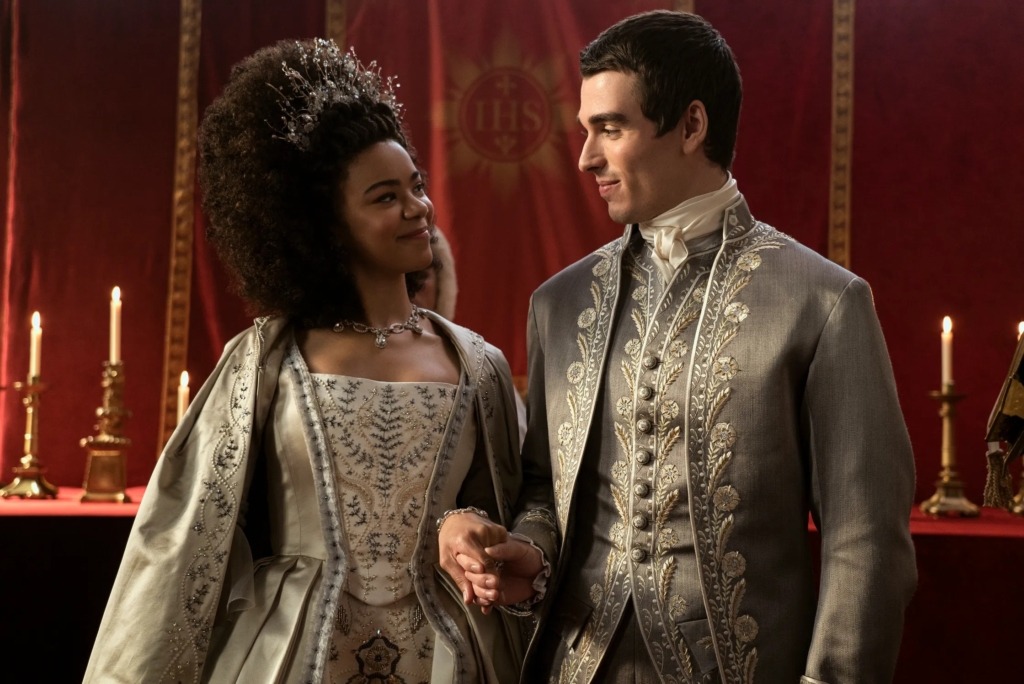
Photo: Liam Daniel/Netflix
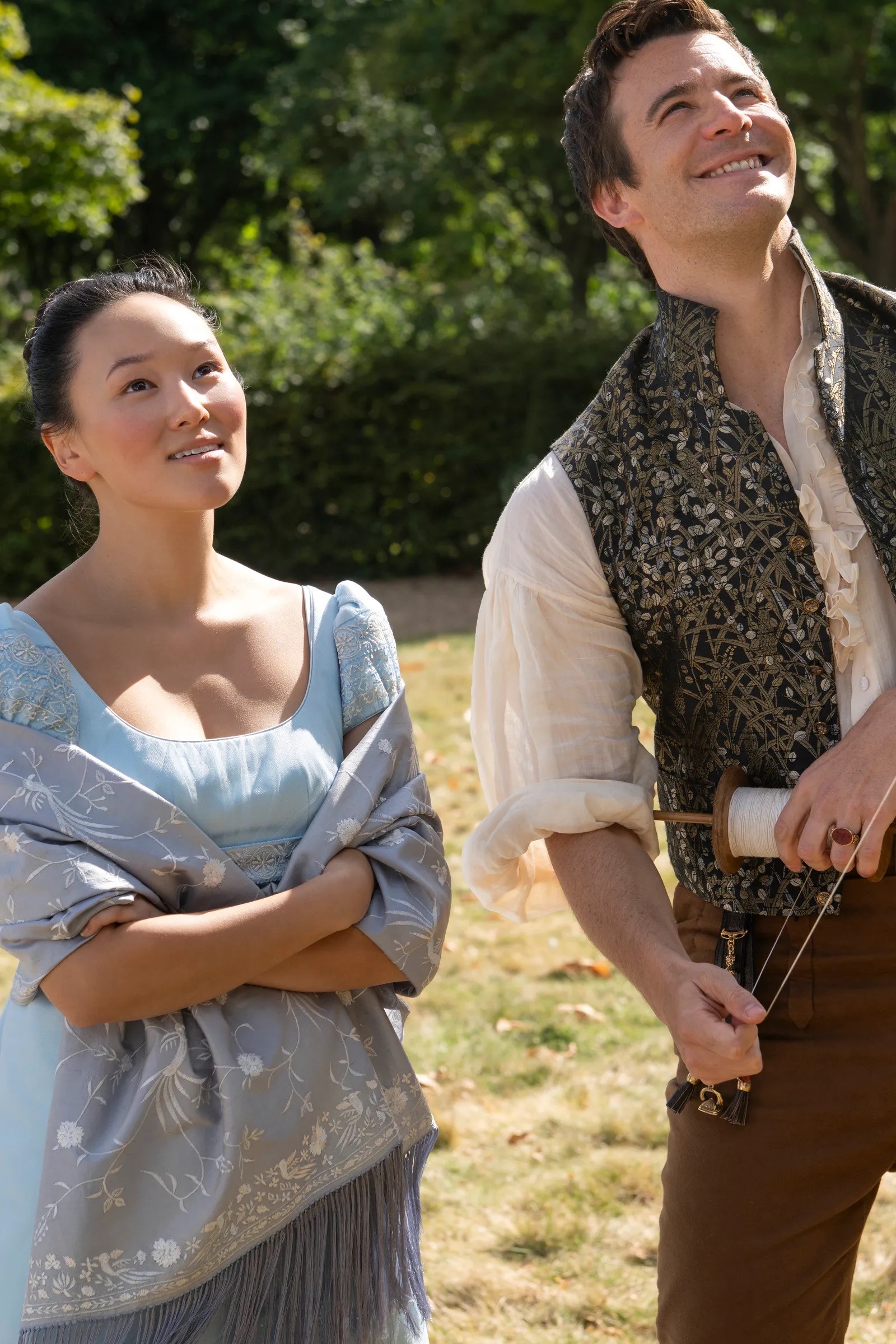
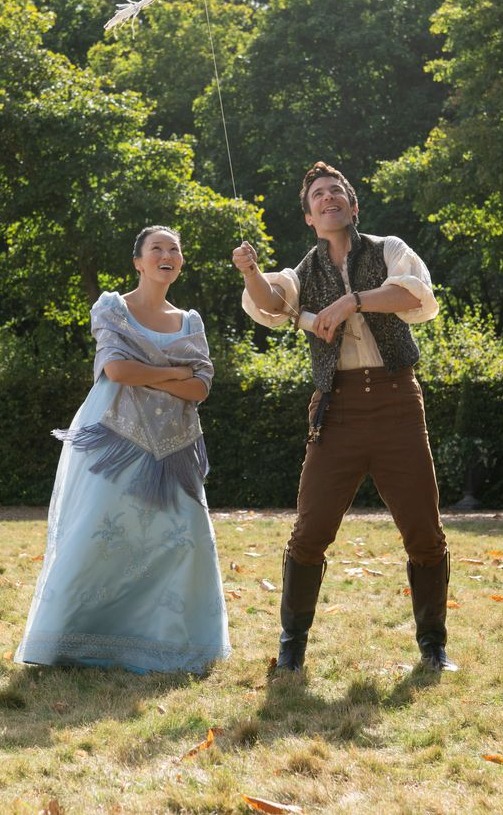
The third season, perhaps most subtly yet most honestly, helped me build a more mature relationship with love. Pen and Colin’s story shifts the focus from dramatic and sexy attraction to something far more fragile: love that grows out of long-term familiarity, out of friendship, out of everyday closeness. Their relationship made me question why I believed for so long that love had to be accompanied by insecurity in order to be exciting. Penelope’s long-standing invisibility and Colin’s inability to recognize what had been present all along opened a painful question: how often do we overlook what offers us safety because it does not resemble the fantasy we have learned to recognize as true love? In that season, I saw clearly for the first time how the romantic ideal I carry within myself is often at odds with my real emotional needs. How prone I am to undervaluing calm because it is not dramatic enough, and how simultaneously exhausting my search for an intensity that does not offer duration can be.
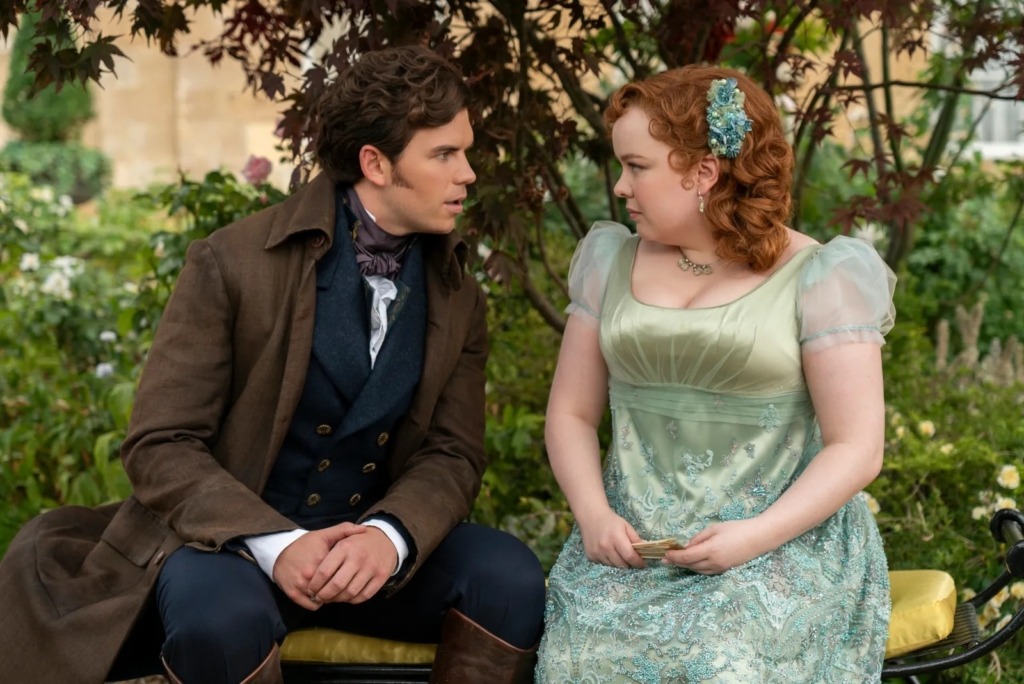
Photo: Liam Daniel/Netflix
Through all of these narratives, Bridgerton consistently shows how our emotional choices are shaped by social expectations. In Regency society, these were titles, marriages, and reputation, while today they are emotional availability, timing, and social acceptability. The frameworks have changed, but the pressure remains the same. Love is still something that is measured, assessed, and valued from the outside before it is ever experienced from within.
What I ultimately learned from watching Bridgerton was not how to love, but why I love the way I do. Why I am drawn to certain patterns, why I fear some relationships precisely because they appear calm, and why it took me so long to understand that romantic fantasy is not a problem in itself. The problem arises when we fail to question it.
Bridgerton was never a fairy tale for me. It is a cultural framework through which I began to dismantle my own romantic myths, not in order to completely discard them, but to finally make them conscious. Perhaps that is the greatest value of this series: not in showing us what love looks like, but in forcing us to ask why we still believe that love should look exactly like that.