The new season of Bridgerton raises questions it has never asked before
Anja StankovićJanuary 30, 2026

January 30, 2026
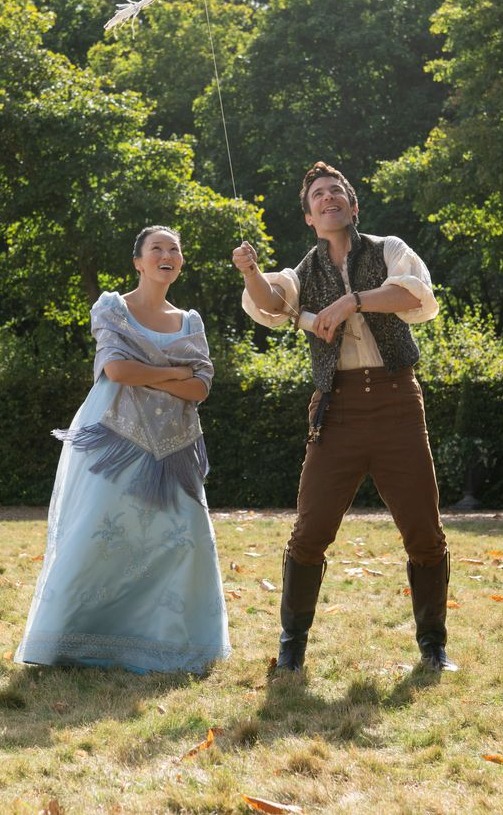
The first part of the fourth season of Bridgerton arrived on Netflix after an almost two-year hiatus, and from the very first episodes it was clear that the series was moving in a somewhat different direction. The focus is finally placed on Benedict Bridgerton, the second son of the central Mayfair family, played by Luke Thompson, with Sophie Baek joining him as the central female figure, portrayed in her debut performance by Yerin Ha. The two of them form the main couple of the new season, but what makes this season distinctive is the expansion of the world in which their romance unfolds.
Alongside the usual excitement, this time I was accompanied by a very concrete sense of satisfaction. I had finally reached a season in which I would get more than two minutes of Benedict Bridgerton per episode. After years of being the most interesting character in the room while persistently pushed into the background, Benedict has at last been given the space he deserves. Not only as a romantic interest, but as one of the most consistently and patiently developed characters in the entire series. His emotional depth, curiosity, resistance to rules, and constant need to test boundaries have always felt like something Bridgerton has been cleverly holding up its sleeve.

Photo: Liam Daniel/Netflix
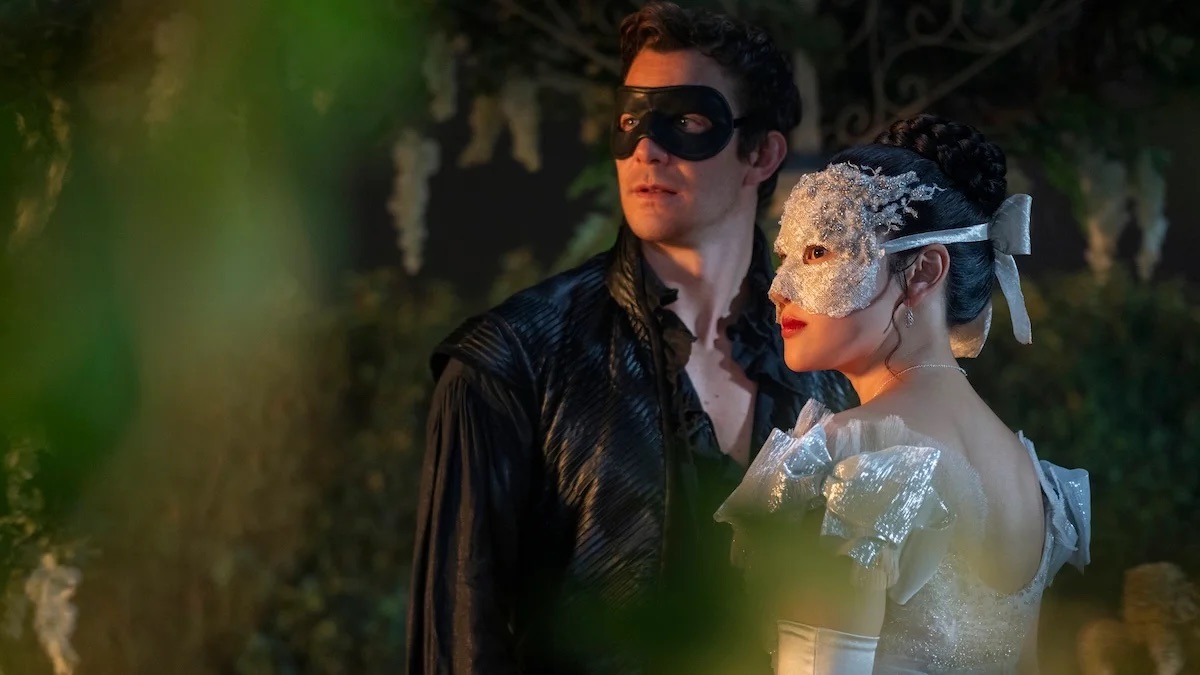
On the surface, Benedict and Sophie’s story seems like the most classic one yet. A masquerade, a mysterious woman, midnight, disappearance, a search. Cinderella in the most literal sense. Precisely for that reason, it is easy to get the impression that the series is taking a step backward toward a fairy tale. However, soon after midnight it becomes clear that this story will be difficult to characterize as fairytale-like.
Unlike previous central couples, whose obstacles were mostly internal, Benedict and Sophie encounter a boundary that does not depend on their willingness to change or to be more honest with themselves. Sophie is a maid. Benedict is an aristocrat. Their problem is not a misunderstanding, but a position on the social ladder.
It is particularly interesting that this season, more than ever, descends from the heights and moves through spaces that previously existed only as background. The camera leads us down corridors, into kitchens, laundries, and the private quarters of the servants. For the first time, the world of Bridgerton is clearly divided into “upstairs” and “downstairs,” but without any attempt to romanticize or erase that division. The staff are no longer a silent decoration of high society, but an active part of the narrative. Their relationships, fears, ambitions, and internal dynamics build a parallel society that exists just beneath the sheen of lavish balls and promenade walks.
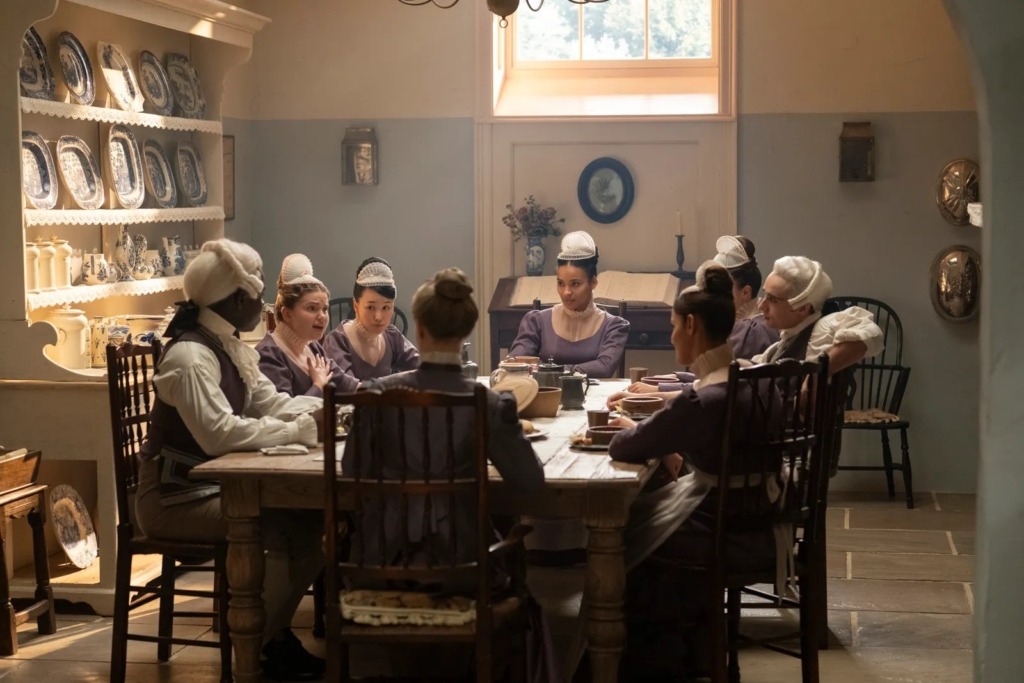
Photo: Liam Daniel/Netflix
It is precisely because of this that the fourth season has received the most positive reviews so far. The side stories no longer feel like distractions, but are organically woven into the main narrative. Conflicts over wages and loyalty are not merely social commentary, but directly reflect the central romance. Love between an aristocrat and a maid cannot exist in a vacuum, because it constantly collides with the real consequences such a relationship carries for the party with less power.
At the same time, the new season radiates sexuality, hedonism, and stories of pleasure. The characters free themselves from constraints, explore desire, and allow themselves passion and risk. The energy that was once almost exclusively tied to Benedict now spills over to the entire ensemble. Sexuality is no longer a taboo, but a form of self-discovery and freedom. The characters have the courage to do what they want, guided by impulses that were previously suppressed by social rules.

Photo: Liam Daniel/Netflix
In this first part of the season, we watch Benedict almost obsessively roaming Mayfair in search of his Lady in a silver dress, a fantasy he himself created on the eve of the masquerade. That search carries something both romantic and frustrating. We see him fall in love with the idea of a woman, with a projection, with an unattainable image, while the real person stands right in front of him, present, tangible, and far more complex than the fantasy he is trying to reconstruct. Each subsequent encounter, every new scene in which they miss each other without recognition, stirred growing dissatisfaction and mild frustration in me. Not because the plot is unfamiliar, but precisely because it is all too familiar.
Sophie, on the other hand, represents the heart of this season. She is not a Cinderella waiting to be chosen. She is a young woman who has been dealt bad cards, but also someone who understands the system she lives in and tries to find a minimum of dignity within it. Her intelligence, perceptiveness, and emotional restraint are nearly unbeatable by any lady of high society.
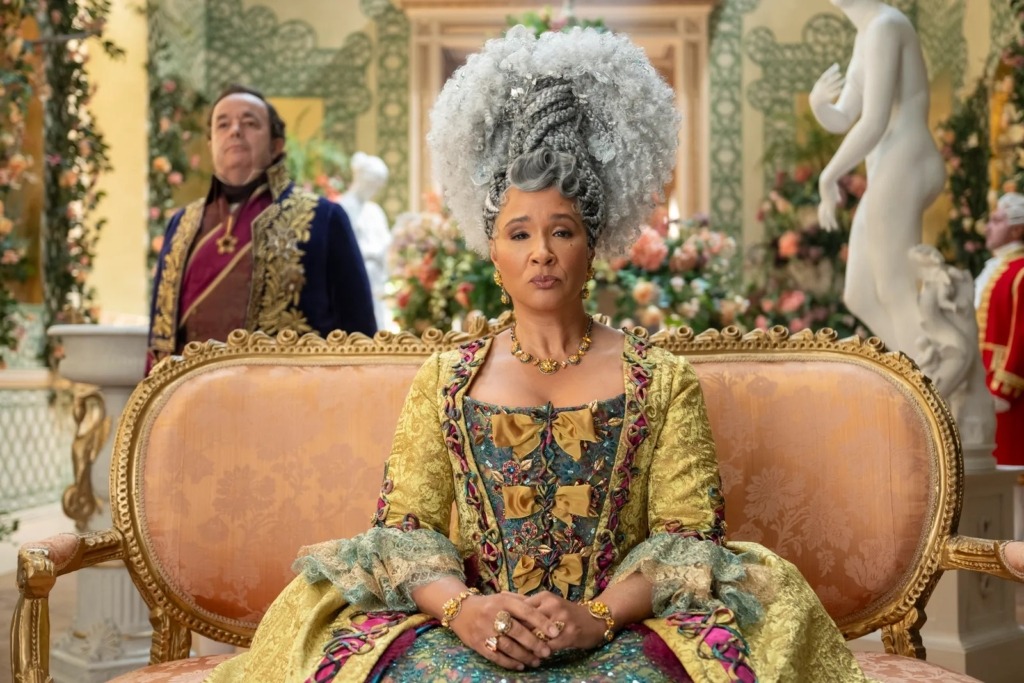
Photo: Liam Daniel/Netflix
One of the most interesting secondary threads this season is the way the series addresses female relationships, especially in an environment that almost automatically places women in rivalry with one another. Instead, the focus remains on relationships that endure despite all pressures. This is evident in the long-standing bond between Queen Charlotte and Lady Danbury, a complex friendship that has survived inequality and a series of tragic events. The season also gives space to the relationship between Eloise and Hyacinth Bridgerton, sisters at completely different points in life, one still tirelessly fleeing from the very idea of marriage, while the other eagerly awaits her step onto the marriage market and her chance to become the leading lady of her own household.
For the first time, the fourth season of Bridgerton seriously raises the question of consent in the context of unequal power. What does it mean to choose a relationship when you do not have equal freedom to leave it? Can friendship survive if it is centered on the needs of one side? Can love be romantic if one party risks reputation while the other risks survival? These are questions the series has not directly asked before.
Bridgerton remains aesthetically lavish, fairytale-like, and fully aware of its own theatricality. But beneath all of that, the fourth season for the first time does not attempt to equalize all destinies. Instead, it shows that romantic fantasy has never been equally accessible to everyone, but mostly reserved for members of the Bridgerton family.