One distinctive detail sets this Sarajevo apartment apart from contemporary interiors
Tina KovačićekJanuary 22, 2026

January 22, 2026
When I was little, a treehouse was a symbol of a space of childhood freedom, an escape into the world of imagination. I did not have one of my own, but I would enjoy it wherever I happened upon one, admittedly not very often in real life, which is why parents should build treehouses for their children. It seems to me that one is never too old for a treehouse, perhaps only too big to fit inside, but even that can be solved.
That is why the information I recently received from the studio Projekt V Arhitektura about a completed apartment in Sarajevo with a wooden treehouse within the interior immediately felt worthy of attention and a mental journey back to childhood, because who would not want to have a Treehouse in their apartment?
Their Treehouse Apartment is an environmentally sustainable transformation of an apartment from the Austro-Hungarian era into a warm, immersive world built from natural materials. Designed for a young family, the home is dominated by cherry wood, walls painted with natural clay, stone countertops, linen curtains, travertine, and minimalist details. I was already familiar with the studio’s work, as their Zemlja apartment, which impressed me greatly and the profession as well, demonstrated the architects’ serious intention to show how the world can be a more pleasant place to live. The interior evokes a sense of timelessness, building on Sarajevo’s rich history of minimalism and modernism, and includes selected artisanal and artistic works from Bosnia and Herzegovina, tell me Vernes Čaušević and Lucy Dinnen from Projekt V Arhitektura.
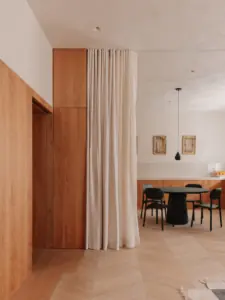
Photo: Shantanu Starick
Minimalism here is not cold, quite the opposite, and what is key to the project is a sense of groundedness, expressed through a continuous wall element of natural cherry veneer that rises from the floor and wraps around the entire apartment at varying heights. Reminiscent of the horizon line, this seamless wooden element evokes a miniature forest, connecting the inhabitants of the home to the earth and nature, blending functionality with poetry and creating a calming atmosphere, the architects say.
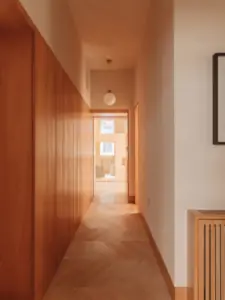
Photo: Shantanu Starick
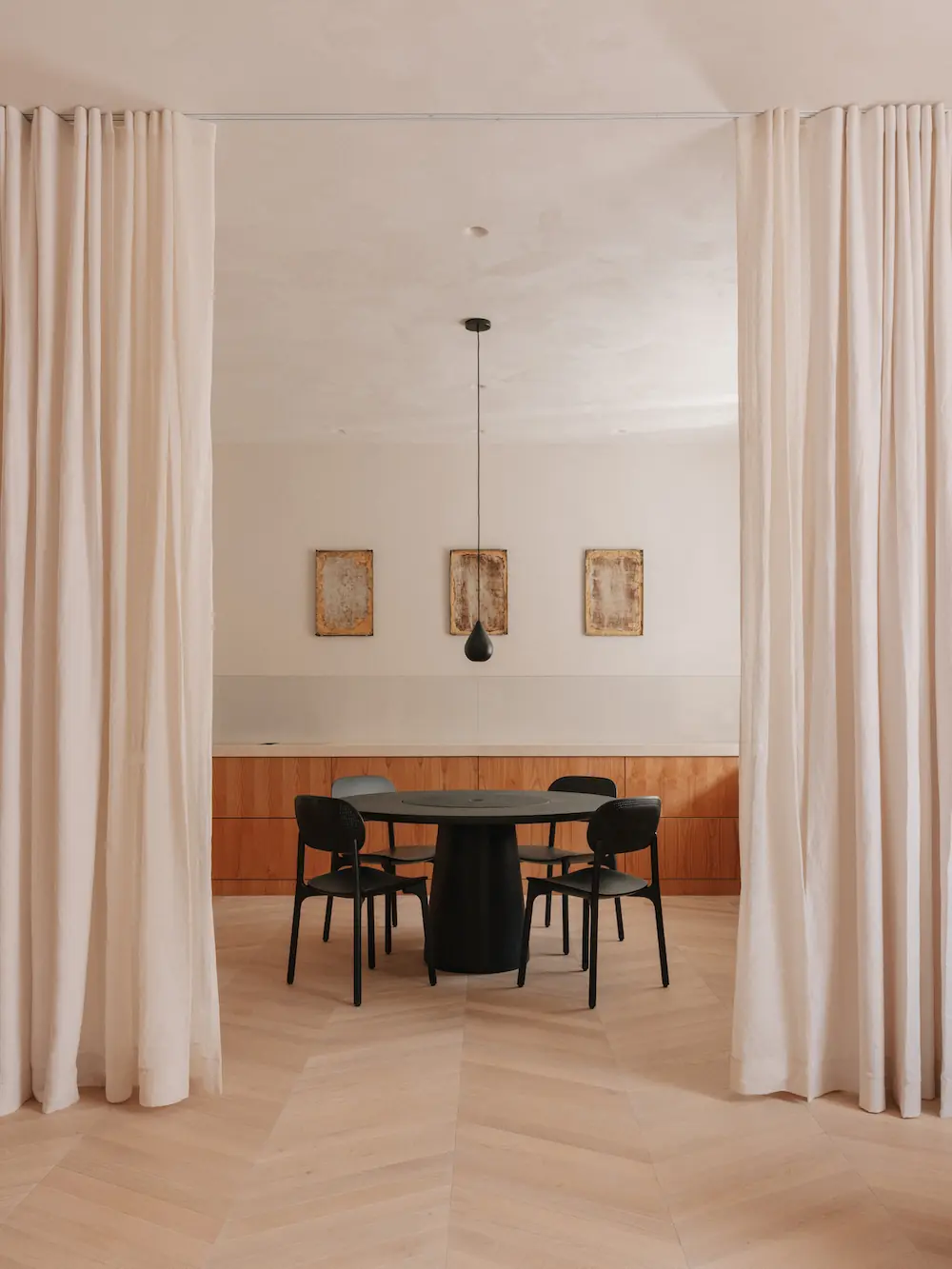
What I especially like about this apartment is that the doors become cherry-clad portals leading into spaces of subtly different character, united by a shared materiality. In this way, natural light and views from all sides introduce a dynamic play of light and shadow, while at the ends the corridor opens toward two contrasting worlds: a playful children’s Wooden House and a calm living room for adults, with the option of connecting or separating them via concealed sliding doors.
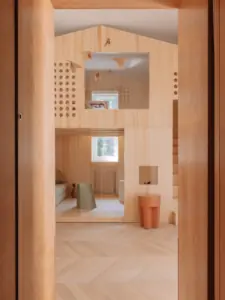
Photo: Shantanu Starick
The kitchen and living room form a single, light-filled space in which floor-to-ceiling linen curtains allow for fluid adjustment between intimacy and openness, while discreetly hiding within cabinets when needed. I look at the photographs and feel a pleasant, subtle, gentle theater, where transformation plays the leading role, one that modern people of our time truly appreciate, do they not? But let us return to play.
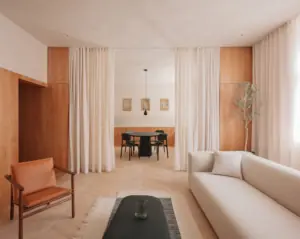
Photo: Shantanu Starick
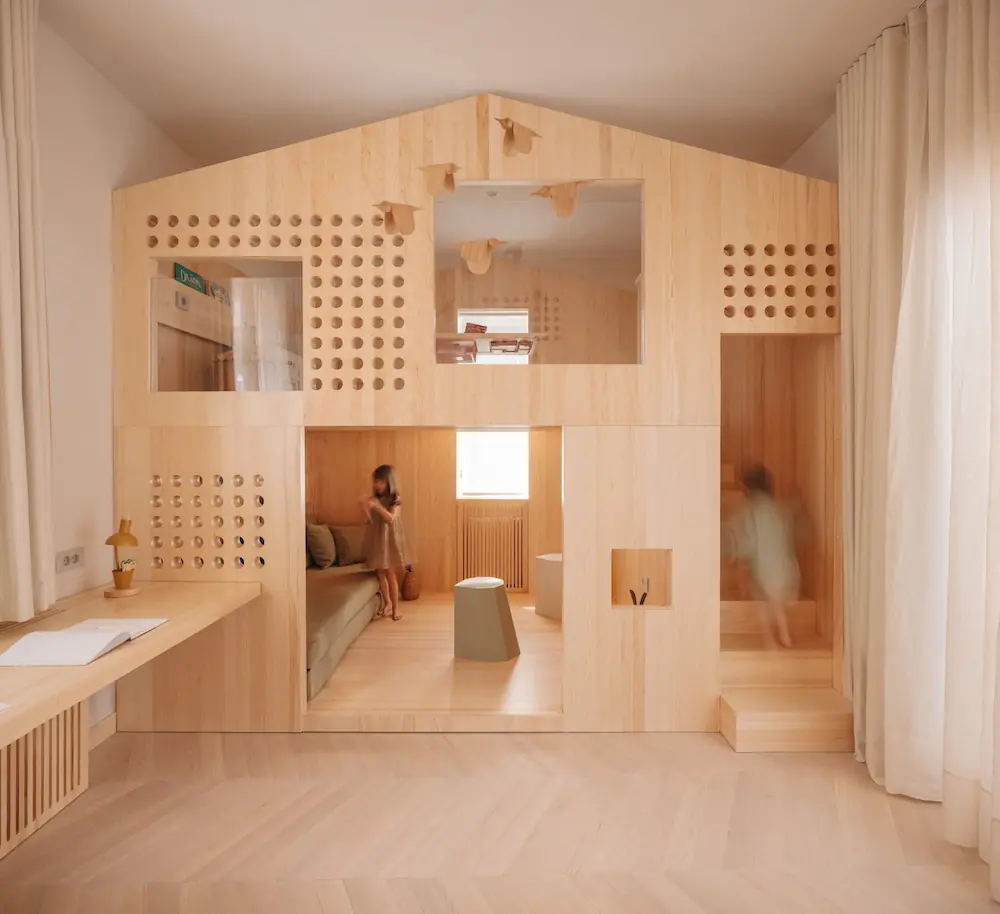
At the western end of the apartment emerges an unusual yet refined wooden house for children, a refuge for play and imagination that instantly takes me back to childhood, and I see many others as well. Overlooking the courtyard, as if placed in a tree, it is built from locally produced prefabricated laminated spruce wood in collaboration with Krivaja Homes, a Bosnian-Herzegovinian factory specializing in solid wood construction, the architects note, particularly emphasizing the many collaborations with local companies on this project. They will reveal more to me shortly, but before that I return to my own little house, which primarily represents miniature architecture: a hybrid between a piece of large furniture and a small house, scaled to a child’s perspective, the architects tell me, praising the apartment’s high ceilings with multiple levels, an attic, built-in stairs, and CNC-machined openings that filter light and views, encouraging movement and interaction.
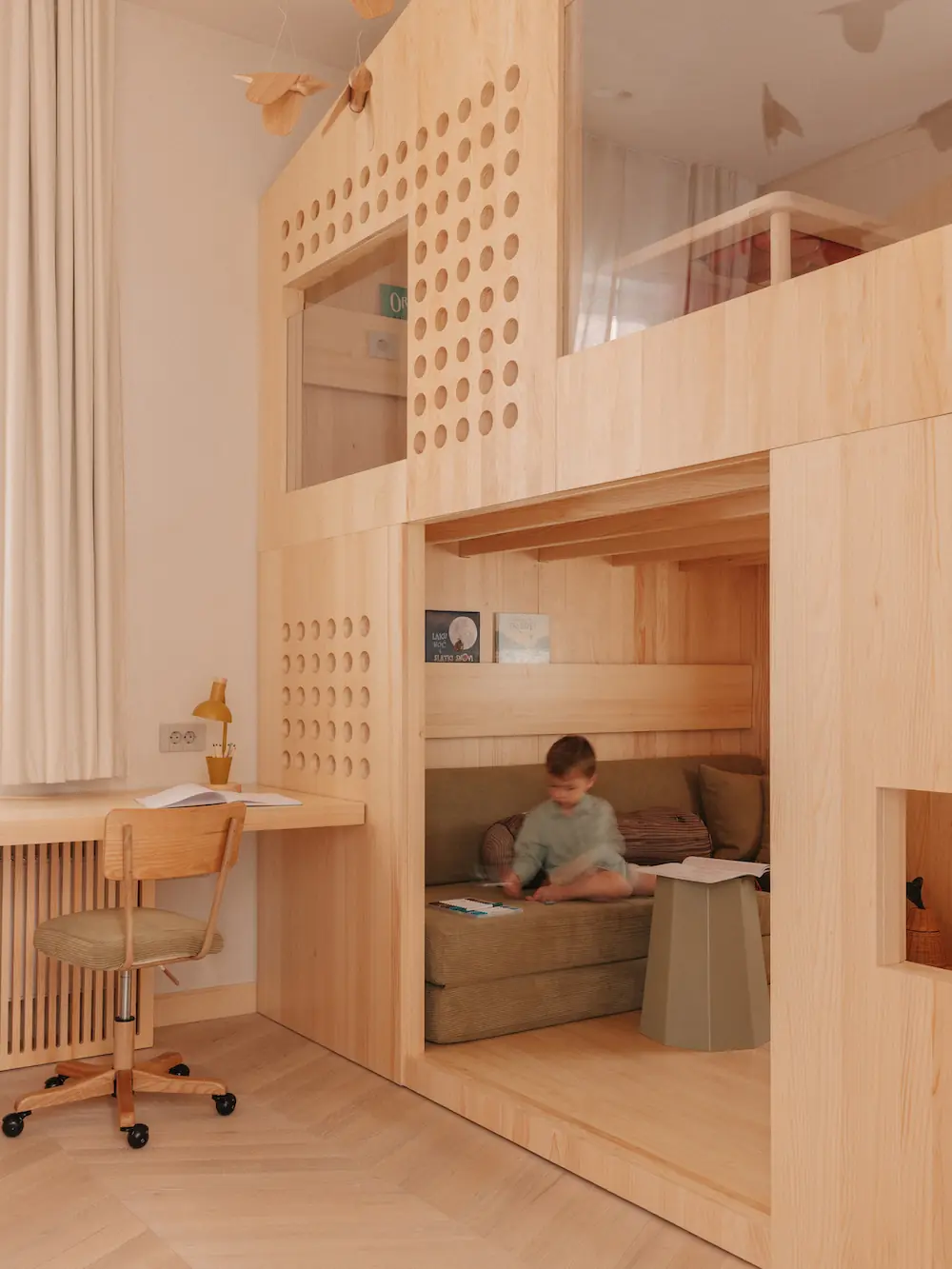
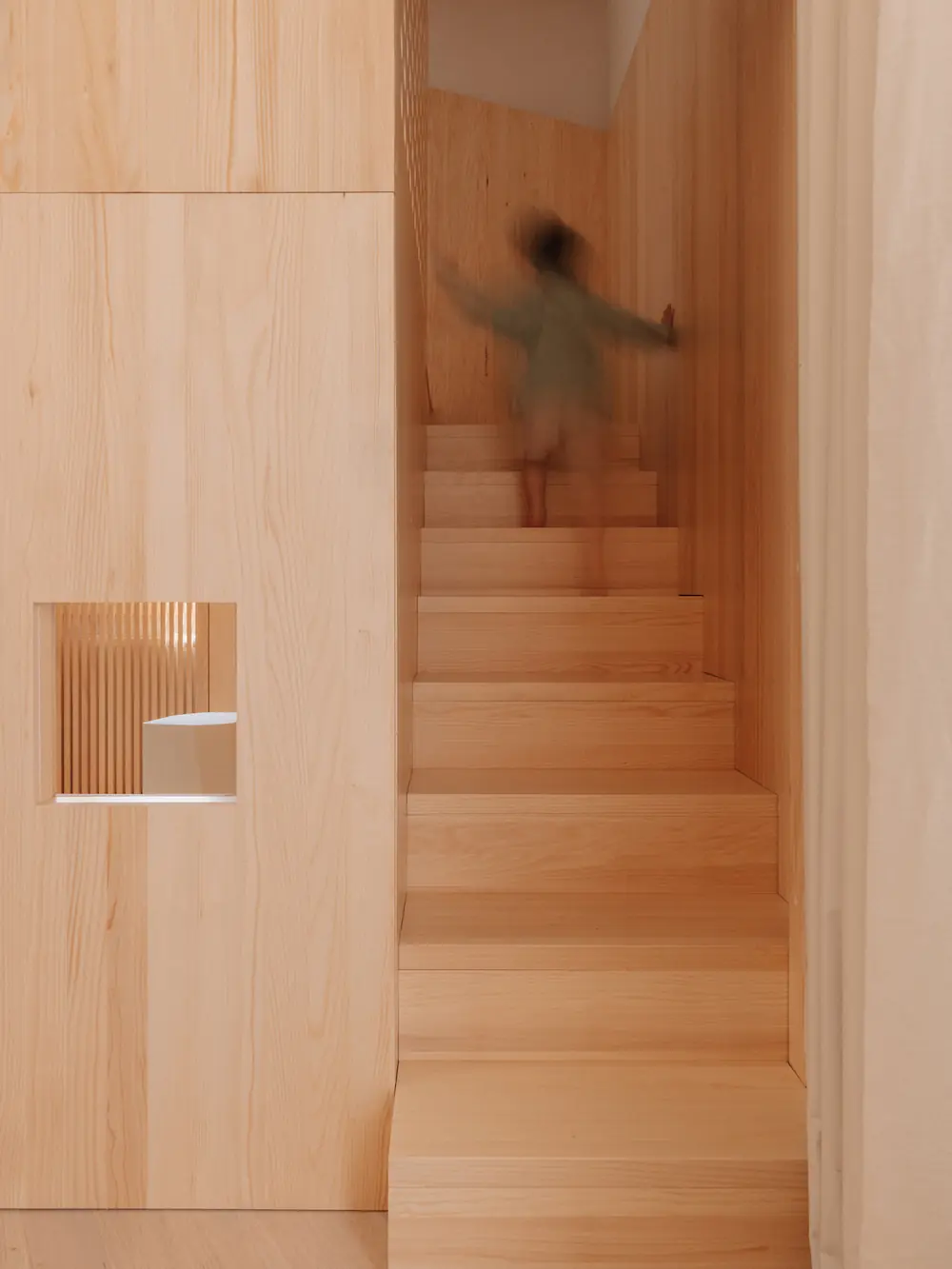
That is why this house within the apartment is the detail that sets this Sarajevo refuge apart from the mass of contemporary interiors, thoughtful, sustainable, and above all playful. “This space is for children and their friends, the future of our society. We hope it will inspire deep respect for wood, craftsmanship, and sustainability.”
The apartment brings together a carefully curated collection of handcrafted furniture and artworks, celebrating contemporary craftsmanship in Bosnia and Herzegovina. Pieces by renowned brands Zanat, Artisan, and Gazzda, alongside collaborations with independent craftsmen and ceramic artists, create spaces in which furniture becomes the focal point of everyday life, such as Zanat’s Koba table, around which life naturally unfolds. Artworks by Muhamed Bajramović and Kemil Bekteši are subtly woven into the interior. Created from materials connected to the region’s industrial heritage, their works, in dialogue with the design, build a strong sense of place, home, and identity.
Photo: Shantanu Starick
Renovating old buildings is synonymous with renovating society, conclude the architects of the studio Projekt V Arhitektura. And if we renovate them with the principles of sustainability and kindness toward the environment and life, the future will be bright.
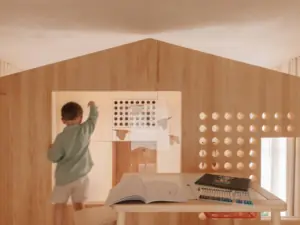
Photo: Shantanu Starick