Who today can afford to be invisible?
Bojana JovanovićJanuary 7, 2026

Are you one of those people who curate their Instagram posts, carefully think about the song that would perfectly accompany a selfie or a landscape, share Pinterest-aesthetic images on their feed, or are you the type who just presses a button and releases into the ether whatever comes to mind, unfiltered, crookedly framed, and full of undefined thoughts or memes that seemed funny in that moment? Or maybe you have curated your profile to look so effortless? There is no way for any of your followers to know.
Maybe you are one of those people who never post anything at all, whose profiles look as if they have blocked you, so you are surprised once every six months when you see their name among Stories. Whatever you are, the point is that it almost does not matter. Almost everyone would tell you that, at the end of the day, it does not really matter what you posted with which song, whether anyone saw it or how many followers you have. That is not real life. But is it really so? We have made social networks such an integral part of our lives that without them we almost do not exist, or at least we do not exist on that map on which we all rank ourselves in an utterly bizarre way. Do you travel enough, how do you dress, what music do you listen to, who do you spend time with and where, what do you read and where do you live, and if you are cringe, maybe all your other qualities fall into the water.
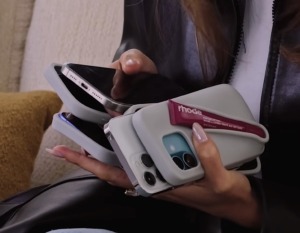
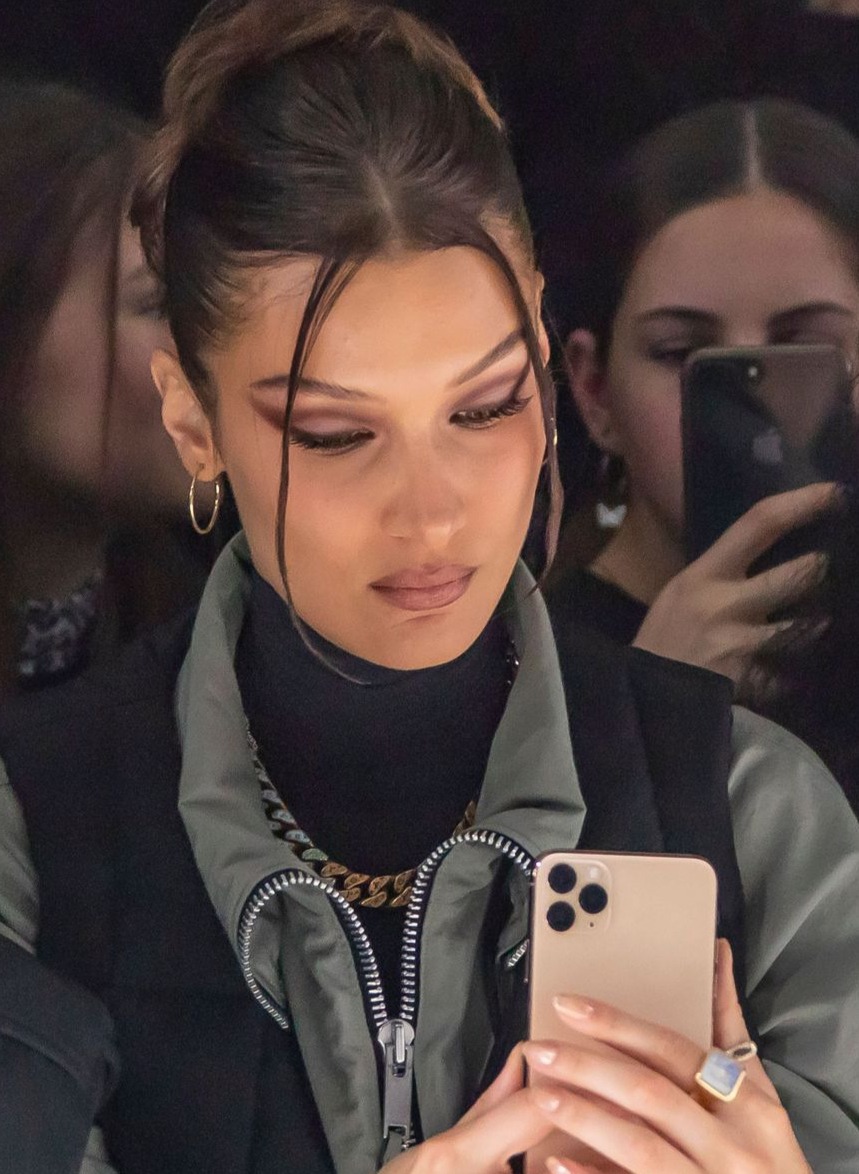
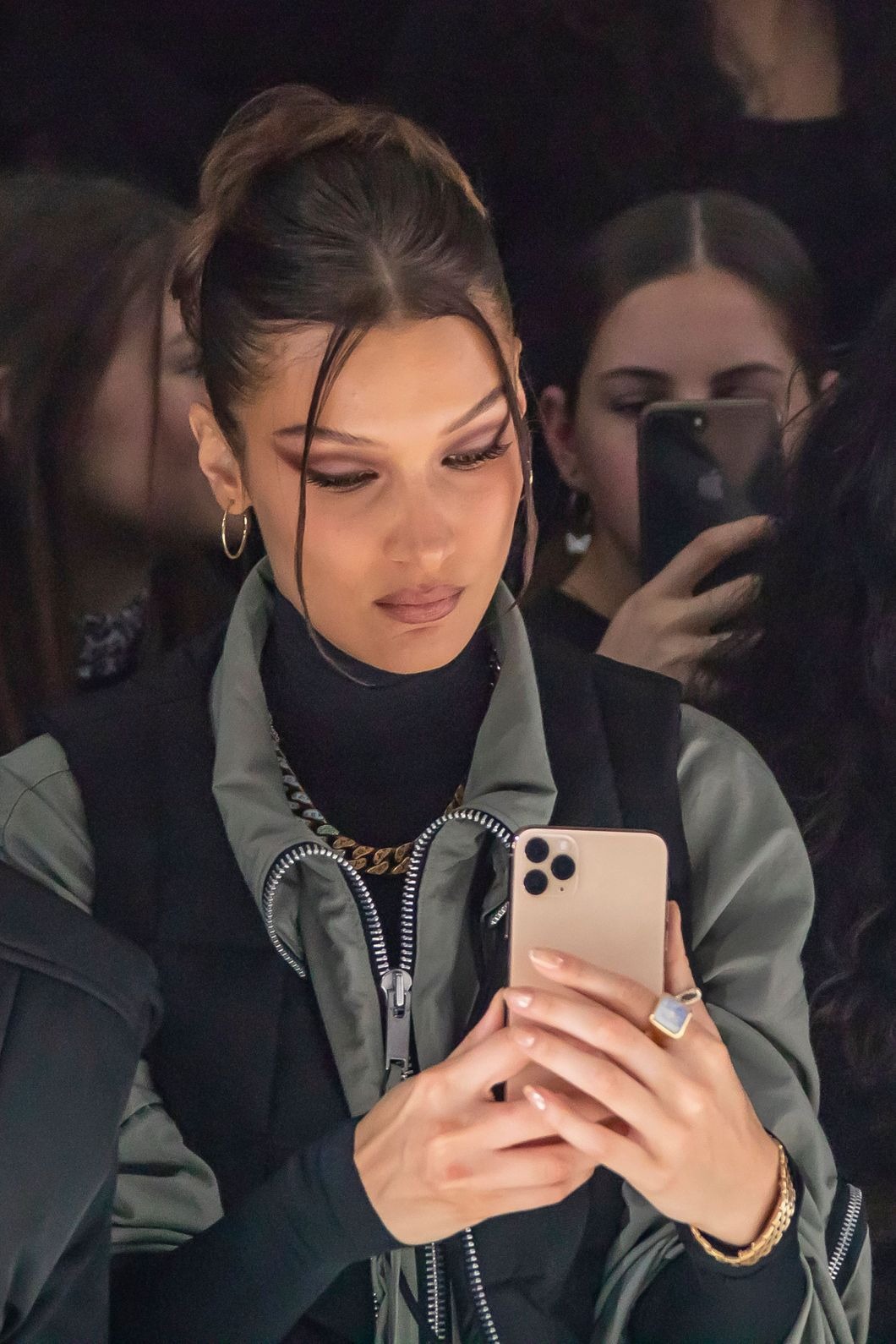
Hailey Bieber explained in the video “Vogue: What’s in my Bag” why she carries so many phones in her bag: “This is my phone, pretty straightforward, obviously, and these are some others that I always carry with me. I mostly use them for simple things, like… anonymous browsing, commenting, stalking, looking at other girls’ profiles, making multiple accounts, you know… those kinds of things.”
You will agree that we all like to get at least a small sneak peek into the lives of people we follow on social networks once every couple of weeks, to see how someone spent their vacation, to speculate whether someone might have ended a long-term relationship because photos with their partner are becoming rarer, to take a look at the new wallpaper in the apartment of a person we once met at a music festival and who now lives thousands of kilometers away. If you do not agree, then you are a better person than me, good for you! Still, the fact is that most people think quite a lot about their presence on social networks. Whether you genuinely and generally care about it or not, you have surely at least once in your life wondered whose car that one person is riding in or how they manage to wear new shoes every weekend when they go out. You noticed it, and there is nothing wrong with that. Do not pretend you are better than us occasionally and perhaps overly curious mortals.
Relared:Productivity apps may become the new social networks in 2026
All in all, the premise that social networks and being present on them are not important is open to serious debate, and not only on the level of needing social media to sell a product, run a business, or live as an influencer. Here we are talking about deeper and more complex categories, such as social relationships, expectations, and images of ourselves and others.
I am definitely a person who likes to curate things, no one is shocked since that is my original profession, and because people are very interested in other people’s lives, if you work in media and writing is your main means of communication with the world and also what you live from, presence on social networks is, unfortunately or fortunately, a very important part of your job and your life. Balancing the two, especially in professions that are inseparable from private life by many threads and in which you cannot simply close a laptop and live life outside your work, social networks serve as a form of connection both with those who follow your work and with yourself, as you find inspiration in everyday life. The problem arises at the moment when life on and with social networks becomes so taken for granted that their absence seems almost socially unacceptable, even suspicious. If you do not have profiles, people wonder what you are hiding, why you are not there, how anyone is supposed to contact you. Absence is interpreted as distance, disinterest, or elitism, rather than as a personal choice. Being available, up to date, and visible has become the new norm, almost an obligation, especially in creative and media circles.
Getty images
At the same time, paradoxically, we have recently been witnessing the fact that deleting apps, closing profiles, or strictly limiting time spent online is increasingly presented as a form of self-help and a wellness routine. Digital detoxes, offline weekends, and conscious withdrawal from networks are becoming signs of self-care, mental health, and maturity. It is as if we have collectively admitted that constant exposure is exhausting, but we are still not sure how to step out of that circle without feeling guilty or fearing that we will fall out of the flow. We thus find ourselves in a strange situation in which we are expected to be present, but also to know when to disappear. To build visibility, but also to occasionally demonstrate conscious withdrawal as a sign of self-awareness.
In that gap between the need to be seen and the need to step aside, anonymity increasingly appears as a simmering desire, almost like a fantasy of rest. Not of complete disappearance, but of a break from constant exposure, from the idea that every moment has the potential to become content. Anonymity today is not the absence of identity, but an attempt to regain control. To stop, at least for a moment, thinking about how something looks from the outside while it is still happening on the inside. In a world where attention is a commodity and visibility a currency, anonymity becomes a luxury that not everyone can afford. Because withdrawal often also means the loss of opportunities, contacts, income, some future “maybe.” It is not easy to turn off a profile even if your job does not depend on it, or if your digital presence is directly tied to professional survival. That is why we increasingly see various hybrid forms of disappearing. Closed profiles, finstas, accounts without names or photos, audiences reduced to a circle of people we know will understand the context or simply be an environment in which we feel comfortable posting anything or posting nothing at all. These are not escapes, but compromises. Attempts to remain present while being less exposed. To retain the ability to look, that quiet voyeurism we all practice, while at the same time reducing the need to be constantly looked at. The paradox of social networks lies precisely in the fact that they offer us the illusion of control. We choose what we show, when, and to whom, but we have no control over how it will be interpreted, saved, remembered, or misread. That part always slips away.

Photo: Keren Levand
A friend who is known for using Instagram as a tool for stalking, or at least that is how I see her because through her likes and views she very clearly signals her presence, though to less careful internet detectives her manner would probably go unnoticed, has recently had the desire to be more visible online. But the problem was not a lack of will, it was exhaustion. Running a profile simply does not come naturally to her. She has to set reminders for herself and reorganize priorities in order to achieve something she is not even sure she wants, but feels she has to. And here we arrive at the key question: is maintaining one’s own relevance online something that should be done at any cost, even when it exhausts us to the point of resistance? I cannot say that I understand her, because I am someone for whom posting on social networks does not feel like an effort, but rather like a kind of release valve. I have not yet felt the pressure of expectations of how my profile should look. It simply is what it is. But could I turn it off? Not post anything for months? I am not sure, but the answer is probably no. On the other hand, there is the question of whether I want the luxury of anonymity and invisibility. At moments, certainly yes. It would be nice to simply exist without a digital footprint, but I still do not feel a need for invisibility and withdrawal. I will ask my friend how she is doing, because it is obvious that once you get used to the comfort of visibility, it is hard to step out of it. When I find out, I will let you know.
As I reach the end of this text, it becomes clear to me that privacy and anonymity are no longer unambiguously desirable categories. For some, they are a refuge, a space of silence and relief. For others, they become a cage, a place they want to escape because they feel invisibility costs them too much. Perhaps the truth lies somewhere in between. Perhaps we simultaneously need validation and distance, an audience and shelter. Social networks give us the tools to balance that, but not the answer of where the right measure lies. And that measure, it seems to me, is constantly shifting, depending on the phase of life, work, exhaustion, and how ready we are that day to be seen.
In a world where we’re expected to be constantly online, knowing when to stop has become a true luxury skill. Maintaining a digital presence shouldn’t mean chronic exhaustion, but rather intentionality, clear boundaries, and a smarter way of working. Below, we share a guide that prioritizes quality over quantity—and protects your energy in the long run.
Before posting anything, ask yourself: why am I here? A clearly defined purpose and core message help you stay focused and avoid being pulled into comparison or digital noise.
You don’t need to be everywhere. Choose one or two platforms where your audience is most active and excel there. Consistency will always outperform scattered presence.
Allow yourself to fully disconnect at certain times—whether in the evenings, on weekends, or during vacations. Turn off notifications, use “Do Not Disturb” mode, and set app limits. Boundaries are not a weakness; they’re a strategy.
Screen-free mornings, a few minutes of stretching, reading, or simply sitting in silence—these small rituals make a difference. Create tech-free zones at home, such as the bedroom or dining table. Your well-being is worth more than constant availability.
It’s time to stop obsessing over numbers. Instead of follower counts, focus on engagement, shares, saves, and the real value your audience receives. Visibility without meaning quickly loses its power.
Rather than improvising daily, dedicate one focused morning a week to planning and creating multiple posts at once. This approach brings calm—and better quality.
Content planning platforms allow posts to go live without your constant presence. Automation gives you back both time and control.
The endless ping of alerts fragments attention and fuels dependency. Decide on specific times during the day to check social media—and stick to them.
When you’re online, ask yourself: does this serve my goals? Unfollow accounts that trigger discomfort or comparison. Your digital space should support you, not drain you.
A pause in posting doesn’t mean disappearing. On the contrary—silence often gives more weight to the next message. Audiences recognize intention.