I can’t stop thinking about the controversial McQueen look Lady Gaga wore at the Grammys
Tara ĐukićFebruary 3, 2026

February 3, 2026
Alexander McQueen will live forever, I thought last night during Lady Gaga’s performance at the 2026 Grammy Awards. Nearly two decades earlier, this duo made me swear eternal love to the world of fashion, a true bad romance, as Gaga walked in a walk, walk, fashion baby rhythm on dizzying heels, wearing a costume worthy of the Met Museum. Over the past decade, I eagerly awaited Gaga’s return, both to the very top of the music world and to the doorstep of the fashion house with which she began shaping her distinctive avant-garde expression. That finally came true: after many Matières Fécales, Dilara Findikoglu, Samuel Lewis, and other young fashion visionaries, Gaga returned to McQueen to perform Abracadabra, through which she once again made history, becoming the only music artist to hold all Grammy awards in the pop category.
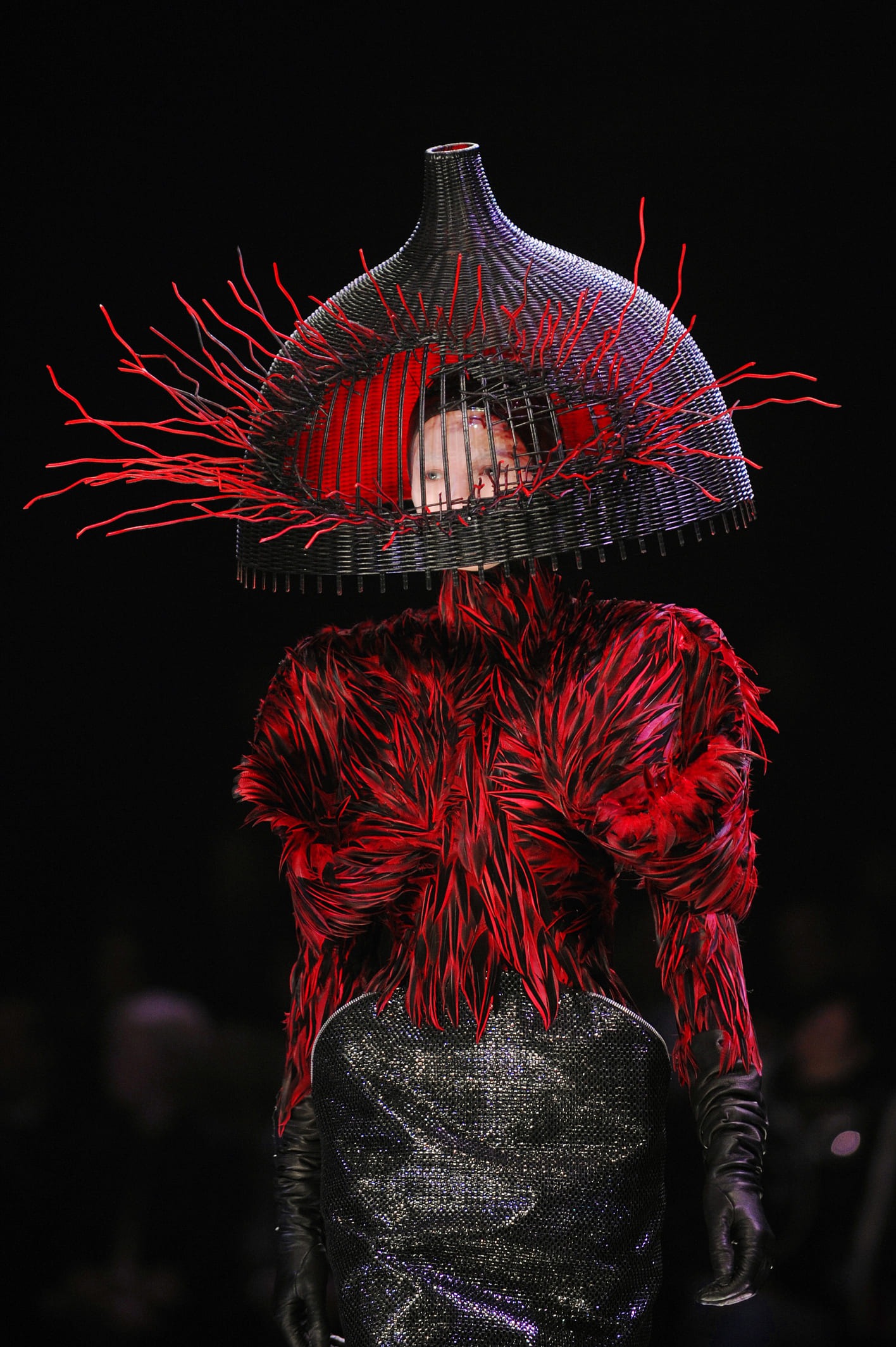
This was look 36, featuring an extravagant woven headpiece and a red feathered top, from McQueen’s legendary The Horn of Plenty collection for fall-winter 2009, which has long been enshrined in the annals of fashion and pop culture. You could find it both on Wikipedia and in the aforementioned famous museum as part of the retrospective exhibition Alexander McQueen: Savage Beauty.
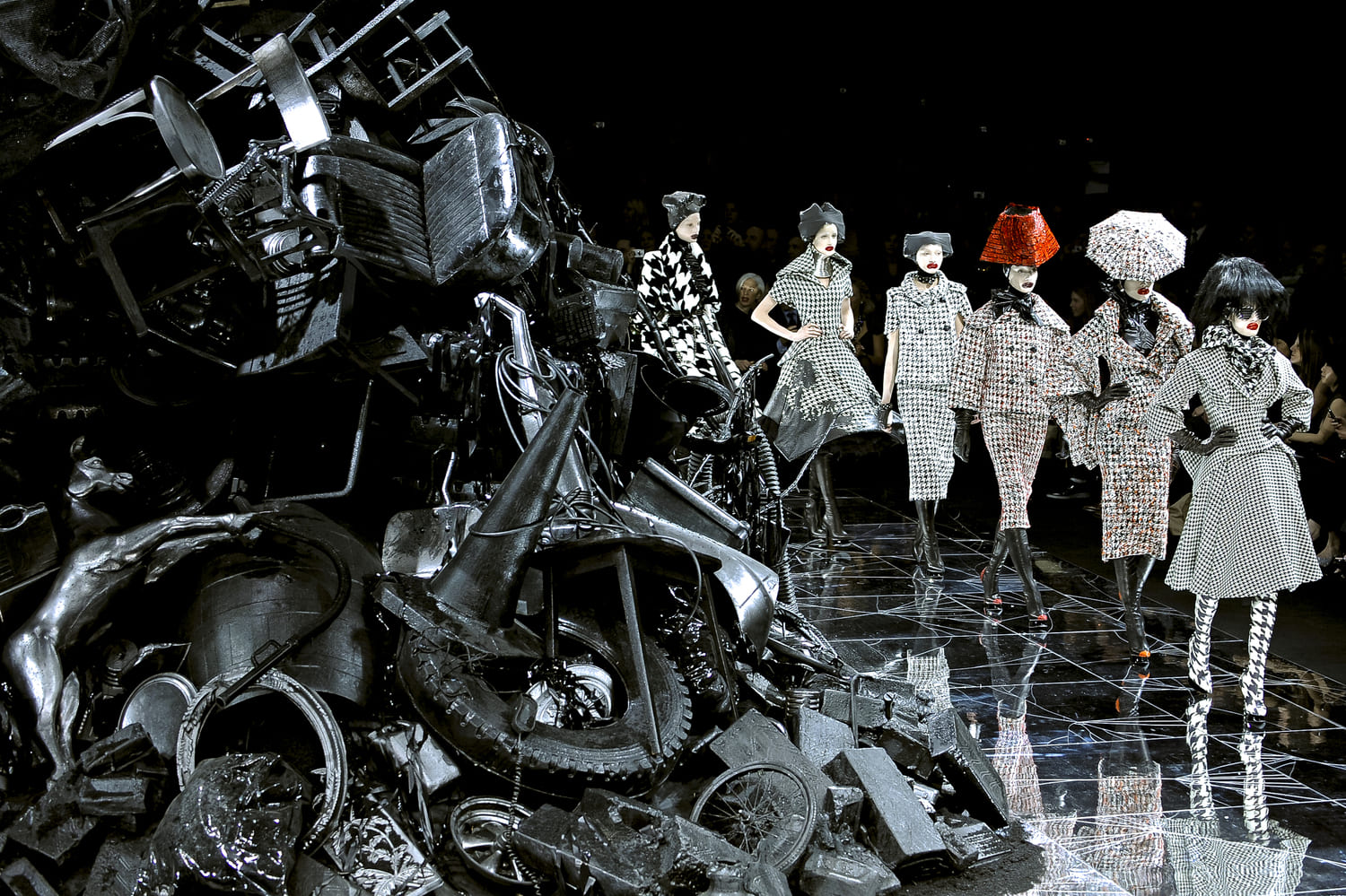
Alexander McQueen was perhaps the last designer in recent fashion history bold and audacious enough to present a collection that was a pure, unfiltered, fashion and theatrical demonstration. On that March 10 at the Palais Omnisports de Paris-Bercy in Paris, the set consisted of a pile of debris from McQueen’s earlier shows, surrounded by a runway made of shattered glass. The clothing was a highly dramatic satire of key fashion moments of twentieth-century French fashion: parodies of Dior’s houndstooth New Look and Chanel’s tweed suits, which transitioned into sharp orange and black harlequin motifs, and then into striking pieces revisited from McQueen’s archive. All of it was conceived as a final, so-called fin de siècle blow to the state in which both fashion and consumer society as a whole found themselves.
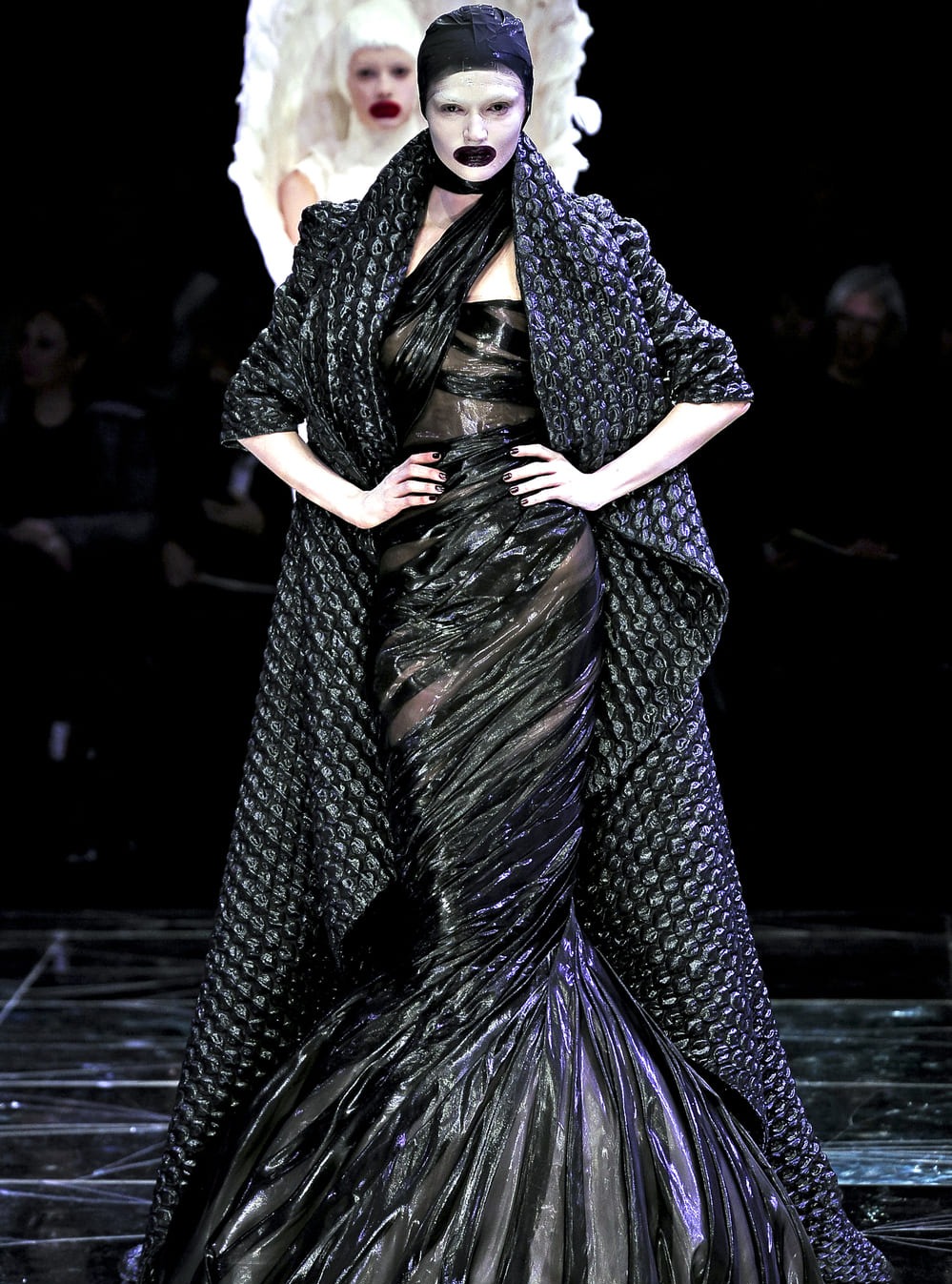
The romantic side of McQueen’s character, which would occasionally surface in deliriously divine shows such as his homage to the Victorian Empire, was completely suppressed here. Instead of poeticism, we were given a vision that felt like an expression of anger, defiance, black humor, and darkness, his destructive refuge. Some of the looks were made from duck feathers dyed black, evoking the black raven, a symbol of death in Romanticism.
“It is important to confront death, because it is part of life. It is sad, melancholic, but at the same time romantic. It is the end of a cycle, everything has to end. The cycle of life is positive because it leaves room for new things,” he said before his sudden and premature death in 2010. Yet McQueen never dismantled his vision of fashion as the highest form of art. Whatever troubled him, he made no compromises when it came to construction and craftsmanship, which was evident in these 45 sculptural looks.
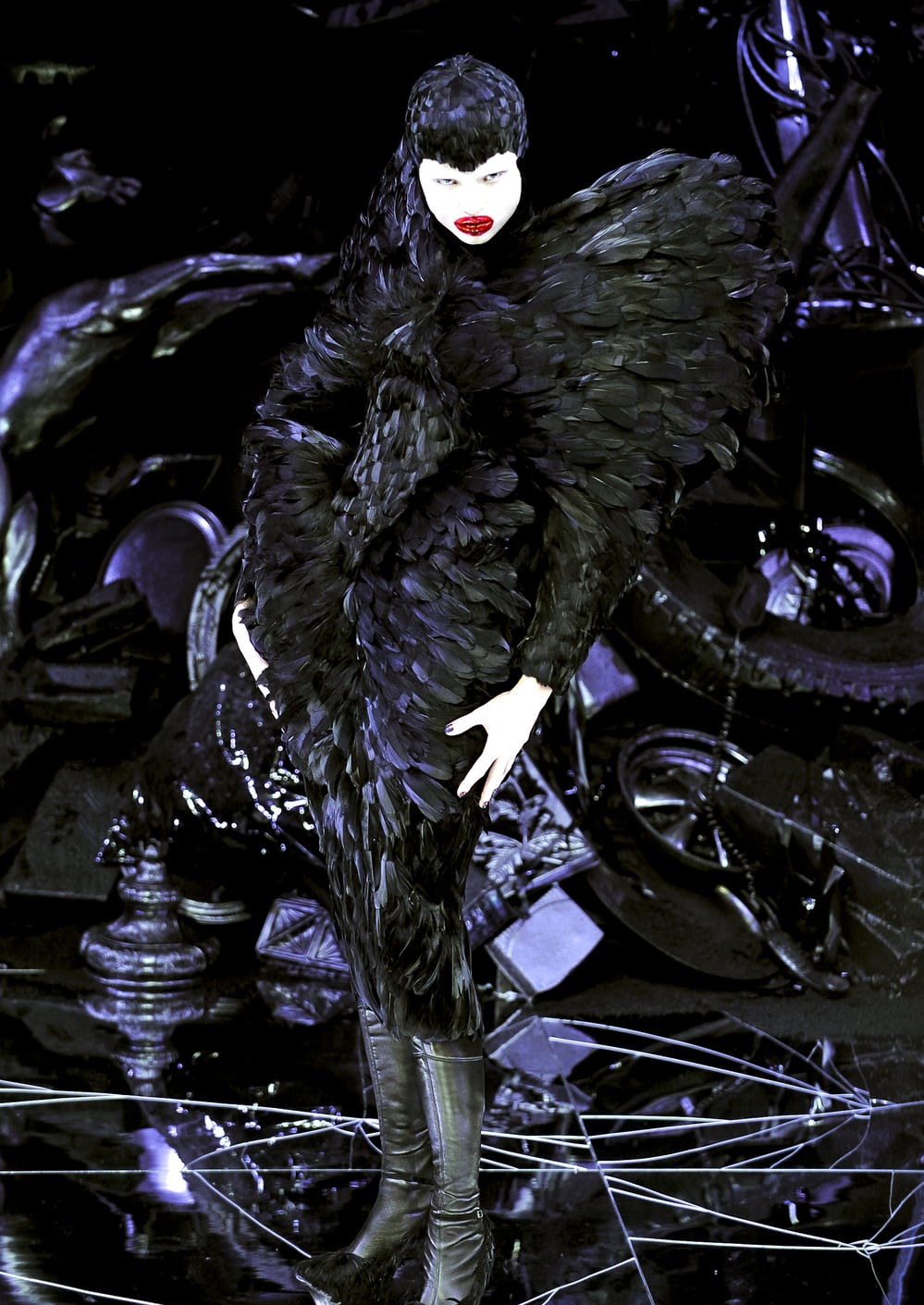
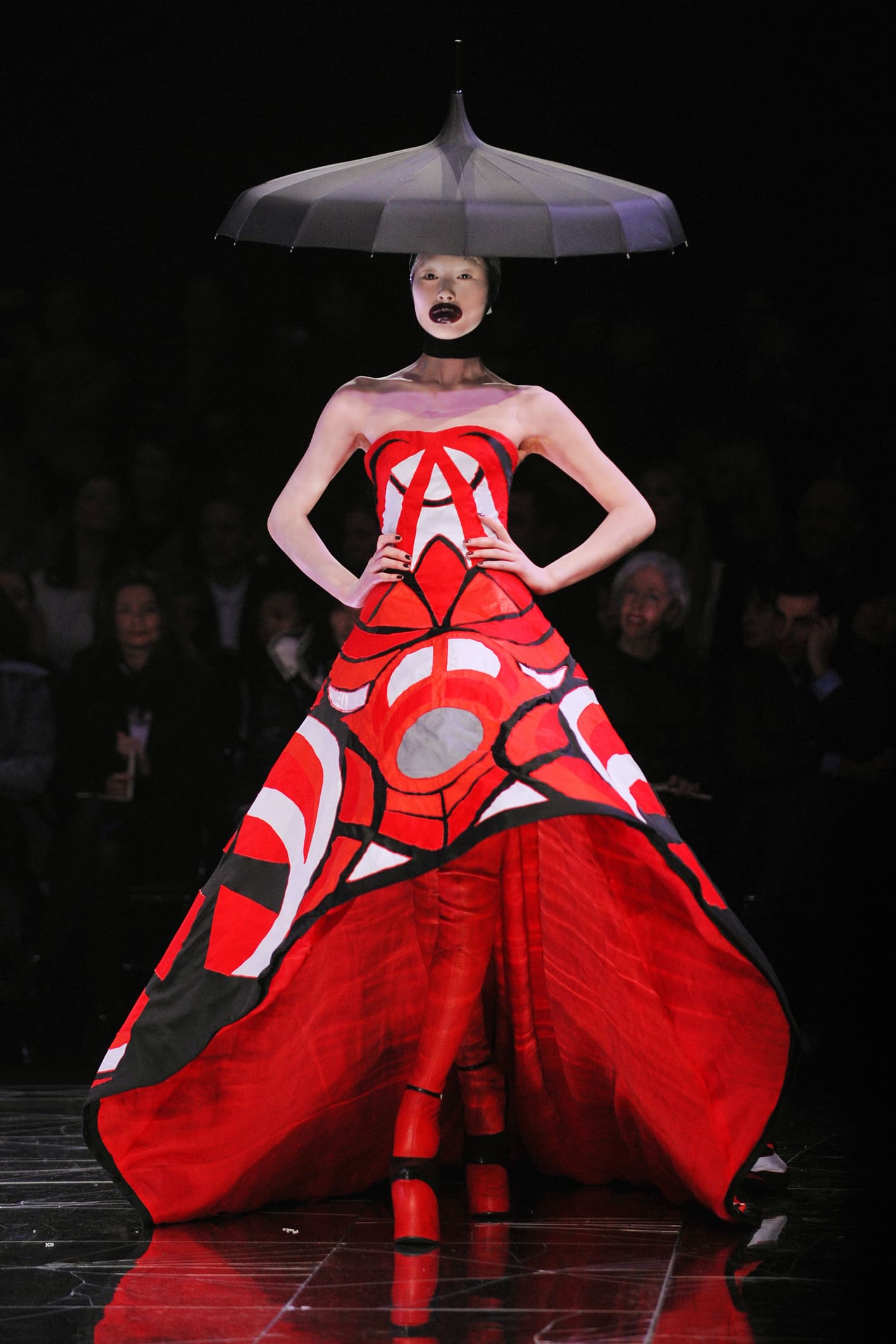
Bitter debates followed. Some criticized the models with bleached eyebrows and extremely emphasized lips pushed to the edge of the grotesque, reminiscent of Leigh Bowery, calling them ugly and misogynistic, while others celebrated the spectacle. Only later did academic analyses direct attention to the deeper message and themes of the collection, especially to the ideas evoked by the two dresses completely covered in feathers that closed the show and were exhibited in famous museums as part of McQueen’s retrospective exhibition.
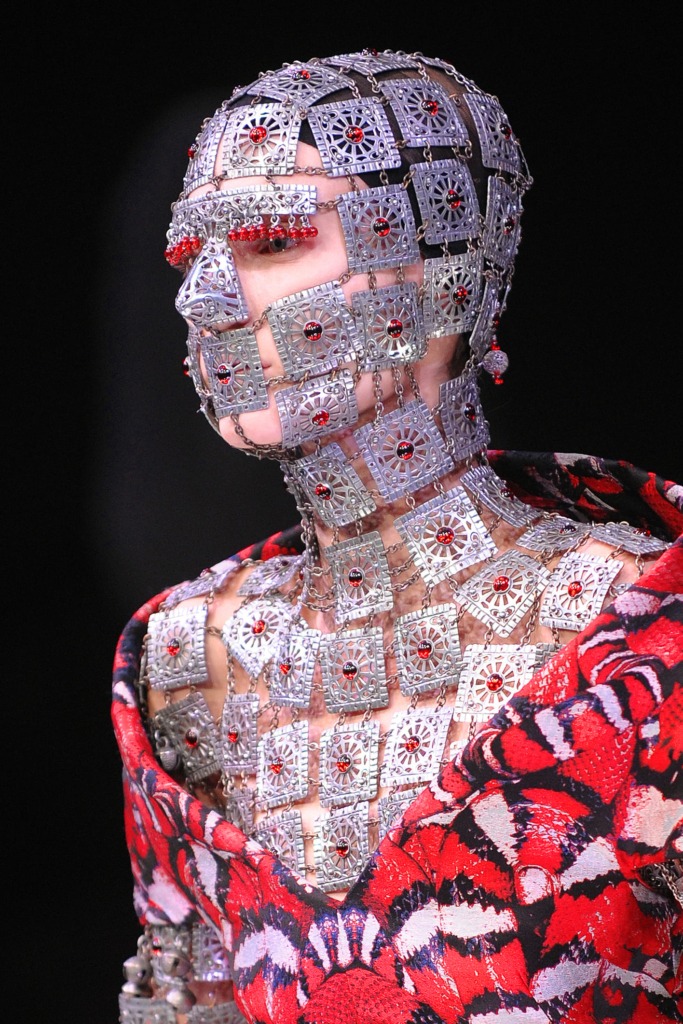
Photo: Getty Images
By the end of the evening, Lady Gaga wore another archival creation by Alexander McQueen, this time for Givenchy haute couture spring 1999. After winning the awards for Best Dance-Pop Recording and Best Pop Vocal Album, the pop icon replaced her textured gown with an edition that once again merges Gothic and Victorian aesthetics. It was a vintage corset dress with long sleeves, a high collar, and an open skirt trimmed with white ruffles, marking the peak of her Mayhem era.