Is 2026 the year we return to romance and love?
Anja StankovićFebruary 1, 2026

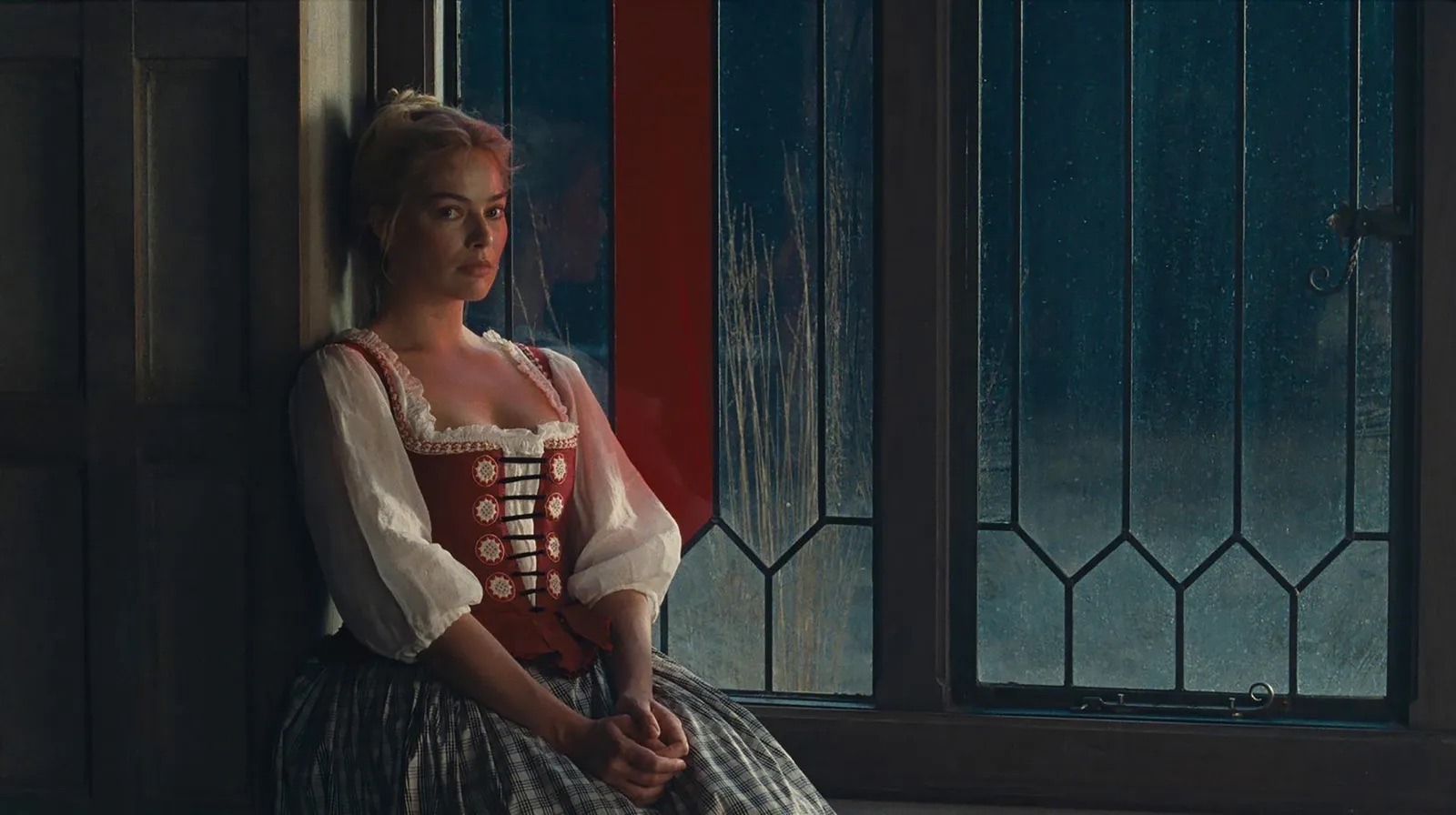
As someone for whom reading the news and scrolling through social media is slowly turning into a full-time job, I couldn’t help but be thrilled when I drew all the parallels and realized that the most universal topic of the world and the century had managed, hiding in the form of a shadow, to assert its presence in 2026. In an era where our attention and interest last less than a single movie trailer, can anyone truly provide a comprehensive framework of social needs and interests? Only, and solely, when it comes to love. One thing is clear: after a chronic wave of cynicism and the insistence on individuality, the need for depth, care, and emotional continuity permeates every aspect of our lives. That doesn’t necessarily mean that the number of love narratives has increased, but what is changing is the way we experience them.
In this social shift, music plays a key role because it registers changes in collective mood the fastest. Charli XCX’s rendition of Everything Is Romantic, from the opening credits of the long-awaited Wuthering Heights film, has become the collective soundtrack of our lives. It feels like the inner monologue of a generation that is simultaneously saturated and hungry. Even though it has been used countless times in different formats over the preceding months, it still leaves me with a feeling whose intensity exceeds the limits of comfort. It is not a song about fulfillment, but about the awareness that desire, in itself, is real, valid, and sufficient. Romance is not a promise of happiness, but an insistence on feelings in a world that constantly pushes us to neutralize them.
On the other end of the musical spectrum, Olivia Dean has recently emerged as a cultural phenomenon, an artist who approaches love as a skill and a discipline of tenderness. Her album The Art of Loving presents the idea of love as something that can be learned, something that involves self-awareness and growth, not just irresistible chemistry. Raye brings a weight to love through jazz-inflected interpretations, where emotions are lived through the voice. In her work, we can clearly see traces of the female vocalists who once embodied love, romance, and suffering. This is not mere fascination with Ella Fitzgerald, Nina Simone, or Etta James, but a return to the idea that love requires time. And it is precisely this time for love that 2026 is once again seeking.
Interestingly, this new romance does not emerge through grand gestures, but through attention to the small ones. This shift is also visible on social media. Instead of performative displays of love, the algorithm currently favors slowness, introspection, and sincerity. Voice-over confessions over slow shots of everyday life, letters to oneself or an unnamed you, recording silence and routine throughout the day—all of this functions as a new form of intimate diary. Love here manifests in the way someone observes their own life. Somehow, from an ironic take on the trend of romanticizing your life, we have unconsciously started to practice this mantra seriously.
In this context, yearning returns as a central emotional and narrative force. Longing is not just desire, but a state of prolonged tension between what is possible and what may never happen. Love is no longer measured by outcome, even on screen, but by the intensity of its duration. This is evident in contemporary literature and its adaptations. The obsession with the novel and series Heated Rivalry, along with the continued popularity of narratives like friends to lovers and enemies to lovers, points to a return of slow-burn love. These are relationships built through tension, waiting, and the unspoken. Love that accumulates over time. Slow-burn is a kind of response to the fatigue and dissatisfaction with instant emotions.
Related: A new Heated Rivalry book is coming, and it will be the most intense yet
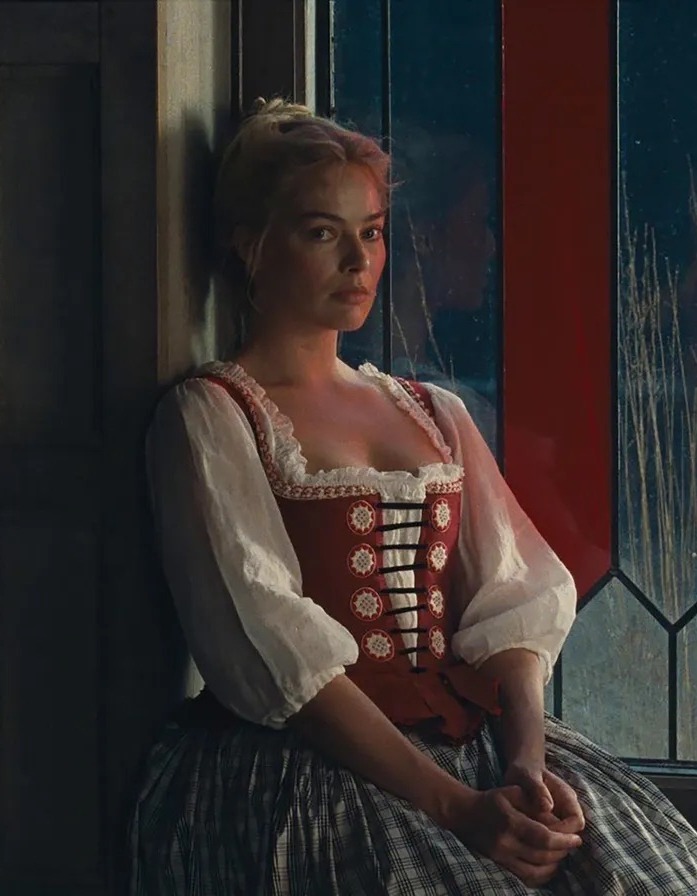
Alongside this, there is a whole wave of Victorian and Regency adaptations both announced and in production. Wuthering Heights,, Pride & Prejudice, and Sense & Sensibility offer a romance that is intense, dark, and messy. These love stories are weighed down by social rules, class differences, and internal conflicts, and their appeal lies precisely in the absence of easy resolution.
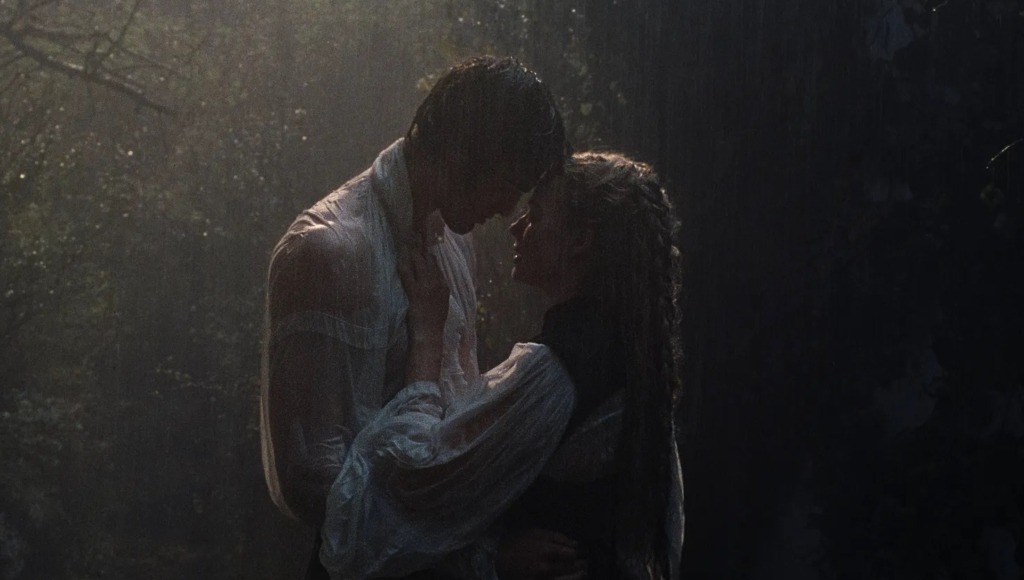
Photo: Courtesy of Warner Bros.
If love is returning as a need for intimacy and duration, fashion translates this into a comeback of materials that are both delicate and disciplined. Transparent fabrics, corsetry, high collars, soft silhouettes, and layered textures. Within this framework, houses like Simone Rocha, Valentino, and Chanel are particularly relevant, as they have spent years cultivating a poetics of tenderness, lace, volume, and intimate armor, and their spring 2026 collections arrive just as the broader market once again has an appetite for this kind of romance. At the same time, what we see on promo tours and red carpets, such as the Wuthering Heights-inspired styling, further emphasizes the transcendental atmosphere of love in the air.
Related: In his debut couture collection, Matthieu Blazy “stripped” Chanel down
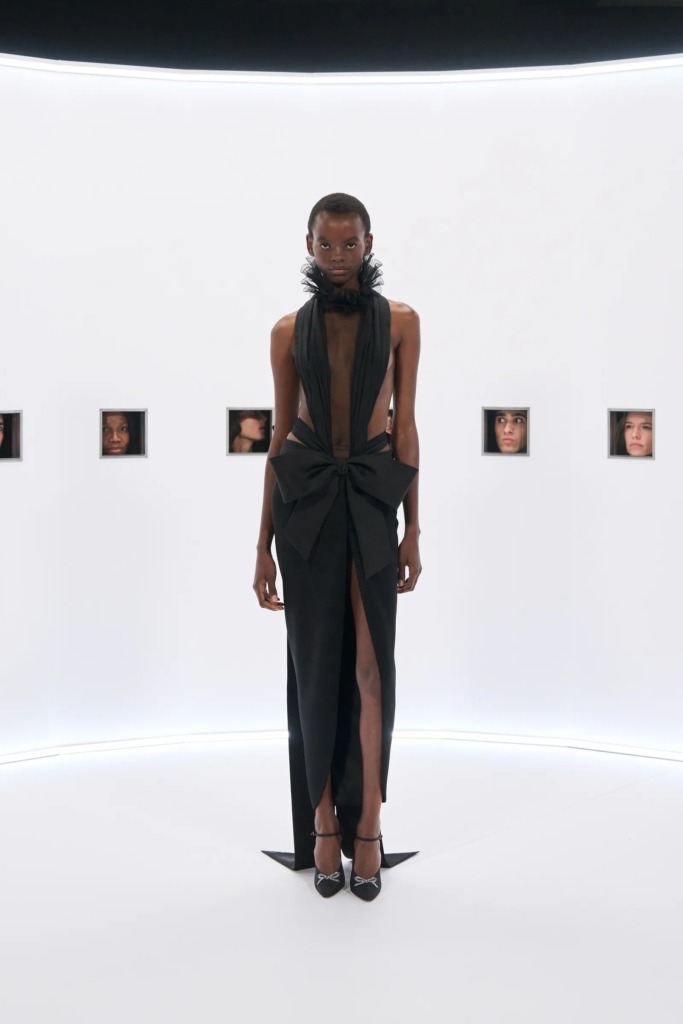
Valentino Couture 2026
When we connect all these threads, it becomes clear that 2026 does not feel like the year of love because the world has become calmer or simpler. On the contrary, love is returning as a need for continuity in a time of discontinuity. As a desire to hold on to something, even when it is uncertain. Perhaps the most accurate way to put it is that 2026 looks like a year in which romance returns as a form of attention. It does not return to promise happiness, but to allow presence. And it is precisely in that presence, slow, imperfect, and persistent, that it becomes a central cultural force once again. In the song that repeats fall in love again and again, in slow-burn narratives that bring us back to tension and waiting, in yearning that is no longer an anomaly but the driving force of every story, in the Victorian Gothic revival that makes romance dark yet alluring, in transparent fabrics and high collars that both protect and reveal the body, in the TikTok diary that offers presence instead of ideals.